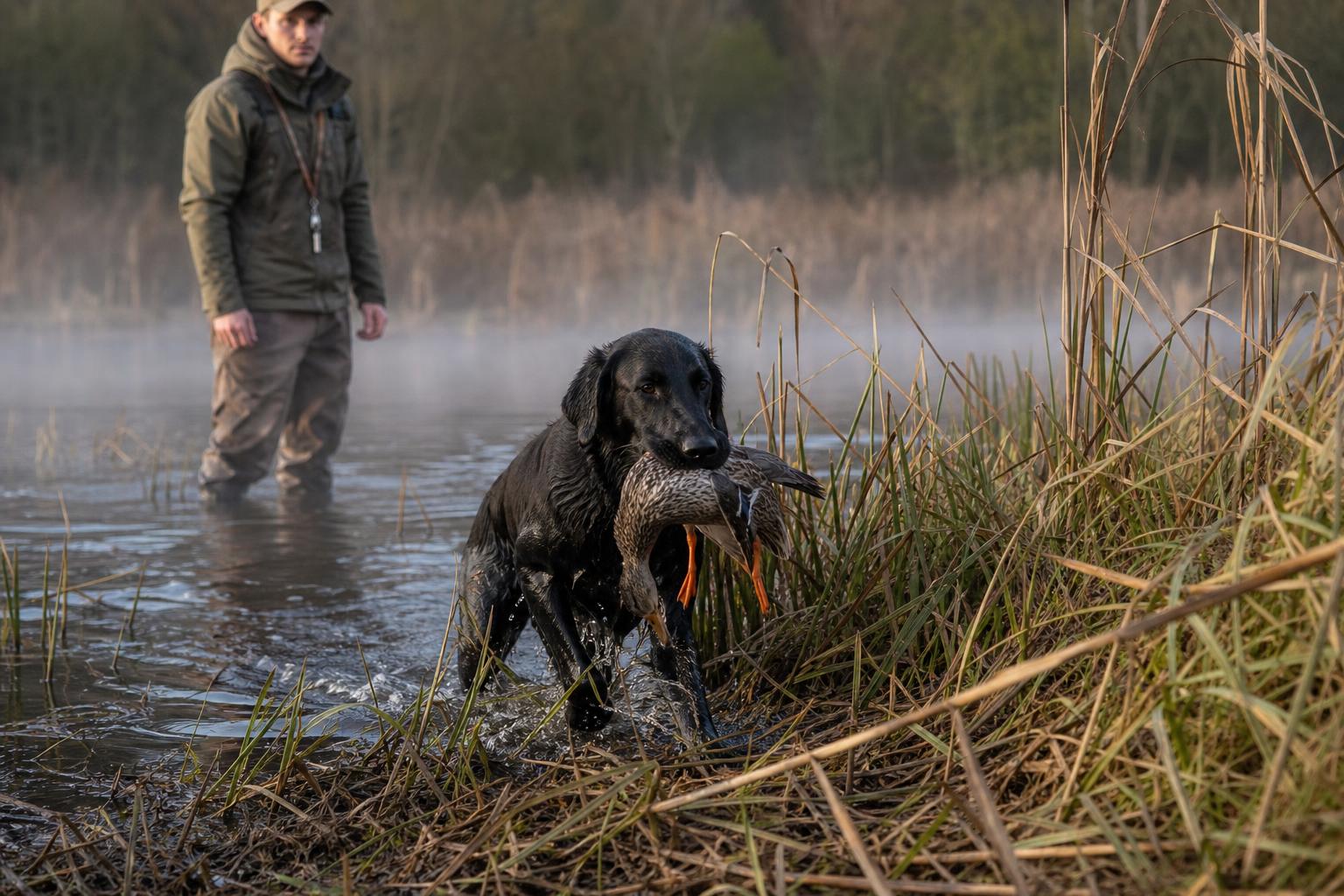
A finished Flat Coated Retriever can be an exciting option for a hunter, trainer, or active family that wants a capable retriever without starting from the puppy stage. The breed was developed as a versatile British gundog for finding and retrieving game on land and in water, and a good adult Flat-Coat should show the cheerful attitude, athletic build, and people-focused temperament that make the breed so enjoyable. Buying a finished dog is still a serious decision. The word finished can mean different things from one seller to the next, so buyers need to look past polished wording and verify exactly what the dog can do.
Use this guide as a practical checklist. It does not assume every Flat Coated Retriever has the same title path, registration status, or field background. Instead, it focuses on observable training, documented experience, soundness, temperament, and whether the dog fits your real hunting or working life.
What makes a finished dog
For a Flat Coated Retriever, finished should mean more than an older dog that has retrieved a few bumpers. At minimum, the dog should have reliable obedience, a clear understanding of retrieving work, steadiness appropriate to its training level, and enough field or water experience to perform under distraction. A finished retriever should be able to mark falls, hunt with purpose, deliver birds cleanly, and work calmly around handlers, other dogs, people, and real outdoor conditions.
Ask the seller to define the term in plain language. Some finished dogs are polished hunting companions ready for regular waterfowl or upland use. Others may be titled competition dogs with advanced handling, blind retrieves, and long-distance work. A family looking for a trained companion may not need the same dog as a serious hunter who expects cold water retrieves, boat manners, blinds, and multi-dog setups. Match the dog to the job rather than paying for training you will not use.
- Request a live demonstration or recent unedited video.
- Watch the dog retrieve on land and in water if water work matters to you.
- Confirm delivery to hand, steadiness, recall, and response to whistle or verbal cues.
- Ask how the dog handles new grounds, strangers, travel, crates, and other dogs.
- Clarify whether the dog has retrieved real birds, bumpers only, or a mix of both.
Hunt tests
Hunt tests can be useful evidence, but they should be reviewed carefully. A Flat Coated Retriever with hunt test experience may have been evaluated against a structured standard for marking, trainability, retrieving desire, and steadiness. If the seller mentions hunt tests, ask which organization hosted them, what level the dog completed, and whether certificates or online records are available. Do not assume every finished Flat-Coat will have hunt test titles, and do not treat a title as a substitute for watching the dog work.
Hunt test relevance depends on your goals. A dog that has passed tests may still need adjustment to your terrain, your handling style, or your hunting routine. Conversely, a capable hunting dog may have no formal test record because the owner focused on practical field work. The best approach is to combine documentation with performance. Ask for dates, levels, judges or event names when available, then compare that record to the dog’s current ability.
Verify working records and breed eligibility
Verify reported working titles and test results with the issuing organisation. Confirm that the programme applies to the breed and ask what the result demonstrates about the individual dog.
Verify reported working titles and test results with the issuing organisation. Confirm that the programme applies to the breed and ask what the result demonstrates about the individual dog.
Trial records
Trial records can add value, especially when they show the dog performed under pressure against other trained dogs. A Flat Coated Retriever with field trial or working test experience may bring stronger marking, drive, memory, and handling skills. Still, trial performance should be interpreted in context. A highly competitive dog may be more dog than a casual hunting home needs, while a steady, practical hunting retriever with modest records may be the better fit.
Ask the seller for the dog’s registered name, registration number if applicable, event history, placements, titles, and the organization that recorded them. Then verify the information through available records or by contacting the relevant club or trainer. Also ask what the record does not show. Was the dog consistently handled by a professional? Has it hunted with amateurs? Does it settle in the house? Is it comfortable around children, vehicles, kennels, and other dogs? The best finished Flat-Coat is not just talented; it is usable in your life.
Age expectations
Age matters when evaluating finished Flat Coated Retriever dogs. Because the breed is known for a playful, youthful personality and can mature slowly, a young adult may still be energetic and silly even with solid training. That can be a joy for the right owner, but it also means you should evaluate impulse control, steadiness, and household manners honestly. A two- or three-year-old may have enough foundation for serious work but still need ongoing structure.
Older finished dogs can be excellent purchases when they are sound, conditioned, and mentally stable. They may bring more experience, calmer judgment, and a clearer record of what they are. Review veterinary history, current fitness, weight, dental care, ear health, and any limitations the seller knows about. Flat-Coats are athletic retrievers, so a finished dog should be lean, mobile, and able to handle the work you expect. For any age, have a veterinarian review records and perform an exam before finalizing a purchase when possible.
- Young adult: often higher energy, more training runway, and more time to bond into a program.
- Prime adult: usually the most straightforward finished-dog window if health and training are documented.
- Older adult: may offer experience and steadiness, but buyers should evaluate soundness and future workload carefully.
Investment value
A finished Flat Coated Retriever represents an investment in breeding, time, birds, grounds, professional handling, travel, veterinary care, and daily training. Price should reflect the dog’s actual ability, health documentation, temperament, age, record, and suitability for your purpose. Avoid sellers who justify a high price with broad claims but cannot show the dog working or provide clear records. Also be cautious of bargain pricing that comes with rushed deadlines, missing paperwork, or vague explanations about why the dog is being sold.
Fair value is not only about the purchase price. Consider the cost of maintaining the dog’s training, keeping it conditioned, feeding a working retriever, routine veterinary care, grooming, travel, and any transition training you may need. A well-matched finished dog can be worth the investment because it saves time and gives you a known adult. A mismatched dog can become expensive quickly if the training does not match your hunting style or the temperament does not fit your home.
Health, temperament, and paperwork checks
Flat Coated Retrievers benefit from buyers who take health and transparency seriously. Ask for documented health clearances commonly relevant to the breed, such as hips and eyes, and discuss any available family health history with the seller. The breed community often emphasizes tracking inherited risks and supporting health research, including cancer-related monitoring, but no seller should make broad medical guarantees without documentation. Work with your veterinarian and review records carefully.
Temperament deserves equal attention. A correct Flat-Coat should be friendly, optimistic, and eager to engage, but finished training should also include manners. Watch for excessive anxiety, avoidance, uncontrolled jumping, resource guarding, poor crate behavior, or difficulty settling after work. Meet the dog in more than one context if possible: kennel, yard, field, vehicle, and a quiet setting. The goal is to see both the working dog and the everyday companion.
Questions to ask before buying
- Who trained the dog, and what methods were used?
- What commands does the dog know, and are they verbal, whistle, hand signal, or collar-conditioned?
- Has the dog hunted wild birds, preserve birds, waterfowl, upland game, or primarily trained with bumpers?
- Can the seller provide recent video showing actual current performance?
- What health clearances, veterinary records, and registration documents are available?
- Why is the dog being sold, and is there a trial period or written agreement?
- How does the dog behave in the house, crate, truck, kennel, and around other dogs?
Buyer-focused conclusion
A Flat Coated Retriever finished dog can be a joyful, capable partner when the training, temperament, and health record are real. Take your time, verify every claim, and insist on seeing the dog do the work that matters to you. The right finished Flat-Coat should combine the breed’s cheerful nature with reliable retriever skills, practical manners, and enough documentation to make you confident in the purchase. Buy the dog in front of you, not the advertisement, and you will have a much better chance of bringing home a working companion that fits both the field and the family.
Explore Flat Coated Retriever on Working Dog Central
View the Flat Coated Retriever breed profile or browse Flat Coated Retriever listings.


