The Future of Working Dogs in Society
Jeff Davis | https://workingdogcentral.com
 0
0 0
0 0
0 0
0 0
0
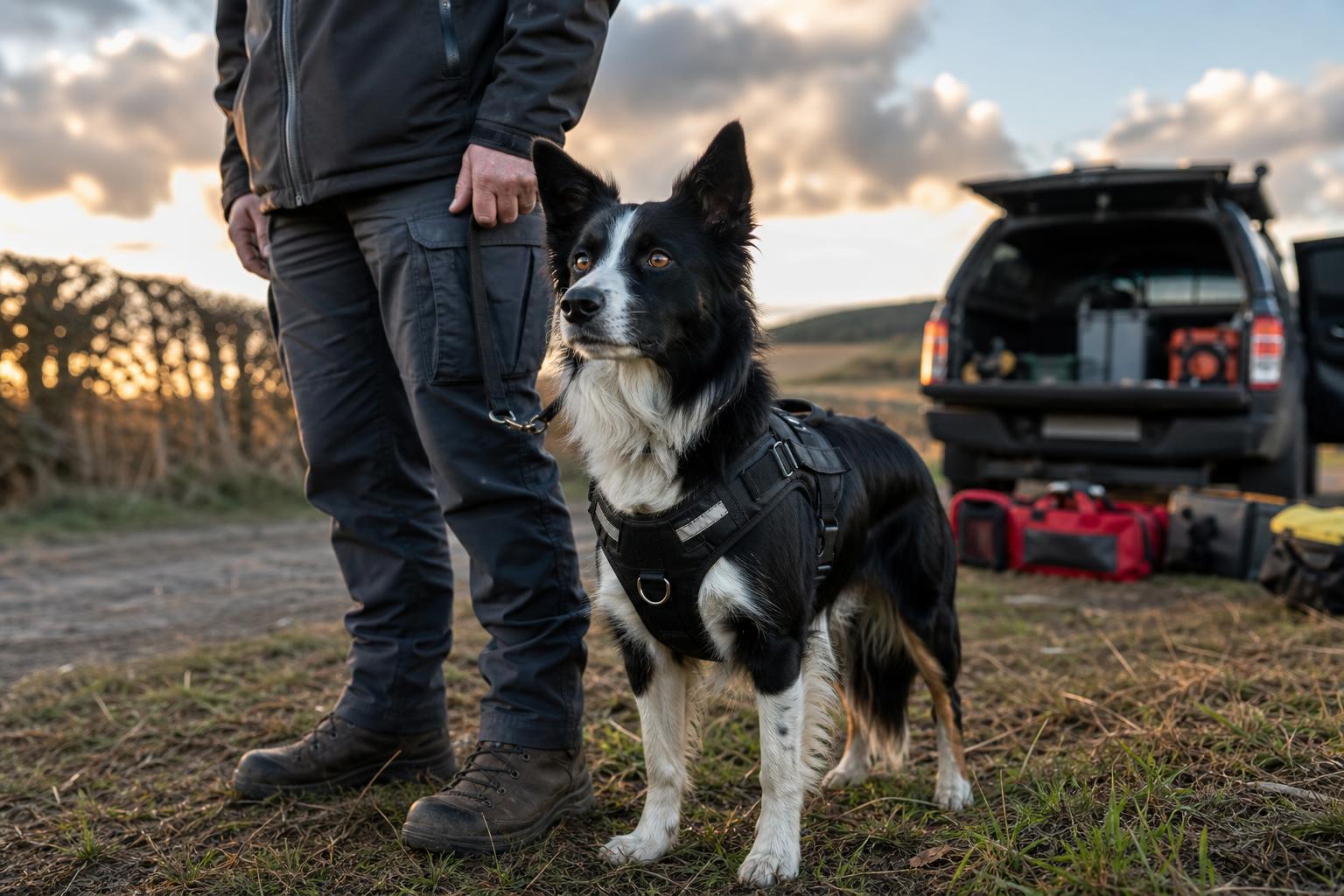
A stock dog holds a stubborn herd with its eye. A retriever breaks ice to reach a crippled mallard. A detection dog works through chaos, following a scent the people around it cannot sense. These are real jobs, and good dogs still bring something essential to them. Technology may race ahead and society may grow more crowded and complicated, but the need for a capable working dog endures. The future of working dogs reaches well beyond preserving old traditions.
Some of those traditions would be familiar to our fathers and grandfathers; other jobs would surprise them. As the work expands, training methods and public expectations are changing with it. What endures is the partnership: a well-bred, well-trained dog and a person who knows how to work alongside it. Built through patient effort and tested on the job, that trust has practical value—and a personal weight that is hard to measure.
The Enduring Value of Working Dogs
Folks who have never watched a seasoned dog work tend to think of dogs in simple categories. Pet. Companion. Guard dog. Maybe a hunting dog if they grew up around one. But working dogs have always been more than labels. They are problem-solvers with instinct, heart, and trainability woven together. They can read terrain, scent, movement, pressure, and even human emotion in ways that still humble the best of us.
That is why working dogs continue to hold their ground in agriculture, law enforcement, military service, conservation, disability support, and search and rescue. Machines can assist, but they do not replace a nose that can separate one scent from another in wind, mud, smoke, and confusion. A drone can scan a hillside, but it cannot comfort a missing child or push through thick brush with the kind of grit a dog carries naturally. A robot may gather data, but it cannot build the kind of bond that makes handler and dog move almost as one.
As society grows more urban, some people assume working dogs belong mostly to the country. I understand why they think that. A lot of us first learned to respect working dogs in fields, duck blinds, sheep lots, and pickup beds. But the modern world is creating more demand for purposeful dogs, not less. The setting may change, but the need remains.
How Modern Roles Are Expanding
One of the clearest signs of the future is the way working dogs are moving into specialized roles that would have sounded unusual a generation ago. Detection dogs are now used not only for narcotics and explosives, but also for conservation work, invasive species tracking, medical alert tasks, and even locating diseases or pests in early stages. That kind of work saves time, money, and in some cases lives.
In hospitals and therapy settings, dogs are helping people through trauma, recovery, and emotional strain. Service dogs are becoming more sophisticated in how they support individuals with physical disabilities, PTSD, diabetes, seizures, and other conditions. These are not casual pet roles dressed up with a vest. The best of these dogs are selected and developed with the same seriousness that field men have long applied to retrievers, pointing dogs, and stock dogs.
Meanwhile, traditional working roles are not disappearing. Hunting dogs still matter to bird hunters, waterfowlers, and upland folks who know the difference between stumbling through a field and truly hunting it well. Herding dogs still save labor and make operations more efficient. Protection and patrol dogs still serve where human safety depends on courage and control. What is changing is that society is beginning to see the practical value of these dogs in a wider range of environments.
Technology Will Support, Not Replace, the Dog
I hear the same question now and then: with all our modern tools, why will we still need working dogs? The answer is simple. Technology can help a good dog become better, but it does not erase what the dog brings to the table. GPS collars, health tracking, better breeding data, improved nutrition, and more refined training methods are making working dogs safer and more effective. Handlers can monitor performance, reduce injury risk, and tailor conditioning with far more precision than before.
Still, no screen can manufacture instinct. No sensor creates grit. No software can duplicate that moment when a dog casts into cover, locks onto a task, and solves the problem with a confidence that comes from breeding, training, and drive. The future likely belongs to teams that blend old-school dog sense with modern tools, not one replacing the other.
Breeding, Training, and Responsibility in the Years Ahead
If working dogs are going to thrive in the future, breeding decisions will matter more than ever. Too many people today are tempted by appearance, fashion, or trend. That is a poor way to preserve a line meant for real work. A working dog must be judged by soundness, nerve, health, instinct, and the ability to do the job at hand day after day. Those standards cannot be faked for long.
I have seen handsome dogs fold under pressure and plain ones turn into legends by noon. The future of working dogs in society will depend on breeders who remember what these animals were built for. That means protecting working traits, refusing shortcuts, and matching dogs to homes and jobs honestly. Not every high-drive dog belongs in every household, and pretending otherwise helps no one.
Training will also continue to evolve. The best trainers today are blending tradition with better timing, clearer communication, and a stronger understanding of canine behavior. Heavy hands and sloppy habits are losing favor, and that is for the good. A dog that understands its work and trusts its handler will give more in the long run than one forced through confusion. Good training has always been about consistency, fairness, and standards. Now we simply know more about how to apply those principles well.
The Public Image of Working Dogs Matters
As working dogs become more visible in public life, the people who breed, train, and handle them carry a larger burden of stewardship. Society notices how these dogs are treated. It notices whether they are sound in mind, under control, and clearly suited to the work they perform. If the public sees disciplined, healthy, fulfilled dogs doing meaningful jobs, support for working dog programs will grow. If it sees poor breeding, bad handling, and confused roles, trust will shrink fast.
That means education matters. Dog owners interested in working dogs need clear information about what these animals require. They need to understand the difference between a pet with energy and a purpose-bred dog that needs structure, outlet, and guidance. They need honest conversations about training, exercise, socialization, and ethics. The future will be strongest where knowledge is passed along without romantic nonsense.
Why Working Dogs Still Matter to Ordinary Dog Owners
Even people who never run a cow dog, hunt over a retriever, or work a detection dog have something to learn from the future of working dogs. These dogs remind us that dogs are happiest when they have purpose. That purpose may be formal work or structured activity, but the principle is the same. A dog bred to think, move, and engage with the world needs more than idle affection. It needs direction.
I have seen this lesson play out in the field and back at home. The steadiest dogs are not always the ones coddled the most. They are usually the ones given clarity. They know where they stand, what is expected, and how to succeed. That idea applies to many homes, even if the dog’s work is not tied to birds, stock, or public service. In the years ahead, more owners will likely seek breeds and training approaches that restore purpose to the human-dog relationship.
That could be one of the greatest benefits working dogs offer society at large. They show us a model of partnership built on mutual effort. The dog brings instinct and willingness. The handler brings leadership and care. Neither side works well without the other.
The Road Ahead
Out where the frost hangs low and the first light catches steam from a dog’s back, you get a clean view of what matters. A working dog does not care about trends. It cares about the job, the handler, and the chance to do what it was made to do. I believe that basic truth is exactly why working dogs will continue to matter in the decades ahead.
The future of working dogs in society will be shaped by better science, broader public roles, and higher expectations for welfare and performance. It will include ranch dogs and retrievers, patrol dogs and service dogs, conservation dogs and search teams. It will require breeders with backbone, trainers with feel, and owners willing to respect what these dogs truly are.
And if we get it right, the next generation will not inherit a watered-down version of the working dog. They will inherit something stronger: dogs with purpose, people with understanding, and partnerships that still prove, in a world full of shortcuts, that some things are best done side by side.
Some of those traditions would be familiar to our fathers and grandfathers; other jobs would surprise them. As the work expands, training methods and public expectations are changing with it. What endures is the partnership: a well-bred, well-trained dog and a person who knows how to work alongside it. Built through patient effort and tested on the job, that trust has practical value—and a personal weight that is hard to measure.
The Enduring Value of Working Dogs
Folks who have never watched a seasoned dog work tend to think of dogs in simple categories. Pet. Companion. Guard dog. Maybe a hunting dog if they grew up around one. But working dogs have always been more than labels. They are problem-solvers with instinct, heart, and trainability woven together. They can read terrain, scent, movement, pressure, and even human emotion in ways that still humble the best of us.
That is why working dogs continue to hold their ground in agriculture, law enforcement, military service, conservation, disability support, and search and rescue. Machines can assist, but they do not replace a nose that can separate one scent from another in wind, mud, smoke, and confusion. A drone can scan a hillside, but it cannot comfort a missing child or push through thick brush with the kind of grit a dog carries naturally. A robot may gather data, but it cannot build the kind of bond that makes handler and dog move almost as one.
As society grows more urban, some people assume working dogs belong mostly to the country. I understand why they think that. A lot of us first learned to respect working dogs in fields, duck blinds, sheep lots, and pickup beds. But the modern world is creating more demand for purposeful dogs, not less. The setting may change, but the need remains.
How Modern Roles Are Expanding
One of the clearest signs of the future is the way working dogs are moving into specialized roles that would have sounded unusual a generation ago. Detection dogs are now used not only for narcotics and explosives, but also for conservation work, invasive species tracking, medical alert tasks, and even locating diseases or pests in early stages. That kind of work saves time, money, and in some cases lives.
In hospitals and therapy settings, dogs are helping people through trauma, recovery, and emotional strain. Service dogs are becoming more sophisticated in how they support individuals with physical disabilities, PTSD, diabetes, seizures, and other conditions. These are not casual pet roles dressed up with a vest. The best of these dogs are selected and developed with the same seriousness that field men have long applied to retrievers, pointing dogs, and stock dogs.
Meanwhile, traditional working roles are not disappearing. Hunting dogs still matter to bird hunters, waterfowlers, and upland folks who know the difference between stumbling through a field and truly hunting it well. Herding dogs still save labor and make operations more efficient. Protection and patrol dogs still serve where human safety depends on courage and control. What is changing is that society is beginning to see the practical value of these dogs in a wider range of environments.
Technology Will Support, Not Replace, the Dog
I hear the same question now and then: with all our modern tools, why will we still need working dogs? The answer is simple. Technology can help a good dog become better, but it does not erase what the dog brings to the table. GPS collars, health tracking, better breeding data, improved nutrition, and more refined training methods are making working dogs safer and more effective. Handlers can monitor performance, reduce injury risk, and tailor conditioning with far more precision than before.
Still, no screen can manufacture instinct. No sensor creates grit. No software can duplicate that moment when a dog casts into cover, locks onto a task, and solves the problem with a confidence that comes from breeding, training, and drive. The future likely belongs to teams that blend old-school dog sense with modern tools, not one replacing the other.
Breeding, Training, and Responsibility in the Years Ahead
If working dogs are going to thrive in the future, breeding decisions will matter more than ever. Too many people today are tempted by appearance, fashion, or trend. That is a poor way to preserve a line meant for real work. A working dog must be judged by soundness, nerve, health, instinct, and the ability to do the job at hand day after day. Those standards cannot be faked for long.
I have seen handsome dogs fold under pressure and plain ones turn into legends by noon. The future of working dogs in society will depend on breeders who remember what these animals were built for. That means protecting working traits, refusing shortcuts, and matching dogs to homes and jobs honestly. Not every high-drive dog belongs in every household, and pretending otherwise helps no one.
Training will also continue to evolve. The best trainers today are blending tradition with better timing, clearer communication, and a stronger understanding of canine behavior. Heavy hands and sloppy habits are losing favor, and that is for the good. A dog that understands its work and trusts its handler will give more in the long run than one forced through confusion. Good training has always been about consistency, fairness, and standards. Now we simply know more about how to apply those principles well.
The Public Image of Working Dogs Matters
As working dogs become more visible in public life, the people who breed, train, and handle them carry a larger burden of stewardship. Society notices how these dogs are treated. It notices whether they are sound in mind, under control, and clearly suited to the work they perform. If the public sees disciplined, healthy, fulfilled dogs doing meaningful jobs, support for working dog programs will grow. If it sees poor breeding, bad handling, and confused roles, trust will shrink fast.
That means education matters. Dog owners interested in working dogs need clear information about what these animals require. They need to understand the difference between a pet with energy and a purpose-bred dog that needs structure, outlet, and guidance. They need honest conversations about training, exercise, socialization, and ethics. The future will be strongest where knowledge is passed along without romantic nonsense.
Why Working Dogs Still Matter to Ordinary Dog Owners
Even people who never run a cow dog, hunt over a retriever, or work a detection dog have something to learn from the future of working dogs. These dogs remind us that dogs are happiest when they have purpose. That purpose may be formal work or structured activity, but the principle is the same. A dog bred to think, move, and engage with the world needs more than idle affection. It needs direction.
I have seen this lesson play out in the field and back at home. The steadiest dogs are not always the ones coddled the most. They are usually the ones given clarity. They know where they stand, what is expected, and how to succeed. That idea applies to many homes, even if the dog’s work is not tied to birds, stock, or public service. In the years ahead, more owners will likely seek breeds and training approaches that restore purpose to the human-dog relationship.
That could be one of the greatest benefits working dogs offer society at large. They show us a model of partnership built on mutual effort. The dog brings instinct and willingness. The handler brings leadership and care. Neither side works well without the other.
The Road Ahead
Out where the frost hangs low and the first light catches steam from a dog’s back, you get a clean view of what matters. A working dog does not care about trends. It cares about the job, the handler, and the chance to do what it was made to do. I believe that basic truth is exactly why working dogs will continue to matter in the decades ahead.
The future of working dogs in society will be shaped by better science, broader public roles, and higher expectations for welfare and performance. It will include ranch dogs and retrievers, patrol dogs and service dogs, conservation dogs and search teams. It will require breeders with backbone, trainers with feel, and owners willing to respect what these dogs truly are.
And if we get it right, the next generation will not inherit a watered-down version of the working dog. They will inherit something stronger: dogs with purpose, people with understanding, and partnerships that still prove, in a world full of shortcuts, that some things are best done side by side.