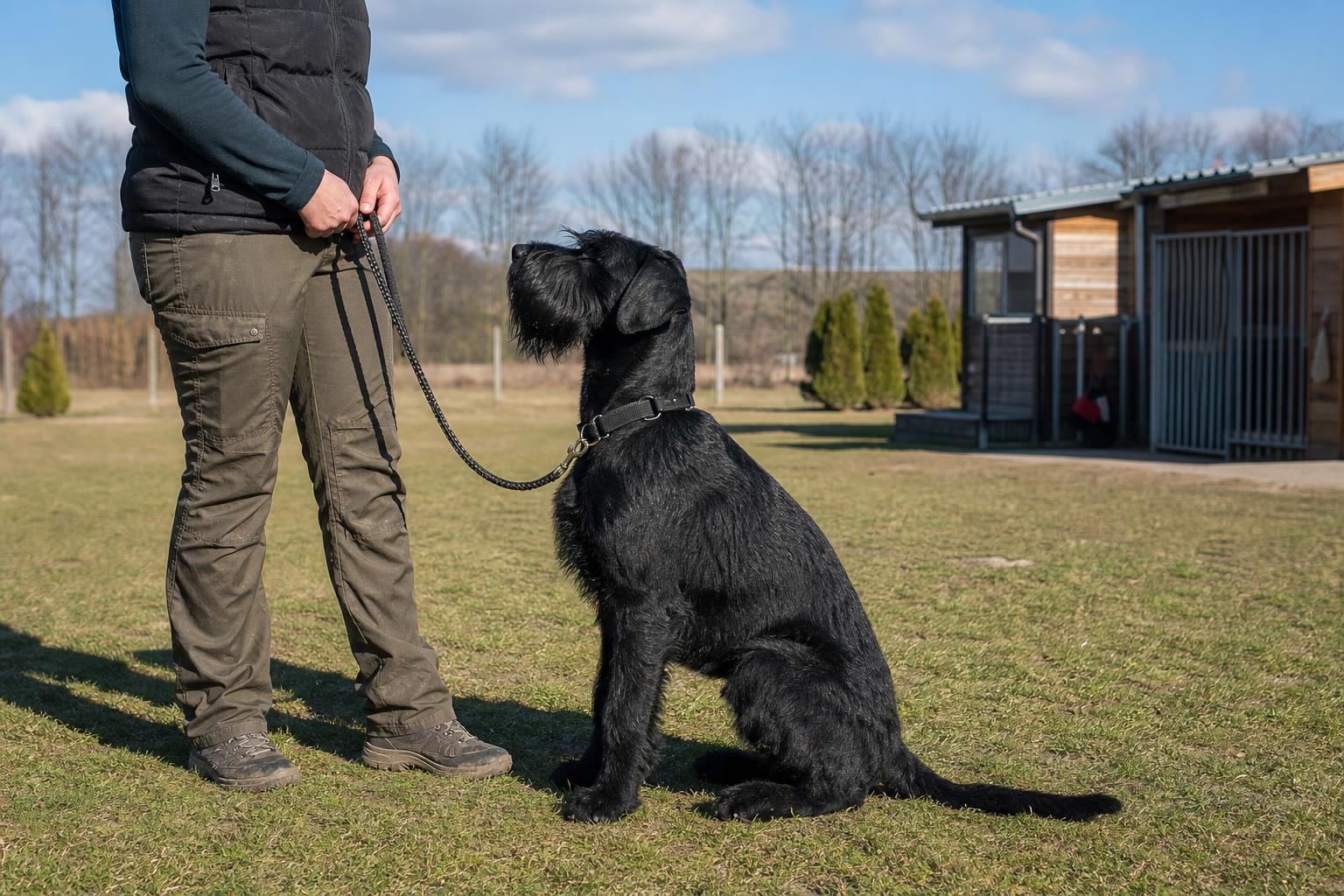
A Giant Schnauzer started dog can be an appealing option for buyers who want a powerful, intelligent, already developing working companion without beginning at eight weeks old. This breed was developed in Germany as a strong all-purpose working dog used for livestock driving, guarding, and demanding service roles. Today, many Giant Schnauzers still carry the same traits that made them useful on farms, in police work, and in structured dog sports: confidence, loyalty, stamina, trainability, and a serious protective instinct.
Because the Giant Schnauzer is not a casual, low-maintenance breed, the phrase started dog deserves careful inspection. A started Giant Schnauzer may have basic obedience, crate training, leash manners, social exposure, grooming tolerance, and early work in sport, scent, farm, protection, or family companion skills. It should not simply mean an older puppy that has become difficult to place. The right dog can save time and reveal more about adult temperament than a young puppy can. The wrong match can bring strength, suspicion, and habits that are hard to manage.
This guide is written for buyers comparing Giant Schnauzer started dogs on Working Dog Central and elsewhere. Use it to ask better questions, compare sellers fairly, and decide whether a particular dog has the training, temperament, and lifestyle fit you need.
Why Consider a Started Giant Schnauzer?
Many buyers like started dogs because some of the unknowns of puppyhood are already visible. Size, structure, confidence, coat type, prey interest, biddability, people skills, and energy level are easier to evaluate in an adolescent or young adult. With a breed as strong and clever as the Giant Schnauzer, that can matter. You can see whether the dog recovers from new situations, whether it respects a handler, and whether it has learned to settle after activity.
A started dog may also be past the most demanding baby-puppy stage. It may be sleeping through the night, comfortable in a crate, introduced to grooming, and familiar with travel. That is useful for active families, trainers, farms, handlers interested in obedience or working sports, and owners who want a large guardian-type companion with a clearer temperament picture.
The tradeoff is that you are also buying the dog’s previous handling. Good early training is valuable. Poor early handling, inconsistent rules, harsh correction, or lack of social exposure can create problems. Giant Schnauzers are intelligent and persistent. They remember what works. A buyer should evaluate both what the dog knows and how it responds when it does not get what it wants.
What Qualifies as “Started” in a Giant Schnauzer
There is no single universal definition of a started Giant Schnauzer. One seller may mean the dog has basic house manners and obedience. Another may mean early sport foundation, scent work, stock exposure, protection-sport preparation, or service-style public manners. Before you compare prices or pedigrees, ask the seller to define started in plain terms.
A credible started-dog description should include the dog’s age, daily routine, training commands, handling style, social exposure, crate and transport experience, grooming experience, and the environments where the dog has worked. For a Giant Schnauzer, useful started skills often include walking on leash without dragging the handler, accepting grooming around the beard and legs, loading into a vehicle, settling in a crate, responding to name and recall foundations, and showing self-control around visitors.
Buyers should be cautious if the only proof of training is a list of big claims. Ask to see video of the dog working in normal conditions, not only polished clips. A started dog should be able to perform basic behaviors for the current handler and show enough clarity that a new handler can continue the program. It does not need to be perfect, but it should be honestly represented.
Birds Introduced or Breed-Appropriate Game Exposure
Giant Schnauzers are working dogs, but they are not primarily described as traditional pointing or retrieving gun dogs in the way many sporting breeds are. For that reason, buyers should not assume that every Giant Schnauzer started dog has bird work, field trial preparation, or upland hunting exposure. If a listing mentions birds, game, tracking, scent work, or farm exposure, ask exactly what that means and why it is relevant to the dog’s intended job.
Breed-appropriate exposure for a Giant Schnauzer may include calm behavior around livestock, controlled interest in scent games, tracking foundations, obedience around distractions, stable behavior on rural property, or confidence in fields, woods, vehicles, kennels, and training grounds. Some individual dogs may have been introduced to birds or small game as part of a broader training program, but buyers should verify the purpose and quality of that exposure instead of assuming hunting readiness.
Useful questions include:
- Has the dog been exposed to birds, livestock, or game, and under what supervision?
- Was the exposure designed for hunting, tracking, farm manners, sport training, or general confidence?
- Does the dog show control around animals, or only excitement?
- Can the seller provide video of the dog working around the relevant distraction?
- Has the dog ever shown unsafe prey behavior toward cats, poultry, livestock, or small dogs?
For many Giant Schnauzer buyers, the most important point is not whether the dog has seen birds. It is whether the dog can think, respond to a handler, and remain manageable in stimulating environments.
Gun Introduction When Relevant
Gun introduction may or may not be relevant for a Giant Schnauzer started dog. If your goal involves hunting property, training grounds, farm shooting, or any environment where gunfire is possible, ask whether the dog has been exposed to noise in a careful, step-by-step way. Do not accept a vague statement such as “not gun shy” without details.
Proper noise introduction is gradual and paired with confidence, distance, and reward. A dog that is simply startled by loud sounds at close range has not been trained fairly. With a serious working breed, poor noise introduction can create stress, avoidance, or defensive behavior. Ask what sounds were used, how far away they were, what the dog was doing at the time, and whether the dog recovered quickly.
If gunfire is not part of your plans, focus instead on general environmental steadiness. A city or suburban Giant Schnauzer still needs to cope with delivery trucks, lawn equipment, thunderstorms, grooming dryers, traffic, children playing, and visitors at the door. The same principle applies: look for a dog that notices the world but can recover and respond to direction.
Obedience Level
Obedience is central when evaluating a started Giant Schnauzer. This is a large, athletic dog with a watchful nature and a strong mind. A started dog should have more than a few tricks. It should show everyday control that makes ownership safer and more enjoyable.
At minimum, ask about leash walking, sit, down, stay or wait, recall foundation, crate manners, place or settle work, door manners, and handling around food, toys, paws, ears, beard, and collar. A reliable off-leash recall may not be realistic in every environment, especially for an adolescent dog, but the seller should be honest about what the dog can and cannot do. A started Giant Schnauzer that has only been handled by one strong trainer may need a transition plan for a new owner.
Pay attention to the dog’s attitude during obedience. Does it work with focus and willingness, or does it appear shut down? Does it accept correction or redirection without escalating? Does it become pushy when rewards are present? Can it settle after a session? For this breed, emotional control is just as important as command vocabulary.
Evaluating Training
The best way to evaluate training is to watch the dog perform ordinary tasks in ordinary places. A clean training field is useful, but daily life tells you more. Ask for video of the Giant Schnauzer walking through a doorway calmly, passing a neutral dog at a distance, entering a crate, being brushed, riding in a vehicle, greeting a familiar person, and responding to basic commands away from home.
If possible, meet the dog in person with the seller handling it first. Then, if safe and appropriate, ask to handle the dog yourself under supervision. A started dog does not need to transfer perfectly in five minutes, but you should see whether it can take direction from someone new. Watch the seller as closely as the dog. Good sellers are transparent, patient, and specific. They can explain the dog’s strengths, limits, daily routine, and ideal home.
Red flags include evasive answers, no current video, pressure to buy quickly, claims that the dog is fully trained for every purpose, unwillingness to discuss temperament challenges, or a dog that is described as protective when it is actually reactive or poorly socialized. A Giant Schnauzer should be confident and discerning, not frantic, nervy, or uncontrollable.
Health, Grooming, and Structure Considerations
Started dogs give buyers a better look at structure and movement than young puppies do. For a Giant Schnauzer, evaluate athletic build, sound movement, body condition, and whether the dog appears comfortable during exercise. The breed is large and active, so lean conditioning and sensible growth management matter. Ask for veterinary history, vaccination records, parasite prevention history, and any health testing or family health information the breeder or seller can document.
Do not assume a specific registry, health clearance, or title applies unless the seller provides proof. If OFA results, DNA testing, working titles, sport scores, or other records are mentioned, ask for registered names, certificate numbers, or links where applicable. If those programs are not relevant to the individual dog or line, the seller should still be able to discuss health history honestly.
Grooming is also part of the evaluation. Giant Schnauzers have a harsh, wiry coat with beard, eyebrows, furnishings, and undercoat that require regular care. A started dog should have some experience with brushing, bathing, drying, nail trimming, ear handling, and standing for grooming. A large dog that resists handling can become expensive and difficult to maintain.
Matching a Started Giant Schnauzer to Your Home
A Giant Schnauzer started dog is usually best for an owner who wants to train, not just own. The breed often thrives with structure, exercise, mental work, and clear household rules. Ask yourself how much time you can realistically give to daily training walks, grooming, enrichment, and management around guests or unfamiliar dogs. A fenced yard helps, but it does not replace engagement.
Discuss children, other dogs, cats, livestock, visitors, travel, and your normal schedule with the seller. A dog that is excellent in a kennel or training home may need careful adjustment to a busy family environment. Likewise, a dog raised as a household companion may not be ready for demanding sport or property-guardian expectations. The right match depends on temperament and preparation, not just breed name.
Questions to Ask Before You Buy
- Why is this Giant Schnauzer being sold as a started dog?
- What commands does the dog know, and in what environments?
- How does the dog behave with strangers, children, other dogs, and small animals?
- What has the dog been exposed to: grooming, travel, kennels, livestock, birds, noise, crowds, or training grounds?
- What training methods have been used?
- What records are available for veterinary care, registration if applicable, health testing, or titles?
- What does the seller consider the dog’s biggest weakness?
- Is there a written purchase agreement, transition support, or return policy?
Buyer-Focused Conclusion
A well-started Giant Schnauzer can be a remarkable partner: strong, loyal, trainable, watchful, and ready for meaningful work with the right owner. The key is to look beyond the label. Started should mean documented preparation, honest temperament, useful obedience, appropriate exposure, and a realistic plan for transfer into your home.
Before you buy, verify every claim, watch the dog work, ask direct questions, and be honest about your own experience level. If the dog’s training, health information, temperament, and daily needs all match your goals, a Giant Schnauzer started dog can offer a valuable head start toward a capable working companion and devoted family guardian.
Explore Giant Schnauzer on Working Dog Central
View the Giant Schnauzer breed profile or browse Giant Schnauzer listings.


