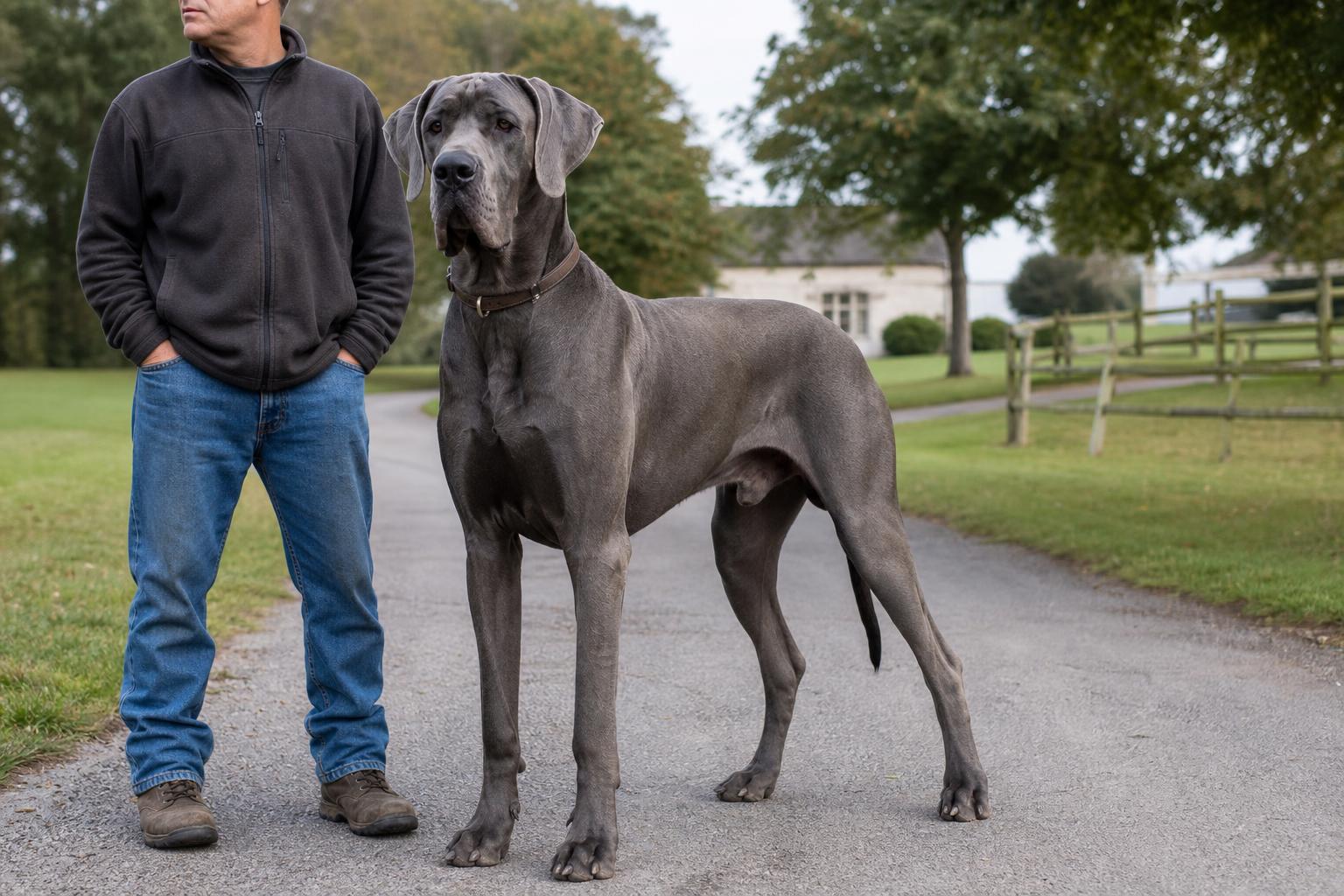
The Great Dane is one of the most recognizable giant breeds in the dog world: tall, elegant, powerful, and famously affectionate when well bred and properly raised. Often called the gentle giant, the Great Dane combines an imposing frame with a people-focused temperament that can make it a calm house companion for the right owner. This Great Dane breed guide is written for buyers, families, trainers, and working-dog enthusiasts who want a realistic look at what the breed is like to live with.
Although Working Dog Central often serves hunters and sporting-dog buyers, the Great Dane should be understood in its own historical context. The breed was developed in Germany from large mastiff-type dogs used for boar hunting and estate guarding. Modern Great Danes are not typically purchased as field gun dogs, but their history still matters because it explains their courage, size, strength, and steady presence. Today, the breed is most often valued as a loyal companion and impressive family dog.
Great Dane History and Original Purpose
The Great Dane is not Danish in origin despite the name. The breed was refined in Germany, where it was known as the Deutsche Dogge, or German Mastiff. Its ancestors were large, strong dogs capable of holding dangerous game such as wild boar. That work required power, bravery, a stable temperament, and enough athleticism to move with purpose rather than just mass.
Over time, the Great Dane shifted from a rough big-game hunting dog into a more polished companion and estate dog. German breeders emphasized size, dignity, elegance, and steadier temperament. The result is the modern Great Dane: still substantial and protective-looking, but generally bred to live closely with people. Buyers should appreciate that history without assuming every individual Great Dane has modern hunting utility. If a seller makes performance claims, ask for specific evidence and context.
Great Dane Temperament
A good Great Dane is friendly, affectionate, and steady. Many bond closely with their people and prefer to be indoors near the family rather than kept apart in a kennel or yard. They can be playful, sensitive, and surprisingly gentle around children when raised with structure. Their size, however, means that ordinary puppy behavior can become a serious management issue. A young Great Dane that jumps, paws, leans, or pulls on leash can overwhelm an adult without meaning any harm.
Socialization is not optional. Great Dane puppies should be introduced thoughtfully to new surfaces, friendly strangers, calm dogs, vehicle rides, veterinary handling, grooming routines, and everyday household activity. The goal is not to make the dog frantic or overly social. The goal is calm confidence. Nervousness in a giant breed is difficult to manage, so buyers should look for breeders who raise puppies in a stable environment and can describe the temperament of both parents.
Size, Build, and Appearance of the Great Dane
The Great Dane is a true giant breed. Males commonly stand around 30 to 34 inches at the shoulder and may weigh roughly 110 to 175 pounds, with females usually somewhat smaller. Individuals vary, but buyers should plan for a very large dog even if the puppy looks manageable at eight weeks old. The breed should be tall, muscular, deep-chested, and elegant rather than clumsy or coarse.
The coat is short and sleek, which keeps grooming simple compared with long-coated breeds. Great Danes may be seen in colors such as fawn, brindle, blue, black, harlequin, and other patterns recognized by different standards or registries. Buyers who care about show eligibility should verify current registry standards directly instead of relying on a seller's casual description.
Living With a Great Dane
Great Danes often do well as house dogs because they enjoy lounging near their people. They do not usually need the constant high-speed work expected of many smaller sporting breeds, but they do need daily movement, mental engagement, and consistent manners. A fenced area can help, but a Great Dane still needs leash skills, calm public behavior, and a predictable routine.
Practical ownership is a major part of this breed. Everything costs more: food, medications, crates, bedding, collars, vehicle space, boarding, and veterinary procedures. Stairs, slick floors, and cramped vehicles can become real issues for a growing or aging giant dog. Owners should also think ahead about emergencies. If a full-grown Great Dane is injured, getting the dog into a vehicle may require planning and help.
Training Priorities for Great Dane Owners
Great Danes are often sensitive dogs. Many respond best to patient, reward-based training with clear boundaries and calm repetition. Heavy-handed correction can create confusion or avoidance, while permissive handling can allow bad habits to become physically dangerous. The best approach is steady, early training that teaches the dog how to live politely in a human household.
Core skills to teach early
- Loose-leash walking without pulling or lunging.
- Polite greetings without jumping on people.
- Settle on a bed or mat during meals, visitors, and quiet time.
- Comfort with nail trimming, ear checks, bathing, and veterinary handling.
- Reliable response to name, recall foundations, sit, down, stay, and leave it.
Because a Great Dane matures into a very large animal, training should begin before size becomes a problem. Puppy classes, controlled social outings, and short daily practice sessions can make a meaningful difference. Adolescence may bring testing, clumsiness, and bursts of energy, so owners should stay consistent rather than assuming the dog is being stubborn.
Exercise and Activity Needs
The Great Dane needs regular exercise, but not the repetitive high-impact work that can stress a growing giant breed. Daily walks, calm exploration, gentle play, and mental enrichment are usually more appropriate than forced running or excessive jumping, especially for puppies and adolescents. Owners should discuss age-appropriate exercise with a veterinarian familiar with giant breeds.
For buyers coming from gun dog or field-trial backgrounds, it is important to avoid comparing the Great Dane to pointing breeds, retrievers, or spaniels. The breed's original work involved power and courage in a different historical role, not modern upland or waterfowl work. If someone markets a Great Dane as a hunting or performance prospect, ask exactly what work the dog has done, what records exist, and whether those claims are relevant to your intended use.
Great Dane Health Considerations
Great Danes require serious health planning. As a deep-chested giant breed, they are commonly associated with risk for gastric dilatation-volvulus, often called GDV or bloat. This is a life-threatening emergency in which the stomach can distend and twist. Owners should learn warning signs, know the location of the nearest emergency veterinary hospital, and ask their veterinarian about prevention and response plans. Some veterinarians may discuss preventive gastropexy for at-risk dogs, but that decision belongs between the owner and veterinarian.
Joint health, heart health, growth management, and overall longevity are also important concerns. The breed's lifespan is typically shorter than that of many smaller dogs, often around 7 to 10 years. Keeping a Great Dane lean is one of the most practical things an owner can do. Excess weight adds stress to joints and can make daily management harder.
Questions to ask breeders about health
- What health screening has been performed on the sire and dam?
- Are results available for review through the relevant registry, veterinary specialist, or testing organization?
- What is known about longevity in the pedigree?
- Have close relatives experienced heart disease, orthopedic problems, GDV, or temperament concerns?
- What feeding and growth-management guidance does the breeder provide?
Registries, OFA results, DNA testing, and formal records may or may not apply in the same way for every breeder, line, or country. Buyers should not assume they exist simply because a listing sounds professional. Ask for documentation, verify it through the issuing source when possible, and involve a veterinarian if you need help interpreting results.
Grooming and Daily Care
The Great Dane's short coat is easy to maintain. Weekly brushing, occasional bathing, nail trimming, ear checks, and dental care are the basic routine. The harder part is not coat care; it is managing a giant body. Supportive bedding helps protect elbows and joints. Non-slip flooring can reduce falls. A properly fitted collar or harness, strong leash, and crate or travel setup sized for a giant breed are worth planning before the dog comes home.
Feeding should be approached carefully. Giant-breed puppies need appropriate nutrition and controlled growth, not maximum weight gain. Owners should follow veterinary guidance and avoid pushing a puppy to grow faster or heavier than is healthy. Adult Great Danes should be kept in lean condition with visible body shape and easy movement.
Is a Great Dane the Right Breed for You?
The Great Dane can be a wonderful choice for a home that wants a large, affectionate companion and is ready for the logistics. The breed is usually best for owners who value calm companionship, indoor family life, and structured training. It may not be ideal for someone who wants a compact travel dog, a low-cost breed to maintain, or a hard-driving modern bird dog.
Good Great Dane homes usually offer
- Room indoors for a giant dog to rest comfortably.
- Time for daily walks, training, and social interaction.
- A realistic budget for food, equipment, and veterinary care.
- Commitment to early manners and steady socialization.
- Awareness of emergency risks such as GDV.
Families with children should remember that even a gentle Great Dane can accidentally knock over a small child. Supervision, boundaries, and training matter. The same applies to homes with smaller pets. Many Great Danes live peacefully with other animals, but introductions should be managed and temperament should be evaluated honestly.
Buying a Great Dane: Practical Considerations
When looking for a Great Dane puppy or adult, start with temperament, health, and breeder transparency. A responsible seller should be willing to discuss the breed's challenges, not just its impressive size or beauty. Be cautious of listings that promise rare colors, exaggerated size, guaranteed health, or instant protection ability without evidence. Bigger is not automatically better, and extreme size can create additional health and mobility concerns.
Ask to see the environment where puppies are raised when possible, meet the dam if available, and review any health documentation the breeder provides. If registration is important to you, verify the registry, the exact status of the litter or dog, and what paperwork you will receive. Do not assume AKC registration, show eligibility, or breeding rights unless the seller provides clear documentation and you confirm the details yourself.
Buyer-Focused Conclusion
The Great Dane is a remarkable breed for the right owner: dignified, affectionate, visually unforgettable, and often deeply devoted to family life. The same traits that make the breed special also demand preparation. Size affects training, cost, transportation, health care, and daily routines. If you choose a Great Dane, choose with your eyes open. Look for stable temperament, honest health information, sensible structure, and a breeder or seller who helps you understand both the rewards and responsibilities of living with a true giant.
Explore Great Dane on Working Dog Central
View the Great Dane breed profile or browse Great Dane listings.


