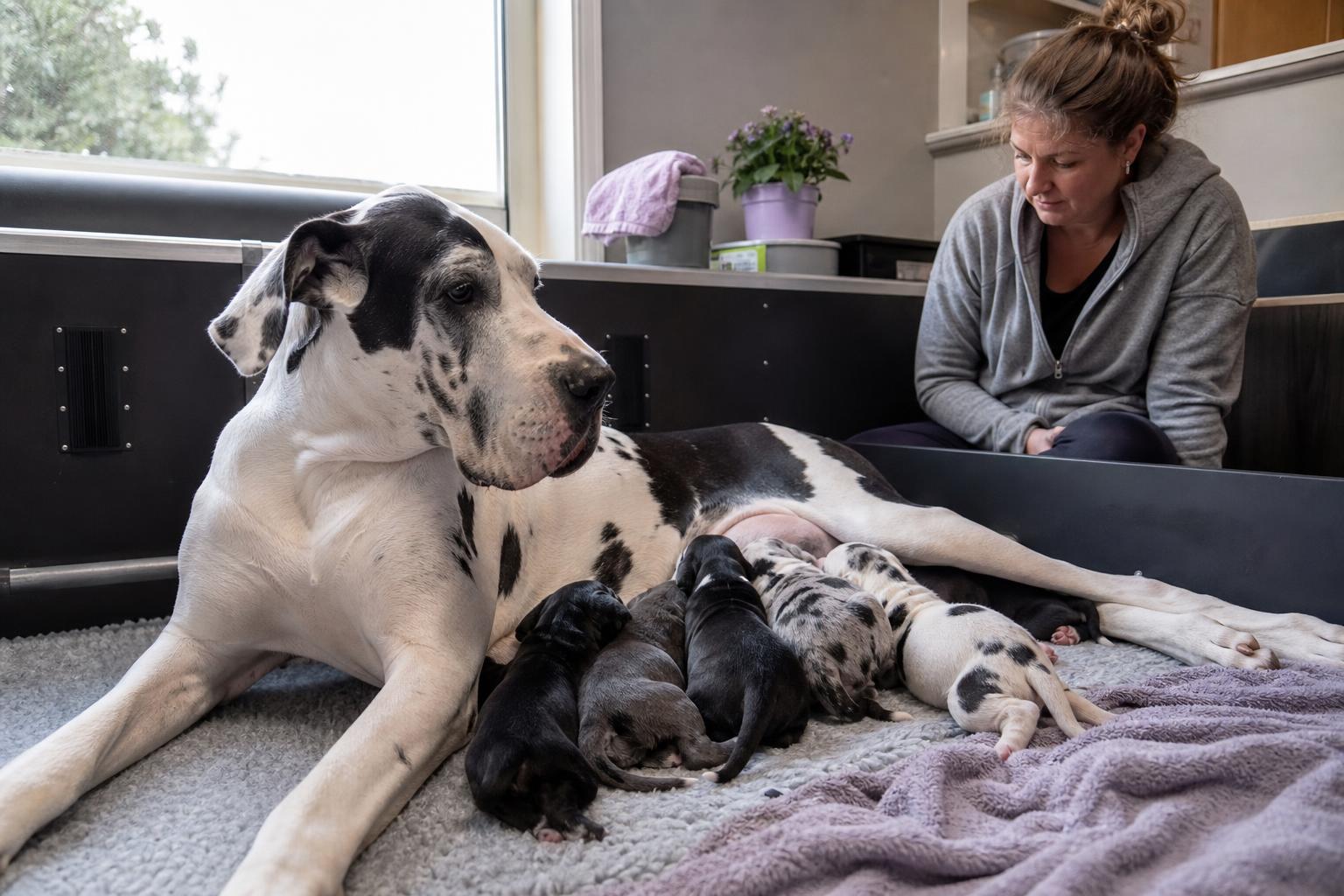
A Great Dane litter announcement should do more than show oversized paws and a sweet photo of puppies. For a giant breed with a gentle temperament, substantial care needs, and known health considerations, the announcement is the buyer’s first chance to evaluate whether the breeder is organized, transparent, and realistic about the breed. A good listing helps you understand the sire and dam, the purpose of the breeding, the expected temperament, the timing of the litter, and what steps the breeder takes to place puppies responsibly.
Great Danes are often described as gentle giants, but that does not mean every litter will be the right match for every home. Their size changes everything: training, food costs, transport, emergency planning, flooring, bedding, and long-term veterinary care. A strong announcement should acknowledge those realities rather than treating Great Dane ownership as simply buying a large family pet.
What a Great Dane Litter Announcement Should Include
Start with the basics. A useful Great Dane litter announcement should identify the breed, expected or actual whelping date, approximate go-home timing, location, contact method, and whether puppies are already born or planned. It should also identify the sire and dam by registered names when relevant, call names, ages, colors, and basic temperament notes. If the announcement is vague on who the parents are, when the litter is expected, or what the breeder is trying to produce, slow down and ask more questions.
- Clear sire and dam information, not just “beautiful parents.”
- Expected birth date and realistic puppy pickup timing.
- Explanation of how puppies are raised and socialized.
- Health testing or veterinary care information that can be verified.
- Buyer expectations, contract terms, and support after placement.
Evaluating the Sire and Dam
The parents matter because they are your best window into the litter’s likely size, temperament, structure, and household suitability. With Great Danes, look for calm, stable adult dogs with good manners. A massive dog that cannot walk politely on leash, tolerate handling, or settle around people may pass along challenges that become difficult for a family to manage. Ask the breeder what each parent is like in normal life: around children, visitors, other dogs, veterinary handling, car rides, and public settings.
Photos can help, but they are not proof of quality. A responsible breeder should be willing to discuss the strengths and weaknesses of both parents. No dog is perfect. A mature answer might sound like, “The dam is very affectionate and steady, while the sire brings more bone and confidence; we are watching toplines and growth rate closely.” Be cautious when every description is generic praise and no tradeoffs are acknowledged.
Pedigree and Breed Purpose
The Great Dane has a history as a German hunting and estate-guardian type dog, but today most Great Danes are companions first. That matters when reading a litter announcement on a site used by sporting dog and working dog buyers. You should not assume every Great Dane litter is intended for field work, hunt testing, or modern gun dog use. Instead, ask what the pedigree is known for and how the breeder evaluates working ability, temperament, and structure in this breed.
If a listing mentions titles, registry information, or performance records, ask for specifics and verify them through the appropriate organization. AKC registration may be relevant for many Great Dane buyers, but the announcement should not be treated as proof by itself. Confirm names, registration numbers, pedigree details, and any show, obedience, therapy, or working achievements directly rather than relying only on marketing language.
Health Clearances and Veterinary Transparency
Great Danes are a giant, deep-chested breed, and buyers should take health discussions seriously. A good litter announcement should invite questions about the health of the parents and the breeder’s approach to giant-breed management. It is fair to ask about hip and joint evaluations, heart screening, thyroid or eye checks if represented, longevity in the family, and any known issues in related dogs. Do not accept broad claims like “vet checked” or “healthy lines” as a substitute for documentation.
OFA, DNA testing, and other screening tools may be relevant depending on the breeder’s program and the claim being made. The key is verification. Ask what tests were performed, when they were completed, which dog they apply to, and where the results can be confirmed. If a breeder says health clearances are complete but cannot provide names, dates, or reports, treat that as a reason to keep looking.
Temperament Expectations for Great Dane Puppies
The announcement should describe the temperament the breeder expects and how that expectation is being shaped. Great Danes are generally valued for affectionate, steady companionship, but they still need early socialization and patient training. Because adult size is so significant, puppy buyers should prioritize stable nerves, polite handling, and early exposure to normal household life.
Ask how puppies are raised during the first eight weeks or longer. Are they exposed to household noises, gentle handling, different surfaces, visitors, age-appropriate play, nail trims, and crate introductions? A breeder does not need to promise a fully trained puppy, but they should be able to explain how they prepare puppies for family life. For a Great Dane, confidence without pushiness is a valuable goal.
Deposits, Timing, and Buyer Commitments
Deposits should be handled clearly. Before sending money, understand whether the deposit is refundable, how puppy selection works, what happens if the litter has fewer puppies than expected, and whether the breeder can move your deposit to a future litter. Avoid pressure tactics that demand immediate payment before you have reviewed the contract, spoken with the breeder, and verified the details of the litter.
Timing also matters. Puppies should not be rushed out the door because a buyer is impatient or a breeder wants space back. Ask when puppies are expected to leave, what veterinary care they receive before pickup, and what records come with them. Great Dane puppies grow quickly but remain mentally immature for a long time, so the breeder should emphasize ongoing training, careful exercise, and lean growth rather than simply advertising size.
Red Flags in Great Dane Litter Announcements
- No clear identification of the sire and dam.
- Heavy emphasis on rare color, size, or “giant” claims without health context.
- No willingness to discuss health testing or veterinary records.
- Pressure to send a deposit before questions are answered.
- Promises about exact adult size, temperament, or future breeding value.
- Little concern about whether your home is prepared for a giant breed.
One of the biggest red flags is a breeder who sells the dream but avoids the responsibilities. A Great Dane is not a casual purchase. The right breeder will want to know whether you understand the breed’s size, lifespan considerations, exercise limits while growing, and emergency planning for conditions such as bloat. They should welcome informed questions.
Questions to Ask Before Joining a Waitlist
- What are the registered names and ages of the sire and dam?
- What health testing has been completed, and how can I verify it?
- What temperament traits are you expecting from this pairing?
- How are puppies socialized before they go home?
- What does your contract require from the buyer?
- What support do you provide after placement?
- How do you match puppies to homes?
Buyer-Focused Conclusion
A strong Great Dane litter announcement should give you confidence, not just excitement. Look for clear parent information, realistic discussion of temperament and size, verifiable health details, fair deposit terms, and a breeder who asks thoughtful questions about your home. When the announcement is transparent and the breeder is willing to document claims, you are in a much better position to choose a Great Dane puppy that can grow into the steady, affectionate companion this breed is known to be.
Explore Great Dane on Working Dog Central
View the Great Dane breed profile or browse Great Dane listings.


