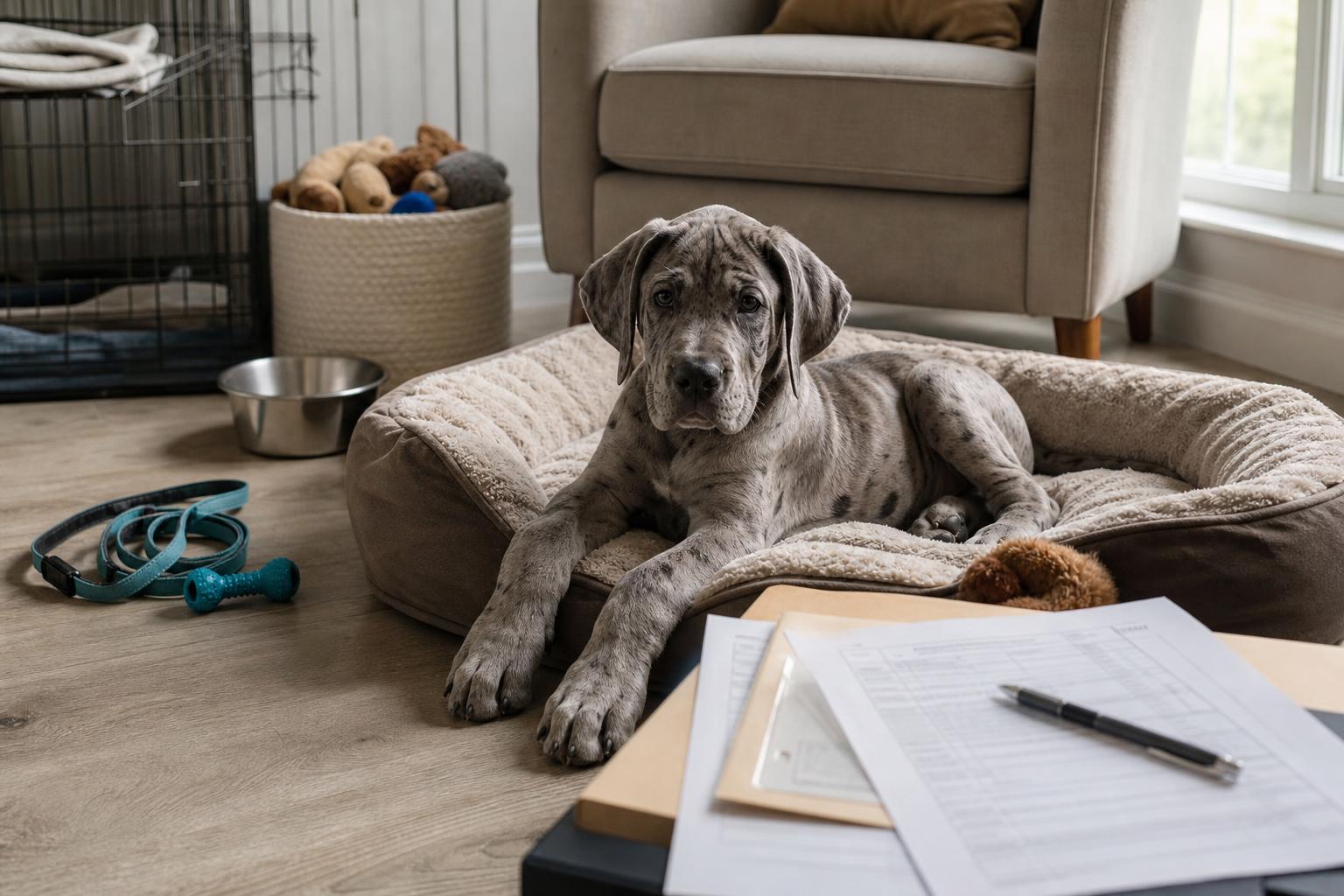
Looking at Great Dane puppies for sale is exciting, but this is a breed where preparation matters as much as attraction. The Great Dane is famous for enormous size, a gentle disposition, and a noble, easygoing presence. Historically developed in Germany from large hunting and estate-guardian dogs, the modern Great Dane is most often a close family companion. A good puppy can grow into a calm, affectionate dog, but even minor puppy habits become major issues when the adult may weigh well over one hundred pounds.
This guide is written for buyers who want to evaluate listings with clear eyes. Use the breeder's information, your veterinarian's advice, and the individual puppy's condition as your final decision points. Do not rely on a pretty photo or a dramatic description alone. A responsible seller should be willing to discuss temperament, health priorities, socialization, feeding, registration if applicable, and what support they provide after the puppy goes home.
Choosing a breeder
When choosing a breeder for a Great Dane puppy, start with temperament and health priorities. Great Danes are often called gentle giants, but that steadiness does not happen by accident. Ask how the sire and dam behave with visitors, children, other dogs, handling, nail trims, car rides, and new environments. A huge dog that is nervous, reactive, or poorly socialized can be difficult for even experienced owners to manage.
Good breeders should know the breed's practical realities: giant-breed growth, careful exercise while young, body condition, flooring traction, bloat awareness, and the importance of manners. They should not oversell the breed as effortless. Instead, they should help you decide whether your home, schedule, budget, vehicle, and long-term plans fit a very large indoor companion.
- Ask why the litter was bred and what traits the breeder hoped to preserve or improve.
- Meet the dam when possible and observe her condition and temperament.
- Ask what early socialization the puppies receive before placement.
- Look for clean housing, appropriate weight, bright eyes, and confident but not frantic puppies.
- Be cautious of sellers who pressure you to buy immediately or avoid basic questions.
Because Great Dane puppies grow quickly, early management matters. A breeder should explain what the puppies are eating, how often they are fed, what activity is appropriate, and how they recommend transitioning to your veterinarian's plan. They should also be realistic about the breed's shorter average lifespan compared with many smaller dogs and the higher costs that come with giant-breed ownership.
AKC registration
The American Kennel Club has long recognized the Great Dane, but buyers should still verify registration details instead of assuming every puppy in a listing is eligible. If AKC registration matters to you, ask whether the litter is registered or registerable, whether papers are full or limited, and whether the names and registration numbers of the sire and dam can be provided. Registration is not a health guarantee, a training guarantee, or proof of quality by itself; it is one piece of documentation to review alongside the dog's condition, pedigree, breeder practices, and veterinary records.
Limited registration is common for companion puppies and usually means the dog is AKC registered but offspring are not eligible for AKC registration. Full registration may be reserved for breeding or show prospects and should come with a deeper conversation about ethics, structure, health testing, and long-term responsibility. If a seller uses vague phrases like “papered,” “champion blood,” or “registered lines,” ask for specifics in writing.
- Confirm the exact registry and do not confuse AKC with unrelated registries.
- Match paperwork to the puppy, litter, sire, and dam.
- Understand any spay/neuter, breeding, or transfer terms before paying a deposit.
- Keep copies of all registration documents and the purchase agreement.
If registration is not your main priority, you should still expect honesty. A non-registered puppy can be a loved companion, but the seller should state that clearly and price, represent, and contract the puppy accordingly.
Vaccinations
Vaccination records should be clear, dated, and tied to the individual puppy or litter. Most puppies require a series of core vaccinations over time, so a first shot does not mean the puppy is fully protected. Ask what vaccines have been given, who administered them, the product used if available, and when the next veterinary appointment is due. Your veterinarian should set the ongoing schedule based on age, local disease risk, lifestyle, and current medical guidance.
Do not accept broad medical claims without documentation. A seller should not promise that a puppy will never develop joint, heart, stomach, or growth-related issues. For Great Danes, it is reasonable to discuss the breed's giant size, deep chest, and owner concerns such as bloat awareness, but your veterinarian is the right person to advise on prevention, screening, diet, and emergency planning.
- Request a written vaccination and deworming record.
- Schedule a wellness exam soon after pickup according to your purchase agreement.
- Ask your vet about parasite prevention, feeding, growth rate, and safe activity.
- Keep your puppy away from high-risk public dog areas until your vet says exposure is appropriate.
A responsible breeder will usually welcome veterinary follow-up. They want the puppy to thrive and should be willing to answer practical questions during the transition.
Bringing puppy home
Bringing a Great Dane puppy home requires planning for the dog you have now and the adult size that is coming fast. Set up a quiet sleeping area, safe crate or confinement space, non-slip walking paths, and a feeding station that is easy to clean. Because Great Danes are large, deep-chested dogs, ask your veterinarian and breeder about feeding routines, exercise timing, and bloat awareness rather than copying advice meant for small breeds.
Training should begin immediately, but keep it kind and simple. Teach name response, leash manners, calm greetings, crate comfort, handling, and settling on a bed. Avoid encouraging jumping, rough mouthing, counter-surfing, or leash pulling, even when the puppy is cute. These behaviors become much harder when the dog is physically powerful.
- Use short, positive training sessions several times per day.
- Introduce visitors, surfaces, sounds, car rides, and gentle handling at the puppy's pace.
- Protect growing joints by avoiding repetitive high-impact exercise and slippery floors.
- Budget for giant-sized crates, beds, collars, food, veterinary care, and transportation.
- Know the location of a 24-hour emergency clinic before you need one.
The first week should be calm and predictable. Let the puppy bond with the household before flooding it with guests or public outings. A steady start helps build the confident, sociable temperament that makes the Great Dane such a memorable companion.
Typical puppy prices
Typical puppy prices for Great Dane puppies vary widely by region, breeder reputation, pedigree, registration status, veterinary care, color, demand, and what is included in the sale. Avoid treating any single number online as a guarantee. A higher price does not automatically mean a better puppy, and a bargain price can become expensive if the seller skipped basic care, documentation, or support.
Instead of shopping by price alone, compare value. What does the purchase include? Are there veterinary records, registration documents if applicable, a written contract, feeding instructions, return or rehoming terms, and breeder support? Are the puppies raised around normal household activity, handled kindly, and matched thoughtfully to buyers? With a giant breed, responsible preparation is worth more than a flashy listing.
- Be wary of unusually low prices paired with urgency, vague records, or refusal to answer questions.
- Be wary of inflated prices justified only by color, size claims, or trendy wording.
- Ask what deposit terms are refundable or transferable before sending money.
- Plan beyond purchase price for food, preventive care, emergency care, training, and equipment.
For many buyers, the best choice is not the first available puppy but the breeder who is transparent, patient, and realistic about life with a Great Dane.
Final thoughts for Great Dane puppy buyers
A well-bred, well-raised Great Dane can be affectionate, dignified, and deeply loyal, but the breed's size makes careful buying essential. Verify paperwork, read contracts, ask practical questions, and involve your veterinarian early. Choose the puppy and breeder that fit your real life, not just the photo that catches your eye. The right preparation gives your Great Dane puppy the best chance to grow into the steady gentle giant people admire.
Explore Great Dane on Working Dog Central
View the Great Dane breed profile or browse Great Dane listings.


