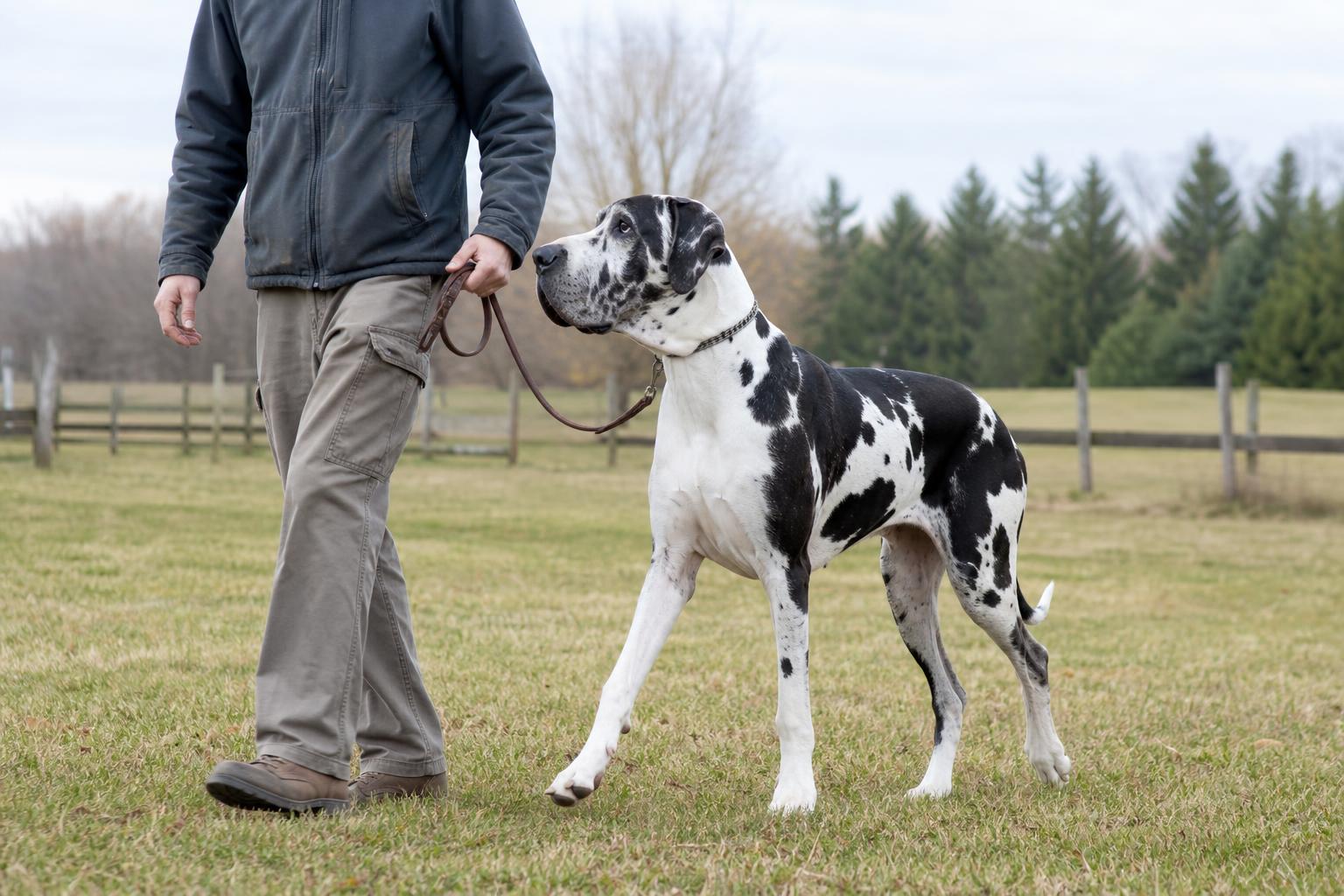
A Great Dane started dog is not the typical first picture that comes to mind when buyers search for gun dogs, but the breed does have a working history. Great Danes were developed from large hunting and estate-guardian dogs, and their background includes pursuing dangerous big game such as wild boar. Today, most Great Danes are chosen as companions rather than field dogs, so a buyer should approach any started Great Dane listing with practical expectations and careful verification.
This guide is for buyers comparing Great Dane started dogs on Working Dog Central and trying to understand what “started” should mean for this giant, people-oriented breed. The goal is not to turn every Great Dane into a bird dog. It is to help you evaluate training, temperament, handling, breed-appropriate exposure, and whether the dog’s size, maturity, and foundation fit your home, hunting goals, or working-dog plans.
What qualifies as “started” in a Great Dane
For a Great Dane, “started” should mean the dog has more than basic potential but is not being sold as a finished working dog. At minimum, the dog should show consistent social stability, leash manners, crate or kennel comfort, reliable handling around people, and an introduction to the kind of work being advertised. Because Great Danes are giant dogs, manners are not optional. A sweet dog that jumps, drags a handler, or panics in new places can become difficult very quickly simply because of size.
A started Great Dane may have been introduced to controlled tracking games, large-game scent, estate or property routines, obedience foundations, or outdoor conditioning. If the seller markets the dog for hunting, ask exactly what that means. Was the dog exposed to scent trails, blood tracking, boar scent, farm environments, vehicles, other dogs, or controlled field scenarios? A started label should describe real exposure and repeatable behavior, not just ancestry or enthusiasm.
- Ask the seller to define “started” in writing.
- Request recent video of the dog working, walking on lead, loading, settling, and responding to cues.
- Look for calm confidence rather than raw size or intensity.
- Confirm the dog’s age, growth stage, and conditioning history.
Birds introduced or breed-appropriate game exposure
Great Danes are not generally purchased as classic upland bird dogs, retrievers, or pointing dogs. If a listing claims bird exposure, treat it as something to verify rather than assume. Some individual Great Danes may be comfortable around birds, livestock, kennels, or field environments, but that does not automatically make them suitable for bird hunting. The more relevant question is whether the dog has had breed-appropriate exposure that matches the work being described.
For this breed, useful exposure may include large-game scent, tracking-style exercises, calm movement through fields or woods, steady behavior around livestock or farm commotion, and confidence around vehicles, gates, strange footing, and unfamiliar people. If birds are mentioned, ask whether the dog was merely walked past birds, allowed to chase, or trained to remain controlled around them. Chasing poultry or wildlife is not the same as disciplined game exposure.
Questions to ask about Great Dane game exposure
- What species or scent has the dog been exposed to?
- Was exposure controlled, repeated, and documented?
- Did the dog show drive, curiosity, steadiness, or avoidance?
- Can the dog work calmly on lead or long line in a new location?
- Is the exposure appropriate for a giant breed with moderate exercise needs?
Good sellers will be specific. Vague phrases like “great hunting blood,” “ready for anything,” or “loves birds” are not enough. With a Great Dane, temperament and manageability often matter more than flashy claims.
Gun introduction when relevant
Gun introduction may or may not be relevant to a Great Dane started dog. If the dog is being sold for hunting, tracking, or outdoor work around hunters, then the buyer should verify whether sound conditioning has been done carefully. Do not assume a dog is gun-safe because it is large, bold-looking, or descended from old hunting stock. Noise sensitivity can occur in any breed, and poor introduction can create lasting problems.
A responsible gun introduction is gradual and paired with positive experiences at a distance the dog can handle. The seller should be able to explain the process: what sounds were used, how close the dog was, whether birds or game scent were involved, and how the dog responded. If the Great Dane has not been introduced to gunfire, that is not automatically a deal-breaker for a companion or estate-style prospect, but it matters if you expect the dog to accompany hunters.
How to verify gun exposure
- Ask for video, not just a verbal claim.
- Watch for relaxed body language after the sound: recovery matters.
- Ask whether exposure involved blanks, shotguns at distance, or only household noises.
- Avoid dogs that were “tested” by sudden close-range noise.
If gun work is not appropriate for the dog’s role, the seller should say so plainly. Honest limits are a positive sign.
Obedience level in a started Great Dane
Obedience is one of the most important parts of buying a started Great Dane. The breed is affectionate and often calm indoors, but an adolescent or adult Great Dane can weigh well over 100 pounds. A started dog should have practical obedience that works outside the seller’s familiar yard. You are looking for everyday control: walking without pulling, coming when called in low to moderate distraction, settling quietly, waiting at doors or gates, loading into a vehicle, and accepting handling.
Because Great Danes tend to be sensitive, training should be patient and fair. Harsh corrections, intimidation, or equipment-dependent control can mask weak training. Ask the seller what commands the dog knows, what language or whistle cues are used, and whether the dog has been trained with food, toys, praise, leash pressure, e-collar, or other tools. The goal is not to judge every method automatically, but to understand what the dog actually understands and how you can continue the work consistently.
Core obedience to evaluate
- Loose-leash walking beside a normal handler.
- Sit, down, stay, or place with reasonable duration.
- Recall in a fenced or controlled area.
- Polite greetings without jumping or crowding.
- Crate, kennel, or quiet confinement behavior.
- Calm behavior around other dogs when appropriate.
For a Great Dane, a calm “off switch” is valuable. A dog that can relax in the house, ride quietly, and recover from excitement may be a better buy than one advertised with exaggerated drive.
Evaluating training before you buy
Evaluating a started Great Dane should include more than a polished sales video. Ask to see the dog handled in several ordinary situations. A strong evaluation includes leash work, greetings, loading, basic commands, outdoor exposure, and any claimed working task. If possible, watch the dog with a handler who is not the primary trainer. That can reveal whether the dog understands cues or is responding only to one familiar person.
Match the evaluation to your intended use. A family wanting a stable companion with outdoor manners should prioritize temperament, socialization, health planning, and household skills. A buyer looking for tracking or hunting-adjacent work should ask for proof of scent exposure, field confidence, and sound introduction when relevant. A breeder or working-dog buyer should also review pedigree, structure, maturity, and any health information available, while remembering not every registry, test, or performance venue applies equally to every breed or individual.
Health, structure, and maturity considerations
Great Danes are a giant, deep-chested breed, so buyers should think carefully about age, conditioning, and long-term care. Ask for veterinary records, vaccination history when available, feeding routine, injury history, and any known concerns. Hip, heart, joint, and bloat risk are common topics for Great Dane owners to discuss with their veterinarians. Do not treat a seller’s casual reassurance as a medical guarantee. Instead, ask for records and schedule your own veterinary exam after purchase.
Verify reported working titles and test results with the issuing organisation. Confirm that the programme applies to the breed and ask what the result demonstrates about the individual dog.
Red flags in Great Dane started dog listings
- The seller cannot explain what training has actually been completed.
- The dog is described only by size, color, or intimidation value.
- Claims of hunting ability are not supported by video or specific exposure.
- The dog pulls hard, jumps on people, or cannot settle.
- Health, age, registration, or training records are vague or unavailable.
- The seller pressures you to buy before you can ask practical questions.
A Great Dane can be a remarkable companion and, in the right hands, a capable working partner for appropriate roles. But buying a started dog should reduce uncertainty, not add to it. Specific records, honest limitations, and clear demonstrations are worth more than big claims.
Buyer-focused conclusion
When shopping for Great Dane started dogs, look for a dog whose training matches the breed’s real strengths: steadiness, confidence, people connection, and manageable power. Verify any hunting, bird, gun, registry, health, or performance claims before relying on them. The best started Great Dane is not simply the biggest or boldest dog available; it is the dog with clear training, sound temperament, appropriate exposure, and a seller willing to show exactly what the dog can do.
Explore Great Dane on Working Dog Central
View the Great Dane breed profile or browse Great Dane listings.


