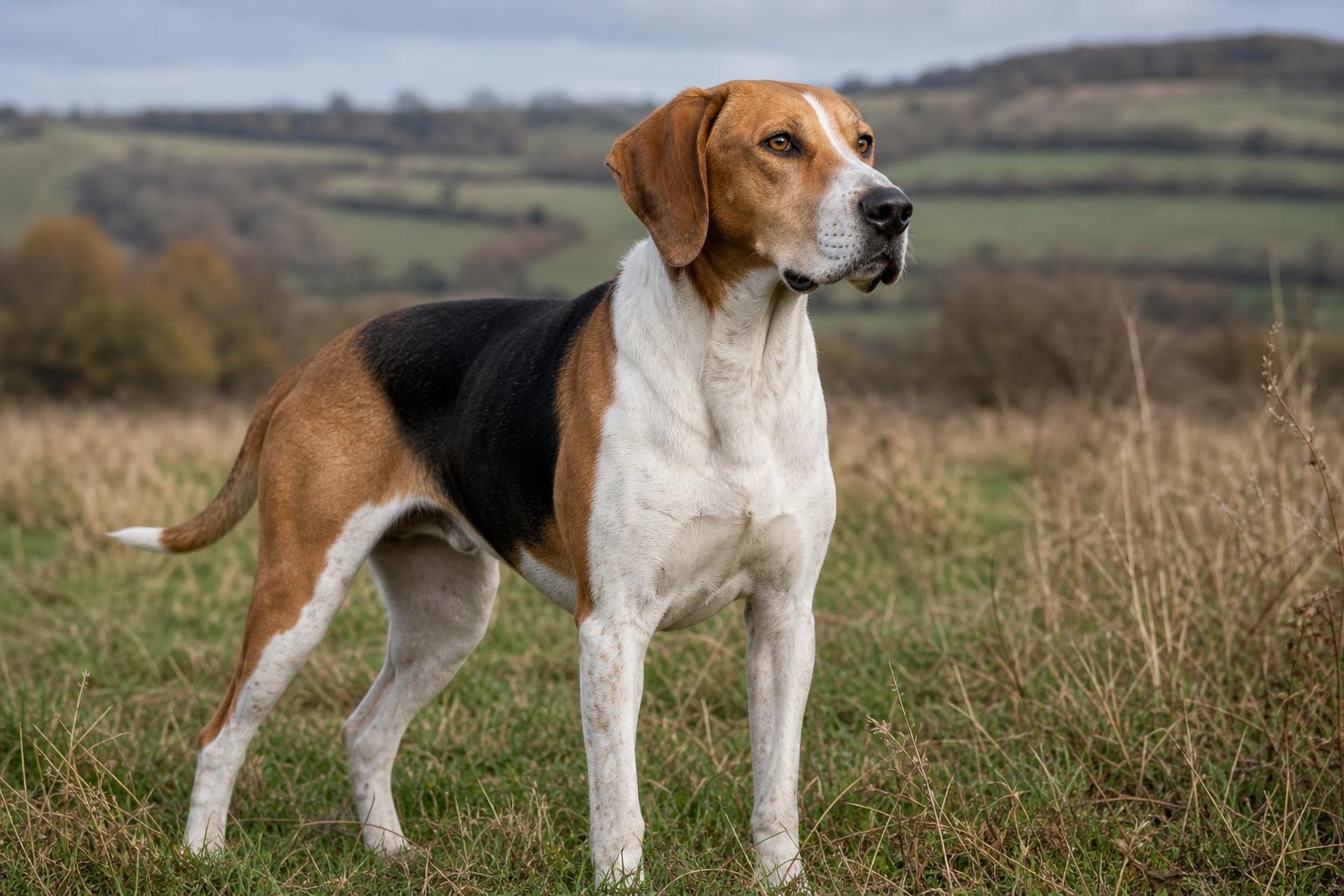
A finished Harrier is not just an older hound with field time. For buyers looking at Harrier finished dogs, the real question is whether the dog has the nose, endurance, pack manners, obedience, and practical hunting experience to step into serious work with minimal guesswork. The Harrier is a medium-sized English scent hound developed for hunting hare in packs, and that history matters. A well-finished Harrier should show drive and stamina, but also enough handling, manners, and steadiness to be useful rather than chaotic.
Because Harriers are relatively rare compared with many popular sporting breeds, finished dogs may not appear often. When they do, buyers should slow down, ask for proof, and evaluate the dog in the type of work they actually plan to do. A hound that is polished in one kennel’s pack may still need time to adjust to a new handler, a different property, or a different group of dogs.
What makes a finished dog
A finished Harrier should have consistent field experience on breed-appropriate game and should understand the basic rhythm of a hunt. That usually means the dog can search, strike, trail, and stay engaged without needing constant direction. Since Harriers were developed to work as pack hounds, social reliability around other dogs is a major part of the picture. A finished dog should not simply be fast or enthusiastic; it should be usable.
Look for a dog that has been exposed to real conditions: changing scent, distractions, weather, cover, and the pressure of other hounds. The seller should be able to explain what the dog has hunted, how often it has been hunted, how it behaves at the start and end of a run, and whether it works best independently, in brace, or in a pack.
- Can the Harrier settle before and after work?
- Does it handle safely on lead, at gates, around vehicles, and near other dogs?
- Does it show honest nose and persistence without creating unnecessary disorder?
- Can the seller describe strengths and weaknesses plainly?
Be cautious of vague claims like “fully trained” or “ready for anything.” Finished should mean demonstrated ability, not just age, confidence, or a high price tag.
Hunt tests
Hunt tests can be useful evidence for some working and sporting breeds, but buyers should verify whether a specific hunt test program is relevant to Harriers and to the kind of hunting they plan to do. The Harrier is a scent hound, not a retriever or pointing breed, so test titles from unrelated venues may not tell you much about practical pack hunting or hare work.
If a seller mentions hunt tests, ask for the exact organization, title name, date earned, and what skills were judged. Then compare those skills to your goals. A certificate may show exposure, steadiness, obedience, or handler cooperation, but it does not automatically prove the dog will fit your terrain, your pack, or your hunting style. If no formal hunt test record exists, that is not automatically a problem for a Harrier. Many valuable hounds are proven by field use, kennel reputation, references, and direct observation.
Verify working records and breed eligibility
Verify reported working titles and test results with the issuing organisation. Confirm that the programme applies to the breed and ask what the result demonstrates about the individual dog.
Verify reported working titles and test results with the issuing organisation. Confirm that the programme applies to the breed and ask what the result demonstrates about the individual dog.
Trial records
Trial records can add value when they are authentic and relevant. With Harrier finished dogs, ask what type of trial or field event the dog attended, what was judged, and whether results can be confirmed. A placement, score sheet, or club record is stronger than a casual statement. References from experienced houndsmen can also help, especially with a rare breed where formal records may be limited.
Still, trial success is not the same thing as household fit or practical hunting fit. A hard-driving Harrier with impressive field results may be too intense for a casual owner. Another dog with no formal placements may be a better match because it is honest, manageable, social, and proven in regular hunting. Treat trial records as one part of the total evaluation, not the entire decision.
- Ask for copies of records or links to published results.
- Confirm the dog’s registered name, age, owner, and event dates.
- Ask whether the dog competed individually, in brace, or as part of a pack.
- Watch the dog work if possible before committing.
Age expectations
A finished Harrier will usually be mature enough to have meaningful experience. Many buyers should expect finished dogs to be past the puppy and early adolescent stage, often several years old. Age alone does not make a dog finished, but a very young dog rarely has enough miles behind it to be fully proven in changing conditions.
Ask how the dog’s age relates to its workload. A young adult may offer many future seasons but may still need refinement with a new handler. A mature dog may bring steadier habits and clearer proof of ability, but buyers should evaluate conditioning, soundness, and long-term expectations carefully. Harriers are athletic working hounds, and a lean body condition, good feet, stamina, and recovery after work matter.
For older finished dogs, ask why the dog is being sold. Reasons can be perfectly reasonable: kennel downsizing, change in pack needs, retirement from breeding, or a better fit as an individual hunting companion. What matters is transparency. A seller should be willing to discuss health, limitations, past injuries, and whether the dog is still actively working.
Investment value
The investment value of a finished Harrier comes from time saved, risk reduced, and ability demonstrated. Compared with raising a puppy, a finished dog lets a buyer evaluate size, temperament, hunt drive, social behavior, and field style before purchase. That can be especially valuable with a scent hound, where prey drive, independence, and pack behavior shape daily life.
Price should reflect evidence, not sales language. A finished dog with verifiable field experience, stable temperament, clear handling, and honest seller support may justify a higher investment. A dog advertised as finished without proof should be priced and evaluated much more cautiously. Avoid sellers who pressure you to buy quickly, refuse demonstrations, dodge questions about faults, or make broad promises about health, performance, or future success.
Health clearances and veterinary records should be reviewed, but buyers should avoid assuming every registry, DNA panel, or orthopedic scheme applies equally to every Harrier. Ask what testing was done, why it was selected, and how results can be verified. For a working hound, also ask about parasite prevention, ear care, injury history, weight management, and current conditioning.
Evaluating a Harrier before purchase
Whenever possible, see the Harrier in person. Watch how it leaves the kennel, loads, travels, meets people, interacts with other dogs, and responds to the seller. A polished field dog that cannot be safely managed on the ground may not be the right purchase for many homes. Because Harriers are social, active hounds, buyers should also consider whether the dog will be kept with other dogs, how much daily exercise it will receive, and how secure the fencing is.
Ask for a trial period or a written agreement when appropriate. Finished dogs can need adjustment time, and a good seller will want the match to work. The contract should describe the dog, price, records provided, return terms, and any representations the seller is actually willing to stand behind. Avoid relying on verbal promises for major claims.
- Request veterinary records and vaccination history.
- Verify any registration, titles, or event records directly.
- Ask to observe breed-appropriate field work or speak with references.
- Confirm whether the dog is intact, spayed/neutered, or sold with breeding restrictions.
- Discuss transition plans for food, kennel routine, exercise, and handling commands.
Buyer-focused conclusion
A finished Harrier can be a rewarding choice for the right buyer: athletic, social, scent-driven, and already shaped by real work. The safest purchase is not always the flashiest dog or the most expensive listing. It is the Harrier whose experience, temperament, records, and daily needs match your hunting plans and home life. Verify what matters, ignore claims that do not apply to the breed, and choose the dog that proves its value in practical terms.


