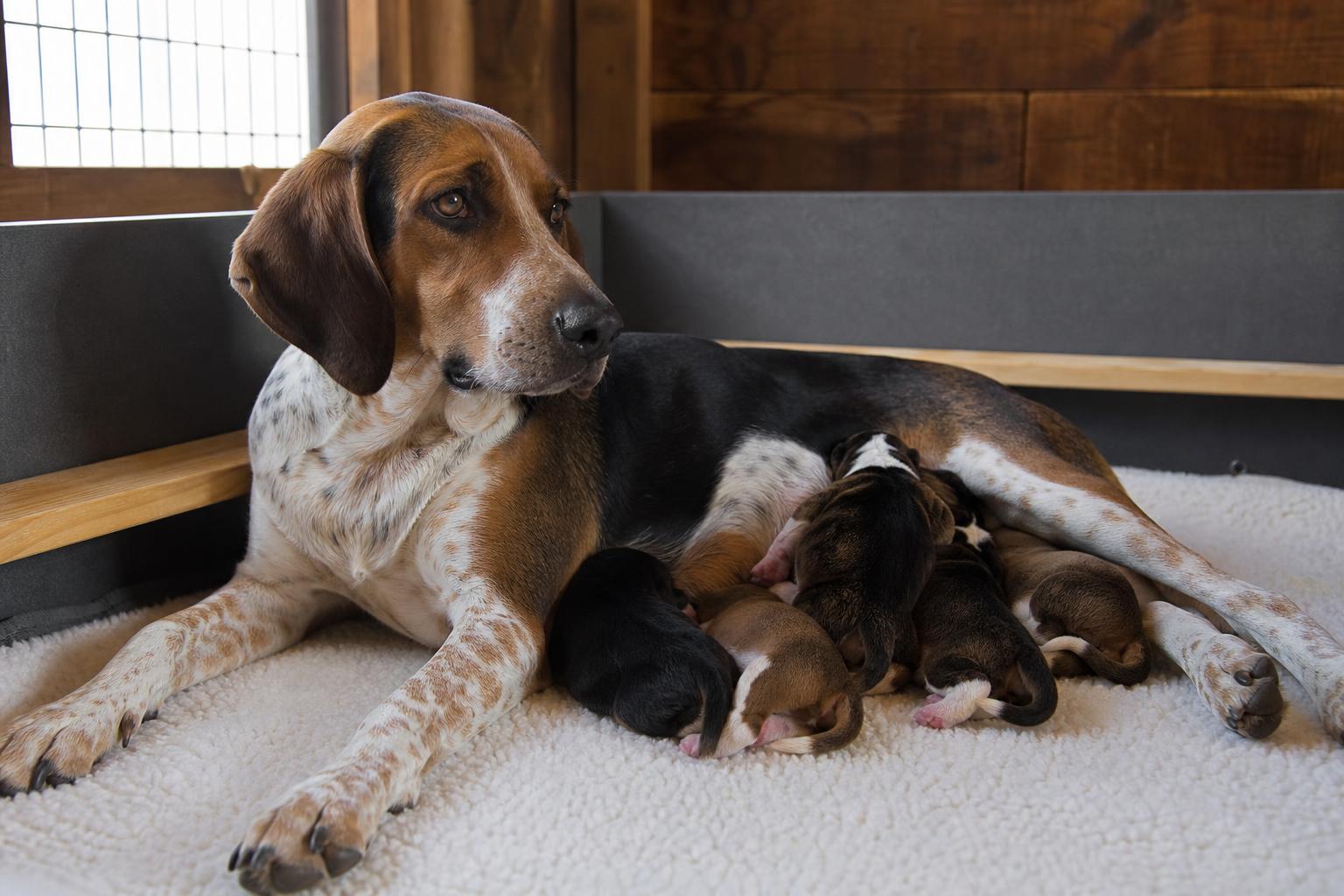
A Harrier litter announcement should do more than say puppies are expected. For a rare, active scent hound with a long history as a pack hunting dog, the announcement should help you understand the breeding pair, the expected temperament, the kind of home the breeder is looking for, and how the puppies are being raised. Harriers are friendly, athletic, nose-driven hounds with strong endurance and a social nature. They can be wonderful companions for active homes, but they are not a casual choice for buyers who want a low-exercise dog or off-leash reliability without careful training and management.
Use a litter announcement as your first screening tool. A good one will not answer every question, but it should give you enough information to decide whether a conversation with the breeder is worthwhile. Look for clear details, honest breed education, and practical expectations rather than vague claims about “perfect family dogs” or “rare puppies available now.”
What a Harrier Litter Announcement Should Include
A useful announcement usually identifies the sire and dam, expected or actual whelping date, general location, planned placement timing, and the breeder’s priorities for the litter. Because Harriers are scent hounds developed for hunting hare in packs, the announcement should also mention temperament, socialization, exercise needs, and whether the breeder is focused on working ability, show structure, companion homes, or some combination of those goals.
- Names of the sire and dam, with enough information to verify them independently.
- Expected due date, birth date, or age of puppies if already whelped.
- Basic description of the breeder’s goals for the cross.
- Information about how puppies are raised, handled, and socialized.
- Clear next steps for inquiries, deposits, visitation, references, and pickup timing.
For this breed, pay attention to whether the breeder understands the difference between an appealing hound and a suitable household match. Harriers are generally outgoing and social with other dogs, but they are also independent scent workers. The best announcements prepare buyers for secure fencing, leash or long-line management, daily exercise, and patient training.
Sire and Dam Information
The sire and dam are the heart of any Harrier litter announcement. You should see more than attractive photos. Ask what each parent is like in daily life, how they behave with people and other dogs, and whether they have field, pack, show, or companion experience. Since the breed was developed for steady work over distance, sound structure and stamina matter. A breeder should be able to explain why these two dogs were paired and what strengths they expect the litter to inherit.
Meeting the dam, when practical, can be especially helpful. Her temperament, condition, and comfort around people give you useful clues. If the sire is not on site, that is not automatically a concern, but the breeder should still be able to provide accurate information, photos, pedigree details, and owner contact or verification when appropriate.
Pedigree and Breed Fit
A pedigree is not a guarantee, but it is a map. For a Harrier, it can help you understand whether the line emphasizes traditional pack hunting traits, show-ring structure, companion temperament, or broader all-around utility. Because Harriers are rare compared with many hounds, buyers may need patience and may see fewer litters available in a given year. Rarity should not pressure you into overlooking weak information.
Ask the breeder to explain the pedigree in plain language. Which dogs are known for stable temperament? Which have strong scenting drive or endurance? Are there related dogs you can meet or observe? If registry information is mentioned, verify it directly with the relevant registry or documentation. Do not assume that every litter announcement includes the same registrations, field records, or titles.
Health Clearances and Documentation
Health information should be specific and documented. Harriers are often described as hardy working hounds, but responsible breeding still requires attention to health, soundness, weight, and long-term quality of life. A litter announcement may summarize testing, but you should ask to see records rather than relying on phrases like “vet checked” or “healthy lines.”
- Ask which pre-breeding health checks were completed for the sire and dam.
- Verify any OFA, DNA, or registry-related claims through the appropriate database when applicable.
- Discuss known concerns in the family with the breeder and your veterinarian.
- Remember that a puppy exam is not the same thing as parental health screening.
Not every testing program applies equally to every breed or every breeding goal. The right question is not “Do you have every possible test?” but “Which checks are relevant for this breed, this line, and this pairing, and can I review the documentation?” A trustworthy breeder will welcome that conversation.
Temperament, Working Traits, and Home Expectations
A strong Harrier announcement should describe expected temperament honestly. Harriers are usually friendly, social, energetic, and dog-oriented, but they can also be stubborn when their nose takes over. They were bred to work a trail, not to stare at a handler waiting for instructions. That independence is part of their charm, and it is also the reason they need structure.
Look for breeders who talk about enrichment, early handling, exposure to normal household activity, and realistic exercise needs. Puppies from this breed are likely to grow into athletic adults that need more than short walks. Sniff walks, tracking-style games, secure outdoor time, hiking, running with appropriate conditioning, and other active outlets can all help channel their instincts.
Deposits, Timing, and Buyer Communication
Deposits should be handled clearly. Before sending money, understand whether the deposit is refundable, how puppy selection works, what happens if the litter is smaller than expected, and what written agreement you will receive. A responsible breeder will not rush you into payment before answering reasonable questions.
- Confirm the expected go-home age and what care puppies receive before pickup.
- Ask how the breeder matches puppies to homes.
- Request a written agreement that explains responsibilities on both sides.
- Be cautious of pressure tactics, vague payment instructions, or refusal to provide documentation.
Timing matters too. Puppies need appropriate early care, social contact, and veterinary attention before placement. If an announcement promises immediate pickup with little context, slow down and ask more questions.
Red Flags in Harrier Litter Announcements
Some warnings are universal: no information about parents, stock photos, no questions for buyers, unclear location, and payment requests that feel rushed or unusual. For Harriers specifically, be cautious when an announcement ignores exercise needs, containment, scent drive, or the breed’s pack-hound background. A breeder who markets every puppy as suitable for every home may not be preparing buyers honestly.
- No named sire or dam, or details that cannot be verified.
- Claims of rare status used mainly to justify urgency.
- No discussion of temperament, socialization, or activity level.
- Health claims without records or willingness to discuss testing.
- Reluctance to answer questions about contracts, deposits, or return policies.
Questions to Ask Before Joining a Waiting List
Before you commit to a Harrier litter, ask direct, practical questions. What are the parents like off the trail and in the home? How much daily exercise do related dogs need? Are puppies raised around other dogs, people, household sounds, and outdoor surfaces? What support does the breeder provide after placement? What happens if the match does not work out?
The answers should feel grounded, not scripted. Good breeders are often selective because they want puppies placed in homes that understand hounds. Expect them to ask you about fencing, schedule, dog experience, and training plans. That is a positive sign, not an obstacle.
Buyer-Focused Conclusion
A Harrier litter announcement is only the starting point, but it can reveal a lot. The best announcements combine accurate parent information, thoughtful pedigree context, relevant health documentation, realistic temperament expectations, and clear deposit terms. Take your time, verify claims, and look for a breeder who understands both the appeal and the responsibility of living with an energetic scent hound. If the announcement helps you picture the adult dog as clearly as the puppy, you are on the right track.


