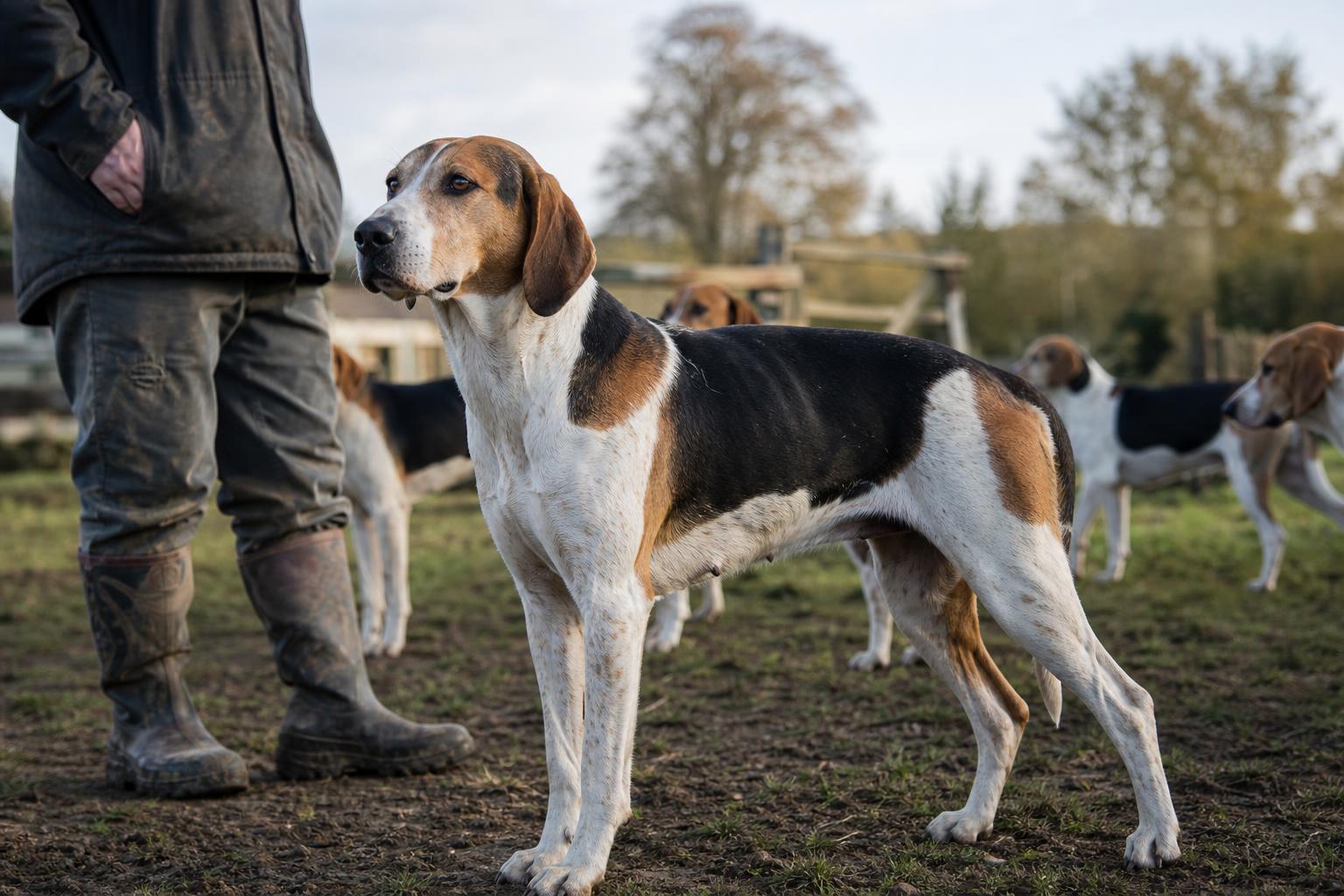
A Harrier proven female can be valuable to the right breeder, hunter, or active hound home, but she should never be judged by one label alone. Proven means she has produced at least one litter, yet the quality of that proof depends on her health, temperament, maternal ability, the quality of her offspring, and whether her breeding history fits your goals. The Harrier is a medium-sized English scent hound developed for pack work and hare hunting, with stamina, a strong nose, and a social nature around other dogs. Those traits make evaluation especially important because a good female should show the practical qualities that keep the breed useful: sound structure, steady temperament, endurance, and the ability to pass on desirable hound character.
Because Harriers are relatively uncommon in many areas, buyers may feel pressure to act quickly when an adult female becomes available. Slow down. A fair purchase starts with documentation, direct conversation, and an honest look at what the female has already produced. Do not rely on vague statements such as “throws great pups” or “comes from hunting lines” without seeing records, photos, owner feedback, and, when possible, the actual offspring.
Production Record in a Harrier Proven Female
The production record is the foundation of evaluating a Harrier proven female. Ask how many litters she has had, when they were born, how many puppies were whelped, how many survived, and where those puppies are now. A responsible seller should be able to describe the strengths and weaknesses seen in previous litters, not just the highlights. Look for consistency in size, structure, temperament, scent drive, and general health.
- How many puppies were in each litter?
- Were there any whelping complications, emergency veterinary care, or puppy losses?
- Do previous puppies resemble the dam in temperament, build, and working style?
- Are any pups being used for hunting, scent work, pack hound work, or active family homes?
- Can the seller provide references from prior puppy buyers or co-owners?
A strong production record does not require every puppy to become a standout. It does require honesty. For a scent hound like the Harrier, you want evidence that offspring are athletic, social, trainable enough for real life, and capable of using their noses in appropriate outlets. If the female has produced several litters and the seller cannot tell you much about the pups, that is a warning sign.
Previous Litters and What They Reveal
Previous litters help you see patterns that a pedigree alone cannot show. Harriers are often described as friendly, outgoing, and dog-social because they were developed to work in packs. Ask whether her puppies have shown those same qualities. Also ask about independence, noise, prey drive, containment needs, and how pups matured in active homes. A Harrier puppy that follows scent with determination may be perfectly normal for the breed, but buyers need to know how strong that trait appears in the line.
Photos and updates from different ages are useful. Eight-week puppy pictures are pleasant, but adolescent and adult updates tell you more about structure, size, coat, temperament, and working potential. If previous litters are old enough, ask whether any owners have reported recurring ear issues, lameness, allergies, fearfulness, aggression, or serious training challenges. The goal is not to find a perfect family tree. The goal is to understand risk clearly before you buy.
Maternal Ability and Whelping History
Maternal ability matters with any proven female. Ask whether the Harrier female settled into whelping calmly, cleaned and nursed puppies well, maintained condition, and accepted normal human handling around the litter. A good mother is attentive without being dangerously defensive. Since Harriers are social hounds, stable temperament around people and other dogs is an important part of the picture.
Review the whelping history in detail. Find out whether she required a C-section, whether milk production was adequate, whether puppies needed bottle feeding, and whether she recovered well after the litter. A female can still be valuable after one difficult event, but you need to know what happened and what a veterinarian recommended for future breeding. Do not accept casual explanations for repeated problems.
Age and Breeding History
Age is one of the most important fair-evaluation points. Ask for the female’s date of birth, litter dates, heat-cycle history, and any skipped cycles. A Harrier used thoughtfully should have reasonable spacing between litters and should not be pushed simply because she can produce. If the seller is offering her as a breeding prospect, request veterinary records and ask whether a veterinarian has cleared her for future breeding.
Older proven females may be excellent companions, hunting partners, or foundation animals for a very limited plan, but fertility and recovery can change with age. Younger proven females may have more breeding years ahead, but you still need to evaluate whether their first litter actually showed the quality you want. Fair pricing should reflect age, health status, production history, and realistic future value.
Health Clearances and Veterinary Documentation
Do not assume that every registry, health program, or test applies equally to every Harrier. The breed is recognized by the American Kennel Club, but buyers should still verify registration documents, ownership, and any breed-specific requirements directly with the registry and seller. For health, ask what screening has been performed and request copies rather than verbal summaries. If OFA, DNA testing, or other health databases are mentioned, verify the dog’s registered name or number through the appropriate source.
- General veterinary history, vaccination records, and parasite prevention history.
- Any orthopedic, eye, cardiac, thyroid, or other screenings the breeder considers relevant.
- Records from pregnancy, whelping, and postpartum care.
- Documentation of any inherited conditions known in the family.
- Current body condition, dental status, ear health, and soundness evaluation.
Be careful with broad claims such as “fully health tested” unless the seller defines exactly what was tested, when, by whom, and with what result. A veterinarian familiar with breeding dogs can help you interpret records before money changes hands.
Temperament in the Kennel, Field, and Home
A Harrier proven female should be evaluated as a whole dog, not just a brood animal. The breed is energetic, scent-driven, and generally social, but individuals vary. Spend time watching how she responds to people, other dogs, confinement, handling, and new environments. A female that is steady, curious, and manageable is usually a better long-term asset than one with extreme drive but poor nerves.
If you want future puppies for hunting, active homes, or scent work, the dam’s temperament matters deeply. Ask how she behaves on lead, around children if relevant, in vehicles, during grooming, and when separated from other dogs. Harriers can be independent because of their hound background, so distinguish normal scent-hound focus from poor socialization or fear. Temperament is inherited and learned; both should be part of your evaluation.
Working Proof and Pedigree Strength
Verify reported working titles and test results with the issuing organisation. Confirm that the programme applies to the breed and ask what the result demonstrates about the individual dog.
Pedigree analysis should focus on repeated quality, not famous names alone. Look for relatives with sound temperament, useful working ability, longevity, and honest owner feedback. Ask whether previous matings were chosen to complement the female or simply because a male was convenient. A thoughtful breeder should be able to explain what they were trying to improve or preserve.
Fertility Considerations Before Purchase
If you are buying the female for future breeding, fertility must be discussed plainly. Ask how easily she conceived, whether natural breeding was used, whether artificial insemination was involved, and whether progesterone timing or veterinary assistance was needed. Live cover, chilled semen, frozen semen, and AI are not universal options in every situation, and their relevance depends on the dog, registry rules, veterinarian access, and contract terms. Verify all requirements before planning a mating.
Request a current reproductive exam when appropriate. A female with one successful litter may still face future fertility issues. Conversely, a female with a small litter is not automatically a poor producer if the timing, male fertility, or management were contributing factors. The fairest assessment looks at the full breeding history rather than a single number.
Fair Purchase Evaluation and Red Flags
Fair value for a Harrier proven female depends on age, health, temperament, registration status, production record, working proof, and whether breeding rights are included. Avoid sellers who price only on rarity. Rare does not automatically mean better, and a scarce breed makes careful stewardship even more important. A female with excellent records, stable temperament, and offspring that fit your goals may justify a stronger investment. A female with missing documentation or unclear reproductive history should be valued cautiously.
- Red flag: no written records for prior litters or veterinary care.
- Red flag: pressure to buy quickly because Harriers are hard to find.
- Red flag: unwillingness to discuss weaknesses in previous puppies.
- Red flag: unclear ownership, registration, or breeding-rights status.
- Red flag: repeated whelping problems explained away without veterinary records.
Use a written agreement. It should state whether the dog is sold for breeding, companionship, hunting, or co-ownership; what records transfer; whether any guarantees exist; and what happens if the female is not suitable for your intended use. Do not assume health guarantees, future fertility, or litter size unless they are written clearly.
Conclusion: Buying a Harrier Proven Female Carefully
A good Harrier proven female is more than a dog that has had puppies. She should represent the breed’s useful scent-hound traits, social temperament, sturdy athletic build, and honest working heritage. The right purchase is built on records, observation, verification, and a realistic plan for her future. Take time to review her production record, maternal history, health documentation, temperament, fertility, and pedigree before deciding. For buyers who do that work, a well-chosen Harrier female can be a meaningful addition to a careful breeding program or an active hound-focused home.


