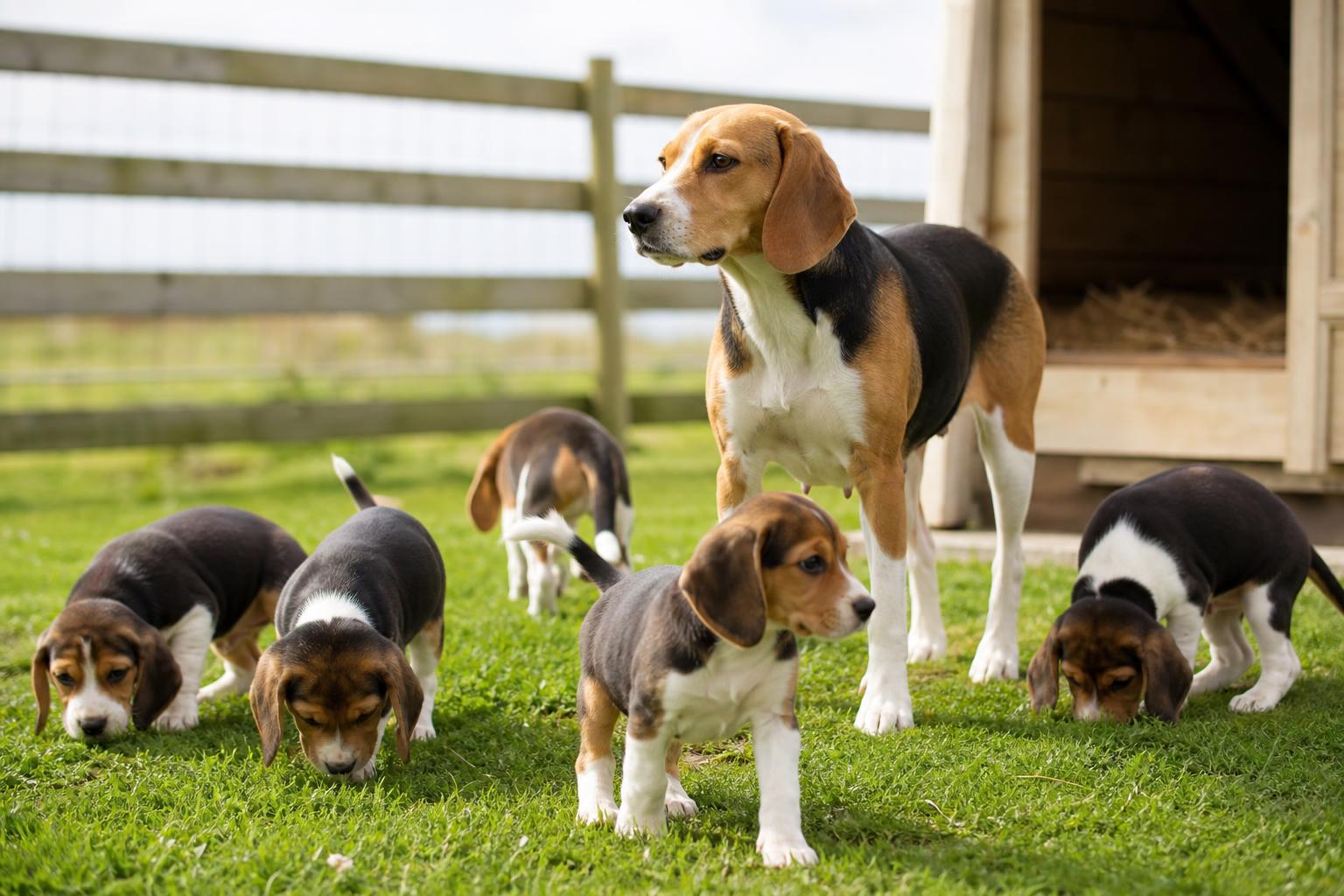
Searching for Harrier puppies for sale is different from shopping for a common companion breed. The Harrier is a rare, athletic English scent hound developed to hunt hare in packs, and good puppies are usually placed by breeders who care deeply about working ability, temperament, health, and the right home fit. A Harrier can be affectionate, social, and cheerful, but this is also a dog with stamina, independence, and a powerful nose. Before you put down a deposit, make sure the breeder is giving you more than cute puppy photos.
This guide is written for buyers who want a realistic look at Harrier puppies: how to evaluate breeders, what registration may mean, which vaccination records to request, how to prepare for the first week at home, and how to think about price without falling for vague promises. Use it as a checklist while you compare listings and conversations.
Understanding the Harrier Before You Buy
The Harrier is a medium-sized scent hound, often described as fitting between a Beagle and an English Foxhound in general appearance. Breed information describes them as sturdy, balanced, and athletic, with a short, dense coat and the endurance to cover ground for a long time. They were bred for pack hunting, especially hare hunting, so many Harriers are friendly with other dogs and happiest when they have activity, structure, and opportunities to use their nose.
That background matters when reviewing Harrier puppies for sale. A good breeder should talk openly about exercise needs, secure fencing, leash or long-line management, and the breed’s tendency to follow scent. This is not a breed to choose only because it looks classic and handsome. The right buyer enjoys outdoor time, patient training, and a hound with a bit of independent thinking.
Choosing a breeder
Choosing a breeder is the most important step in buying a Harrier puppy. Because Harriers are uncommon, you may need to wait, travel, or build a relationship before a litter is available. That can be frustrating, but rarity is also a reason to slow down. A legitimate breeder should know the breed well, understand the line behind the puppies, and be willing to discuss both strengths and challenges.
Look for breeders who ask you questions. They should want to know about your yard, schedule, other dogs, hunting or outdoor interests, training plans, and expectations for a hound. If a seller is willing to ship a puppy immediately with no conversation, no contract, and no meaningful screening, be careful. Harrier puppies need homes prepared for energy, scent drive, and social development.
Questions to ask a Harrier breeder
- How long have you owned or bred Harriers, and what drew you to this breed?
- What are the sire and dam like in temperament, stamina, voice, pack behavior, and household manners?
- Are the puppies raised in a home, kennel, or mixed setting, and what daily socialization do they receive?
- What health screenings or veterinary evaluations have been done on the parents?
- Can I see documentation rather than just hear verbal claims?
- What kind of home is not a good match for one of your puppies?
- Will you take the dog back or help with rehoming if a serious problem arises later?
A trustworthy breeder will not make every answer sound perfect. They may explain that Harriers can be vocal, that recall requires management, that bored hounds can become creative, or that secure fencing matters. Honest limitations are a good sign. They show the breeder is placing dogs, not just selling inventory.
AKC registration
The Harrier has a long history and is recognized by the American Kennel Club, but buyers should still verify the specific registration status of any litter. Do not assume that every Harrier puppy advertised online is AKC registerable, and do not treat the phrase “registered” as a complete answer. Ask which registry applies, whether the litter is registered or eligible, whether the puppy comes with full or limited registration, and when paperwork will be provided.
AKC registration can document parentage within that registry, but it is not a guarantee of health, temperament, training quality, or ethical breeding. For a rare breed like the Harrier, registration paperwork should be one part of a larger review that includes breeder reputation, parent information, health records, contract terms, and the breeder’s willingness to support the buyer.
How to verify registration claims
- Ask for the registered names or numbers of the sire and dam when appropriate.
- Confirm whether the puppy is sold with limited or full registration and what that means.
- Make sure the seller’s name and litter details match the paperwork process.
- Be cautious if paperwork is promised “later” with no clear explanation.
- Remember that registration does not replace veterinary records or health documentation.
If another registry is used, ask why and learn what that registry does and does not verify. For hunting or working homes, also ask about actual field experience in the family line, but avoid assuming formal hunt tests or trial records apply to every Harrier breeder or every individual dog. When performance claims are made, request specifics and documentation.
Vaccinations
When evaluating Harrier puppies for sale, vaccination records should be clear, dated, and tied to the individual puppy or litter. A breeder should be able to tell you which vaccines have been given, when deworming was performed, whether a veterinarian examined the puppies, and what schedule your veterinarian should continue after pickup.
Do not accept vague statements like “all shots done” for a young puppy. Puppies usually receive vaccines in a series, and a puppy leaving at an appropriate age may not be finished with the full puppy schedule. Your veterinarian should guide the remaining timing based on age, local disease risk, lifestyle, and prior records.
Records to request before pickup
- Dates and names of vaccines administered.
- Deworming dates and products used, if available.
- Veterinary exam record or health certificate when applicable.
- Microchip information if the puppy is chipped before leaving.
- Feeding details, including current food and meal schedule.
Because Harriers are active outdoor hounds, discuss parasite prevention, tick exposure, and ear care with your veterinarian early. The breed’s short coat is easy to maintain, but an adventurous puppy can still collect dirt, burrs, and pests. Preventive care should be practical and ongoing, not treated as a one-time handoff from the breeder.
Bringing puppy home
Bringing a Harrier puppy home should be planned before the pickup date. This breed’s nose and curiosity can get ahead of its judgment, so the first priority is safety. Check fencing for gaps, secure gates, remove hazards, and plan for leash use even in areas that seem safe. A young Harrier should not be expected to understand boundaries simply because the family wants it to stay close.
Set up a simple routine for meals, potty breaks, crate time, sleep, and short training sessions. Harriers often respond well to food rewards and upbeat handling, but they can become distracted quickly in scent-rich environments. Start training indoors or in a quiet fenced area before expecting focus outdoors. Short, successful sessions are better than long battles.
First-week priorities for a Harrier puppy
- Schedule a veterinary visit within the timeframe required by your contract.
- Keep food changes gradual to avoid unnecessary stomach upset.
- Use a crate or safe pen when you cannot supervise.
- Begin name recognition, recall games, and leash basics with rewards.
- Introduce new people, surfaces, sounds, and calm handling without overwhelming the puppy.
- Give appropriate chew items and prevent unsupervised access to shoes, trash, and cords.
Socialization is important, but it should be thoughtful. A Harrier puppy benefits from meeting friendly people and stable dogs, hearing normal household sounds, riding in the car, and exploring new places at a safe pace. Until your veterinarian confirms the puppy’s vaccine status and risk level, avoid high-traffic dog areas where disease exposure may be higher.
Typical puppy prices
Typical Harrier puppy prices can vary because the breed is rare, litters may be limited, and breeders differ in location, parent quality, registration, veterinary care, and what is included with the puppy. It is better to ask each breeder for current pricing than to rely on a fixed number from an old advertisement. Treat price as one factor, not the only factor.
A very low price may be tempting, but it can also mean missing health records, weak breeder support, unclear parentage, or poor early care. A higher price is not automatic proof of quality either. The best value is a well-raised puppy from a breeder who is transparent, organized, and committed to taking responsibility for the dogs they produce.
What may be included in the purchase price
- Initial veterinary exam and age-appropriate vaccines.
- Deworming and basic health records.
- Registration application or transfer information when applicable.
- Microchip, if provided by the breeder.
- Written contract with return or rehoming terms.
- Starter food, care notes, and ongoing breeder support.
Budget beyond the puppy price. A Harrier owner should plan for quality food, routine veterinary care, parasite prevention, crate and fencing needs, training classes, durable leashes, enrichment toys, and possible travel to reach a reputable breeder. For active hounds, investing in safe containment and early training is not optional decoration; it is part of responsible ownership.
Red flags in Harrier puppy listings
Online listings can be useful, but they can also hide problems. Be cautious with sellers who avoid phone or video conversations, refuse to identify the parents, use stolen-looking photos, demand unusual payment methods, or pressure you with claims that the puppy must leave immediately. Rare breeds are often used in misleading ads because buyers may not know what normal availability looks like.
- No clear information about sire, dam, age, location, or breeder identity.
- No vaccination or veterinary records available for review.
- Promises that the puppy will be perfectly trained, hypoallergenic, or suitable for every home.
- Unwillingness to discuss exercise needs, scent drive, or containment.
- Contracts that offer no breeder responsibility after payment.
A responsible Harrier breeder should be comfortable slowing the process down. They may have a waiting list, require an application, or ask you to meet them before final placement. Those steps can feel formal, but they often protect both the puppy and the buyer.
Is a Harrier puppy right for you?
A Harrier puppy is a strong choice for an active buyer who likes hounds, values outdoor time, and is ready to manage scent-driven behavior. The breed is usually friendly and social, but it is not a low-effort apartment ornament. Expect daily exercise, patient recall work, secure boundaries, and plenty of sniffing. If you want a dog that naturally checks in every few seconds off leash, another breed may be easier.
If you appreciate a cheerful pack hound with history, stamina, and personality, the Harrier can be deeply rewarding. Take your time, verify claims, ask for records, and choose a breeder who wants the puppy to succeed for life. The best Harrier puppies for sale are not just available; they are well matched to homes prepared for the breed.
Buyer-focused conclusion
When comparing Harrier puppies for sale, look past the photo and focus on fit. Confirm registration details when relevant, review vaccination and veterinary records, ask careful questions about the parents, and prepare your home for an energetic scent hound. A good purchase is not the fastest one; it is the one that gives you a healthy start, honest support, and a Harrier puppy whose needs match your life.


