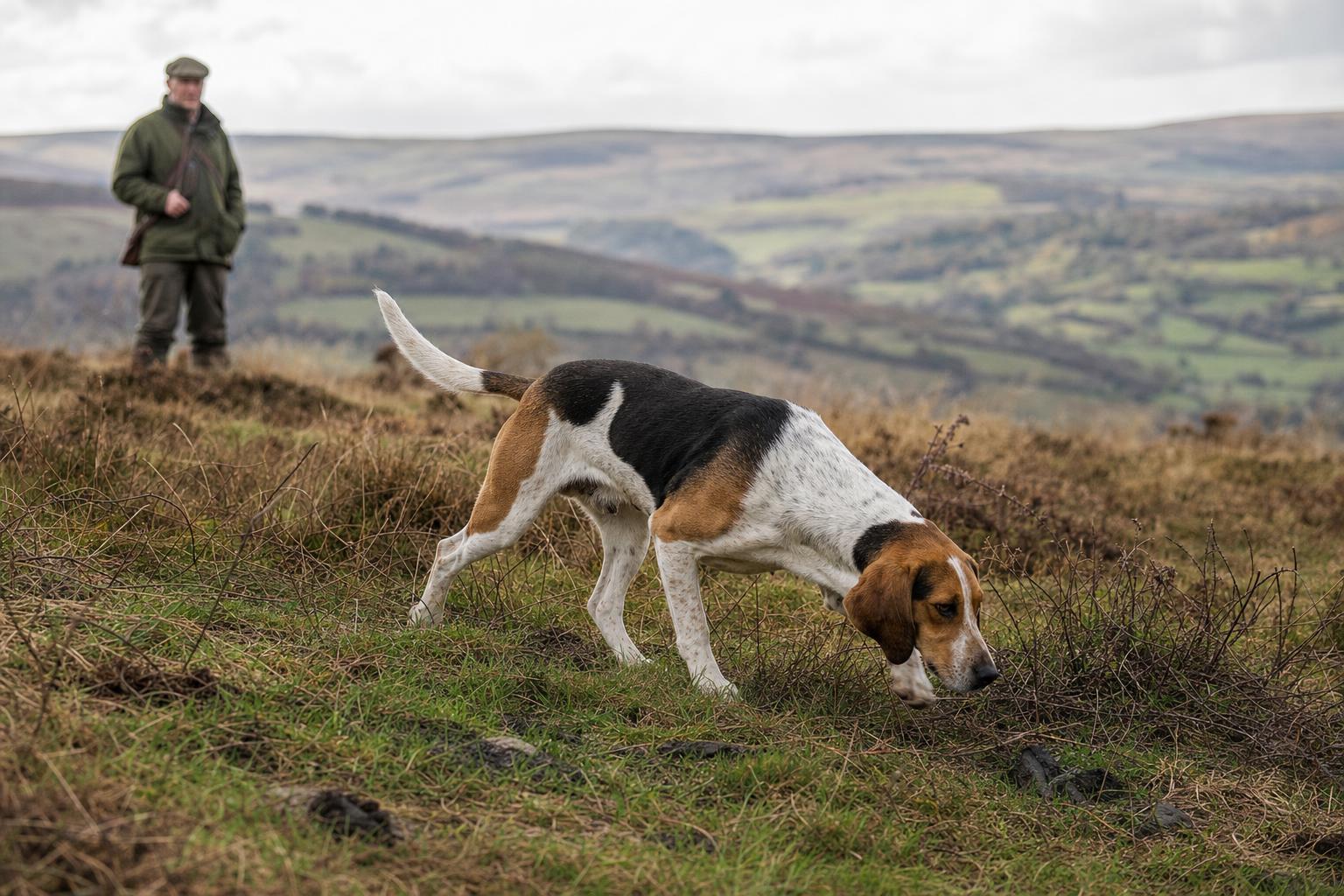
A Harrier started dog can be a smart choice for a hunter, trainer, or active family that wants to skip the earliest puppy stage and begin with a young hound that already has some foundation. The key is understanding what started means for this breed. The Harrier is a medium-sized English scent hound developed to hunt hare in packs. Its best traits are nose, stamina, social pack sense, and the determination to keep working a trail. Those same traits can make a poorly described started dog confusing for buyers if the seller does not explain exactly what the dog has learned.
Because Harriers are rare compared with many other hounds, buyers may see fewer listings and less standardized wording. A started Harrier may be lightly exposed to field work, regularly exercised with older hounds, introduced to hare or other suitable scent trails, or simply past the puppy stage with basic manners. None of those descriptions are automatically wrong, but they mean very different things. Before paying a premium, ask for clear details, observe the dog if possible, and match the dog’s current level to your hunting style, property, time, and handling experience.
What qualifies as “started”
For a Harrier, “started” should mean the dog has moved beyond ordinary puppy raising and has begun breed-relevant work. At minimum, a started Harrier should show confidence outdoors, willingness to explore cover, interest in scent, basic handler awareness, and enough maturity to learn from routine exposure. A stronger started prospect may already work with other dogs, follow a track, search independently without panic, and return to the handler or pack when managed correctly.
Do not rely on the word alone. Ask the seller to define it in plain language. Useful questions include:
- How old is the dog, and how long has formal or informal field exposure been happening?
- Has the dog hunted alone, with one brace mate, or in a larger pack?
- What game or scent has the dog been exposed to?
- Has the dog opened on track, checked back naturally, or shown steady pursuit?
- What does the seller still consider unfinished?
A fair seller should be comfortable naming strengths and gaps. A Harrier that is bold on scent but still loose on recall may still be a good prospect for the right buyer. A dog advertised as started but unable to settle, lead, load, or work in a controlled setting may need more foundation than the ad suggests.
Birds introduced or breed-appropriate game exposure
Harriers are scent hounds, not pointing dogs or retrievers, so the most relevant early field exposure is usually hare, rabbit, fox where legal and appropriate, or scent-line work that suits the buyer’s intended use. Some individual Harriers may be introduced around birds as part of general steadiness, farm exposure, or multi-dog kennel life, but buyers should not assume bird work is central to the breed. If a listing mentions birds, ask what that means. Was the dog simply comfortable around flushing birds, or was it trained for a bird-dog task that may not match traditional Harrier work?
Breed-appropriate exposure should build confidence without creating chaos. Look for a dog that uses its nose, searches with purpose, and has enough independence to investigate while still accepting handling. A young Harrier should not be expected to perform like a seasoned pack hound, but it should show curiosity and stamina consistent with the breed. If the seller has video, watch the dog’s behavior before, during, and after scent work. Does it recover from distractions? Does it work with other dogs without unnecessary conflict? Does it continue searching after a lost line, or does it quit quickly?
Gun introduction when relevant
Gunfire may or may not be relevant to a Harrier started dog depending on the seller’s hunting program and the buyer’s plans. Traditional hound work is often more about pursuit, voice, pack order, and game handling than close-range shooting over a dog. That said, some buyers will use Harriers in hunting situations where gun noise, vehicles, other dogs, and people are part of the environment.
If gun introduction matters to your use, verify it rather than assuming it. Ask whether the dog has heard gunfire, at what distance, in what context, and how it reacted. Proper introduction is gradual and positive. A dog that ignores distant shots while working may not be ready for close gunfire. A dog that has only heard noise at feeding time has not necessarily been field-tested. Avoid sellers who dismiss concern about sound sensitivity or cannot describe the process. For any breed, a rushed or careless introduction can create problems that take time to repair.
Obedience level
A Harrier started dog should have practical obedience, not a polished obedience-trial routine. This breed was developed to follow scent and work with drive, so buyers should value reliable management skills: leading, loading, kennel manners, recall work on a long line, and the ability to be handled around other dogs. A dog that knows its name, accepts a collar, travels reasonably, and can be caught without drama is often more useful than one that performs a few commands in a quiet yard but loses all connection outdoors.
Important obedience points to review include:
- Leash manners in a normal setting and near scent distractions.
- Recall or check-in habits, especially when the dog is excited.
- Crate, kennel, and vehicle behavior.
- Comfort being handled by people for feet, ears, collaring, and basic care.
- Social behavior with other dogs, since Harriers are historically pack hounds.
Because the breed can be independent, management is part of obedience. Secure fencing, leash work, and long-line practice are not signs of failure; they are realistic tools for a scent hound. Be cautious if a seller claims a young Harrier is completely reliable off leash in every situation. That may be true for a particular dog in a familiar area, but a serious buyer should still test the claim carefully and safely.
Evaluating training
The best way to evaluate a Harrier started dog is to see the dog work in a setting that resembles how you will use it. If an in-person evaluation is not possible, ask for recent, unedited video that shows the dog before the work begins, during the exposure, and afterward. Short highlight clips can be useful, but they do not tell the whole story. You want to see attitude, recovery, handler relationship, and consistency.
Ask for the dog’s daily routine and training history. A Harrier that has been run regularly, socialized with stable dogs, and handled kindly may be ahead of a dog that had one impressive outing but little structure. Review health and veterinary records, but do not accept vague medical claims as proof of future soundness. If health testing, kennel club registration, hunt records, or organized test results are mentioned, ask for documentation and verify that each item is relevant to the Harrier and to the registry or program being cited.
Consider bringing an experienced hound person if you are new to the breed. They may notice whether the dog’s voice, search pattern, dog manners, and recovery fit your goals. Also think about your own setup. A started Harrier still needs exercise, safe containment, patient training, and outlets for scenting. Buying more training than you can maintain rarely works; buying a dog whose foundation fits your life is the better investment.
Buyer-focused conclusion
A well-started Harrier should show the beginnings of what makes the breed valuable: nose, endurance, social pack ability, and a confident desire to work. The right dog does not need to be finished, but the seller should be able to explain exactly what has been introduced and what still needs development. Verify the dog’s exposure, observe obedience in real conditions, ask for documentation where claims are made, and be honest about the time and containment a scent hound requires. With careful evaluation, a Harrier started dog can become a rewarding hunting partner and active companion.


