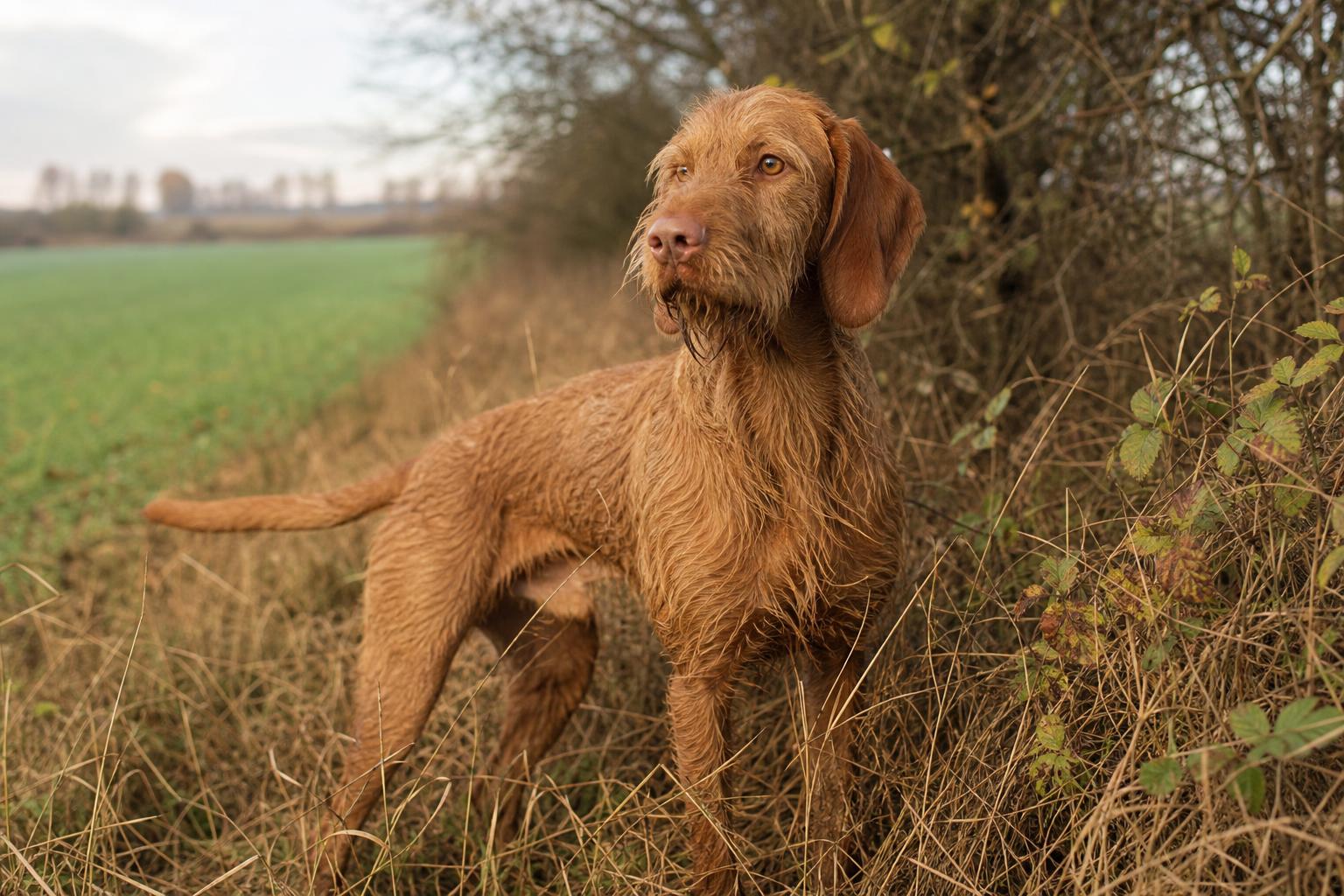
The Hungarian Wirehaired Vizsla is a medium-sized, athletic gundog developed in Hungary for hunters who wanted the close-working style and affectionate nature of the Vizsla with a harsher, more weather-resistant coat. For buyers researching this breed, the first thing to understand is that it is not simply a softer-coated house companion with a rugged look. It is a versatile pointing and retrieving dog built to work in fields, woods, rough cover, and water while staying closely connected to its handler.
That combination is the appeal of the Hungarian Wirehaired Vizsla: stamina outdoors, sensitivity and loyalty at home, and a strong desire to be part of daily family life. The same traits can be challenging in the wrong match. This breed usually needs purposeful exercise, steady training, and regular companionship. A casual walk around the block will not satisfy most individuals, especially young dogs from working lines.
Hungarian Wirehaired Vizsla History and Purpose
The breed originated in Hungary in the 20th century, with development commonly traced to breeders who wanted a more rugged version of the smooth Hungarian Vizsla. The smooth Vizsla was already valued for speed, nose, trainability, and close cooperation with the hunter, but some hunters needed a dog better suited to cold weather, brush, and demanding water work. German Wirehaired Pointer influence helped create the harsh coat and sturdier field package while retaining much of the Vizsla's people-oriented character.
The result was the Drótszőrű Magyar Vizsla, known in English as the Hungarian Wirehaired Vizsla or Wirehaired Vizsla. It was intended as an all-purpose gun dog: one that could search, point, retrieve, track, and work in different terrain without becoming too independent. Buyers should keep that original purpose in mind. Even if a dog is purchased primarily as a companion, its instincts and energy still come from a practical working background.
Size, Build, and Coat of the Hungarian Wirehaired Vizsla
The Hungarian Wirehaired Vizsla is typically a medium, sturdy, rectangular sporting dog with moderate bone and a lean, muscular outline. The selector breed facts describe a common height range of about 21 to 25 inches at the shoulder, with males generally larger than females. The dog should look athletic rather than bulky, with enough substance for endurance and water work.
The coat is one of the breed's defining features. It is dense, harsh, wiry, and protective, usually in warm golden sand to russet-gold shades. Furnishings on the face create the characteristic eyebrows, moustache, and beard. This coat is functional, not decorative. It helps protect the dog from cold, water, and brush, and it should usually be maintained in a natural, workmanlike condition rather than clipped into a soft pet trim.
- Expect weekly brushing or combing to remove debris and dead hair.
- Check ears carefully after swimming or hunting.
- Ask breeders how they maintain coat texture, including whether hand-stripping is used.
- Keep nails short, because athletic gundogs need sound feet.
Hungarian Wirehaired Vizsla Temperament and Home Life
A well-matched Hungarian Wirehaired Vizsla is affectionate, loyal, and deeply attached to its people. Many owners describe the breed as a close-contact dog that wants to be in the room, in the truck, on the trail, or in the field with the family. This is a strength for buyers wanting a genuine companion, but it also means the breed can struggle if left isolated for long hours with little interaction.
At home, mature dogs can be calm when their physical and mental needs are met. Without enough work, however, they may become restless, mouthy, noisy, destructive, or difficult to settle. The breed is usually intelligent and eager, but it can also be sensitive. Heavy-handed training is more likely to create confusion or avoidance than reliable performance. Clear routines, fair expectations, and plenty of reward-based structure usually fit the breed better.
Families with children should look for breeders who emphasize stable temperament and early social exposure. The breed can be friendly and gentle, but young dogs may be enthusiastic and physical. Supervision, crate training, place training, and polite greetings are practical investments, not optional extras.
Hunting Style and Field Ability
The Hungarian Wirehaired Vizsla was developed as a versatile point-and-retrieve dog. The breed facts support its aptitude for pointing, retrieving, tracking, and working on land and in water. Many individuals are used for upland birds, waterfowl, and other game exposure where appropriate. As with any sporting breed, field ability varies by line and by individual, so buyers should talk directly with breeders about the actual work their dogs do.
Verify reported working titles and test results with the issuing organisation. Confirm that the programme applies to the breed and ask what the result demonstrates about the individual dog.
Training a Hungarian Wirehaired Vizsla
Training should begin early with name recognition, recall foundations, cooperative handling, crate comfort, leash manners, and calm settling. The breed's intelligence is a gift, but smart dogs learn bad habits as quickly as good ones. Short, upbeat sessions usually work better than long drilling. Mix obedience with retrieving games, scent work, field exposure, and quiet household manners.
Practical priorities
- Recall: Build it before giving freedom in open country.
- Impulse control: Teach waiting at doors, steadiness around birds or thrown bumpers, and calm greetings.
- Bird introduction: Use knowledgeable help if you are new to pointing dogs.
- Gun introduction: When relevant, introduce sound gradually and positively; do not test a puppy by startling it.
- Water: Encourage confidence, but avoid forcing a young dog into frightening situations.
For owners who do not hunt, the same brain still needs work. Scent sports, tracking, canicross, hiking, obedience, dock work, and structured retrieve games can help. The goal is not simply to tire the dog out; it is to give the dog a job that makes sense.
Care, Exercise, and Daily Routine
Plan for daily exercise that goes beyond a casual neighborhood walk. Most Hungarian Wirehaired Vizsla owners should expect a mix of free running in safe areas, training, retrieving, hiking, swimming, or field work. A fenced yard is useful, but it is not a substitute for interaction. This breed tends to do best when exercise and training are woven into the household routine.
Because the breed is active and often works in cover, regular body checks matter. Look for ticks, burrs, cuts, sore pads, and ear irritation after time outdoors. Keep the dog lean and conditioned. Growing puppies should not be overworked with repetitive forced exercise, but they do need socialization and age-appropriate outlets.
Health Considerations and Buyer Verification
The selector facts note that, like many medium-to-large sporting breeds, the Hungarian Wirehaired Vizsla can be affected by orthopedic concerns such as hip or elbow dysplasia. Responsible breeders commonly use health screening programs and should be willing to share documentation. Buyers should not accept vague statements such as “vet checked” as a substitute for actual results.
Verify reported working titles and test results with the issuing organisation. Confirm that the programme applies to the breed and ask what the result demonstrates about the individual dog.
- Ask for registered names or numbers for the sire and dam.
- Confirm health results in public databases when available.
- Review contracts for return policy, breeder support, and ownership expectations.
- Ask what temperament and working traits the breeder is trying to produce.
Is the Hungarian Wirehaired Vizsla Right for You?
This breed is best suited to active buyers who want a close, trainable, outdoor partner and who have time to provide daily exercise and guidance. It can be a fine family dog when its needs are met, but it is usually not a low-maintenance choice for a sedentary home. Apartment living may be possible for a committed owner, but only with substantial daily activity and mental work.
The best homes are honest about lifestyle. If you hunt, ask for a puppy or started dog from lines that match your terrain and game. If you want a companion, ask for temperament first and be prepared to train anyway. A Hungarian Wirehaired Vizsla with no job and too much alone time can become frustrating; a well-raised dog with structure can become a remarkably loyal sporting companion.
Buying a Hungarian Wirehaired Vizsla: Practical Questions
Questions for breeders
- What work do the sire and dam actually do?
- What health clearances can you document?
- How are puppies raised, socialized, and introduced to household life?
- How do you match puppies to buyers?
- What support do you provide after the sale?
Be cautious of sellers who rely only on rare-breed appeal, dramatic claims, or quick deposits. Good breeders can explain both strengths and challenges. They should be comfortable discussing coat care, energy level, prey drive, sensitivity, and the difference between show, companion, and working priorities.
Conclusion: A Thoughtful Choice for Active Buyers
The Hungarian Wirehaired Vizsla is a capable, affectionate, weather-ready gundog with a strong need for partnership. Buyers who want a versatile field dog and close family companion may find the breed deeply rewarding. The key is matching the dog to the household, verifying health and working claims, and planning for training from the beginning. Choose carefully, ask for documentation, and be honest about the daily life you can offer.
Explore Hungarian Wirehaired Vizsla on Working Dog Central
View the Hungarian Wirehaired Vizsla breed profile or browse Hungarian Wirehaired Vizsla listings.


