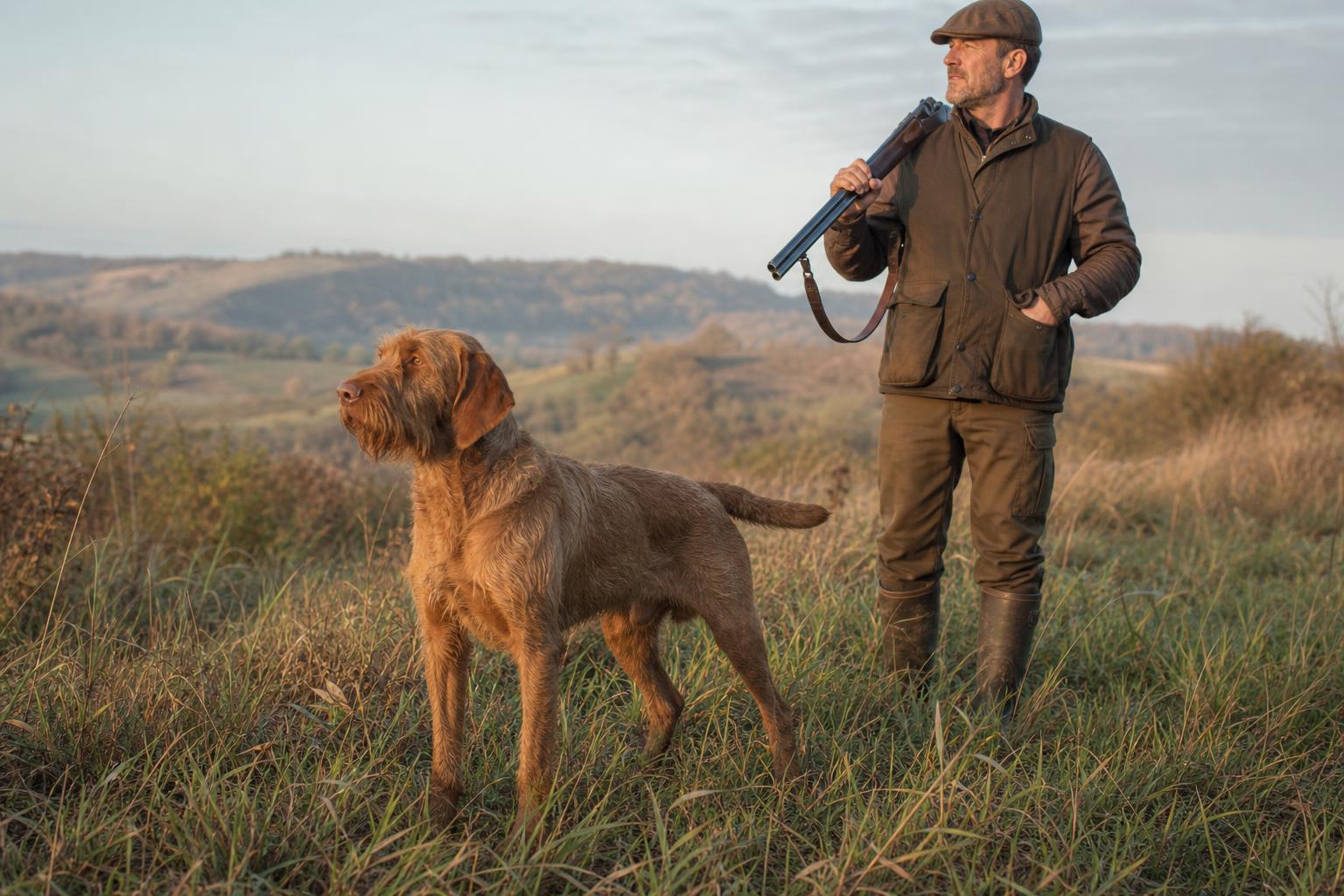
A Hungarian Wirehaired Vizsla finished dog appeals to buyers who want a mature, trained pointing and retrieving partner instead of starting from puppyhood. This breed was developed in Hungary as an all-purpose gun dog with a harsh, weather-resistant coat, a close bond with its handler, and the ability to point and retrieve on land and in water. Those traits can make a finished dog especially useful for hunters who need a dog that can handle rough cover, cold conditions, upland birds, rabbits, and water work when properly trained.
The challenge is that finished does not mean the same thing in every kennel, region, or sales listing. One seller may use it for a dog that is steady, handles cleanly, retrieves reliably, and has meaningful field experience. Another may use it for a dog that has simply hunted a few seasons and knows the basics. Your job as a buyer is to slow down, define the claim, and ask for evidence that fits the way you plan to hunt.
Use the breed facts as your anchor. The Hungarian Wirehaired Vizsla is intelligent, energetic, people-oriented, and eager to work with a handler. It can be sensitive to harsh handling, so a finished prospect should show confidence, cooperation, and composure, not just drive. A good purchase is not only about training level. It is about whether the dog, the seller, and the documentation line up with your needs.
What makes a finished dog
A finished Hungarian Wirehaired Vizsla should be more than a started dog with extra exposure. At this level, the dog should demonstrate a practical package of field manners, bird sense, obedience, retrieving ability, and emotional steadiness. For a versatile pointing breed, buyers commonly look for a dog that hunts with purpose, uses its nose intelligently, points game, remains manageable around birds and gunfire, and retrieves in a controlled way.
Before you accept the label, ask the seller to describe exactly what finished means in their program. Useful answers are specific. They might explain whether the dog is steady to wing, shot, and fall; whether it retrieves to hand; whether it has been hunted from foot, blind, or boat; how it handles water; how it responds to whistle and verbal cues; and how often it has been hunted in real conditions. Vague answers like fully trained or ready to go are not enough.
Questions to ask about finished training
- What commands does the dog reliably understand in the field and at home?
- Has the dog been hunted on wild birds, preserve birds, waterfowl, rabbits, or other breed-appropriate game?
- Is the dog steady before and after the shot, or does it break on flush or fall?
- Will the dog retrieve to hand on land and in water?
- How does the dog handle pressure, correction, travel, kenneling, and new handlers?
- Can the seller provide a live demonstration or recent unedited video?
Because Wirehaired Vizslas are affectionate and strongly handler-focused, transition matters. A dog that is finished for its trainer may need a thoughtful handoff before it performs the same way for a new owner. Ask whether the seller includes handler lessons, follow-up support, or a short transition plan.
Hunt tests
Hunt test results can be helpful, but they should be interpreted carefully. A pass or title can show that the dog met a standard on a given day under judges, but it does not replace watching the dog work. It also does not prove that every type of hunting you plan to do will suit that dog. For a Hungarian Wirehaired Vizsla, hunt tests may be relevant through kennel clubs, versatile dog organizations, or local testing programs depending on where the dog was trained and registered.
Ask the seller for copies of score sheets, title certificates, or links to official results when they mention hunt tests. Verify the organization, level, date, and registered name of the dog. Some finished dogs have no formal titles because they were trained and hunted privately. That does not automatically make them poor prospects. It simply means you need stronger practical proof: demonstrations, references, training logs, and a clear explanation of field experience.
How to weigh hunt test evidence
- Confirm that the dog named in the test record is the same dog being sold.
- Look at the level of the test, not only the presence of a title.
- Ask what parts of the test reflect your real hunting style.
- Remember that steadiness, cooperation, and retrieving standards vary by program.
- Do not assume a title guarantees house manners, temperament, or compatibility with your family.
If hunt tests may not apply to a particular dog or line, ask the seller to explain why. The best sellers are comfortable separating proven facts from marketing language.
Verify working records and breed eligibility
Verify reported working titles and test results with the issuing organisation. Confirm that the programme applies to the breed and ask what the result demonstrates about the individual dog.
Verify reported working titles and test results with the issuing organisation. Confirm that the programme applies to the breed and ask what the result demonstrates about the individual dog.
Verify reported working titles and test results with the issuing organisation. Confirm that the programme applies to the breed and ask what the result demonstrates about the individual dog.
Trial records
Field trial records may or may not be central to a Hungarian Wirehaired Vizsla purchase. Some dogs come from lines or trainers active in competitive venues, while others are built primarily for practical hunting and family companionship. If the seller mentions trial placements, championships, or competitive records, verify them through the relevant organization and ask how those accomplishments translate to the dog being sold.
Trial success can indicate speed, independence, style, desire, and bird-finding ability. Those traits may be exciting for experienced handlers, but they are not automatically the right fit for every hunter. A big-running, highly competitive dog can be a poor match for a buyer who wants a close-working companion for small farms, thick cover, or casual weekend hunts. Likewise, a dog without trial credentials may be an excellent personal hunting dog if it is steady, cooperative, healthy, and proven in the field.
Trial record checks
- Ask whether the record belongs to the dog, its sire or dam, or more distant relatives.
- Confirm official results instead of relying on sales copy.
- Ask the seller to describe range, pace, handle, and bird manners in plain language.
- Make sure competitive traits match your hunting terrain and experience level.
Pedigree and performance records are useful only when they help you predict the dog in front of you. A finished dog purchase should always come back to present ability, temperament, and fit.
Age expectations
Finished Hungarian Wirehaired Vizsla dogs are usually mature enough to have completed meaningful training and field exposure. Exact age varies because training speed depends on the dog, the trainer, the opportunities available, and the standards being used. A young adult may be impressive but still need seasoning. An older dog may offer steadier judgment and a known temperament but may have fewer peak working years ahead.
Think in terms of useful working life, not just purchase price. Ask about the dog's age, training timeline, hunting seasons completed, injuries, veterinary history, and current conditioning. Because this breed is athletic and energetic, sound movement matters. Watch the dog run, turn, swim if relevant, and settle afterward. Look for stamina, enthusiasm, and recovery, but also ask about orthopedic screening or veterinary evaluations where available. Do not let anyone turn a health conversation into a guarantee they cannot support.
Age also affects household transition. A mature Wirehaired Vizsla that has lived mostly in a kennel may need time to learn house routines. A dog raised closely with a family may adjust faster indoors but still need clear rules and exercise. Either can work if you know what you are buying and plan accordingly.
Investment value
A finished Hungarian Wirehaired Vizsla often costs more than a puppy or lightly started dog because the price reflects time, training, bird exposure, travel, equipment, food, veterinary care, and the risk carried by the trainer or seller. The right dog can be a strong investment for a hunter who wants to spend the coming season hunting instead of building every foundation from scratch. The wrong dog can become expensive quickly if the training claim is inflated or the fit is poor.
Verify reported working titles and test results with the issuing organisation. Confirm that the programme applies to the breed and ask what the result demonstrates about the individual dog.
Value factors to compare
- Training level shown in person or on recent unedited video.
- Real hunting experience on the type of game and terrain you use.
- Health screening, veterinary records, and current fitness.
- Temperament with people, dogs, travel, kennels, and home routines.
- Registration, pedigree, and performance records when documented.
- Seller reputation, references, and willingness to support the transition.
Be cautious with pressure tactics, incomplete records, unrealistic promises, or a seller who will not let you see the dog work. A sound finished dog should stand up to reasonable questions.
Buyer-focused conclusion
A Hungarian Wirehaired Vizsla finished dog can be a rewarding choice for an active hunter who wants a versatile, affectionate, weather-ready partner with proven field skills. The best purchase comes from matching the dog to your hunting style, verifying claims, and respecting the breed's need for exercise, structure, and close human connection. Look beyond labels, ask for evidence, and choose the dog whose training, temperament, health information, and seller support make practical sense for your home and field.
Explore Hungarian Wirehaired Vizsla on Working Dog Central
View the Hungarian Wirehaired Vizsla breed profile or browse Hungarian Wirehaired Vizsla listings.


