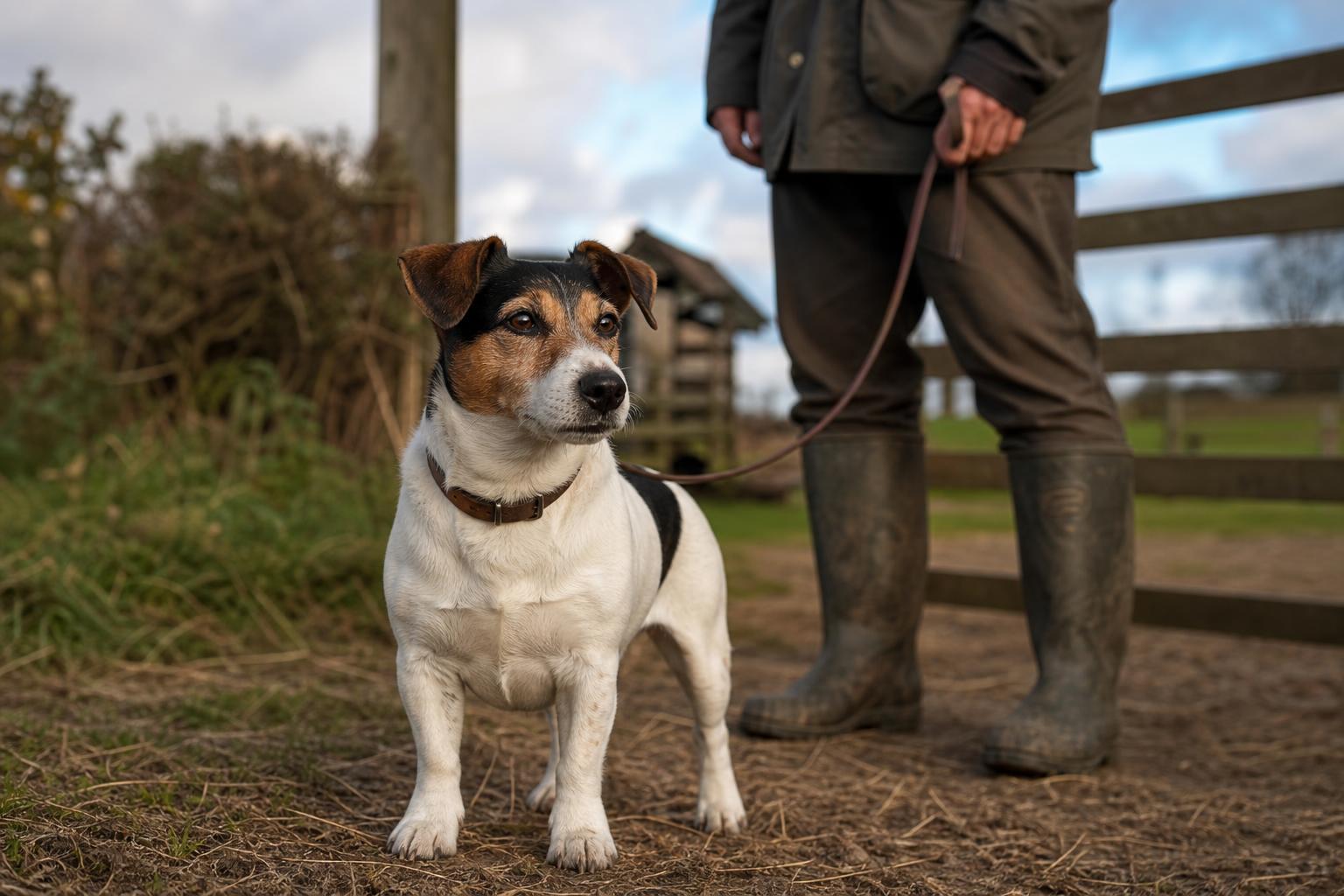
A finished Jack Russell is not simply an older terrier with energy to burn. This small, bold working breed was developed for fox hunting, vermin control, and go-to-ground work, so a truly finished dog should show more than enthusiasm. Buyers should be looking for a stable adult with useful training, proven manners, appropriate working exposure, and a temperament that fits the home or job ahead.
Because the Jack Russell is compact, athletic, curious, and often intensely prey driven, finished training needs to be judged in context. A dog that is excellent in a controlled yard may still need management around livestock, cats, wildlife, or unfamiliar dogs. A finished Jack Russell should have learned how to work with a handler, settle when asked, and recover from excitement without becoming frantic or unsafe.
Verify reported working titles and test results with the issuing organisation. Confirm that the programme applies to the breed and ask what the result demonstrates about the individual dog.
What makes a finished dog
For a Jack Russell, finished should mean the dog has moved beyond basic exposure and has consistent, repeatable skills. The exact meaning depends on the seller's program. Some finished Jack Russells are trained primarily as working terriers for farm use, earthwork, or vermin control. Others may be finished in obedience, agility, barn hunt-style work, scent games, or as highly trained active companions.
At minimum, a buyer should expect the seller to explain what the dog is finished in, how the dog was trained, and what situations the dog has handled successfully. A useful finished Jack Russell should show confidence without being reckless, drive without being uncontrollable, and independence without ignoring the handler completely.
Skills worth seeing in person
- Reliable response to name, recall, and basic commands in a distracting environment.
- Leash manners and the ability to settle after excitement.
- Crate comfort, loading, travel manners, and calm handling for grooming or veterinary care.
- Appropriate working exposure for the dog's intended role, whether that is terrier work, scent work, sport, or active family life.
- Sound temperament around people and a clear explanation of the dog's behavior around other dogs and small animals.
The Jack Russell's strong chase, dig, and vocal instincts should not be dismissed as quirks. They are part of the breed's heritage. A finished dog is not necessarily a dog with no prey drive; it is a dog whose drive is understood, trained, and managed.
Hunt tests
Hunt tests can be useful proof for some gundog breeds, but buyers should be careful when applying that expectation to a Jack Russell. This breed is a terrier, not a pointing dog, flushing spaniel, or retriever. Standard AKC-style hunt tests used for retrievers, pointing breeds, or spaniels may not be relevant to a Jack Russell's real working purpose.
If a seller mentions hunt tests, ask which organization held the test, what the test measured, and whether the results can be verified through the organization. In the terrier world, earthdog-style events, working certificates, barn hunt records, or club-specific activities may be more relevant than traditional gundog tests. Even then, a title is only one piece of the evaluation.
A buyer should not reject a good finished Jack Russell simply because it lacks a hunt test title. Instead, ask for practical proof: controlled exposure, a clear description of quarry or game experience where legal and ethical, and demonstrations of obedience before and after high excitement. The best sellers will be honest about what the dog has and has not done.
Verify working records and breed eligibility
Verify reported working titles and test results with the issuing organisation. Confirm that the programme applies to the breed and ask what the result demonstrates about the individual dog.
Verify reported working titles and test results with the issuing organisation. Confirm that the programme applies to the breed and ask what the result demonstrates about the individual dog.
For this breed, stronger questions include: Has the dog been introduced to controlled digging outlets, scent work, farm environments, livestock boundaries, or legal terrier work? Does the dog stay responsive when aroused? Can it be called off distractions? These answers are usually more meaningful than a score from a system that may not fit the breed.
Trial records
Trial records can add value when they are real, current, and relevant. Jack Russells may appear in terrier trials, agility, obedience, rally, barn hunt, earthdog-type events, or other performance venues. Some dogs may also come from lines with documented working use rather than formal sport titles. Both types of proof can matter, but neither should replace direct evaluation.
How to verify records
- Ask for the dog's registered name, registry, microchip number if available, and copies of certificates or score sheets.
- Confirm the organization that issued each title or result.
- Check whether the record belongs to the same dog, not just a relative in the pedigree.
- Ask what the dog did after the title was earned; an old result may not reflect current fitness or behavior.
- Watch the dog perform practical tasks instead of relying only on paperwork.
For a working terrier, word-of-mouth claims such as proven, hard hunter, or fully finished need details. What quarry or game exposure was involved? Was it legal and supervised? How did the dog handle pressure? Does the dog have any history of unsafe aggression, fence fighting, bolting, or fixation on household pets? Honest answers protect both the buyer and the dog.
Age expectations
Finished Jack Russell dogs are usually mature enough to show stable temperament and consistent skills. Many buyers will be looking at young adults through middle-aged dogs rather than puppies. A very young dog may be promising and well started, but it may not yet be finished in the full sense. A mature dog may offer the advantage of known temperament, known drive, and established habits.
Age should be evaluated alongside health, soundness, and training history. The Jack Russell is often a sturdy, long-lived breed, but buyers should still ask about veterinary care, dental health, prior injuries, eye screening where relevant, and any DNA testing the breeder or owner uses for known inherited risks such as primary lens luxation or certain ataxias. Do not assume all tests apply to every dog or registry; ask what was done, why it matters, and how the results can be verified.
Older finished dogs can be excellent purchases for the right home, especially if their training is clear and their temperament is settled. They may also be less forgiving of major lifestyle changes, other pets, or inconsistent handling. A trial stay, written return terms, or careful transition plan can be worth discussing.
Investment value
A finished Jack Russell can cost more than a puppy or lightly started dog because time, training, handling, and real-world exposure have already been invested. Value should not be judged only by age or titles. A fair price depends on the dog's health, temperament, training depth, working proof, pedigree relevance, and suitability for the buyer's needs.
A buyer paying for a finished dog should receive transparency. Ask what is included: registration papers if applicable, veterinary records, training notes, equipment, transfer documents, and written terms. If the seller makes claims about AKC registration, club records, trial results, OFA information, DNA tests, or other paperwork, verify each item directly. Not every Jack Russell will be AKC registered, and related classifications such as Russell Terrier or Parson Russell Terrier can create confusion. The name used in a listing should match the paperwork being provided.
Questions before purchase
- What specific work or sport is the dog finished in?
- What commands are reliable off leash, on leash, and around distractions?
- How does the dog behave with children, other dogs, cats, poultry, and livestock?
- What health screening, DNA testing, or veterinary history is available?
- Why is the dog being sold, and what kind of home will not be a good fit?
The strongest investment is the dog that matches your real life. A high-drive terrier with impressive working proof may be a poor match for a quiet household with small pets. A polished sport dog may not be suitable for unsupervised farm work. A seller who helps you understand those limits is usually more trustworthy than one who describes every dog as perfect.
Buyer-focused conclusion
Finished Jack Russell dogs can be rewarding, capable, and full of character when their training and temperament match the buyer's goals. Look for proof, not slogans. Watch the dog work, verify any records that are offered, ask direct questions about health and behavior, and be realistic about terrier drive. The right finished Jack Russell should bring useful experience and a clear head, not just speed and confidence in a small package.
Explore Jack Russell on Working Dog Central
View the Jack Russell breed profile or browse Jack Russell listings.


