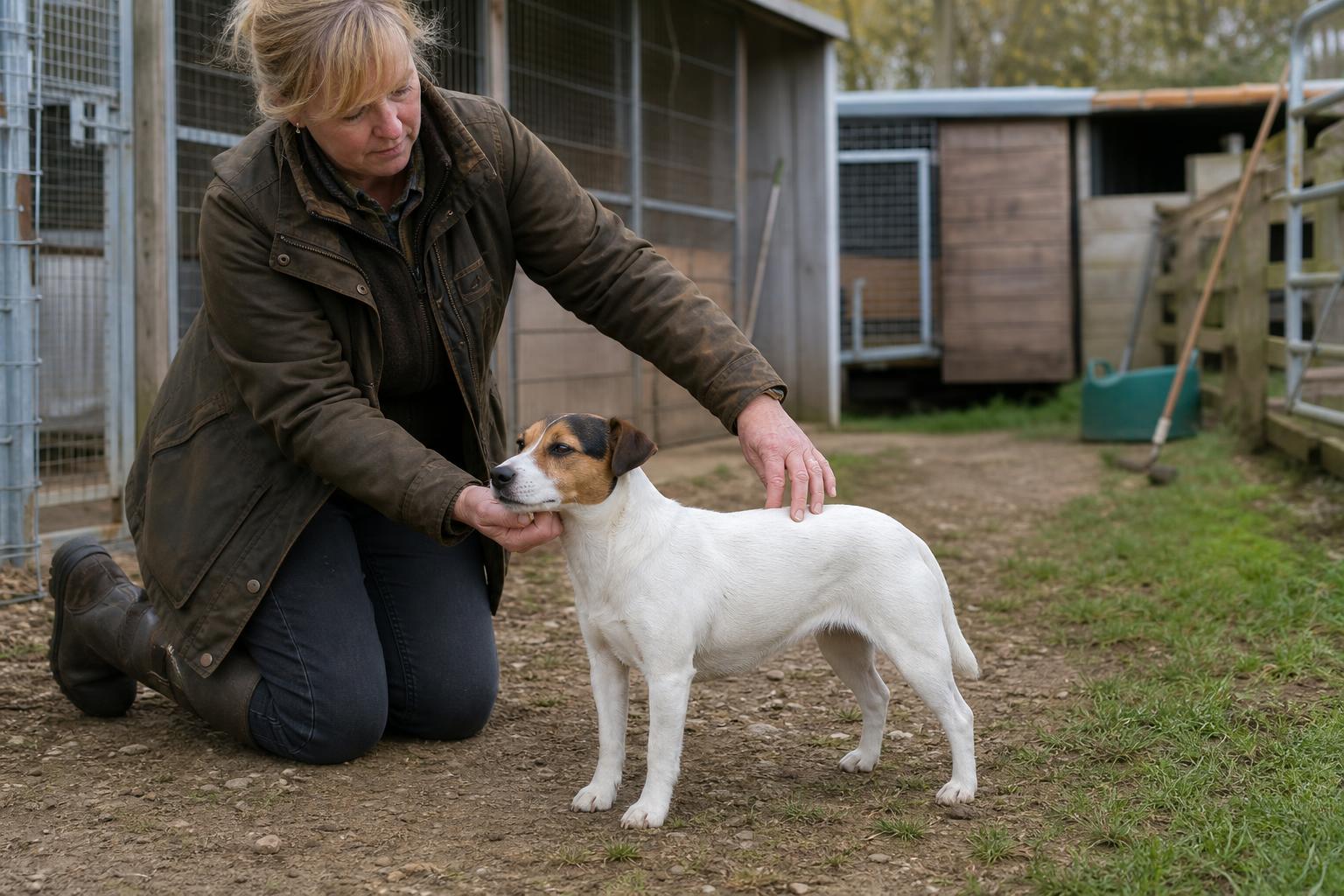
A proven female Jack Russell can be an appealing option for a breeder, working-terrier enthusiast, or serious buyer who wants more information than a young prospect can provide. Instead of guessing how a female may mature, you can often review her adult temperament, prior litters, mothering style, fertility history, and how consistently she has produced sound, useful pups. That extra information is valuable, but it also means the buyer has more homework to do.
The Jack Russell is a small, athletic, intensely motivated terrier with a strong hunting background. Breed facts matter here: these dogs are often bold, curious, energetic, vocal, and driven to chase, dig, and investigate. A good proven female should not only have produced puppies, but should also represent the kind of temperament and structure that makes the breed functional. Buyers should look past a simple claim that she is “proven” and ask what has actually been proven.
This guide focuses on practical evaluation. It does not assume every Jack Russell female is registered with the same organization, has formal working titles, or has every possible test available. Instead, it helps buyers verify records, ask better questions, and decide whether a female fits their breeding, working, or companion goals.
Production record for a Jack Russell proven female
The production record is the first place to start. Ask how many litters the female has had, when they were born, how many puppies were whelped, how many survived, and whether the pups developed as expected. A seller should be able to talk clearly about puppy size, temperament, structure, coat type, and any concerns that appeared as the pups matured.
Because Jack Russells can vary in leg length, outline, coat, drive, and registry classification, the details matter. If the female consistently produced pups with stable temperaments, athletic builds, weather-resistant coats, and the lively but manageable character expected of the breed, that is useful information. If prior pups were difficult to place, overly sharp, unusually timid, structurally unsound, or affected by avoidable health problems, buyers should slow down.
- Ask for dates and sizes of previous litters.
- Request photos or updates of grown offspring when available.
- Ask what traits the female reliably passes on.
- Find out whether any puppies were returned, rehomed, or had serious concerns.
- Compare the female’s production record with the stud dogs used.
A strong production record is not just a big litter count. For a Jack Russell, quality is measured in healthy, well-adjusted, active dogs that can handle training, family life, and appropriate working or sport outlets.
Prior litters and what they say about the female
Prior litters can reveal patterns. A single nice puppy may say more about the sire, the home, or luck than the female. Multiple litters, especially with different males, may show whether the female contributes consistent temperament, size, coat, hunting desire, or trainability. Buyers should ask the seller to describe each litter rather than accepting broad praise.
For example, a Jack Russell female that produced pups successful in agility, scent work, barn hunt-style activities, farm vermin control, or active companion homes may be valuable to the right buyer. A female whose offspring needed unusually heavy management around other pets may still be useful in some programs, but that information must be understood before purchase. This breed often has strong prey drive; responsible sellers should be honest about how that drive shows up in the female and her pups.
If the seller has no follow-up on previous litters, that is not always a deal breaker, but it does limit what can be verified. A proven female is worth more when her production can be checked through records, buyer references, photos, veterinary notes, or direct observation of offspring.
Maternal ability in Jack Russell females
Maternal ability matters because it affects both puppy survival and early development. Ask whether the female whelped naturally, whether she required veterinary assistance, and how she cared for her puppies. Did she clean, nurse, and settle with them? Was she steady when people handled pups? Did she become excessively stressed, defensive, or neglectful?
Some terriers are intense, and a Jack Russell female with a strong personality may still be an excellent mother. The key is whether her behavior is safe, manageable, and repeatable. A good seller should explain what kind of whelping setup worked, how much supervision was required, and whether any complications occurred.
- Ask if she accepted normal handling of pups by trusted people.
- Ask whether supplemental feeding was needed and why.
- Review any C-section, mastitis, uterine infection, or puppy loss history with a veterinarian.
- Find out how she behaved when puppies became mobile and demanding.
Good maternal ability does not guarantee future breeding success, but poor maternal history should be taken seriously, especially if the buyer is paying a premium for a proven brood female.
Age and breeding history
Age is a major part of fair evaluation. Jack Russells are often long-lived and sturdy, but breeding decisions should still be made conservatively and with veterinary guidance. Buyers should know the female’s exact age, number of litters, spacing between litters, recovery after each litter, and current body condition.
A younger adult with one healthy litter offers different value than an older female near the end of her breeding years. An older proven female may still be a wonderful companion, worker, or mentor dog in a household, but her price should reflect realistic future breeding potential. Avoid vague statements such as “she has a few litters left” unless a veterinarian has evaluated her and the buyer understands the risks.
Responsible questions include: When was her last heat cycle? Were cycles regular? Has she missed breedings? Has she ever failed to conceive? Has she needed hormone treatment or repeated veterinary intervention? These answers help separate a genuinely valuable proven female from one being sold because a problem has appeared.
Health clearances and records
Health clearances should be reviewed carefully, but buyers should verify what is relevant to this specific Jack Russell and registry type rather than assuming every test or title applies. The breed can have inherited concerns involving eyes and neurologic conditions, and some programs use DNA testing for issues such as primary lens luxation and certain ataxias, along with formal eye screening. Ask the seller what testing has been completed, by whom, and whether results are public or documented.
Do not accept casual statements like “vet checked” as a substitute for clear records. A routine veterinary exam, vaccination history, dental record, reproductive history, DNA result, and formal eye screening all answer different questions. Buyers should also ask for records on previous litters if any inherited issue has appeared.
- Confirm the female’s identity on every health document.
- Review dates, laboratories, registries, or veterinary clinics listed.
- Ask whether the sire of each prior litter was also tested where relevant.
- Have your own veterinarian review reproductive and general health records before purchase.
Health testing reduces risk; it does not create a guarantee. Be wary of anyone promising perfect puppies or dismissing reasonable health questions.
Temperament and daily manageability
Temperament is central in a Jack Russell proven female. The breed is known for confidence, energy, intelligence, and a large personality in a small frame. Buyers should observe the female in normal situations if possible: around people, on leash, in a crate, in the yard, around other dogs, and during handling. A good Jack Russell may be animated and intense, but she should still be understandable and manageable by experienced owners.
Ask how she handles children, visitors, grooming, nail trims, travel, confinement, and small animals. Because Jack Russells may have strong prey drive and digging instincts, a seller should be candid about containment needs. A female that climbs, digs under fencing, or fixates on cats is not necessarily abnormal for the breed, but the buyer must be prepared.
For breeding, temperament is not just about whether the female is pleasant with her owner. Her offspring may inherit intensity, sociability, environmental confidence, and impulse-control tendencies. A proven female with a stable, honest temperament is worth more than one whose issues are hidden behind pretty photos or strong marketing language.
Working proof, pedigree strength, and registry questions
Verify reported working titles and test results with the issuing organisation. Confirm that the programme applies to the breed and ask what the result demonstrates about the individual dog.
For a working-terrier buyer, useful proof may include practical field experience, earthdog-style activities, vermin control, barn hunt, agility, obedience, or reliable owner references. For a companion or sport breeding program, stable temperament, trainability, structure, and health may matter more than a formal title. The point is to match proof to purpose.
- Ask for the registered name and number if registration is claimed.
- Verify titles, trial results, or working claims with the issuing organization.
- Study relatives, not just the female herself.
- Consider whether the pedigree supports your goals for size, coat, drive, and temperament.
A pedigree full of names is not the same as a thoughtful breeding history. Good sellers can explain why the female was bred, what she contributed, and where her strengths and weaknesses show up.
Fertility considerations before purchase
Fertility is one of the biggest reasons to be cautious. A female may be proven because she once produced a litter, but that does not mean she is currently fertile or safe to breed again. Ask about missed breedings, small litters, false pregnancies, irregular seasons, infections, difficult whelpings, and recovery after nursing. If the sale price depends on future breeding value, a pre-purchase reproductive exam is sensible.
Buyers should also discuss whether the female has been bred by natural service, live cover, artificial insemination, or another method. Do not assume all options are available or appropriate. If frozen semen or AI is part of your plan, verify the veterinary support, timing, costs, and suitability before buying the female.
Fair purchase evaluation
A fair price for a Jack Russell proven female depends on age, health, records, temperament, production quality, pedigree, current condition, and realistic future use. Exact prices vary too much by region, registry, training, and seller reputation to give a universal number. Instead, buyers should compare documentation against the asking price.
Value rises when the female has verified health testing, strong prior litters, stable temperament, clear records, and offspring that reflect the seller’s claims. Value drops when records are missing, the female is older than advertised, prior litters are vague, health history is incomplete, or the seller pressures for a fast decision.
- Use a written contract that states registration, health records, breeding status, and return terms.
- Clarify whether she is being sold with full breeding rights or as a companion.
- Confirm whether any puppies, deposits, or co-ownership obligations are attached.
- Budget for veterinary review, transport, quarantine, and adjustment time.
Red flags when shopping for Jack Russell proven females
Be cautious if the seller cannot provide basic dates, avoids health questions, overpromises future litters, or claims every pup will be a top worker or perfect family dog. Also watch for a female being sold immediately after weaning a litter while thin, stressed, or poorly recovered. A responsible seller should care where she goes and should be willing to discuss both strengths and faults.
Photos and short videos help, but they are not enough. Whenever possible, speak with the seller by phone, review documents, and arrange an independent veterinary exam. If distance prevents an in-person visit, ask for current video showing movement, handling, teeth, coat, and normal behavior in the home or kennel.
Buyer-focused conclusion
A proven Jack Russell female can be a smart purchase when her production record, maternal ability, temperament, health information, and breeding history are all clear. The best females are not simply dogs that have had puppies; they are mature, well-documented representatives of a bold working terrier breed, with records that help buyers make realistic decisions.
Take your time, verify every claim that matters, and match the female to your goals. A careful buyer will look beyond the word “proven” and choose a Jack Russell female whose health, character, records, and prior offspring support the value being asked.
Explore Jack Russell on Working Dog Central
View the Jack Russell breed profile or browse Jack Russell listings.


