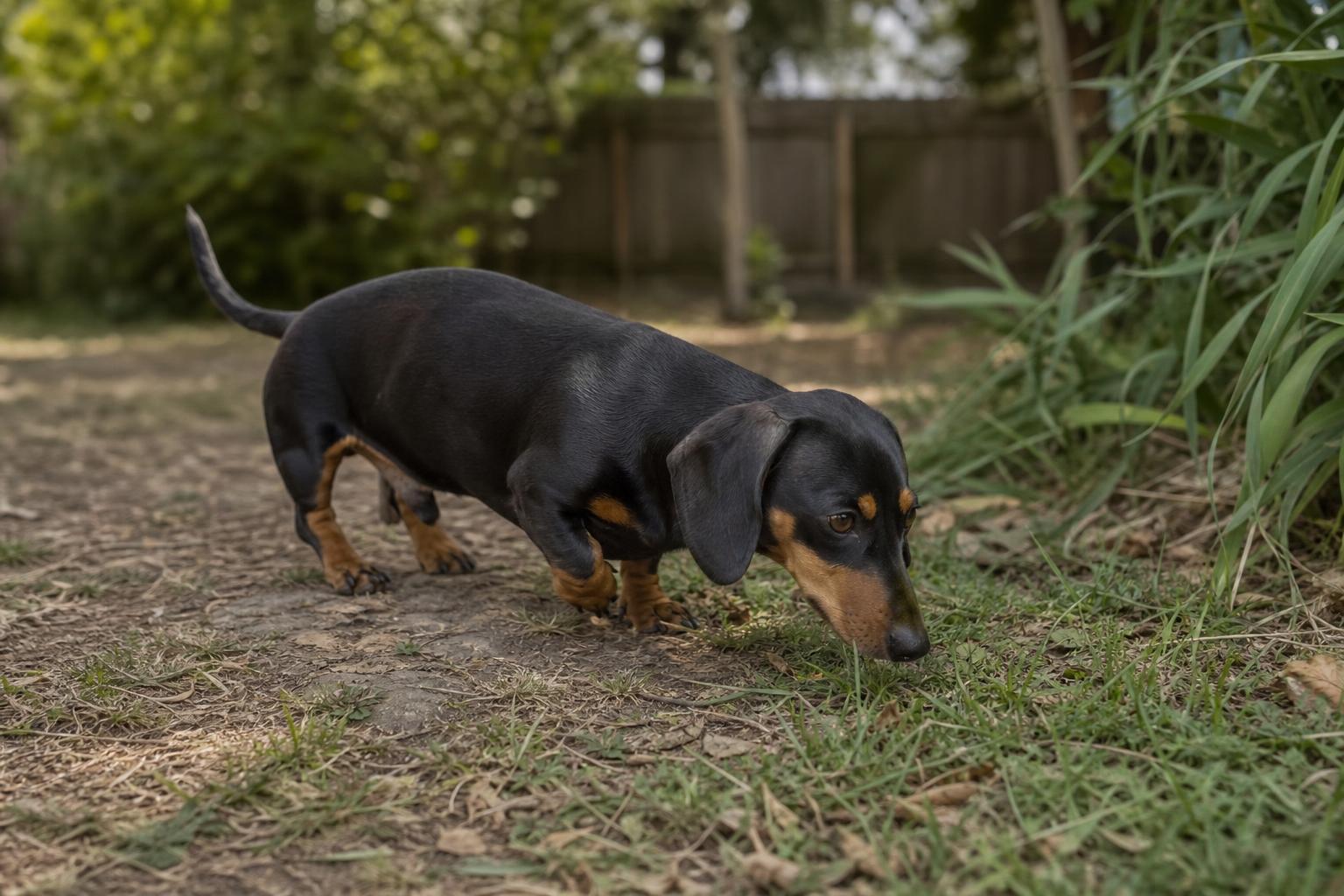
The Miniature Dachshund is a small dog with a working-dog mind, a bold voice, and a body shape almost everyone recognizes. Long, low, sturdy, and alert, the breed was developed from German scent hounds for work around burrows and small game. Today, many Miniature Dachshunds are beloved companion dogs, but the original traits still matter: they are curious, determined, nose-driven, and often much braver than their size suggests.
For buyers, that combination is both the charm and the responsibility. A Miniature Dachshund can be affectionate, funny, loyal, and adaptable in an apartment or house. The same dog may also bark at sounds, follow scent trails with single-minded focus, dig with enthusiasm, and chase small wildlife if given the chance. The best homes understand the breed as a serious little hound, not a fragile novelty dog.
Breed History and Original Purpose
The Dachshund name means badger dog in German, and the breed's history is tied to hunting animals that went underground. Standard Dachshunds were developed for larger quarry, while smaller Dachshunds were useful for rabbits and other smaller burrowing game. The Miniature Dachshund emerged through selective breeding for a smaller dog that kept the courage, scenting ability, and independent working style of the original Dachshund.
That history explains a lot about the modern Miniature Dachshund. A dog bred to work around dens needed to make decisions, push forward in tight spaces, use its nose, and announce activity. In a home, those instincts can appear as alert barking, confident problem-solving, persistence, and strong opinions. Training works best when it respects that background and channels the dog rather than trying to erase the hound nature.
Size, Build, and Appearance
Miniature Dachshunds are defined by their long body, short legs, proud head carriage, and alert expression. They are smaller than standard Dachshunds, with many descriptions placing them around 11 pounds or less and about 5 to 6 inches at the shoulder, though size definitions vary by registry and country. Whatever the measuring system, a Miniature Dachshund should look sturdy and well-muscled rather than delicate.
The breed comes in three coat types: smooth, longhaired, and wirehaired. Smooth coats are sleek and easy to maintain. Longhaired dogs have softer feathering that needs more brushing. Wirehaired dogs have a rougher coat texture and often a more terrier-like expression. Color and pattern vary widely, including red, black and tan, chocolate, dapple, and piebald. Buyers should focus less on unusual markings and more on sound structure, comfort, temperament, and health-focused breeding choices.
Temperament and Household Personality
Miniature Dachshunds are often affectionate with their people and enjoy being close to the family. Many are playful, comical, and expressive. They may be reserved with strangers at first, and they can be quick to alert when they hear something outside the door. Their small size does not make them automatically easy; this is a bold breed with enough independence to test inconsistent rules.
- Expect a lively, curious companion that likes interaction and attention.
- Plan for barking management from the beginning, especially in apartments or close neighborhoods.
- Use careful introductions with cats, pocket pets, poultry, and small wildlife because prey drive may be present.
- Supervise children and teach respectful handling, especially because the breed's long back needs protection.
With good socialization, many Miniature Dachshunds become confident, engaging family companions. Without structure, they can become pushy, noisy, or suspicious. Buyers should look for puppies or adults raised with patient handling, normal household exposure, and calm human contact.
Training and Mental Enrichment
Miniature Dachshunds are intelligent, but they are not always eager to repeat drills simply because a person asked. Short, reward-based sessions usually work better than pressure or long lessons. Food rewards, sniffing games, clear routines, and consistent household rules are valuable. Recall deserves special attention because a Dachshund that catches an exciting scent may tune out everything else.
Good early goals include name response, leash manners, crate comfort, polite greetings, quiet-on-cue foundations, and handling for feet, ears, teeth, and grooming. Because many are vocal, reward calm behavior before barking becomes a habit. Puzzle toys, scent games, and controlled exploring can give the dog an outlet for its working instincts without allowing unsafe roaming.
Exercise and Back-Friendly Living
Miniature Dachshunds need daily activity, but their structure calls for sensible exercise. Walks, sniffing routes, light play, and training games are better than repeated jumping or rough high-impact activity. Their long spine can be vulnerable, so many owners use ramps or steps for furniture and avoid letting the dog launch repeatedly from couches, beds, stairs, or vehicles.
Keeping a Miniature Dachshund lean is one of the most practical care decisions an owner can make. Extra weight increases strain on the back and joints. A healthy routine includes measured meals, regular walks, and a home setup that makes good choices easy. This is not a breed that should be treated as a couch ornament, but it also should not be encouraged into reckless jumping.
Grooming and Everyday Care
Grooming depends on coat type. Smooth-coated Miniature Dachshunds usually need occasional brushing and routine nail care. Longhaired dogs need more frequent brushing to prevent tangles around the ears, chest, tail, and furnishings. Wirehaired dogs may need coat-specific maintenance to keep the texture tidy. All coat types benefit from regular tooth care, ear checks, and nail trimming.
- Handle feet and nails early so grooming is not a wrestling match.
- Brush longhaired and wirehaired coats on a predictable schedule.
- Check ears and skin after outdoor exploring, especially in brushy areas.
- Use ramps, low furniture access, or lifted support when needed to protect the back.
Health Considerations Buyers Should Understand
Back health is a central ownership issue in Dachshunds, including miniatures. Intervertebral disc disease, often shortened to IVDD, is a known concern in the breed. No buyer should accept a simple promise that a line has no risk. Instead, ask how the breeder thinks about spine health, body condition, structure, activity management, and veterinary care. Owners should watch for pain, reluctance to move, wobbliness, weakness, or sudden changes in jumping or climbing comfort and seek veterinary attention quickly.
Some lines may also have inherited eye concerns, including forms of progressive retinal atrophy. Responsible breeders use appropriate screening and genetic testing where relevant and should be willing to discuss what has been done without exaggerating guarantees. Buyers should ask for documentation, understand what each test does and does not prove, and plan for regular veterinary care throughout the dog's life.
Ownership Fit
A Miniature Dachshund can fit many living situations, including apartments, if the owner is committed to daily walks, training, and noise management. The breed usually does best with people who want a close companion and can provide structure without harshness. Long hours alone, unsecured yards, and homes that ignore barking or jumping habits can create problems.
This breed is often a good match for someone who enjoys personality, humor, and a dog that wants to be involved. It may be a poor match for someone expecting a silent, ultra-compliant, off-leash dog with no prey drive. The small size is convenient, but the temperament still belongs to a hound with a job history.
Practical Buying Considerations
When evaluating a Miniature Dachshund breeder or available adult, slow down and ask specific questions. Look for sound structure, confident temperament, clean records, and an honest discussion of health. Avoid choosing solely by rare color, tiny size, or dramatic markings. A sturdy, comfortable, well-socialized dog from a thoughtful source is more important than a trendy look.
- Ask about the parents' temperaments, back history, eye screening, and any genetic testing used in the line.
- Ask how puppies are raised, handled, introduced to normal household sounds, and started on crate or house routines.
- Ask what support the seller provides after placement and what the purchase agreement requires.
- Meet the dam or adult dog when possible and observe confidence, movement, and comfort with people.
- For adoption, ask about barking, prey drive, house training, handling tolerance, and any known back or vision history.
Bottom Line
The Miniature Dachshund is a charming, spirited, historically purposeful little hound. Its best qualities are loyalty, courage, humor, intelligence, and adaptability. Its challenges are also tied to those same roots: vocal behavior, independence, prey drive, and the need for thoughtful back care. Buyers who choose carefully, train patiently, keep the dog lean, and provide safe outlets for scenting and exploration are most likely to enjoy the breed for what it truly is: a small companion with a working-dog heart.
Explore Miniature Dachshund on Working Dog Central
View the Miniature Dachshund breed profile or browse Miniature Dachshund listings.


