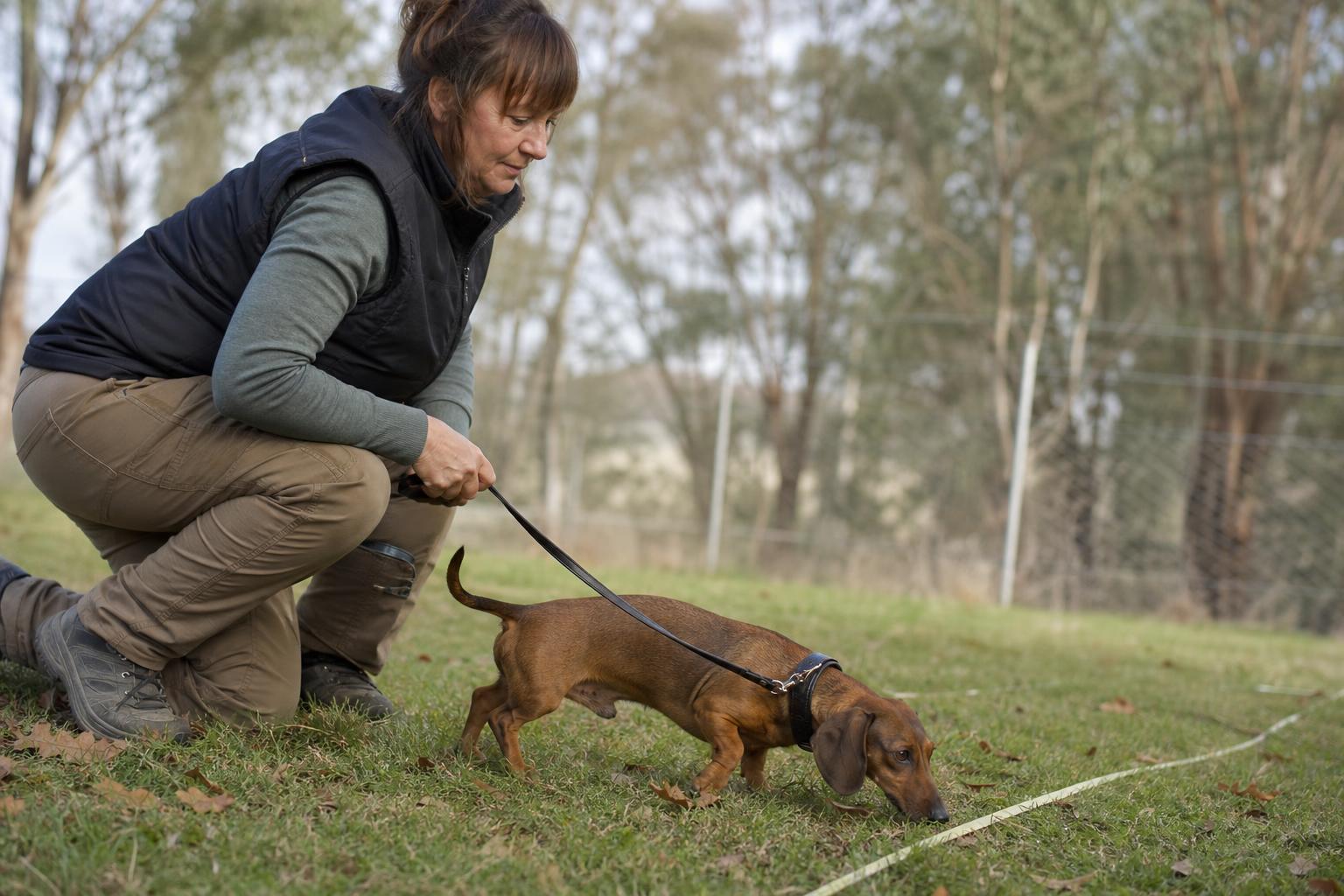
A finished Miniature Dachshund is a small dog with a large amount of practical evaluation behind it. The breed is known for a long, low body, short legs, a bold temperament, and a strong nose rooted in German hunting history. Miniatures were developed as smaller Dachshunds suited to rabbits and other smaller burrowing game, and many still carry the independent, scent-driven mindset that made the breed useful in the field. When a buyer is looking at a finished dog rather than a young puppy, the central question is not simply whether the dog is cute, affectionate, or already grown. The question is what the dog has actually been taught, how reliably it performs, and whether its temperament and structure fit the buyer's home, work, and handling style.
The term finished can mean different things depending on the seller, the venue, and the dog. For one Miniature Dachshund, finished may mean a mature companion with reliable house manners, leash skills, crate comfort, grooming tolerance, and dependable behavior around normal household routines. For another, it may mean a dog with documented field experience, den work, tracking, scent games, or competitive records. Because Miniature Dachshunds are intelligent but often independent, buyers should ask for demonstrations rather than relying on broad labels. A finished dog should show its training in real situations, not only in a quiet yard or polished description.
What Makes a Miniature Dachshund a Finished Dog
A truly finished Miniature Dachshund should have age-appropriate maturity, a stable temperament, and a clear record of what it can do. The breed can be brave, vocal, playful, and devoted, but it can also be stubborn when an interesting scent overrides the handler. Finished training should include practical control around distractions, calm handling, and predictable responses to familiar commands. The dog should be comfortable being picked up, examined, groomed, and managed in ways that protect its back. This matters because Dachshunds, including miniatures, require thoughtful weight management and sensible activity to reduce unnecessary strain on their long spines.
Buyers should separate trained behavior from wishful language. A dog described as finished for family life should be able to demonstrate polite leash walking, settling in a crate or quiet space, appropriate response to visitors, and manageable alert barking. A dog described as finished for scent work or hunting-style tasks should show nose use, drive, handler cooperation, and recovery after excitement. A small hound can have plenty of courage, but finished work should never be confused with recklessness or lack of control.
- Ask what commands the dog knows and where those commands have been proofed.
- Watch the dog work or demonstrate skills before committing.
- Ask how the dog behaves around children, other dogs, cats, and small animals.
- Discuss barking, digging, prey drive, and off-leash reliability honestly.
- Confirm the dog's coat type and grooming routine: smooth, longhaired, or wirehaired.
Hunt Tests, Field Work, and Scent Ability
Not every Miniature Dachshund finished dog will have formal hunt test results, and buyers should not assume that every dog on a general dog marketplace has been campaigned in a hunting venue. However, the breed's history as a scent hound and burrow worker makes field aptitude relevant when a seller claims working ability. When records are available, ask for copies, dates, venue names, and the dog's registered or call name used in those records. If formal hunt tests are not part of the dog's background, ask for practical proof: how the dog follows scent, whether it has worked on rabbit or tracking exercises, how it responds to recall during scent interest, and how it is managed safely outdoors.
Because Miniature Dachshunds are small and long-backed, buyers should also ask how work has been conditioned. Sensible field conditioning should build fitness without repeated high-impact jumping or unsafe terrain. A finished dog should be lean, muscled, and eager without being pushed into activities that conflict with sound care. If the dog will be used primarily as a companion, field drive still matters because it affects leash habits, yard security, and interest in small wildlife.
Verify working records and breed eligibility
Verify reported working titles and test results with the issuing organisation. Confirm that the programme applies to the breed and ask what the result demonstrates about the individual dog.
Trial records can be helpful because they show that the dog has performed away from home under pressure. Still, records do not replace a fit assessment. A titled dog may be too intense, too vocal, or too independent for a quiet apartment. A dog without formal titles may be ideal for a buyer who wants a mature, trained companion with reliable manners. The best finished-dog purchase balances proof, temperament, health awareness, and realistic expectations.
Age Expectations for Finished Miniature Dachshunds
Finished dogs are usually past the earliest puppy stage, but age can vary widely. A young adult may have energy, adaptability, and many years ahead, but may still need continued proofing and boundary work. A mature adult may offer steadier habits and a clearer temperament, which can be valuable for families or owners who prefer predictability. With Miniature Dachshunds, age evaluation should include mobility, body condition, dental care, eye health awareness, and any history of back pain or restricted activity.
Ask the seller how the dog handles stairs, furniture, ramps, crates, car rides, grooming, and veterinary exams. Many owners use ramps or steps and discourage repeated jumping to support back-friendly living. A finished dog should already have a management routine that can transfer to the new home. If the dog has ever shown pain, wobbliness, reluctance to jump or climb, or other possible spine-related signs, those details should be discussed openly with veterinary guidance.
Evaluating Temperament and Household Fit
Miniature Dachshunds often form strong bonds with their people. Many enjoy warmth, comfort, short walks, sniffing games, and close companionship. They may also alert bark, chase small animals, and test rules when training is inconsistent. A buyer should ask how the dog behaves when left alone, whether it is crate trained, how it responds to strangers, and whether it has lived with children or other pets. Early socialization and positive, consistent training matter, but an adult dog's current behavior is especially important because it shows what the buyer is actually bringing home.
- For apartments, focus on barking, leash manners, and settling skills.
- For homes with yards, focus on fence security, digging, and prey drive.
- For families, focus on handling tolerance and respect around small dogs.
- For working or sport homes, focus on drive, recovery, and handler cooperation.
Investment Value and Buyer Due Diligence
A finished Miniature Dachshund may require a larger upfront investment than a puppy because time, training, care, and proof have already gone into the dog. The value is strongest when the dog saves the buyer uncertainty: known temperament, established routines, demonstrated skills, and a clearer idea of adult structure. Value is weaker when the word finished is used loosely without records, demonstrations, or transparent health and behavior information.
Before buying, request veterinary records, vaccination and preventive-care history, any health screening information available in the line, and a written agreement that explains what is included. Responsible sellers should be willing to discuss structure, back care, eye concerns where relevant, diet, exercise, grooming, and the dog's daily routine. Buyers should avoid invented assumptions about registry, price, availability, or health guarantees and instead evaluate the specific dog in front of them.
Questions to Ask Before You Buy
- What exactly makes this Miniature Dachshund finished?
- Can I see the dog demonstrate its training in a realistic setting?
- What records, titles, trial results, or scent-work documentation are available?
- Has the dog had any back pain, mobility issue, eye concern, or activity restriction?
- How does the dog behave around strangers, children, other dogs, and small animals?
- What routines should continue immediately after purchase?
- What support does the seller provide after placement?
Bottom Line
A finished Miniature Dachshund can be a wonderful choice for buyers who want a known adult dog with training already in place. The best prospects combine the breed's charm, courage, and scent-hound character with clear manners, honest documentation, and sensible back-friendly management. Look for proof over promises, fit over labels, and a seller who can explain both the dog's strengths and its needs plainly.
Explore Miniature Dachshund on Working Dog Central
View the Miniature Dachshund breed profile or browse Miniature Dachshund listings.


