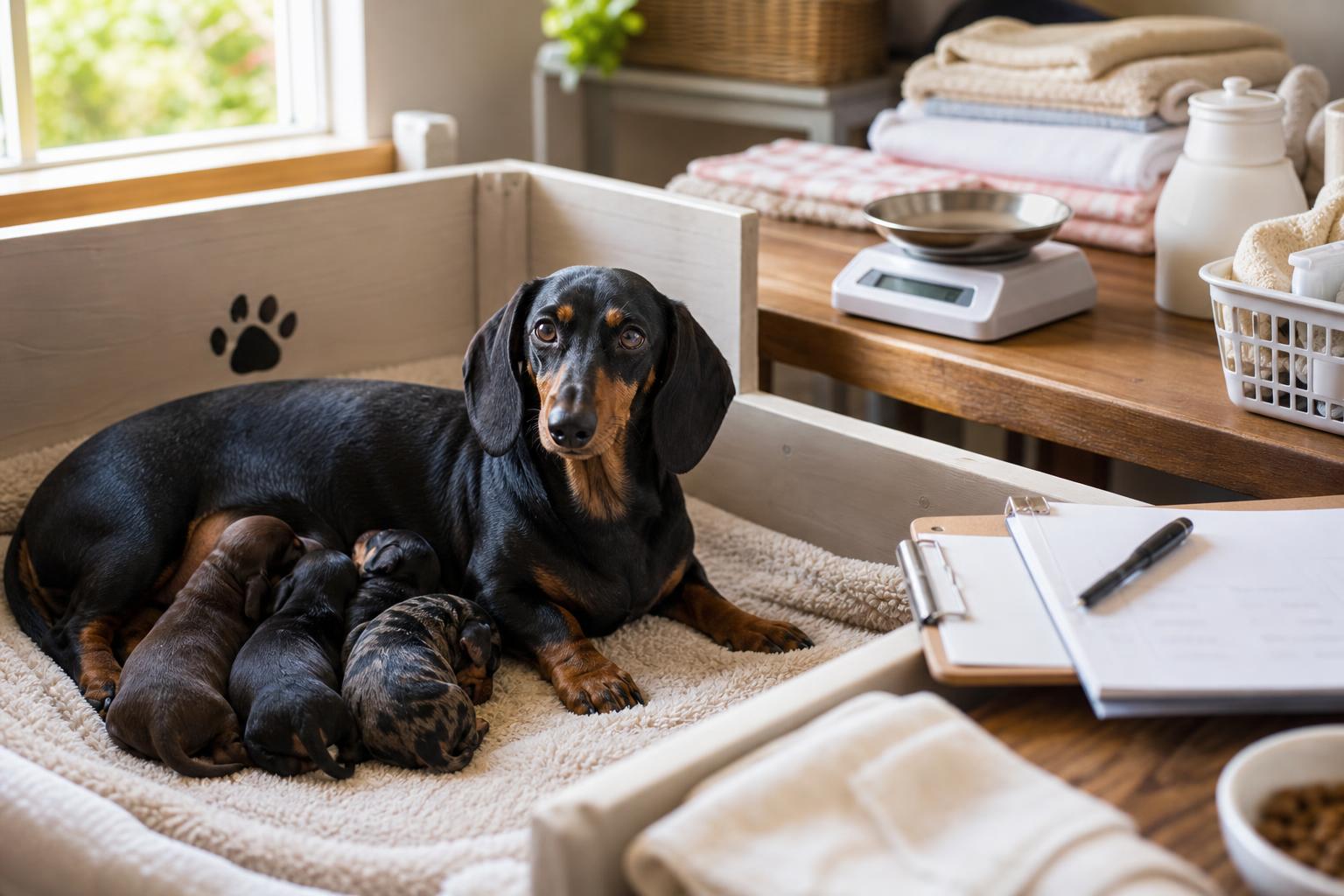
A Miniature Dachshund litter announcement should do more than say puppies are coming. For a buyer, the best announcements are clear, specific, and easy to verify. They explain who bred the litter, identify the sire and dam, describe the expected coat types or colors when appropriate, outline the timing, and show how the breeder is thinking about health, temperament, and long-term fit. Because the Miniature Dachshund is a small hound with a bold personality and a long-backed build, buyers should look for announcements that treat structure, soundness, handling, and responsible placement as priorities rather than afterthoughts.
This guide is written for people comparing Miniature Dachshund litter announcements on Working Dog Central and elsewhere. It does not replace direct conversations with breeders, veterinary advice, or registry verification. Instead, it gives you a practical checklist for deciding which announcements deserve a follow-up call and which ones should be approached with caution.
What a Good Litter Announcement Should Include
A strong announcement gives buyers enough information to understand the planned or whelped litter without forcing them to guess. At minimum, it should include the breeder's contact information, location or general region, expected or actual whelping date, the sire and dam, coat type, anticipated go-home timing, and a plain-language explanation of how puppies will be raised. For Miniature Dachshund litters, it is also helpful when the announcement notes whether the puppies are smooth, longhaired, or wirehaired, and whether the breeder expects certain colors or patterns.
Be cautious with announcements that lean entirely on hype. Phrases like “rare,” “tiny,” “perfect,” or “won't last” are not useful unless they are backed by transparent information. A thoughtful breeder usually spends more time explaining the dogs, the home environment, and the placement process than pushing urgency. If a litter is already born, the announcement should clarify how many puppies are available, whether any are reserved, and how the breeder matches puppies to homes.
Sire and Dam Information
The sire and dam are the foundation of the litter announcement. Buyers should expect registered names when available, call names, ages, coat types, and a short description of each parent's temperament. For a Miniature Dachshund, that description should not be limited to “sweet” or “cute.” Useful details include confidence, noise sensitivity, prey drive, trainability, sociability with visitors, comfort with children, and how the dog behaves in the home.
Miniature Dachshunds are known for being lively, affectionate, alert, and independent. Many are vocal and many enjoy following scent. A good announcement acknowledges those traits honestly. If both parents are bold and busy, puppies may suit active homes that enjoy training and enrichment. If one parent is softer or more reserved, the breeder should be able to explain how that affects puppy placement.
Ask whether you can see the dam with the litter, either in person or by recent video. If the sire lives elsewhere, ask why he was chosen and what the breeder knows about him beyond a photograph. A responsible breeder should be able to discuss the pairing in terms of structure, health history, temperament, and pedigree compatibility.
Pedigree and Registry Verification
Pedigree can be useful, but buyers should verify rather than assume. If an announcement references AKC registration, another registry, show results, field background, earthdog work, or performance titles, ask for registered names and documentation. Registry status can vary by country, breeder, and individual dog, and a casual claim in an advertisement is not the same thing as proof.
The Miniature Dachshund has a long history as a hunting hound, originally developed for work around burrows and smaller game. In modern homes, many are primarily companions, but their instincts still matter. Pedigree may help a buyer understand whether a line emphasizes companion temperament, conformation showing, performance activities, or working aptitude. Still, pedigree should never be used as a substitute for meeting the breeder, reviewing health information, and evaluating the actual parents.
If an announcement uses terms such as “champion lines,” “imported bloodlines,” or “working lines,” ask what those terms mean in that specific litter. Good breeders are usually comfortable naming the dogs behind the statement and explaining what they liked about those ancestors.
Health Clearances and Back-Smart Breeding
Health information is one of the most important parts of a Miniature Dachshund litter announcement. Dachshunds, including miniatures, require special attention to back health because their long spine can be associated with intervertebral disc disease risk. A breeder should never promise that a puppy will be free of future back problems, but they should be able to explain how they select breeding dogs, manage weight and conditioning, and educate puppy buyers about back-friendly routines.
Ask what health screening has been completed on the sire and dam. Depending on the line and location, this may include eye testing, genetic testing when appropriate, and other veterinary evaluations. If an announcement mentions OFA, DNA testing, or specific certificates, request copies or database links and confirm that the names match the sire and dam. If those programs do not apply to a particular dog or registry, the breeder should still be able to explain what they do to reduce risk and make informed breeding decisions.
Be wary of medical guarantees that sound absolute. A health guarantee should be written, limited, and clear about what is covered, what documentation is required, and what the breeder will do if a serious issue appears. It should not be used to distract from weak screening, poor communication, or a lack of knowledge about the breed.
Temperament, Socialization, and Early Handling
A litter announcement should tell you how puppies are being raised. For Miniature Dachshund puppies, early handling, gentle exposure to household sounds, safe surfaces, crate familiarity, and positive human interaction can make the transition to a new home much smoother. Because the breed can be alert and vocal, ask how the breeder introduces normal life noises and how they encourage confidence without overwhelming the puppies.
Look for details about where the puppies live, who handles them, and what they experience before going home. Are they raised in the house? Are they exposed to different people? Are they introduced to grooming basics, nail trims, and being picked up safely? For longhaired and wirehaired puppies, early grooming practice is especially useful. For all coat types, calm handling around the feet, mouth, and body helps future veterinary and grooming visits.
The breeder should also ask questions about you. A careful placement process is a good sign. They may want to know about your home, children, other pets, stairs, furniture habits, training plans, and experience with small hounds. That is not nosiness; it is part of matching a Miniature Dachshund puppy to a suitable home.
Deposits, Timing, and Buyer Expectations
Announcements should clearly explain deposit policy, reservation order, expected go-home age, and what is included with the puppy. A typical responsible process includes an application or conversation before a deposit is accepted. Buyers should receive a written receipt and a simple contract that explains whether the deposit is refundable, transferable, or tied to a specific puppy.
Timing matters. Puppies should not be rushed out the door too young. Ask when the breeder schedules veterinary checks, vaccinations, deworming, microchipping if offered, and final puppy matching. If the announcement says puppies are ready immediately, ask why. Sometimes an older available puppy is perfectly legitimate, but the breeder should be able to explain the situation clearly.
A good go-home package often includes veterinary records, feeding information, registration paperwork when applicable, a contract, and guidance for the first week at home. For a Miniature Dachshund, the breeder should also discuss safe handling, preventing repeated jumping, using ramps or steps, keeping the puppy lean, and building good habits early.
Red Flags in Miniature Dachshund Litter Announcements
- No named sire or dam, or reluctance to share registered names when registration is claimed.
- Heavy emphasis on unusual color, tiny size, or urgency without health and temperament details.
- Absolute promises about health, size, behavior, or future breeding value.
- No written contract, unclear deposit terms, or pressure to pay before speaking with the breeder.
- No veterinary records or vague answers about vaccinations and deworming.
- Unwillingness to discuss back care, responsible weight management, or breed-specific risks.
- Photos that appear reused, inconsistent, or unrelated to the actual litter.
- A breeder who will ship or release a puppy with little interest in the buyer's home or plans.
Questions to Ask Before You Commit
- What are the sire and dam like in daily life?
- Why did you choose this pairing?
- What health screening or veterinary evaluation has been completed?
- What registry paperwork applies, and how can I verify it?
- How are puppies socialized before going home?
- What vaccinations, deworming, and veterinary records will be provided?
- How do you match puppies to families?
- What support do you provide after the puppy leaves?
- What do you recommend for back-safe home setup and exercise?
Bringing a Miniature Dachshund Puppy Home
Once you choose a litter, prepare your home before pickup day. Use baby gates where needed, block unsafe stairs, and think carefully about furniture access. Many owners use ramps or steps to reduce repeated jumping, especially as the puppy grows more confident. Set up a crate or safe pen, choose a consistent potty routine, and plan short, positive training sessions.
Miniature Dachshunds are small, but they are not fragile ornaments. They need enrichment, leash practice, polite handling, and patient boundaries. Expect curiosity, opinions, and a strong desire to be near their people. If you have children, teach them to support the puppy's body properly and avoid rough play. If you have cats or small pets, supervise introductions and remember that many Dachshunds retain chase instincts.
Conclusion: Choose Clarity Over Hype
The best Miniature Dachshund litter announcements make it easy for a buyer to verify facts and understand the breeder's priorities. They identify the parents, explain the pedigree without exaggeration, discuss health screening honestly, describe how puppies are raised, and make deposit and timing details clear. For this breed, extra attention to structure, back-smart ownership, temperament, and careful handling is especially important.
If an announcement gives you useful information and the breeder welcomes thoughtful questions, it is worth a closer look. If the listing relies on pressure, vague claims, or promises that cannot be verified, keep searching. A well-bred Miniature Dachshund puppy should come from a breeder who is just as careful about the buyer as the buyer is about the puppy.
Explore Miniature Dachshund on Working Dog Central
View the Miniature Dachshund breed profile or browse Miniature Dachshund listings.


