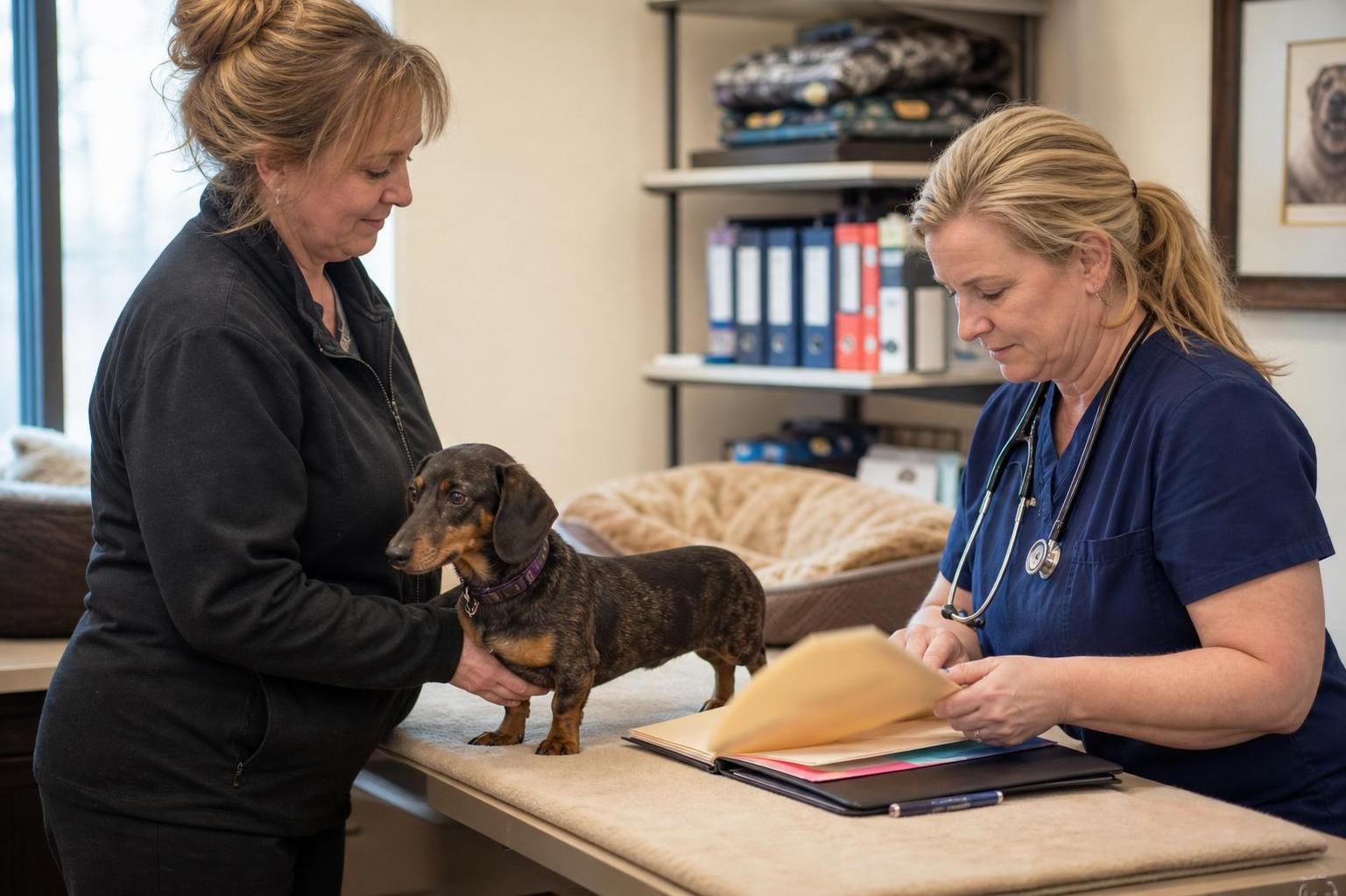
A Miniature Dachshund proven female can be a valuable addition for a knowledgeable breeder, but she should never be evaluated by charm, color, or popularity alone. This small German scent hound is bold, affectionate, vocal, and physically distinctive, with a long back, short legs, and a history tied to hunting burrowing game. Those same traits make thoughtful evaluation essential. A good female should show sound structure, steady temperament, appropriate health documentation, and a breeding history that supports—not exploits—her future quality of life.
This guide is written for buyers reviewing Miniature Dachshund proven females on Working Dog Central and similar listings. Use the breed facts as your anchor: Miniature Dachshunds are small, spirited dogs with three coat types, strong noses, independent minds, and special back-health considerations. Because registry rules, health programs, and breeding practices vary by country, club, and individual line, verify every claim directly with paperwork, veterinary records, and the relevant registry or testing organization.
Production Record in a Miniature Dachshund Proven Female
The first question is simple: what has this female actually produced? A proven female should have a clear production record, not just a statement that she has had puppies. Ask for details on prior litters, including dates, litter size, whelping method, puppy survival, coat types or colors produced, and whether any puppies were retained, shown, placed as companions, or developed into breeding prospects.
For Miniature Dachshunds, production record should be read alongside health and structure. Because the breed’s long spine can be vulnerable to intervertebral disc disease, buyers should pay close attention to whether previous offspring have shown back problems, mobility issues, eye concerns, bite problems, or temperament patterns such as excessive fearfulness or sharpness. A seller may not know every outcome, but a responsible breeder should be willing to discuss what is known and what is not.
- Ask how many litters she has produced and at what ages.
- Request information about whelping ease, maternal behavior, and puppy development.
- Ask whether any puppies have had notable health, structure, or temperament concerns.
- Look for honesty. A perfect-sounding record with no documentation deserves careful verification.
Prior Litters and What They Tell You
Prior litters can reveal patterns that a pedigree alone cannot. A Miniature Dachshund female that consistently produces confident, sturdy, appropriately sized puppies from compatible males may be more useful than one with flashy color but inconsistent results. Review photos, veterinary notes, buyer feedback, and any follow-up from previous puppy homes if available.
Because Miniature Dachshunds come in smooth, longhaired, and wirehaired coats, ask whether the female’s coat type and the stud choices were planned with a clear purpose. Color and pattern should never outrank health, structure, and temperament. Be especially cautious around any breeding claims involving dapple or double-dapple genetics; buyers should verify color genetics and understand associated risks before planning future pairings.
Maternal Ability and Whelping History
Maternal ability matters. A proven female should have demonstrated that she can care for puppies appropriately, or the seller should clearly explain any complications. Ask whether she free-whelped or required a C-section, whether she accepted and nursed her puppies, and whether supplemental feeding was needed. One difficult whelping does not automatically disqualify a female, but repeated complications change the evaluation.
Miniature Dachshunds are small dogs, so breeding plans should be conservative and veterinary-supported. Ask whether the seller has reproductive veterinary records, pregnancy confirmations, progesterone timing notes if used, and post-whelping checkups. Do not rely on vague assurances. The goal is to understand whether the female has been managed responsibly and whether another breeding would be fair to her.
Age and Breeding History
Age is one of the most important parts of evaluating a Miniature Dachshund proven female. A young female with one healthy litter is very different from an older female who has already produced several litters. Ask for her date of birth, complete breeding timeline, rest periods between litters, and the seller’s reason for placing her.
Fair purchase evaluation should include the possibility that her best future is retirement rather than another breeding. If she is being sold as a breeding prospect, confirm with a veterinarian that another litter is reasonable. If she is being sold as a retired companion, evaluate her as a household dog: manners, leash behavior, barking habits, social comfort, grooming needs, and how she handles children, other dogs, and small pets.
- Verify age with registration papers or veterinary records.
- Ask how many litters she has had and when.
- Confirm whether she has had adequate recovery time.
- Consider whether retirement is the most ethical next step.
Health Clearances for Miniature Dachshund Proven Females
Health documentation should be more than a verbal promise. Miniature Dachshunds have breed-specific concerns, especially back health and inherited eye conditions such as forms of progressive retinal atrophy in some lines. Ask what testing has been completed, what the results mean, and how those results influence future breeding decisions.
Not every clearance applies equally to every breed, country, or registry. If a seller mentions OFA, DNA testing, eye exams, or other screening, verify the results with the issuing database or laboratory when possible. If a seller says a test is unnecessary, ask why. A practical breeder can explain the relevance of each test to Miniature Dachshunds and to that particular pedigree.
Back Health and Everyday Soundness
Back health deserves special attention in this breed. Miniature Dachshunds should be kept lean, conditioned, and protected from repeated high-impact jumping. When evaluating a proven female, observe how she moves, rises from rest, uses stairs or ramps, turns, and tolerates normal handling. Any signs of pain, wobbliness, reluctance to move, or a history of disc episodes should be discussed with a veterinarian before purchase.
Ask how the female has been managed at home. Does she use ramps? Has she maintained a healthy weight? Has she ever had back pain, crate rest, medication, or imaging? A female with a past issue may still make a wonderful companion, but breeding decisions require extra caution and professional guidance.
Temperament and Household Fit
A proven female is still an individual dog. Miniature Dachshunds are often brave, lively, affectionate, and vocal. Many have a strong prey drive and a determined personality. This can be delightful in the right home and difficult in the wrong one. Spend time observing her away from puppies and away from the seller’s most controlled setup.
Ask how she behaves with strangers, children, other dogs, cats, and small animals. Ask about crate training, house manners, grooming tolerance, leash behavior, and barking. A female who has lived primarily in a kennel may need patient transition time. A female who has been a house dog may adapt faster, but still needs structure while she bonds with a new owner.
Fertility and Future Breeding Plans
If the female is being purchased for future breeding, fertility must be documented rather than assumed. Ask whether she cycles regularly, whether she has missed breedings, whether artificial insemination was ever used, and whether progesterone timing or reproductive veterinary support was part of prior litters. Do not assume that frozen semen, live cover, or AI options are automatically available or appropriate; verify relevance with the stud owner, veterinarian, registry, and any contract terms.
Future breeding plans should also account for size, structure, coat type, temperament, and health risks. A Miniature Dachshund female should be paired with a male selected to improve the next generation, not merely to produce a popular color or quick litter. Review the pedigree with someone experienced in the breed before committing.
Pedigree Strength and Verification
Pedigree can help you understand family patterns, but it is not proof of quality by itself. Ask for registration papers, a three-generation pedigree if available, and any documentation tied to relatives. If AKC registration is claimed, verify current status and transfer requirements directly with AKC or the appropriate registry. Some Miniature Dachshunds may be registered through different organizations depending on country, breeder, and line, so avoid assumptions.
Look for consistency: sound relatives, sensible breeding choices, and clear explanations of why specific dogs were paired. Trial records, hunt-related proof, or performance titles may not apply to every Miniature Dachshund line, especially companion-focused programs. When such claims are made, ask for records and confirm that they are relevant to the breed and the individual dog.
Fair Purchase Evaluation
Price should reflect the whole dog: age, health records, reproductive history, temperament, registration status, contract terms, and whether she is being sold as a breeding female or retired companion. Avoid exact price assumptions. Markets vary widely by region, pedigree, coat, training, health documentation, and the seller’s goals. The more limited the documentation, the more cautious the buyer should be.
- Review the contract for breeding rights, spay requirements, return clauses, and health disclosures.
- Confirm whether registration papers transfer with full or limited rights.
- Ask what records are included: veterinary, reproductive, genetic, eye, and vaccination history.
- Consider paying for an independent veterinary exam before finalizing the sale.
Red Flags When Buying a Miniature Dachshund Proven Female
Walk away from pressure tactics, missing records, vague explanations, or a seller who cannot describe the female’s past litters. Be cautious if the dog is underweight, overweight, fearful, painful, repeatedly bred without rest, or advertised mainly by rare color language. Also be wary of sellers who guarantee future fertility or promise that every puppy will have a specific size, color, temperament, or health outcome.
A trustworthy seller will welcome careful questions. They should be able to explain why the female is available, what she has produced, what her limitations are, and what kind of home she needs next.
Conclusion: Buy the Dog, Not Just the Breeding Opportunity
A Miniature Dachshund proven female can be a smart purchase when her production record, health clearances, temperament, and breeding history all support the plan. She can also be a wonderful retired companion when her breeding years are behind her. Either way, evaluate her as a living dog first and a pedigree second. Verify paperwork, involve a veterinarian, respect the breed’s back-health needs, and choose the option that gives the female the safest and most stable future.
Explore Miniature Dachshund on Working Dog Central
View the Miniature Dachshund breed profile or browse Miniature Dachshund listings.


