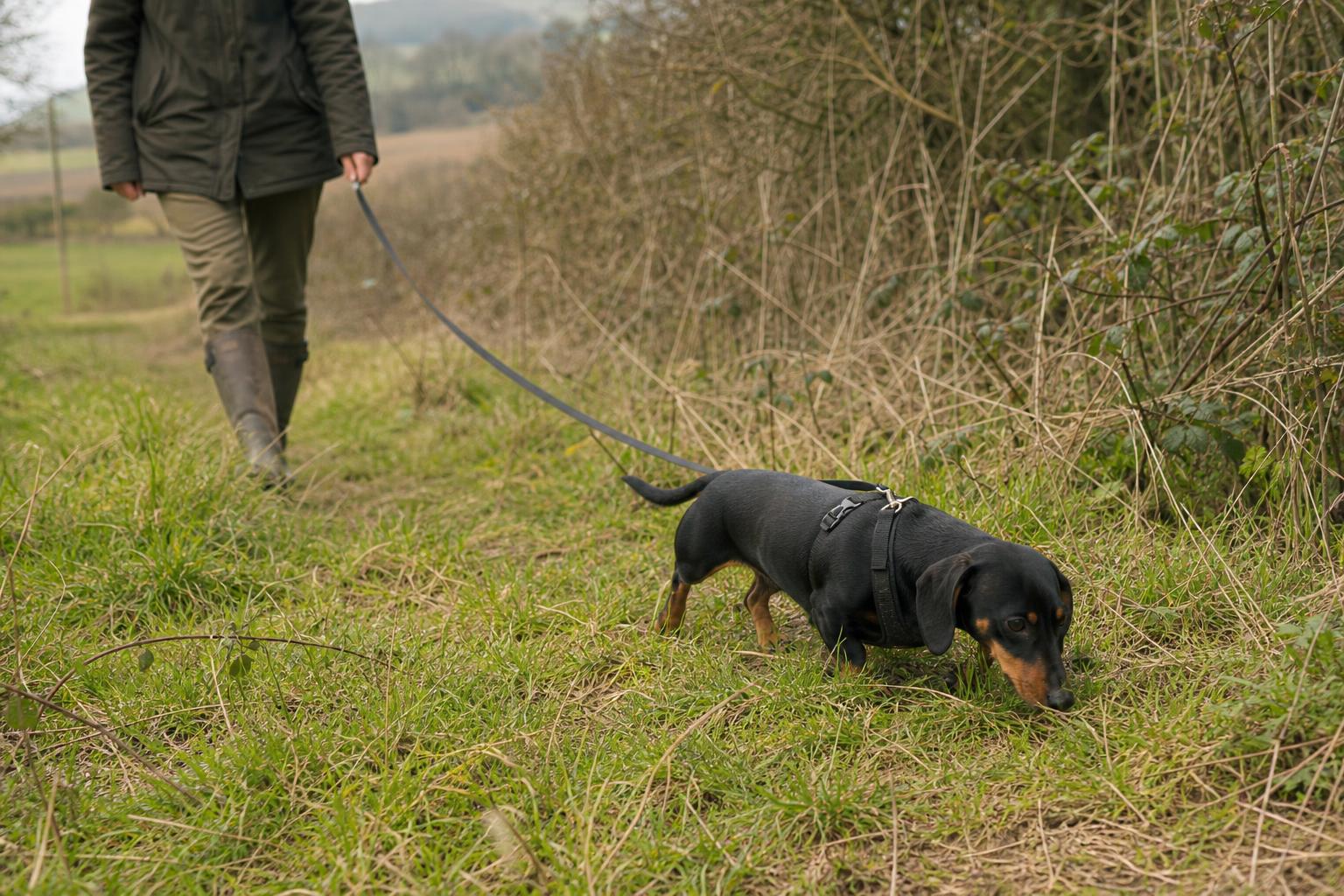
A Miniature Dachshund may be small, but the breed was built from serious hunting stock. The long body, short legs, strong nose, and bold attitude all trace back to German earthdog work, where Dachshunds were expected to trail, enter cover, and work independently around burrowing game. Today many Miniature Dachshunds are beloved companions first, yet the started-dog market can still matter for buyers who want a dog with early training, a known temperament, and some proof that the dog can handle real-world routines.
When you see a Miniature Dachshund started dog advertised, read the description carefully. “Started” is not a universal title. It can mean anything from a young dog that is crate trained and walking on a leash to a dog that has been introduced to scent work, rabbit cover, controlled digging games, basic recall, and household manners. A good seller should be specific about what the dog has done, what the dog has not done, and what kind of owner will help it keep progressing.
What qualifies as “started” in a Miniature Dachshund
For a Miniature Dachshund, a started dog should have more than age on its side. The dog should show a foundation in daily handling, basic obedience, confidence in new places, and some breed-appropriate work that uses its nose and natural curiosity. Because miniatures are typically 11 pounds or less and stand low to the ground, buyers should not expect the same style of field work they would expect from a large pointing dog or retriever. The better question is whether the dog has been started in a way that respects the breed’s size, back structure, and original scent-hound instincts.
- Age and maturity should be clearly stated, along with whether the dog is still adolescent or closer to adult behavior.
- The seller should describe crate habits, leash manners, house routine, grooming tolerance, and comfort with handling.
- Breed work may include scent trails, rabbit scent, safe brush exposure, barn or farm environments, and controlled earthdog-style enrichment.
- The dog should recover from distractions, accept direction, and show curiosity without becoming frantic or unsafe.
A started Miniature Dachshund is not automatically a finished hunting companion. Think of it as a dog with a useful foundation. The foundation should save you time, reveal more about temperament than an eight-week-old puppy can, and give you a clearer picture of how the dog may fit your home.
Birds introduced or breed-appropriate game exposure
Miniature Dachshunds are not normally purchased as bird dogs in the way setters, retrievers, spaniels, and versatile pointing breeds are. If an ad mentions birds, ask what that really means. Some dogs may have simply walked near poultry, flushed small birds in the yard, or learned to ignore household birds. That is not the same as a trained upland bird dog, and a responsible seller should not present it that way.
For this breed, the more relevant question is often breed-appropriate game exposure. Miniature Dachshunds were developed as smaller hunting hounds, especially for rabbits and other small quarry. A started dog might have been introduced to rabbit scent, safe trailing games, brush piles, tunnels used for enrichment, or supervised outdoor tracking. Exposure should be controlled and humane, not reckless. Because these dogs can have strong prey drive, the seller should also explain how the dog behaves around cats, small pets, poultry, and wildlife.
Questions to ask about exposure
- Has the dog followed artificial scent trails, natural rabbit scent, or only casual yard smells?
- Was exposure done on leash, in a fenced area, or loose in open country?
- Does the dog bark on scent, dig, chase, or lose focus once excited?
- Can the dog be called away from a scent, or does it need more recall work?
- Has the dog been around smaller animals in a household setting?
Good answers should be plain and specific. Be cautious with vague claims such as “started on game” without details. For a Miniature Dachshund, safe management matters as much as drive. A brave dog with no recall and no boundaries can be difficult to live with, especially in neighborhoods with rabbits, squirrels, traffic, or unfenced yards.
Gun introduction when relevant
Gun introduction may or may not apply to a Miniature Dachshund started dog. Some buyers may be looking for a small tracking companion, blood-tracking prospect where legal, or a dog that can handle farm and hunting-camp noise. Others simply want a confident companion and do not need gun exposure at all. Do not assume a Miniature Dachshund has been introduced to gunfire just because the listing appears on a hunting or working-dog site.
If gun introduction is mentioned, ask exactly how it was done. Proper introduction is gradual and paired with something positive, often starting at a distance with mild sound before moving closer over time. It should never involve surprising a young dog with loud shots to “see what happens.” A poor introduction can create lasting sound sensitivity, and Dachshunds can already be vocal, alert dogs that notice every change in their surroundings.
How to verify gun exposure
- Ask what sounds were used: cap gun, starter pistol, shotgun at distance, or general field noise.
- Ask the distance, number of sessions, and the dog’s reaction during and after the sound.
- Ask whether the dog remained engaged with food, play, scent work, or the handler.
- Request a current video if the seller claims the dog is comfortable around gunfire.
- If gun work does not matter to your plans, prioritize temperament, recall, and household stability instead.
For many Miniature Dachshund buyers, “not gun-shy” is less important than “not noise-sensitive in daily life.” Ask about thunderstorms, fireworks, vacuum cleaners, doorbells, traffic, and barking triggers. Those answers may tell you more about whether the dog will fit your home.
Obedience level
Obedience in a started Miniature Dachshund should be realistic. This is an intelligent, independent hound, not a push-button robot. The breed often learns quickly but may choose scent, digging, barking, or personal opinion over instant compliance. That does not make the dog bad; it means buyers should look for consistency, motivation, and a seller who has trained with patience rather than force.
At minimum, a started dog should have some response to its name, a basic recall in low-distraction settings, leash walking, crate or pen comfort, and handling tolerance for grooming and veterinary care. Because back health is a major consideration in Dachshunds, the dog should also be accustomed to safe lifting and should not be encouraged to launch repeatedly off furniture, tailgates, or high steps. Ask whether the seller uses ramps, stairs, or management around jumping.
Useful started-dog obedience skills
- Comes when called in the house or fenced yard, even if recall is still developing outdoors.
- Walks on leash without constant pulling or freezing.
- Can settle in a crate or safe confinement area.
- Accepts collar, harness, brushing, nail handling, and being picked up properly.
- Understands a few basics such as sit, wait, leave it, or a marker word.
- Shows progress with barking control, door manners, and redirection from chasing.
House training should be discussed separately. Some started dogs are fully reliable in the seller’s home but need a transition period after moving. Miniature Dachshunds can be stubborn about weather, schedule changes, and new routines, so ask how the dog signals, where it is used to eliminating, and what schedule has worked best.
Evaluating training before you buy
The best way to evaluate a Miniature Dachshund started dog is to watch the dog work and live, not just read a polished description. If you cannot visit in person, ask for recent, unedited video. You want to see the dog in ordinary conditions: walking on leash, coming when called, being handled, settling in a crate, meeting a new person, and doing whatever scent or game exposure the seller claims.
Look for a dog that is curious, engaged, and recoverable. A bold Miniature Dachshund may bark, investigate, or pull toward an interesting scent, but it should not be impossible to redirect. A shy dog may still become a wonderful companion, but the seller should be honest about confidence level and should not market nervousness as “careful” or “reserved” without explanation.
Documents and verification
- Ask for age, vaccination and veterinary records, microchip information if available, and any registration papers that actually apply.
- If AKC registration is advertised, verify the paperwork directly rather than assuming registration guarantees health or training quality.
- Ask about eye testing, genetic screening, and back-health awareness in the line, but avoid accepting broad medical promises.
- Request the dog’s daily schedule, feeding routine, crate habits, and known triggers.
- Get a written purchase agreement that explains trial periods, returns, health terms, and what training is included.
Health claims deserve extra care. Dachshunds, including miniatures, can be prone to intervertebral disc disease because of their long spine. Responsible sellers can discuss weight management, safe exercise, family history, and any screening they have done, but no seller can honestly guarantee that a dog will never have a back problem. Keep the dog lean, limit repetitive jumping, and plan your home with ramps or steps where needed.
Matching a started Miniature Dachshund to your home
A started Miniature Dachshund can be a smart choice for a buyer who wants more predictability than a puppy but still wants to shape the dog’s future. The right dog may already show its adult coat type, vocal habits, prey drive, and comfort with children, other dogs, or apartment life. That information is valuable.
Be honest about your environment. This breed can thrive in apartments or homes with yards, but it needs daily walks, enrichment, and close companionship. A secure yard is helpful, yet leash habits are still important because a Dachshund on scent may ignore boundaries. Families with children should ask how the dog handles being picked up, crowded, or approached while resting. Homes with cats or small pets should be especially careful about prey drive.
Buyer-focused conclusion
The best Miniature Dachshund started dogs are not marketed with big promises; they are presented with clear evidence. Look for a seller who explains the dog’s real training level, breed-appropriate scent or game exposure, obedience foundation, health background, and household habits. Verify AKC or other registration only if it is relevant to your goals, and remember that paperwork is not a substitute for sound temperament and honest training.
If the dog is confident, manageable, healthy for its current stage of life, and matched to your home, a started Miniature Dachshund can be a charming, practical choice: part affectionate companion, part determined little hound, and entirely its own character.
Explore Miniature Dachshund on Working Dog Central
View the Miniature Dachshund breed profile or browse Miniature Dachshund listings.


