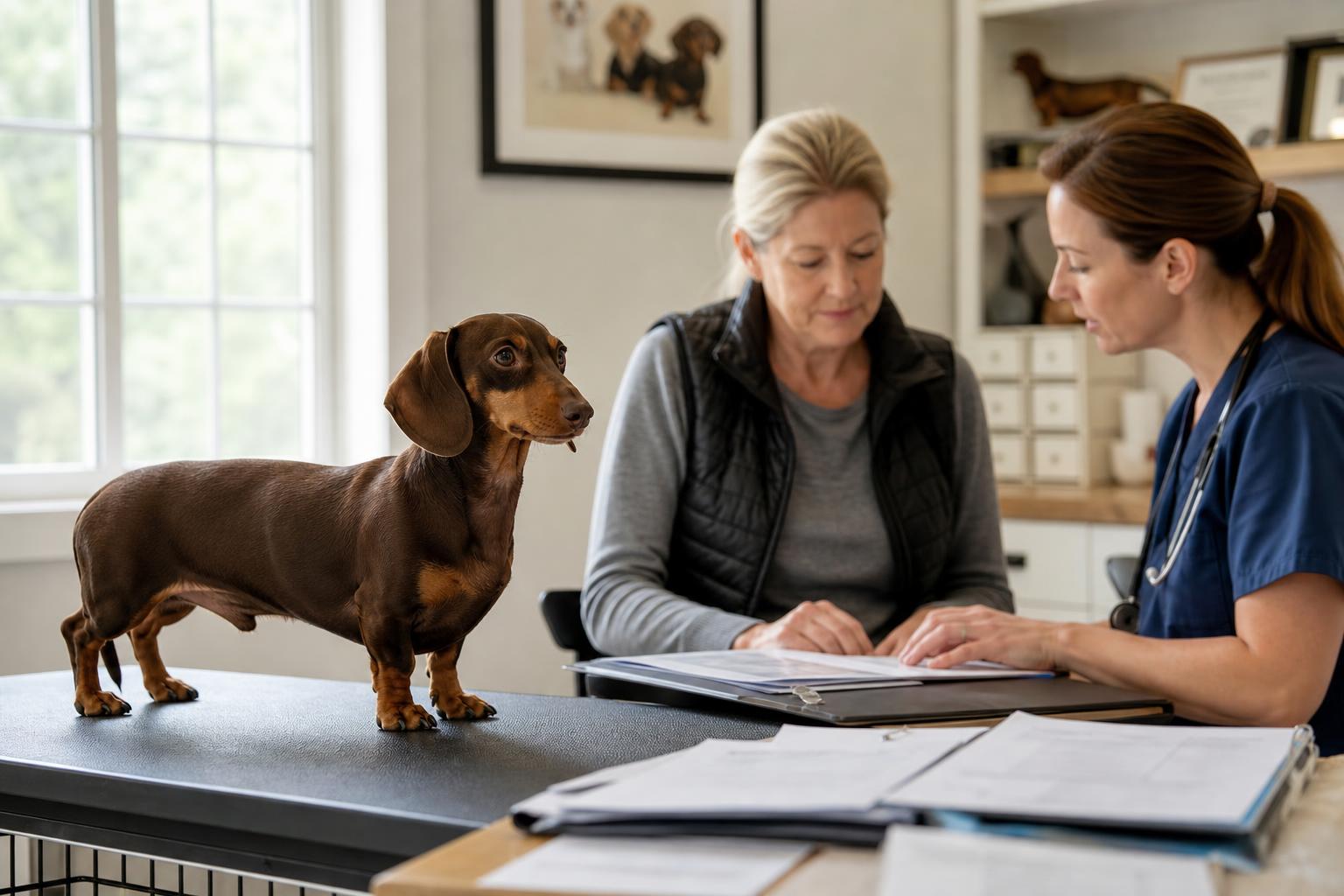
A Miniature Dachshund stud dog should be considered for more than his charm, coat, color, or pedigree names. This is a bold, long-backed scent hound in a compact package, and the right breeding decision should protect the breed’s structure, temperament, and usefulness as a confident companion and little hunter. A good stud dog discussion starts with the facts: the dog’s health testing, his own build and movement, his temperament around people and other dogs, and how well he complements the female being bred.
Miniature Dachshunds are known for their long, low outline, lively personality, and independent hound mind. They come in smooth, longhaired, and wirehaired coats, with many colors and patterns. Because size definitions can vary by registry or country, breeders should be clear about the size standard they are breeding toward and avoid treating “miniature” as simply a marketing label. The goal is a sturdy, well-muscled dog with balanced movement, not a fragile dog selected only for smallness.
Health Clearances to Discuss Before Breeding
Health clearances are the foundation of a responsible stud dog decision. In Miniature Dachshunds, back health deserves special attention because the breed’s long spine can be susceptible to intervertebral disc disease. No clearance can promise that puppies will never have a health problem, but documented screening helps breeders make better decisions and gives puppy buyers more confidence in the planning behind a litter.
- Ask for current veterinary records relevant to breeding soundness and general health.
- Discuss any history of back pain, reluctance to jump or climb, wobbliness, or other mobility concerns in the dog or close relatives.
- Review eye testing where appropriate, especially because inherited eye conditions, including forms of progressive retinal atrophy, may occur in some lines.
- Confirm that the dog is physically mature, fit, and maintained at a lean weight.
- Ask how the owner tracks health outcomes in previous offspring, if the dog has already been used at stud.
OFA and Documented Screening
OFA records can be useful because they provide a way to document and verify certain health screening results. For a Miniature Dachshund stud dog, buyers and breeders should not stop at a verbal assurance that a dog is “healthy.” Ask what tests were performed, when they were performed, and whether results can be viewed or shared. If a particular screening is not available or not commonly used for a specific concern, the stud owner should still be able to explain how they evaluate risk in the line.
Responsible breeders often combine formal screening with practical observation. Structure, movement, body condition, and a family history free from repeated back problems are all part of the conversation. Because Miniature Dachshunds have a distinctive build, soundness should be judged with the breed’s function and proportions in mind rather than by generic small-dog expectations.
DNA Testing and Coat/Pattern Planning
DNA testing can help breeders avoid preventable surprises and make informed pairings. It is especially helpful when planning coat traits, color, pattern, and inherited conditions that may be identified in a line. Miniature Dachshunds appear in many colors and patterns, including red, black and tan, chocolate, dapple, and piebald. The presence of variety makes genetic planning more important, not less.
- Ask which DNA tests have been completed and request copies of results.
- Discuss how coat type and color genetics may affect the expected litter.
- Be cautious with pairings that increase known health risk; for example, some registries restrict double-dapple breeding because of associated concerns.
- Use DNA information alongside health, structure, temperament, and pedigree rather than as the only deciding factor.
Live Cover vs AI
Miniature Dachshund stud arrangements may involve live cover or artificial insemination. The better choice depends on the dogs, distance, timing, veterinary support, and the preferences of both owners. Live cover can be straightforward when both dogs are experienced, compatible, and safely managed. Artificial insemination may be useful when travel is difficult, when timing needs veterinary assistance, or when semen is being shipped.
For either option, safety matters. Miniature Dachshunds are small, long-backed dogs, so handling should be calm and careful. Both owners should agree on supervision, timing, veterinary involvement, and what happens if a breeding does not occur. A clear plan prevents rushed decisions during the female’s fertile window.
Frozen Semen Considerations
Frozen semen can extend access to a stud dog, but it requires more planning than a casual breeding arrangement. Confirm collection history, storage details, semen quality information, ownership rights, shipment logistics, and veterinary timing before committing. Frozen semen is not just a product; it is part of a breeding plan that should still be evaluated through health records, pedigree analysis, and suitability for the female.
- Confirm who legally controls the semen and who can authorize shipment or use.
- Ask for documentation on collection, storage facility, and available breeding doses.
- Use a veterinarian experienced with reproductive timing and insemination methods.
- Put replacement terms, repeat breeding terms, and unused semen provisions in writing.
Stud Contracts: Put the Details in Writing
A stud contract protects both parties and keeps expectations clear. It should identify the stud dog and female, define the service being provided, list fees or puppy-back arrangements, specify timing, and explain what counts as a completed breeding. It should also address repeat service if the female does not conceive, veterinary costs, travel or shipping costs, registration paperwork, and any limits on how the resulting puppies may be represented.
Because Miniature Dachshunds are popular companion dogs, marketing claims can become careless. A responsible contract should avoid exaggerated promises about size, coat, temperament, availability, or health. It should focus on documented facts and shared responsibilities. If a breeder is planning a litter for family homes, they should also discuss how puppy buyers will be educated about back-friendly care, weight management, safe activity, barking tendencies, prey drive, and early socialization.
Pedigree Analysis and Complementary Pairing
Pedigree analysis is more than counting titled dogs or familiar kennel names. It means looking at how traits appear across relatives and deciding whether the stud dog strengthens the female’s weaker areas without doubling up on risk. For Miniature Dachshunds, important areas include sound structure, confident temperament, sensible size, coat type, and any known history of back, eye, or other inherited concerns.
- Compare the stud and female for body length, leg structure, movement, and overall balance.
- Look for consistent temperament, not just one charming individual.
- Ask about close relatives, previous offspring, and any patterns the stud owner has observed.
- Avoid choosing a stud only because he is nearby, fashionable, unusually small, or an eye-catching color.
Questions to Ask the Stud Dog Owner
A good stud dog owner should welcome informed questions. Ask for health records, DNA results, pedigree, photos or video showing movement, temperament notes, and details on previous litters if available. Ask how they handle timing, what veterinary support they recommend, and how communication works during the breeding process. If answers are vague or pressure-driven, that is a reason to slow down.
The best Miniature Dachshund stud dog choice supports the breed’s long-term welfare. Look for a dog who is sturdy, lively, trainable, and structurally sensible, with documentation that matches the claims being made. A careful pairing cannot guarantee a perfect litter, but it gives every puppy the best possible start and helps preserve the Miniature Dachshund’s bold, affectionate, unmistakable character.
Explore Miniature Dachshund on Working Dog Central
View the Miniature Dachshund breed profile or browse Miniature Dachshund listings.


