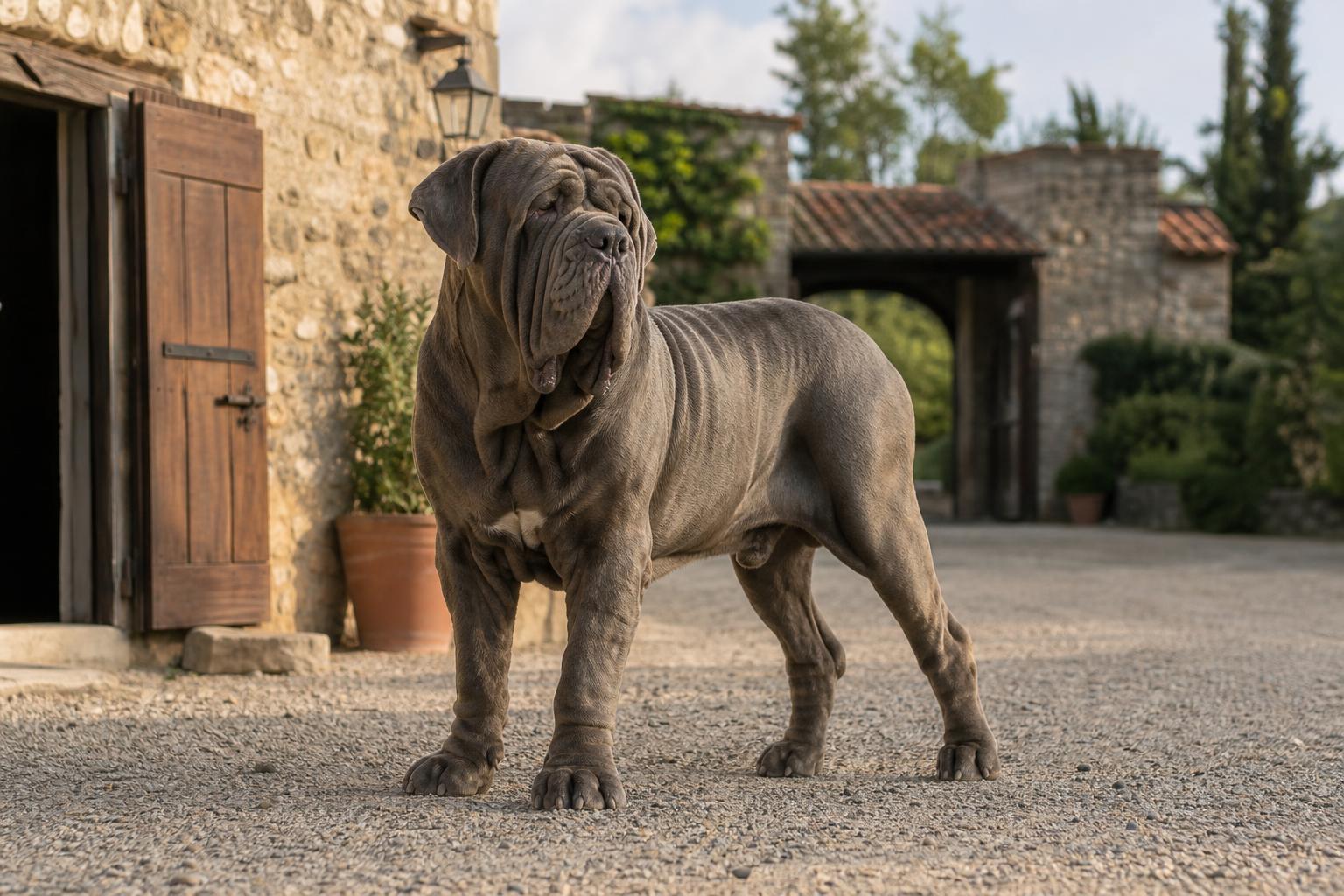
The Neapolitan Mastiff is a massive Italian guardian breed known for loose skin, deep facial wrinkles, a powerful frame, and a calm but serious presence around the home. For the right owner, the breed can be devoted, affectionate, and deeply loyal. For the wrong setup, its size, strength, drool, heat sensitivity, and natural suspicion of strangers can become overwhelming fast.
This Neapolitan Mastiff breed guide is written for buyers and families who want a practical look at living with the breed, not just a list of impressive traits. The breed was shaped to protect homes, farms, and estates, and that history still matters. A Neo is usually not a social butterfly, not a high-speed sporting companion, and not a dog to raise casually. It needs structure, early socialization, steady handling, and an owner who respects what a giant guardian dog was bred to do.
History of the Neapolitan Mastiff
The Neapolitan Mastiff, also known as the Mastino Napoletano, traces its background to ancient Molossian-type dogs associated with the Roman world. Large, intimidating dogs were valued for protection, war, estate guarding, and livestock defense. Over time, dogs of this type remained especially connected with southern Italy and the area around Naples, where practical owners kept them as farm and property guardians.
For generations, the breed was selected less for flash and more for presence, loyalty, strength, and deterrence. Its loose skin, heavy head, deep wrinkles, and rolling movement became part of a look that could discourage trespassers before a confrontation ever happened. By the mid-20th century, the breed had become rare, and preservation-minded breeders in Italy worked to standardize and revive it. Today, the Neapolitan Mastiff is recognized internationally as a distinctive mastiff breed and remains best understood as a serious home guardian and companion.
Neapolitan Mastiff Appearance and Size
The first thing most people notice about the Neapolitan Mastiff is scale. This is a giant, heavy-boned dog with a broad chest, powerful body, short muzzle, large head, and abundant loose skin around the head and neck. Males are often described in the 26 to 31 inch range at the shoulder and may weigh around 110 to 150 pounds or more, depending on build and condition. Females are generally substantial as well, though often slightly smaller.
The coat is short, dense, and smooth. Common colors include gray or blue shades, black, mahogany, and tawny, sometimes with brindling or small white markings on the chest or toes. The breed’s wrinkles are part of its identity, but buyers should remember that exaggeration is not the same as quality. Skin should not impair the dog’s eyes, breathing, movement, or overall comfort.
Temperament: Calm, Watchful, and Protective
A well-raised Neapolitan Mastiff is usually calm in the house, affectionate with its own people, and quietly watchful. Many owners describe the breed as a gentle giant with family, but that phrase can be misleading if it makes the dog sound easy or universally friendly. The Neo was developed to notice strangers, assess situations, and protect home territory. That means reserved behavior is normal, while poor socialization can turn natural caution into anxiety or overreaction.
This breed often prefers being near its people and may position itself between family members and anything unfamiliar. It does not usually need constant activity, but it does need clarity. Household rules, controlled introductions, good leash manners, and calm leadership are essential. Because of the dog’s size, small behavior problems can become big management problems if ignored.
Training and Socialization for a Neapolitan Mastiff
Training should begin early and stay consistent. The most valuable foundation skills include leash walking, settling on a place mat, calm door manners, cooperative handling, recall in safe areas, and polite behavior around visitors. Short, regular sessions usually work better than long drilling. Reward-based methods with clear boundaries are a better fit than harsh corrections, which can damage trust and increase defensive behavior in a serious guardian breed.
Socialization should be structured rather than chaotic. A Neapolitan Mastiff puppy should see different people, surfaces, sounds, vehicles, veterinary handling, and normal household activity without being forced into every stranger’s hands. The goal is neutrality: a dog that can observe the world calmly, not one that believes every person must be greeted or challenged.
Exercise, Work Style, and Daily Life
The Neapolitan Mastiff is not a gun dog or high-drive hunting breed. Its traditional work is guarding property and family, not quartering fields, retrieving birds, or running all day. Most Neos do best with moderate daily walks, gentle conditioning, and time with their people. They are often content to lounge indoors, but they still need enough movement to maintain muscle tone and prevent weight gain.
Because this is a giant breed, joint-friendly exercise matters. Owners should avoid repetitive jumping, hard landings, slippery floors, and excessive forced exercise, especially while the puppy is growing. Heat management is also important. Exercise during cooler parts of the day, offer shade and water, and do not expect a heavy mastiff to perform well in hot, humid conditions.
Grooming and Care
The short coat is simple to brush, but the wrinkles and mouth area require regular attention. Food, water, and moisture can collect in facial folds, so many owners wipe and dry them routinely to reduce odor and irritation. Ears, nails, teeth, and skin should be checked on a schedule, and the dog should be comfortable with handling long before a problem appears.
- Brush weekly to remove loose hair and monitor skin condition.
- Wipe and dry facial folds as needed, especially after meals or drinking.
- Keep nails short to support sound movement.
- Use non-slip flooring where possible to protect joints.
- Plan for drool, large beds, sturdy crates, and giant-breed expenses.
Health Considerations for Neapolitan Mastiff Buyers
Like many giant breeds, the Neapolitan Mastiff can be associated with orthopedic concerns such as hip and elbow issues, and responsible weight management is especially important. Eye irritation or eyelid problems may occur when loose skin affects normal eye function, and skin fold irritation can develop if hygiene is neglected. Buyers should avoid any breeder who treats extreme exaggeration as more important than comfort, soundness, and temperament.
Ask breeders what health screening is relevant to their dogs and request documentation rather than verbal reassurance. OFA evaluations, DNA testing, or other registry-linked records may or may not apply in the same way for every breeding program, so buyers should verify what tests are appropriate for the breed, the individual family line, and the kennel’s goals. A veterinarian familiar with giant breeds can help you interpret what matters before you commit.
Buying a Neapolitan Mastiff Puppy or Adult
Good buying decisions start with temperament, health, and honest expectations. Meet the breeder’s adult dogs when possible and look for stable, manageable guardians rather than dogs that are frantic, fearful, or uncontrollable. Ask how puppies are raised, what early handling they receive, how visitors are introduced, and what support the breeder provides after placement.
Be cautious with sellers who promise rare colors, guaranteed guarding ability, exact adult size, or perfect health. No breeder can honestly guarantee everything about a living dog. What they can provide is thoughtful pairing, appropriate health information, clear contracts, realistic guidance, and a willingness to take responsibility for the dogs they produce.
Is the Neapolitan Mastiff a Good Family Dog?
In the right home, the Neapolitan Mastiff can be a loving family companion. It is often patient and gentle with its own household, but supervision around children is still essential because of sheer size. A casual bump from a giant dog can knock over a small child. Children also need to understand boundaries around food, sleeping spaces, and the dog’s body.
This breed is best for owners who want a calm, serious guardian and are prepared for management. It is usually a poor match for people who want a dog park regular, a long-distance running partner, or a low-cost, low-maintenance pet. The Neo’s best home is stable, structured, and realistic about training, socialization, drool, veterinary costs, and space.
Buyer-Focused Conclusion
The Neapolitan Mastiff is impressive for good reason: it is powerful, devoted, ancient in type, and unmistakable in appearance. But the same traits that make the breed appealing also make it demanding. If you want a serious guardian with a calm household presence, and you are ready for giant-breed costs, consistent training, wrinkle care, and careful socialization, the Neapolitan Mastiff may be a rewarding fit. If you want an easygoing public companion for busy social settings, choose a different breed. A good Neo deserves an owner who values steadiness, soundness, and responsibility over image.
Explore Neapolitan Mastiff on Working Dog Central
View the Neapolitan Mastiff breed profile or browse Neapolitan Mastiff listings.


