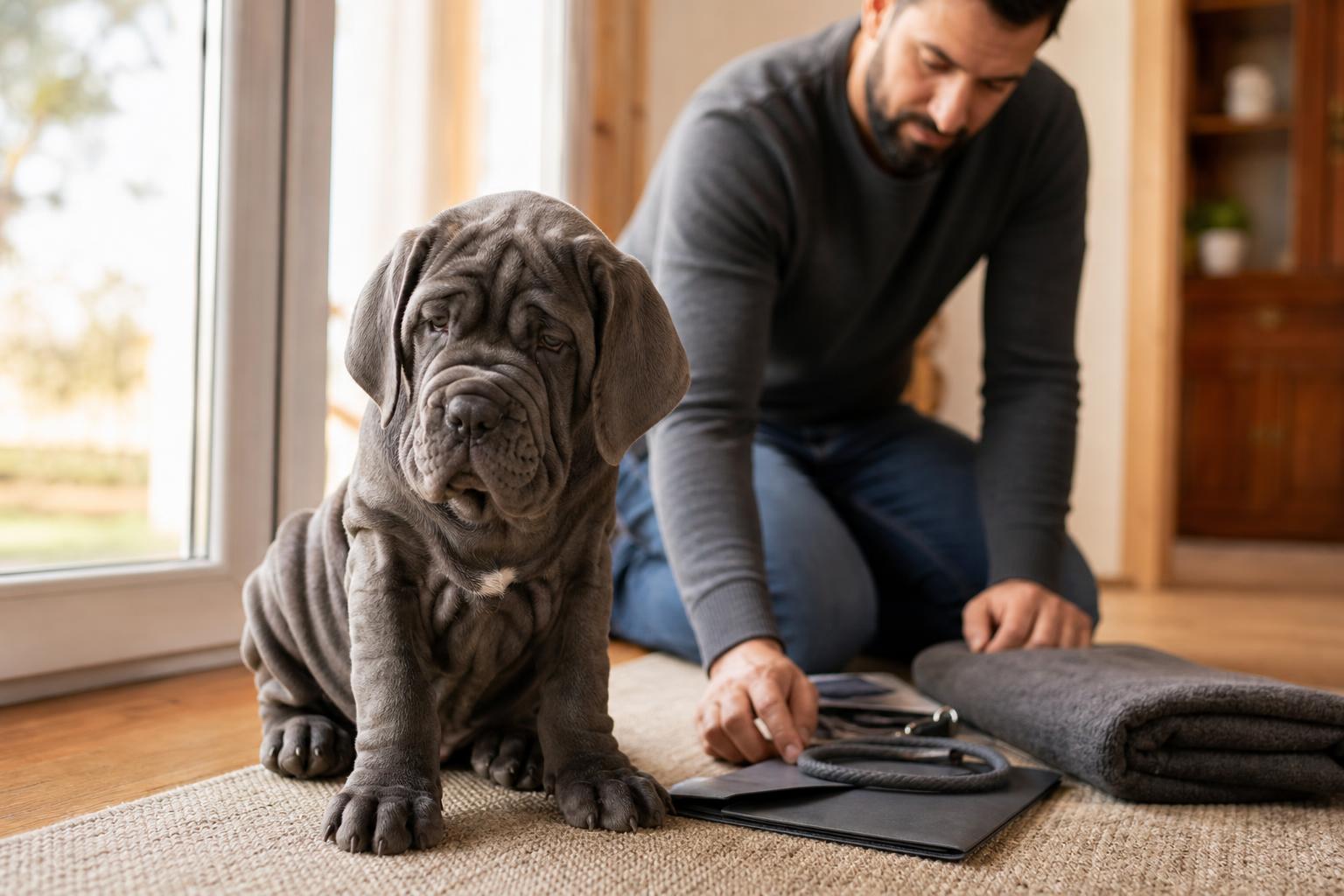
The Neapolitan Mastiff is a massive Italian guardian breed with a calm, watchful nature and a deeply loyal attachment to its family. Puppies can be appealing because of their heavy wrinkles, broad heads, and soft expressions, but this is not a casual purchase. A young Neo grows into a powerful, heavy-boned dog that needs steady handling, early structure, and a home prepared for size, drool, wrinkle care, and guardian instincts.
When researching Neapolitan Mastiff puppies for sale, focus less on finding the quickest available litter and more on finding a breeder who understands the breed's temperament, health needs, and slow maturity. A well-raised puppy should be started with calm social exposure, gentle handling, and sensible care for skin, eyes, joints, and growth. The right puppy is not simply the biggest one in the litter; it is the one whose background, temperament, and breeder support fit your household.
Choosing a Neapolitan Mastiff Breeder
A responsible breeder should be able to explain why they planned a litter, what traits they are trying to preserve, and what kind of owner is a realistic match for the breed. Neapolitan Mastiffs are typically devoted at home and reserved with strangers, so breeders should take temperament seriously. Look for someone who raises puppies with routine household handling, introduces age-appropriate sights and sounds, and talks honestly about the responsibilities of living with a giant guardian dog.
- Ask about the temperament of both parents, including how they behave with visitors, children, other dogs, and routine handling.
- Ask what socialization the puppies receive before leaving, such as gentle exposure to grooming, surfaces, household noise, and calm visitors.
- Ask how the breeder evaluates puppy temperament and matches puppies to homes rather than selling strictly by color, size, or order of deposit.
- Ask what support is available after pickup, especially for feeding, growth, training, skin fold care, and early management.
Be cautious if a seller avoids questions, cannot discuss the breed beyond appearance, pressures you to buy immediately, or treats extreme size and exaggerated wrinkles as the only goals. Loose skin and a powerful build are part of the breed's look, but exaggeration should not interfere with mobility, eyes, breathing, or basic comfort. A good breeder will care about soundness and temperament as much as the puppy's impressive appearance.
Registration and Paperwork
Registration may matter to some buyers, especially those interested in documented pedigree, breed events, or future breeding decisions. If registry paperwork is offered, review it carefully and make sure the names, dates, and terms match what the breeder has promised. Registration alone does not prove quality, health, or suitability, but clear records can help buyers understand the puppy's background and family history.
Ask for a written purchase agreement that explains health terms, return expectations, spay or neuter requirements if any, breeding rights if any, and what happens if the puppy cannot stay with you later. For a breed as large and specialized as the Neapolitan Mastiff, long-term breeder accountability matters. The paperwork should make responsibilities clear for both sides before money changes hands.
Vaccinations, Veterinary Records, and Early Care
Before bringing a puppy home, ask for veterinary records showing age-appropriate care that has already been completed. This may include exam notes, vaccination dates, deworming history, and any recommendations from the breeder's veterinarian. Your own veterinarian should review those records soon after pickup and help you set a schedule for boosters, parasite prevention, nutrition, and safe growth.
- Confirm the puppy's date of birth and the dates of any vaccines or deworming already given.
- Ask what food the puppy is eating and how much, then transition gradually if your veterinarian recommends a change.
- Discuss large-breed puppy nutrition with your veterinarian, because steady growth is more important than pushing rapid weight gain.
- Watch for eye irritation, skin fold moisture, limping, poor appetite, breathing difficulty, or unusual lethargy, and seek veterinary advice promptly.
Neapolitan Mastiffs need basic coat care, but their facial folds and mouth area deserve extra attention. Puppies should become comfortable with gentle wiping, nail trims, ear checks, and calm restraint. Starting cooperative care early makes life easier when the dog is too large to physically manage through force.
Bringing Your Neapolitan Mastiff Puppy Home
Prepare your home before pickup. A Neo puppy will grow quickly, so think beyond the first week. Use non-slip surfaces where possible, block unsafe stairs when needed, and provide a quiet sleeping area where the puppy can rest without constant stimulation. Avoid repetitive jumping, rough forced exercise, and slippery flooring that can make giant-breed movement harder during growth.
Training should begin immediately, but it should be calm and consistent rather than harsh. Teach leash manners, settling on a bed or place mat, waiting at doors, accepting grooming, and greeting people politely. Because this breed is naturally protective and often reserved with strangers, socialization should mean neutral, positive exposure to the world, not pressure to let everyone crowd or handle the puppy.
Early priorities for the first weeks
- Schedule a veterinary wellness visit and bring all breeder records.
- Set up a feeding plan appropriate for a giant-breed puppy.
- Introduce a collar, leash, crate or rest area, grooming wipes, nail handling, and short training sessions.
- Keep meetings with new people calm and controlled so the puppy learns confidence without being overwhelmed.
- Plan for drool, big paws, water mess, and regular cleaning around the mouth and facial folds.
Typical Neapolitan Mastiff Puppy Prices
Prices for Neapolitan Mastiff puppies can vary widely depending on location, pedigree, breeder experience, included veterinary care, registration terms, and overall demand. Treat any price you see as a starting point for questions, not as proof that a puppy is a good or bad choice. Very low prices may still come with high long-term costs if the puppy lacks appropriate care, while higher prices should be backed by transparency, records, and breeder support.
Budget beyond the purchase price. Giant-breed ownership usually means larger crates and beds, more food, higher medication doses, durable equipment, and potentially higher veterinary costs. The most affordable puppy on day one is not always the most affordable dog over a lifetime. A thoughtful buyer weighs health records, temperament, breeder honesty, and fit for the home alongside the initial cost.
Is a Neapolitan Mastiff Puppy Right for You?
A Neapolitan Mastiff can become a devoted family companion and impressive home guardian for the right owner. This breed is often calm indoors and affectionate with its people, but it needs structure, space, responsible handling, and realistic expectations. It is not ideal for buyers who want a highly social dog park companion, an off-leash jogging partner, or a puppy that will mature without training.
If you are prepared for a giant, protective breed with moderate exercise needs, regular wrinkle care, slow maturity, and a serious guardian temperament, the Neo can be deeply rewarding. Take your time, compare breeders carefully, verify records, and choose the puppy whose breeder, background, and temperament give you the best chance of a stable life together.
Explore Neapolitan Mastiff on Working Dog Central
View the Neapolitan Mastiff breed profile or browse Neapolitan Mastiff listings.


