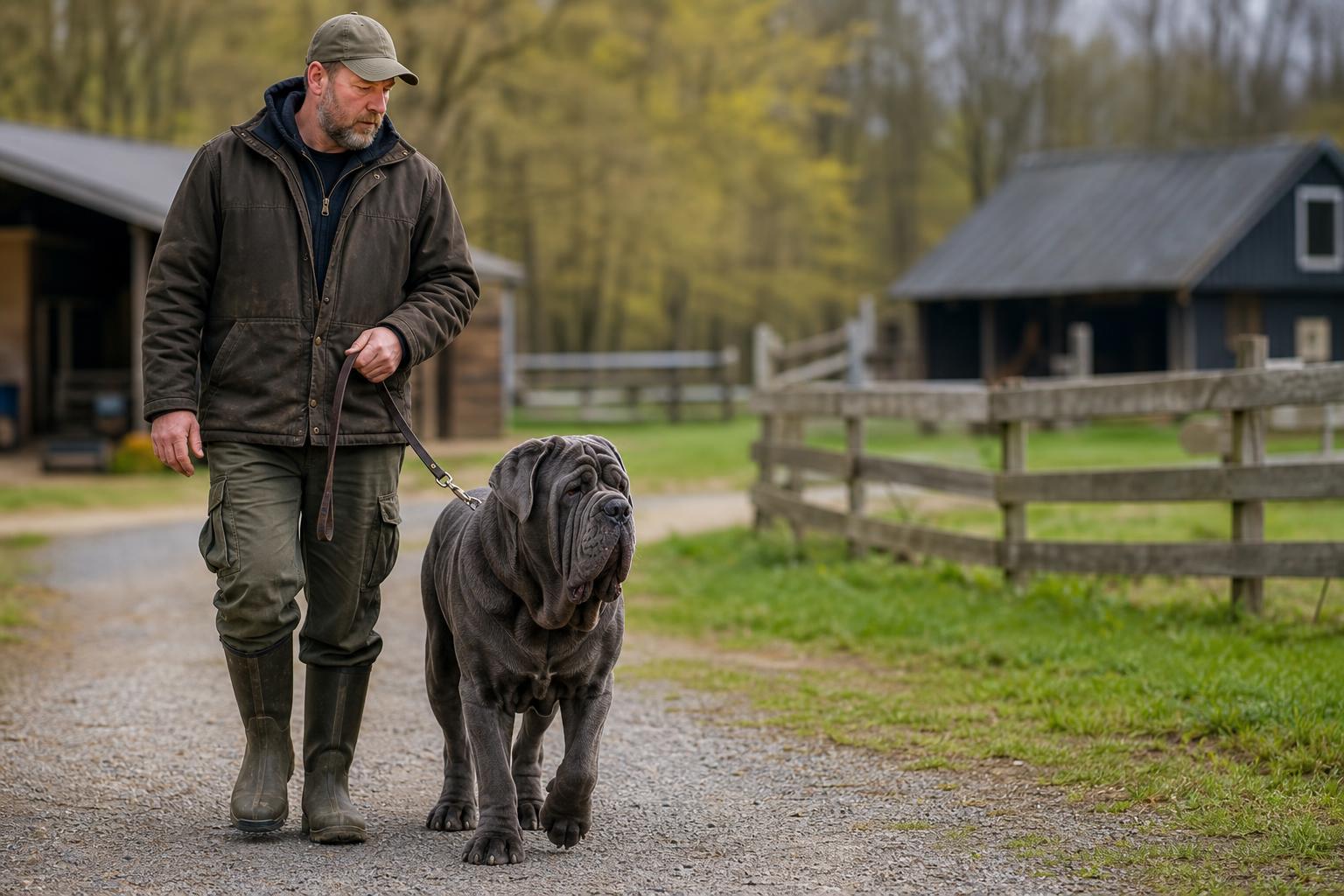
A Neapolitan Mastiff started dog is usually not being sold as a classic bird dog, retriever, or field-trial prospect. This is a massive Italian guardian breed developed to protect homes, farms, and estates, and its value is usually measured in maturity, steadiness, household manners, confidence, and appropriate protective instinct. For buyers searching Working Dog Central, that distinction matters. The phrase started dogs can mean very different things depending on the breed, the seller, and the intended job.
With a Neapolitan Mastiff, a useful started dog should show more than size and wrinkles. The dog should have a foundation in leash handling, calm confinement, basic obedience, grooming tolerance, and controlled social exposure. Because the breed is naturally reserved with strangers and physically powerful, the best started prospects are not overly sharp, frantic, or under-managed. They should be steady enough to live with and clear enough in temperament that an experienced buyer can continue the work.
What qualifies as “started”
For many sporting breeds, started may mean the dog has been introduced to birds, bumpers, water, gunfire, or early field drills. For a Neapolitan Mastiff, the more relevant question is whether the dog has been started in the skills that make a giant guardian safe, manageable, and useful in daily life. A seller should be able to describe exactly what the dog knows, where it has been handled, and how it behaves under normal pressure.
A started Neapolitan Mastiff may have experience with a crate or kennel run, walking on lead, loading into a vehicle, standing for basic care, accepting collar or harness handling, and settling quietly when guests or household activity are present. The dog may also have been exposed to livestock, property boundaries, children at a safe distance, other dogs, and routine farm or home noise. None of that should be assumed. Ask for specifics rather than relying on the label.
- Can the dog walk beside a handler without dragging or lunging?
- Does the dog accept calm handling of the face, feet, ears, and skin folds?
- Has the dog lived in a home, kennel, farm setting, or mixed environment?
- How does the dog respond to strangers entering neutral space versus home territory?
- What behaviors are reliable without the seller present?
Birds introduced or breed-appropriate game exposure
Bird introduction is not normally the central measure of a Neapolitan Mastiff. This breed was shaped as an estate and property guardian, not as a pointing, flushing, or retrieving dog. If a listing mentions birds, hunting exposure, or game work, buyers should ask how that exposure relates to the breed's actual role. It may simply mean the dog has been around poultry, livestock, barns, or rural property without creating problems.
Breed-appropriate game exposure for a Neapolitan Mastiff is usually about neutrality and control. A started dog might be expected to ignore chickens, remain calm around horses or goats, or patrol a property without harassing stock. Some individuals may live in hunting homes and be comfortable around harvested game, kennels, trailers, and outdoor activity, but that does not make them a finished gun dog. The practical goal is a dog that can remain steady and responsive in the environments where it will actually live.
When evaluating this section of a listing, look for real descriptions rather than impressive but vague claims. A useful seller can explain whether the dog has seen livestock through fencing, walked past poultry on leash, lived near kennel dogs, or been supervised around farm equipment. If the dog has prey-drive issues, chasing habits, or reactivity toward animals, that needs to be disclosed before purchase.
Gun introduction when relevant
Gun introduction may not be relevant to many Neapolitan Mastiff started dogs. This breed is not typically trained to quarter cover, mark falls, or work under the gun. If the dog is being placed in a rural or hunting household, however, it can still be useful to know whether it has been exposed to distant gunfire, ATVs, trucks, barking kennels, or other loud sounds in a calm and controlled way.
A responsible seller should not claim a Neapolitan Mastiff is gun-broke unless the term is clearly defined and demonstrated. For this breed, the safer standard is noise stability. Ask whether the dog startles, recovers quickly, tries to flee, becomes defensive, or remains neutral around loud sounds. Exposure should be gradual and humane, never forced. A giant guardian that panics or redirects under noise stress can be difficult and unsafe for an average buyer to manage.
If you need a dog that can live around hunting activity, ask for a video of the dog calmly responding to ordinary noise at a reasonable distance. Do not require theatrical demonstrations. The goal is not to prove toughness; it is to verify that the dog can think, recover, and remain handler-aware in the environment you plan to provide.
Obedience level
Obedience is one of the most important parts of evaluating Neapolitan Mastiff started dogs. A puppy can be physically manageable even with imperfect manners, but an adolescent or adult Neo may weigh as much as a grown person and has the strength to overpower casual handling. Reliable leash manners, a basic sit or down, a recall in controlled settings, and a practical place or settle cue can make a major difference.
Expect maturity to come slowly. Neapolitan Mastiffs are often calm indoors, but they can also be stubborn, suspicious, or slow to respond if training has been inconsistent. The best started dogs have learned through clear structure and reward-based handling, not intimidation. Harsh corrections can create distrust or defensive behavior in a guardian breed. Ask what methods were used and whether the dog responds to food, praise, routine, or handler relationship.
- Leash work: The dog should be controllable by the intended handler, not only by a professional trainer.
- House manners: Ask about crate training, house training, door behavior, and settling indoors.
- Handling: Wrinkle care, nail trims, ear checks, and veterinary handling should be part of the conversation.
- Social obedience: The dog should be able to remain neutral around strangers without being forced to greet everyone.
- Management cues: Place, wait, leave it, and calm loading can be more useful than flashy tricks.
Evaluating training
Before buying a Neapolitan Mastiff started dog, evaluate the training in person if possible. If distance makes that impossible, request current video made for you, not only polished clips from months earlier. Watch the dog move, walk on leash, settle, meet a neutral person at a safe distance, and accept basic handling. Because this breed has loose skin, heavy bone, and a slow rolling gait, also pay attention to comfort, soundness, breathing, eyes, and overall conditioning.
Good training should show up in ordinary moments. A started Neo does not need to perform like a competition obedience dog, but it should be understandable and manageable. Be cautious if the seller cannot show the dog away from its kennel, cannot describe its daily routine, or blames every issue on the dog being protective. True guardian temperament includes discernment. A dog that is constantly exploding, hiding, or unable to recover may need remedial work rather than simply a new home.
Health, structure, and care questions
Training is only part of the purchase. Neapolitan Mastiffs require careful giant-breed management, including weight control, joint-friendly exercise, skin-fold care, and heat awareness. Ask for veterinary history, vaccination records, current weight, diet, medications, and any known issues with hips, elbows, eyes, skin irritation, heart health, or mobility. Do not accept broad health promises without documentation from a veterinarian or appropriate testing records.
Registry status, titles, and test results should also be verified rather than assumed. If a listing mentions AKC papers, OFA results, DNA testing, working titles, or other records, ask for the registered name or number and confirm details through the appropriate organization. Not every record applies to every dog, and not every guardian-breed buyer needs the same credentials, but honest documentation helps you understand what you are purchasing.
Fit for the right buyer
The ideal buyer for a Neapolitan Mastiff started dog is experienced, realistic, and physically capable. This is not a casual impulse purchase or a shortcut around training. A started dog may save time on early foundations, but it still needs transition work, consistent rules, controlled introductions, and a home prepared for drool, space needs, veterinary costs, and the responsibility of a powerful guardian breed.
Ask how the seller will support the transition. A written bill of sale, clear return policy, health records, feeding notes, and a training summary are all useful. If the dog is being shipped or transported, confirm safe arrangements and avoid rushed handoffs. The more mature the dog, the more important it is to understand what routines and boundaries have already shaped its behavior.
Buyer-focused conclusion
Neapolitan Mastiff started dogs can be excellent choices for the right home when the word started means practical life preparation: obedience, social stability, handling, and breed-appropriate exposure. Look past dramatic photos and ask for evidence. A good started Neo should be steady, manageable, healthy enough for its role, and matched honestly to the buyer's experience. When those pieces are in place, this ancient guardian can become a devoted, imposing, and deeply loyal companion.
Explore Neapolitan Mastiff on Working Dog Central
View the Neapolitan Mastiff breed profile or browse Neapolitan Mastiff listings.


