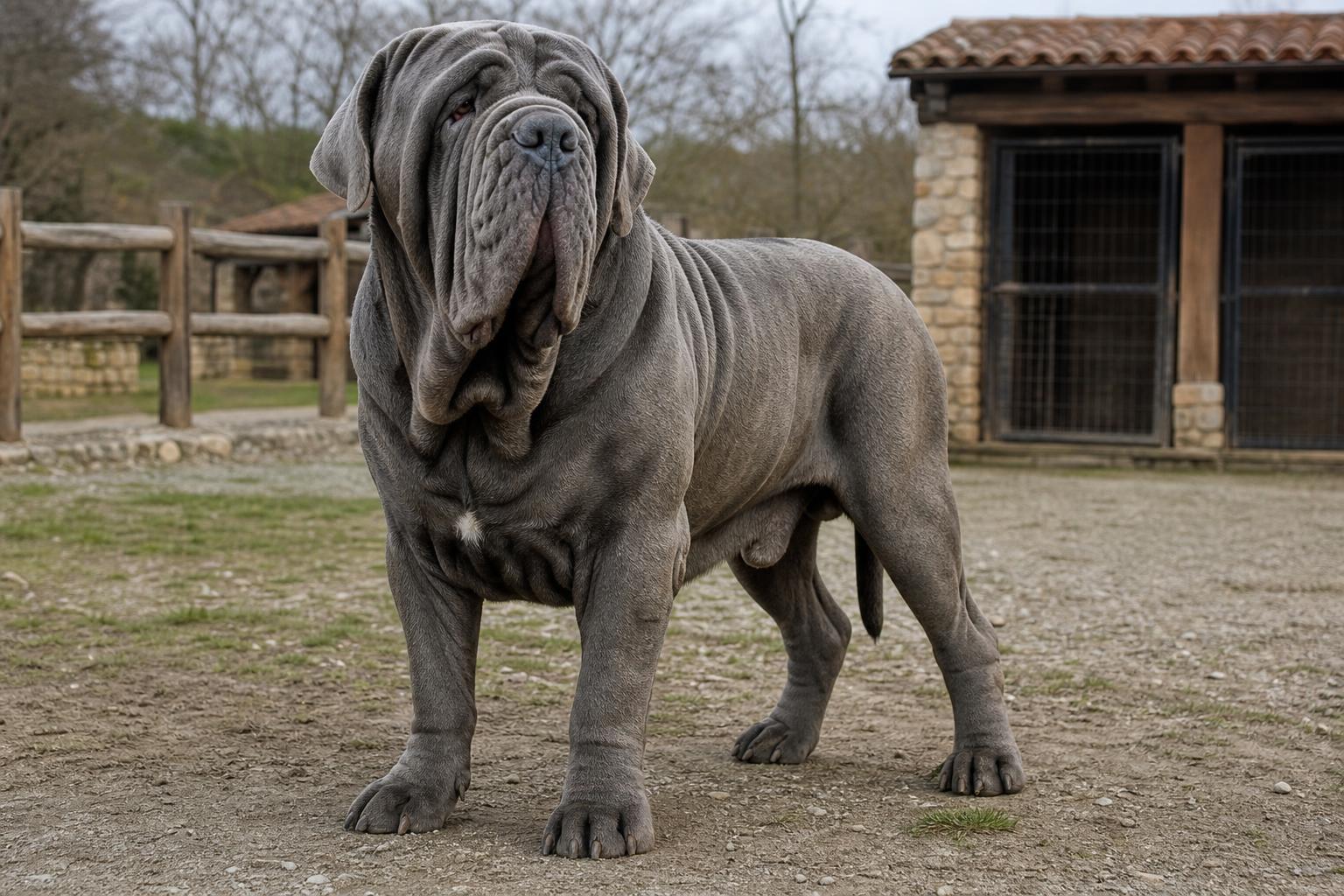
The Neapolitan Mastiff is a massive Italian guardian breed known for loose skin, deep wrinkles, heavy bone, and a calm but watchful nature. When you are comparing Neapolitan Mastiff stud dogs, the decision should be based on more than size, color, or an impressive photograph. A good stud choice should support the breed's strengths while helping reduce avoidable risk in temperament, structure, mobility, skin, eyes, and long-term soundness.
This breed was developed to protect homes, farms, and estates. That background matters in a breeding decision. A stud dog should show the steady, devoted, naturally protective character expected of the breed without being unstable, frantic, or unnecessarily sharp. He should also be physically capable of moving comfortably for his size, because a giant guardian dog with poor structure can pass along problems that affect quality of life.
Health Clearances
Health clearances are one of the first things to review before committing to a Neapolitan Mastiff stud dog. The breed can face giant-breed orthopedic concerns, eye problems related to excessive skin or eyelid function, and skin fold irritation when care and structure are poor. A responsible stud owner should be willing to discuss veterinary history, family history, and the health of close relatives, not just the individual dog.
Ask for documentation rather than verbal reassurance. Clearances do not guarantee perfect puppies, but they help breeders make informed choices. In a large breed where veterinary care, mobility, and management can be costly, skipping health review is not a shortcut; it is a gamble.
Questions to Ask About Health
- What health screening has the stud dog completed, and when was it done?
- Are results available for hips, elbows, eyes, heart, or other areas relevant to the family line?
- Has the dog had persistent lameness, breathing difficulty, eye irritation, or skin fold infections?
- What health issues have appeared in his parents, siblings, previous offspring, or other close relatives?
- How does the stud owner manage weight, exercise, heat, and joint-friendly conditioning?
OFA Records
OFA records can be useful when comparing Neapolitan Mastiff stud dogs because they provide a more structured way to review certain health testing. For a giant breed, orthopedic information is especially important. Hip and elbow results, where available, help breeders think about soundness and long-term mobility. Eye and cardiac information may also be worth discussing with the stud owner and your veterinarian.
When reviewing OFA information, look at the whole picture. One result does not replace pedigree analysis, temperament evaluation, or a conversation about how the dog lives and moves day to day. Also remember that the absence of a public record is not the same thing as a failed result; it may simply mean testing was not submitted or made public. Ask politely and directly for copies of available documentation.
DNA Testing
DNA testing can help confirm parentage and identify some inherited risks, depending on which tests are relevant and available for the breed or line. For stud service, DNA-based parentage is especially valuable when frozen semen, shipped semen, or artificial insemination is involved. It protects both breeder and stud owner by reducing confusion and giving the litter record a clearer foundation.
Use DNA testing as one tool, not the entire breeding plan. A genetic panel cannot tell you whether a Neapolitan Mastiff has the correct guardian temperament, whether his wrinkles interfere with eye comfort, or whether his movement is functional for a giant dog. Pair DNA information with health clearances, veterinary records, pedigree review, and honest evaluation of the dog in person or on current video.
Frozen Semen
Frozen semen may allow breeders to use a Neapolitan Mastiff stud dog that is geographically distant, retired from live breeding, or no longer available for natural service. It can be useful when trying to preserve a particular pedigree or bring in qualities that are difficult to find locally. Because timing is critical, frozen semen breeding should involve a veterinarian or reproduction specialist who is experienced with canine semen handling and insemination.
Before using frozen semen, confirm collection records, storage details, ownership rights, shipping requirements, and what happens if a breeding does not result in a pregnancy. The contract should explain how many units are included, whether additional semen is available, and who pays for storage, shipping, progesterone timing, insemination, and related veterinary services.
Live Cover vs AI
Live cover and artificial insemination both have practical considerations with Neapolitan Mastiffs. This is a giant, heavy-bodied breed, so safety and handling matter. Live cover may be straightforward for some pairs, but it can also be physically difficult or risky if either dog is inexperienced, stressed, poorly matched in size, or difficult to manage.
Artificial insemination may be preferred when travel is impractical, when semen is shipped, when the dogs are not a safe physical match, or when a veterinarian recommends a controlled reproductive plan. AI also pairs well with progesterone timing and careful recordkeeping. Whatever method is chosen, the priority should be the welfare of both dogs and a clear agreement between breeder, stud owner, and veterinary professionals.
Stud Contracts
A written stud contract protects everyone involved. For Neapolitan Mastiff breeders, the contract should be specific about the stud fee, what counts as a successful breeding, whether a return service is offered, and what documentation the stud owner will provide. It should also state expectations for the female, including age, health, registration status if applicable, and any required testing before breeding.
Important Contract Points
- Stud fee amount, deposit terms, payment timing, and refund or repeat-breeding policy.
- Required health testing or veterinary clearance for the female before service.
- Breeding method, timing responsibilities, travel, boarding, collection, shipping, and veterinary costs.
- What paperwork will be supplied after a confirmed breeding or litter.
- Rules for using frozen semen, transferring semen rights, or naming additional owners.
- Any limits on breeding rights, puppy placement expectations, or follow-up reporting.
Pedigree Analysis
Pedigree analysis is where a stud dog evaluation becomes more than a checklist. Study what the dog has produced, what his parents and siblings are like, and whether his strengths actually complement the female. A Neapolitan Mastiff stud with impressive mass may not be the best choice for every female if the pairing doubles up on poor mobility, excessive skin, weak eyelids, or overly suspicious temperament.
Look for balance. The breed should be powerful, broad, and unmistakably mastiff-like, but exaggeration can create problems. Loose skin should not compromise eye comfort or basic function. Size should not come at the expense of sound movement. Guardian instinct should not become nervousness or lack of control. The best stud choice is often the one that improves the planned litter, not simply the most dramatic dog available.
Final Checklist Before Choosing a Neapolitan Mastiff Stud Dog
- Review health clearances, OFA records where available, DNA information, and veterinary history.
- Evaluate temperament for steadiness, confidence, and appropriate guardian behavior.
- Consider structure, movement, skin, eyes, heat tolerance, and overall functionality.
- Compare the stud's pedigree with the female's pedigree to avoid doubling down on weaknesses.
- Use a written contract that explains fees, breeding method, semen rights, paperwork, and repeat-service terms.
- Work with an experienced veterinarian when using shipped or frozen semen, AI, or a tightly timed breeding plan.
Choosing a Neapolitan Mastiff stud dog is ultimately about responsibility. The breed's size, protective nature, and specialized care needs make thoughtful breeding especially important. Take the time to verify records, ask direct questions, and choose a stud that supports soundness, stable temperament, and the practical realities of living with a giant guardian breed.
Explore Neapolitan Mastiff on Working Dog Central
View the Neapolitan Mastiff breed profile or browse Neapolitan Mastiff listings.


