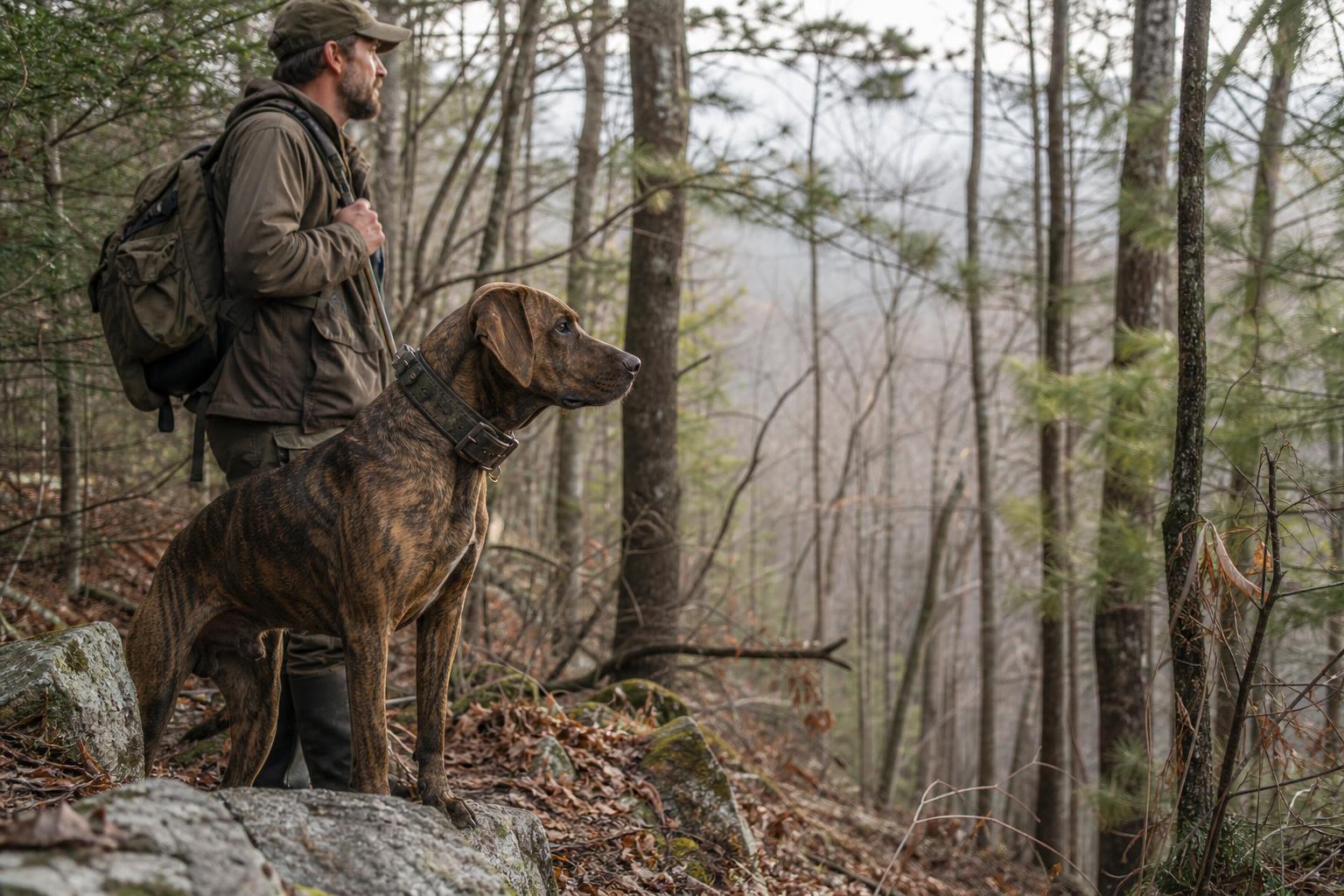
A finished Plott Hound can be a serious advantage for a hunter who wants a proven scenthound rather than a blank slate. The breed is known for grit, stamina, tracking drive, and the confidence to work large game in rough country. That does not mean every advertised finished dog is ready for every buyer, every region, or every style of hunting. A finished dog should be evaluated by what it has actually done, how reliably it performs, and whether its training fits the work you expect.
For buyers, the most important point is simple: the word finished is not a registry title by itself. It is a seller's description. Some Plott Hounds are called finished because they can trail, locate, and stay with game under real hunting conditions. Others may be well started but still need more handling, more exposure, or more consistency away from the seller's home ground. Before paying finished-dog money, ask for specifics, watch the dog work when possible, and verify claims with records, references, and direct observation.
What makes a finished Plott Hound
A finished Plott Hound should understand its job from release to recovery. In practical terms, that usually means the dog can search with purpose, open appropriately on a track, move a workable trail, locate game, stay committed, and handle well enough for the hunter to manage the hunt safely. Because Plotts have a long history as big-game hounds, especially in bear and boar country, a finished dog may be judged less by yard obedience and more by honesty, courage, nose, track sense, tree or bay behavior, and the ability to perform when conditions are not easy.
Ask the seller to describe the dog's actual finished skills in plain language. What game has the dog been hunted on? Does it cold trail, rig, strike from the box, pack with other hounds, or work independently? Is it trash-broke from off-game common in your area? How does it behave at a tree, bay, road crossing, or recovery point? The best answers are specific and practical, not vague praise.
- Confirm the dog has repeated field experience, not one lucky hunt.
- Ask whether the dog works alone, in a pack, or both.
- Watch for consistency in unfamiliar cover if you can arrange it.
- Find out how the dog handles pressure, correction, long tracks, and difficult weather.
Hunt tests
Hunt tests may or may not be central to a Plott Hound purchase, depending on the dog's background and the seller's goals. Some hounds are campaigned in organized events, while many capable working Plotts are proven almost entirely in real hunting situations. Do not assume a finished Plott Hound has hunt test titles, and do not assume the absence of titles means the dog cannot hunt. Instead, ask what standards the seller uses to call the dog finished.
If titles or hunt test records are mentioned, verify them through the relevant organization rather than relying on an advertisement. Ask for the registered name, registration number if available, event dates, and copies of score sheets or certificates. Then compare those records to your intended use. A dog that performs well in one format may still need evaluation for big-game hunting, pack compatibility, road manners, or handling in your terrain.
Verify working records and breed eligibility
Verify reported working titles and test results with the issuing organisation. Confirm that the programme applies to the breed and ask what the result demonstrates about the individual dog.
The useful lesson is not to chase the wrong credential. Evaluate the dog according to breed-appropriate work. For a Plott Hound, that often means scenting ability, track honesty, stamina, voice, game focus, grit, biddability, and how safely the dog can be handled before, during, and after the hunt.
Trial records
Trial records can add value when they are legitimate and relevant. Some hound buyers care about competition results because they show the dog has performed under outside judgment. Others care more about local hunting references and season-after-season reliability. Either approach can be reasonable, but claims should be checked. Ask for the event type, dates, placements, registry or club, and the name under which the dog competed.
When reviewing records, look beyond a single win. A finished Plott Hound with repeated performance, solid handling notes, and a reputation among hunters is usually easier to evaluate than a dog advertised only with broad claims. References from people who have hunted behind the dog can be especially useful. Ask them what they liked, what they would change, and whether the dog was honest about game.
Age expectations
A finished Plott Hound is usually mature enough to have real miles behind it. Many buyers expect a finished dog to be past the early puppy and adolescent stages, with enough age to show consistency but not so much age that the working future is short. Exact age expectations vary by dog, training history, and purpose. A three-year-old with steady experience may be more valuable than an older dog with patchy work, while a seasoned older hound may be ideal for a buyer who wants a reliable pack member or teacher for younger dogs.
Ask about physical condition as carefully as training. Plotts are athletic, muscular hounds that need sound feet, wind, joints, and recovery. Request veterinary history, injury history, current conditioning routine, and any limitations the seller has noticed. For an active, deep-chested hound, sensible feeding, conditioning, and rest matter. Avoid sellers who dismiss health and soundness questions as unimportant.
Investment value
A finished Plott Hound costs more than a prospect because someone has already invested time, fuel, birds or game exposure where relevant, road miles, handling, and risk into proving the dog. The value is not just training hours; it is reduced uncertainty. A buyer may be paying for a dog whose nose, hunt drive, temperament, and field habits are already visible.
Still, investment value depends on fit. A hard-driving big-game hound may be a bargain for the right hunter and a poor match for a casual home. Before buying, decide what you need the dog to do in your country, with your game, your other dogs, and your handling style. Ask whether there is a trial period, written bill of sale, return terms, and clear disclosure of faults. No finished dog is perfect. Honest sellers will tell you what the dog does well and where it needs management.
Questions to ask before buying
- What game has this Plott Hound been hunted on, and how often?
- Can I see the dog work, or speak with hunters who have?
- Does the dog hunt alone, with a pack, or only in a specific setup?
- What off-game has the dog been corrected from, and how reliable is it now?
- Are registration, hunt test, trial, or club records available to verify?
- What are the dog's known faults, health history, and handling quirks?
Buyer-focused conclusion
The right finished Plott Hound can save years of guesswork and give a hunter a capable, proven partner with the breed's classic stamina and determination. Take your time, verify every claim, and judge the dog by work that matches your needs. A practical evaluation, a clear written agreement, and honest discussion with the seller will do more for you than any flashy advertisement.
Explore Plott Hound on Working Dog Central
View the Plott Hound breed profile or browse Plott Hound listings.


