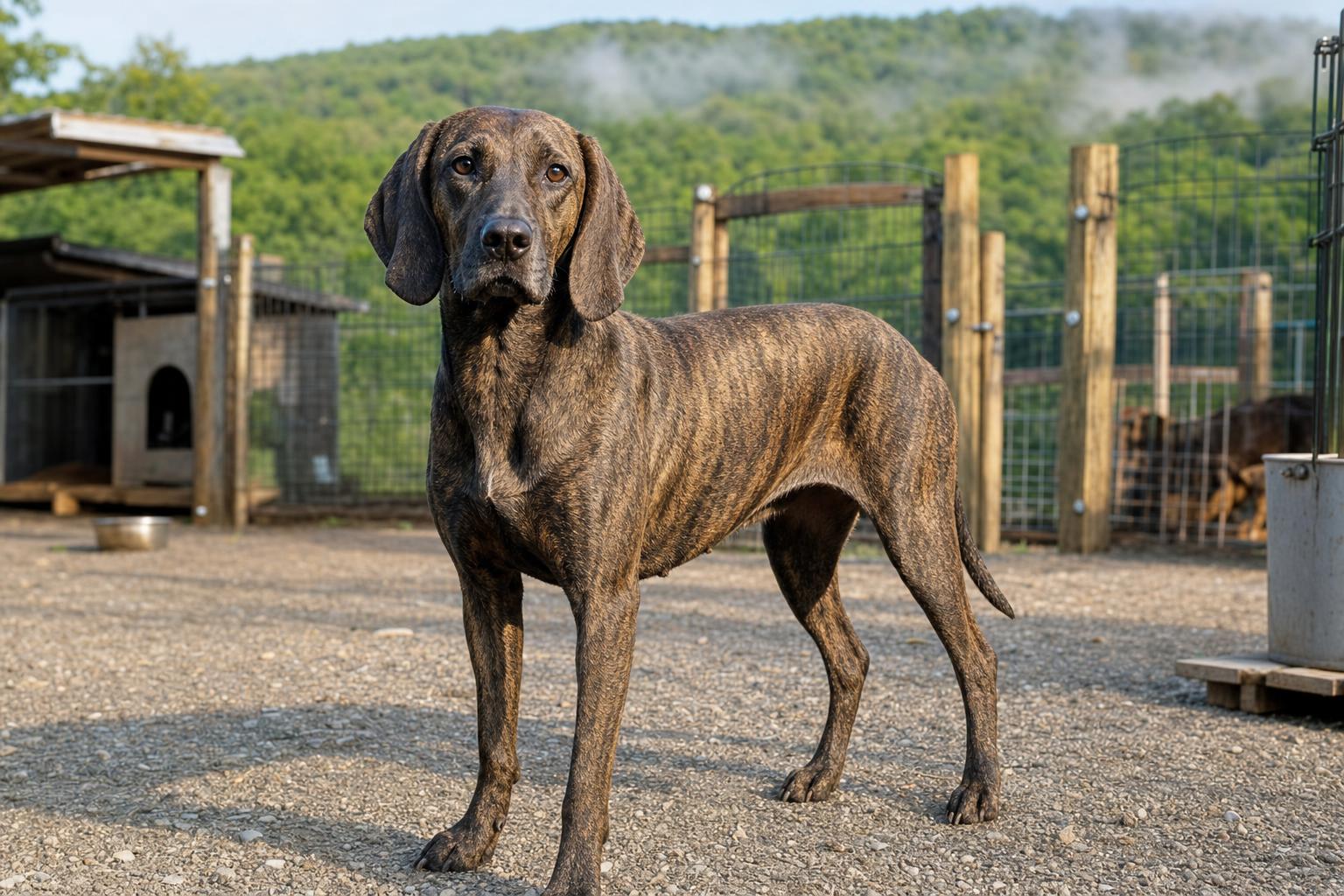
A proven female Plott Hound can be an important purchase for a hunter, breeder, or working-hound program, but she should be evaluated with more care than a puppy or casual companion. A female that has already raised a litter may offer useful information about fertility, maternal ability, temperament, and the kind of pups she produces. At the same time, the word proven should never be treated as a shortcut for quality. Buyers still need to verify health, working ability, breeding history, and fit for their goals.
The Plott Hound is a rugged American scenthound with deep roots in North Carolina and the Appalachian hunting tradition. Known for grit, stamina, courage, and a powerful nose, the breed has long been associated with big-game work such as bear and wild boar, while many individuals also serve as active family companions. That working background matters when evaluating a proven female. The best purchase is not simply the female with the most impressive papers, but the one whose record, condition, temperament, and production history match the buyer's intended use.
Production Record in a Plott Hound Female
Start with the female's production record. Ask how many litters she has had, when they were born, how many pups were in each litter, and how many survived to weaning. A normal record should be discussed plainly, without pressure or vague claims. Large or small litters are not automatically good or bad, but the details help you understand fertility, whelping history, and management.
For a Plott Hound, production should also be considered in light of working purpose. If the seller says previous pups became hunting dogs, ask for specifics. What kind of game were they used on? Did they show nose, voice, drive, grit, track style, treeing ability, or stamina? Are any pups being used by repeat buyers? Can the seller connect you with owners of earlier offspring? Firsthand feedback from pup owners is often more useful than a broad claim that a female throws great dogs.
- Number and dates of previous litters
- Average litter size and puppy survival
- Any complications during breeding, whelping, or nursing
- Feedback from owners of previous pups
- Evidence that offspring fit the intended hunting or companion role
Prior Litters and What They Tell You
Prior litters give buyers a window into consistency. A proven Plott Hound female may produce pups with similar body type, voice, temperament, and working drive across more than one cross, or her production may vary significantly depending on the stud. Ask whether previous litters were from the same male or different males. If all the information comes from one cross, you are really evaluating that pairing, not the female alone.
Look for honest descriptions of strengths and weaknesses. A trustworthy seller can usually tell you what they liked about earlier pups and what they would improve. Maybe the offspring had excellent track drive but matured slowly. Maybe they were bold in the woods but needed experienced handlers. Maybe they made strong family dogs when exercised properly. Practical detail is a better sign than perfect-sounding advertising.
Maternal Ability and Puppy-Raising History
Maternal ability matters in any breeding female. Ask whether the Plott Hound female settled into motherhood, accepted her pups, nursed reliably, and kept weight through the litter. Good maternal behavior can reduce management problems and support strong early development, but buyers should still remember that future litters are never guaranteed.
Discuss how previous litters were raised. Were pups handled regularly, exposed to normal household or kennel routines, and monitored for growth? Were they raised in a clean, safe environment? If the seller is transparent about puppy care, vaccination timing, deworming, and veterinary involvement, that is a positive sign. Avoid any sale where the female's value is based only on having produced pups, with no clear record of how those pups were cared for or placed.
Age and Breeding History
Age is central when buying a proven female. A younger adult with one well-managed litter is a different prospect from an older female with several previous breedings. Ask for her birth date, breeding dates, whelping dates, rest periods between litters, and whether a veterinarian has recently assessed her reproductive health. Do not rely on guesswork or casual assurances.
A fair seller should be willing to explain why the female is being sold. Some proven females are sold because a kennel is changing direction, reducing numbers, or keeping daughters. Others may be nearing the end of their breeding usefulness. That does not automatically make the female a bad purchase, but it changes the value and purpose of the deal. If the buyer hopes to breed her again, a current veterinary opinion is worth more than optimism.
Health Clearances and Veterinary Records
Health documentation should be reviewed carefully, but buyers should avoid assuming that every registry or testing program applies equally to every Plott Hound line. Ask what health screening has been done and request copies, not summaries. Orthopedic screening, general veterinary records, parasite prevention, vaccination history, and reproductive notes may all be relevant. If OFA results, DNA testing, or other formal clearances are mentioned, verify them through the appropriate registry or testing provider instead of accepting a verbal claim.
The Plott Hound is generally a hardy working breed, but active hounds can still face orthopedic strain, ear issues, injuries, and other health concerns common to athletic dogs. A deep-chested, active dog may also warrant a conversation with a veterinarian about bloat risk and management. No seller should promise that a female or her pups will be free from every health issue. What you want is transparency, documentation, and a breeding plan that takes health seriously.
Temperament in the Kennel, Home, and Field
Temperament is especially important in a proven Plott Hound female because her behavior influences both daily management and buyer confidence in her pups. Plotts are often loyal, intelligent, courageous, vocal, and scent-driven. Some are affectionate and steady at home when well exercised, while others are intense working hounds best suited to experienced handlers. Ask to see the female in ordinary situations if possible: on lead, around the kennel, around familiar people, and in a calm handling setting.
For breeding value, temperament should be more than friendly advertising language. Ask whether she is stable around people, manageable with other dogs, easy to load and handle, and reasonable when not hunting. If she has produced pups before, ask whether her offspring tend to be bold, reserved, high-drive, vocal, soft, independent, or handler-focused. A buyer looking for bear-hunting prospects may prioritize different traits than a family seeking an active companion, so fit matters.
Working Proof and Pedigree Strength
Pedigree can help you understand a Plott Hound female, but it should not replace proof. Ask what she has personally done. Has she been hunted? On what game? In what terrain? Does she trail, strike, bay, tree, or pack well? Is she used alone or with other hounds? If the seller mentions titles, hunt tests, registry recognition, or trial records, verify that those programs are relevant to the dog and confirm the records directly. Not every valuable Plott Hound will have formal titles, and not every titled dog is the right match for every buyer.
Pedigree analysis should focus on repeatable traits. Look for families known for the kind of work you need, whether that is big-game courage, cold-nose trailing, endurance, voice, handle, or balanced household temperament. Ask where the female fits in the breeder's program and why she was crossed the way she was. A strong answer connects ancestry, observed traits, and breeding goals.
Fertility Considerations Before Purchase
If the buyer intends to breed the female again, fertility should be evaluated before money changes hands. Ask when she last cycled, whether she settled naturally, whether artificial insemination was used, whether she required veterinary support, and whether she has ever missed after being bred. For any claims involving live cover, artificial insemination, chilled semen, or frozen semen, verify what actually occurred and whether the method is practical for your plans.
Do not assume that a proven female will remain fertile indefinitely. Age, health, timing, stud fertility, and management all affect outcomes. A pre-purchase veterinary exam, reproductive consultation, and clear written terms can prevent expensive misunderstandings. If the sale depends on future breeding potential, the agreement should say exactly what is and is not guaranteed.
Fair Purchase Evaluation
Fair value depends on more than the fact that the Plott Hound female has had puppies. Consider her age, health, condition, production record, working proof, pedigree, temperament, and remaining breeding potential. A female being sold primarily as a working dog or companion should be priced differently from one sold with realistic breeding value. Exact prices vary by region, quality, demand, and the seller's program, so buyers should compare similar dogs rather than rely on a single advertised number.
Use a written bill of sale. It should identify the dog, registration details if applicable, health records provided, breeding rights if any, known issues, and whether any return or replacement terms apply. If registration through AKC, UKC, or another organization is part of the sale, verify the paperwork and transfer process before closing. Do not accept promises that important documents will appear later unless the agreement clearly protects you.
Red Flags When Buying a Proven Plott Hound Female
- The seller cannot provide basic litter dates, puppy counts, or breeding history.
- Health records, registration papers, or claimed test results are unavailable or inconsistent.
- The female is thin, neglected, unsound, overly fearful, or difficult to handle without explanation.
- Every previous pup is described as exceptional, but no references or specifics are offered.
- The seller pressures you to buy quickly before you can verify records.
- Future fertility, litter size, or puppy quality is guaranteed without realistic limits.
Conclusion: Buying With Clear Eyes
A proven Plott Hound female can be a valuable addition when her record supports the buyer's goals. The right female may bring known maternal ability, useful production history, working traits, and a pedigree that fits a thoughtful program. The wrong purchase can bring health problems, poor documentation, unrealistic breeding expectations, or a mismatch in drive and temperament.
Take your time. Verify records, ask specific questions, talk with owners of prior pups when possible, and evaluate the female as an individual Plott Hound rather than as a label. A careful buyer is more likely to find a female that is fair to own, fair to breed if appropriate, and true to the hardworking character that makes the Plott Hound respected among serious hound people.
Explore Plott Hound on Working Dog Central
View the Plott Hound breed profile or browse Plott Hound listings.


