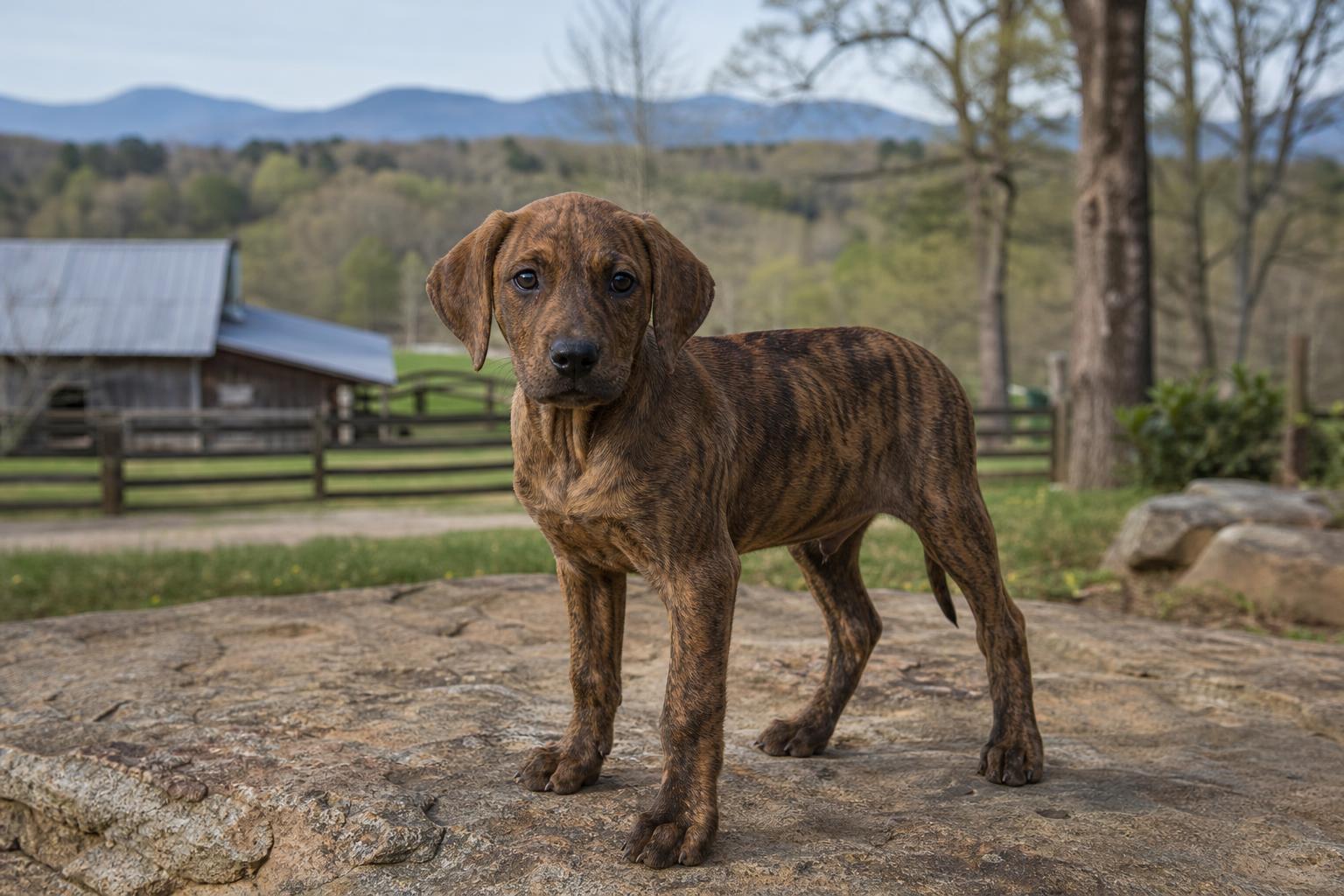
Plott Hound puppies attract buyers who want a bold, athletic scenthound with real working history. The breed is closely tied to the mountains of North Carolina, where generations of hunters valued Plotts for tracking and treeing large game such as bear and wild boar. A good Plott can be loyal, intelligent, determined, and affectionate at home, but this is not a casual couch companion for every household. Before responding to any listing for Plott Hound puppies for sale, buyers should understand the breed's drive, voice, exercise needs, and independent hound nature.
The right puppy is more than a brindle coat and a good photo. Plott Hounds are medium to large working dogs, commonly described as muscular, athletic, and built for endurance. Many mature around 20 to 25 inches at the shoulder and often weigh somewhere in the 40 to 60 pound range, though individual dogs vary. Their short, smooth coat is easy to maintain, but their mind and body need work. If your goal is hunting, tracking, hiking, scent sports, or an active family dog with structure, the Plott Hound may be a strong match. If you want a quiet, low-drive puppy that naturally ignores wildlife, it may be worth reconsidering.
Choosing a breeder
Choosing a breeder is the most important step when searching for Plott Hound puppies for sale. A responsible breeder should be able to explain why a litter was planned, what the sire and dam are like, and how the puppies are being raised. For this breed, that conversation should include working style, scent drive, voice, confidence, social stability, and household temperament. Plotts can be courageous and intense in the field, so buyers should look for breeders who also care about clear-headed behavior around people and manageable manners in everyday life.
Ask specific questions rather than accepting general claims. How do the parents hunt or work? Are they bear dogs, coon dogs, general tracking dogs, family companions, or some combination? How do they behave in the kennel, home, truck, and around strangers? Have the puppies been exposed to normal household sounds, handling, crates, car rides, different footing, and age-appropriate outdoor experiences? If the breeder is focused on hunting homes, ask how they match puppies by confidence, nose, independence, and energy level. If you are a family buyer, be honest about your experience and daily routine.
- Look for clear answers about the sire, dam, and reason for the breeding.
- Ask for written records for vaccinations, deworming, veterinary checks, and any health screening the breeder uses.
- Expect questions from the breeder about your home, fencing, activity level, and plans for training.
- Be cautious of sellers who always have puppies, avoid basic questions, or pressure you to send money quickly.
- Do not treat color alone, including brindle pattern, as proof of quality.
Because Plott Hounds are scent-driven and can be vocal, containment and training matter. A good breeder will not hide that. They should tell you plainly that a Plott puppy needs early socialization, leash work, recall practice, and safe outlets for nose work. This honesty is a positive sign, not a drawback.
AKC registration
AKC registration can be relevant for Plott Hound buyers, as the breed gained full American Kennel Club recognition in 2006. However, registration should be understood correctly. Papers identify a recorded pedigree within that registry; they do not automatically prove working ability, health, temperament, or suitability for your home. Some Plott Hound lines may also be associated with other registries or working-dog traditions, so buyers should verify which registry applies to a particular litter and what the paperwork includes.
If a listing mentions AKC registration, ask whether the litter is registered or registerable, whether registration is full or limited, and when the buyer receives paperwork. If the breeder also mentions UKC, hunt tests, performance events, or trial records, ask to see documentation rather than relying on verbal claims. Not every excellent Plott will have the same type of paperwork, and not every registered dog is the right dog for your goals. The key is transparency.
How to verify registration claims
- Ask for the registered names or numbers of the sire and dam when appropriate.
- Confirm whether the puppy comes with individual registration paperwork or only a bill of sale.
- Understand any limitations on breeding rights before you place a deposit.
- Verify registry rules directly if something sounds unclear or unusually restrictive.
For hunting buyers, registration is only one piece of the puzzle. Ask about actual field experience, scenting style, game exposure, handle, voice, grit, and how the breeder evaluates pups. For companion buyers, prioritize temperament, socialization, health records, and the breeder's willingness to help you choose a puppy that fits your lifestyle.
Vaccinations
Vaccination records are a basic part of responsible puppy buying. A Plott Hound puppy should come with written information showing what vaccines, deworming, and veterinary care have already been provided. The exact schedule can vary by veterinarian, region, age at pickup, and individual risk, so buyers should not rely on a listing alone. Take the records to your own veterinarian promptly and build the next-step plan with professional guidance.
Ask whether the puppies have had a veterinary exam, what product was used for each vaccine or deworming, and on what date it was given. Also ask about parasite prevention, stool checks if available, and whether the breeder has noticed any health concerns in the litter. Avoid sellers who cannot provide dates, labels, or records. A confident breeder should not be offended by practical questions.
Health records to request
- Vaccination dates and vaccine names or labels.
- Deworming dates and products used.
- Veterinary exam notes, if available.
- Any known illness, injury, or treatment in the litter.
- Feeding information so you can transition food gradually.
Plott Hounds are generally hardy working dogs, but active hound lifestyles can bring exposure to mud, ticks, brush, wildlife areas, and rough terrain as the dog grows. Your veterinarian can advise on core vaccines, regionally appropriate prevention, and safe timing for public outings while the puppy's immunity is developing. The breeder's job is to start the puppy responsibly; your job is to continue care without gaps.
Bringing puppy home
Bringing a Plott Hound puppy home should be planned before pickup day. This breed is smart, physical, and guided strongly by scent. Set up a crate, safe sleeping area, secure leash and collar, appropriate chew items, food and water bowls, and a cleaning plan for house training. A securely fenced area is helpful, but it is not a substitute for supervision. Even young hounds can become focused on smells and wander if given the chance.
The first weeks should emphasize routine, not chaos. Keep introductions calm, reward eye contact and following you, and begin short crate sessions right away. Start name recognition, leash walking, handling, trading games, and gentle recall practice in low-distraction areas. Plotts often learn quickly, but they can also become absorbed in scent. Use that instinct wisely by adding simple sniffing games, food trails, and age-appropriate exploration.
Early priorities for a Plott Hound puppy
- Build a predictable schedule for meals, potty breaks, sleep, and short training sessions.
- Reward quiet behavior and teach settling before vocal habits become hard to manage.
- Practice recall on a long line instead of trusting off-leash freedom too soon.
- Expose the puppy to people, surfaces, sounds, vehicles, crates, and handling in a positive way.
- Protect growing joints by avoiding forced long-distance running or repetitive hard impacts.
If your puppy is intended for hunting, do not rush serious work. Foundation manners, confidence, socialization, and safe exposure come first. Birds or game scent, woods walks, and tracking games can be useful when introduced thoughtfully, but pressure too early can create confusion. If your puppy is primarily a companion, the same rule applies: give the dog purpose. Nose work, hikes, obedience, and structured play help turn a high-drive hound into a livable partner.
Typical puppy prices
Typical puppy prices for Plott Hounds can vary widely. Location, pedigree, breeder reputation, working background, registration, veterinary care, transportation, and demand all influence cost. A puppy from proven hunting stock with careful selection and documented care may be priced differently from a casual local litter. Because markets change, buyers should treat any price range as general guidance rather than a guarantee.
Instead of shopping by the lowest price, compare value. A well-raised Plott Hound puppy should come with honest information, records, support, and a breeder who is willing to discuss fit. Very low prices can still produce good dogs, but they may also signal missing veterinary care, unclear parentage, poor socialization, or rushed placement. Very high prices do not automatically mean better quality. Ask what is included and evaluate the entire package.
Costs beyond the purchase price
- Veterinary visits, vaccines, parasite prevention, and possible health screening as the dog matures.
- Quality food for an active medium-to-large hound.
- Crate, leash, long line, collar, ID, training tools, and safe chew items.
- Secure fencing or containment improvements if needed.
- Training classes, hunting exposure, tracking equipment, or travel expenses.
Deposits should be handled carefully. Get the terms in writing, including whether the deposit is refundable, how puppy selection works, what happens if the litter does not produce the right match, and when the balance is due. Avoid sending money through methods that offer no buyer protection unless you already know and trust the breeder.
Red flags when shopping for Plott Hound puppies
Some warning signs apply to any breed, but they matter especially with a working hound like the Plott. Be wary of sellers who cannot describe the parents beyond color, who avoid discussing temperament, or who claim every puppy will be perfect for hunting and family life without asking about your needs. A good Plott puppy should be matched thoughtfully, because independence, prey drive, voice, and energy level can differ within a litter.
- No written vaccination or deworming records.
- No meaningful information about the sire and dam.
- Pressure to buy immediately or send a deposit before questions are answered.
- Unclear registration claims or excuses about paperwork.
- Puppies raised with little handling, social exposure, or clean housing.
- Promises of exact adult size, guaranteed hunting success, or medical outcomes.
It is reasonable to walk away if the details do not add up. The right puppy is worth waiting for, and a trustworthy breeder will respect serious questions.
Conclusion: finding the right Plott Hound puppy
A Plott Hound can be a loyal, courageous, and rewarding dog for buyers who understand what the breed was built to do. When reviewing Plott Hound puppies for sale, focus on fit, not just availability. Choose a breeder who knows the breed, documents care, explains registration honestly, and helps match each puppy to the right home. Prepare for training, exercise, scent work, and secure management from the first day. With patience and good selection, a Plott puppy can grow into the kind of capable hound and steady companion that made the breed respected in the first place.
Explore Plott Hound on Working Dog Central
View the Plott Hound breed profile or browse Plott Hound listings.


