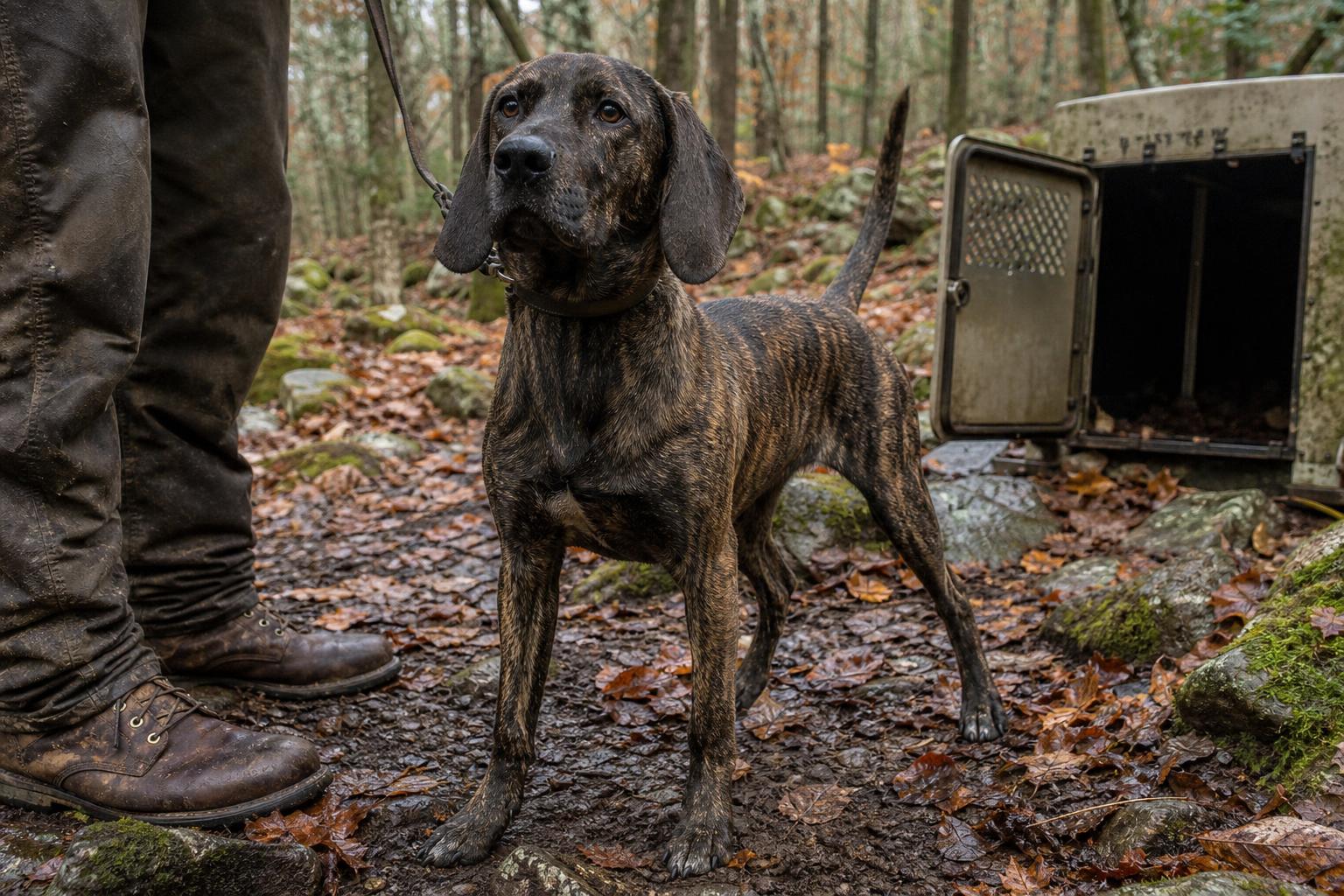
A started Plott Hound is often attractive to hunters who want a young hound with some foundation already built. The breed is known for grit, stamina, scenting ability, and a long history in the rugged country of western North Carolina, especially on large game such as bear and wild boar. A good started dog can save time, show you more about its natural ability than an eight-week-old puppy can, and give you a clearer look at size, voice, confidence, and drive.
Started, however, is not a regulated term. One seller may use it for a hound that has been lightly handled, hauled, and exposed to game scent. Another may mean a young Plott that has opened on track, packed with older dogs, and shown interest at the tree or bay. Before you buy, slow down and ask what the dog has actually done. The right question is not simply whether the dog is started. The better question is: started at what, under what conditions, and with what consistency?
What qualifies as “started” in a Plott Hound
For a Plott Hound, started should mean more than being old enough to leave the kennel. At minimum, the dog should have some combination of handling, exposure, and early field experience that suggests it is moving toward useful work. Because Plotts are scenthounds rather than pointing or flushing gun dogs, started work usually centers on trailing, game interest, pack manners, confidence in rough terrain, and response to basic handling.
A started Plott Hound may still be young and unfinished. It may not be dependable alone, may not stay treed for long periods, and may not have seen enough country to prove endurance. That is normal. What you are paying for is evidence of development, not a finished product. Ask the seller to describe the dog’s age, number of trips to the woods, type of game exposure, whether it has hunted alone or only with older dogs, and what the dog does when it loses a track.
- Has the dog shown honest interest in scent and game?
- Does it hunt out naturally, or does it stay underfoot?
- Has it been hauled, kenneled, led, loaded, and handled regularly?
- Does it work well with other hounds without causing kennel or pack trouble?
- Can the seller explain both strengths and shortcomings?
Be cautious of vague claims such as “ready to hunt” with no detail. A trustworthy seller should be able to talk plainly about what the Plott has done and what still needs work.
Birds introduced or breed-appropriate game exposure
For this breed, breed-appropriate game exposure matters more than bird work. Plott Hounds were developed as tough scenthounds, historically associated with tracking and treeing or baying large game. Some may be used on raccoon, hog, bear, or other legal quarry depending on region and hunter preference. A buyer should verify that the dog’s exposure fits the intended use and complies with local laws and seasons.
Ask whether the dog has been exposed only to drags, caged game, scent trails, released game where legal, or actual hunting situations. Each type of exposure tells you something different. A drag can show nose interest and willingness to follow a line, but it does not prove the dog can sort an old track, handle pressure, or stay committed when conditions are difficult. Time in the woods with experienced hounds can build confidence, but it may also hide whether the young dog is truly contributing.
Because Plotts are often intense and prey-driven, buyers should also ask what the dog ignores. Has it been corrected off livestock, deer, or off-game where relevant? Has it been hunted around roads, fences, water, steep ground, or thick cover? A young dog does not need to be perfect, but the seller should be honest about what the dog has and has not seen.
Gun introduction when relevant
Gun introduction may or may not be central to a Plott Hound started dog, depending on the type of hunting. In some hound work, the gun is not introduced the same way it would be for an upland pointing dog or retriever. Still, a buyer should ask whether the dog has been around gunfire, vehicles, tracking equipment, lights, other dogs, and the general commotion of a hunt.
Do not assume a Plott is gun-broke just because it is advertised as started. Ask for specifics. Was the dog introduced gradually at a distance? Was it around calm, experienced dogs? Did it show curiosity, indifference, worry, or avoidance? A seller should not need to make medical or behavioral guarantees, but they should be able to describe what happened during exposure. If gunfire is important to your hunting style, try to observe the dog in a fair, controlled setting rather than surprising it with a loud test.
Obedience level to expect
A started Plott Hound should have practical manners, not polished obedience-ring performance. This is an independent scenthound with a strong nose and a serious desire to work. Buyers should look for a dog that can be caught, led, loaded, kenneled, handled at the truck, and settled when needed. A recall or tone response may be developing, but it should be evaluated honestly around distractions.
Useful obedience questions include whether the dog walks on lead, comes to the handler in a fenced area, loads into a dog box, tolerates handling of feet and ears, and accepts basic kennel routines. For a Plott, ear care and physical checks matter because working and hiking can expose the dog to moisture, ticks, burrs, paw wear, and minor scrapes. A dog that cannot be safely handled may cost more time than its field start is worth.
Also ask about household exposure if the dog is expected to live partly as a companion. Some started hounds have been raised in kennels and may need patient adjustment to house life. That is not a flaw if disclosed, but it affects the match.
Evaluating training before you buy
The best way to evaluate a started Plott Hound is to see the dog work in conditions that resemble your intended use. If that is not possible, ask for recent video, references, and a clear explanation of the dog’s progress. Look for natural desire, confidence, recovery after mistakes, and a willingness to keep hunting. Do not judge only the most exciting moment. Watch how the dog behaves before and after the action.
During evaluation, pay attention to the dog’s voice, independence, pack behavior, and biddability. Plotts are known for determination, but determination without handle can become a management problem. A young hound that hunts hard, respects other dogs, and accepts correction fairly is often more valuable than one with flash but no brakes.
- Ask the seller what the dog does best right now.
- Ask what the next thirty to ninety days of training should focus on.
- Ask whether the dog has been hunted alone, in a pair, or only in a pack.
- Ask about off-game issues, kennel behavior, and temperament with people.
- Ask what records, videos, or references support the claims.
Health and soundness should be part of the evaluation. Do not invent assumptions about clearances or guarantees. Instead, ask what veterinary care, vaccination history, deworming, injury history, and parent information are available. For an athletic hound, overall condition, feet, gait, weight, ears, and recovery after exercise are all worth checking. If claims are made about AKC, UKC, hunt tests, trial results, OFA, DNA, or other records, verify them directly with the relevant registry or issuing organization.
Matching a started Plott Hound to your goals
A started dog is only a bargain if it fits your country, quarry, experience level, and management setup. Plott Hounds often do best with active owners who understand hounds, secure containment, and regular outlets for scent work. If you need a quiet suburban pet with minimal exercise, this breed may be too much dog. If you want a tough, loyal, track-minded partner and you enjoy building skills over time, a started Plott can be a strong choice.
Discuss trial period terms, transport, registration papers if applicable, and what happens if the dog is not as represented. Get important promises in writing, including the dog’s identity, purchase price, known health information, and any return policy. Avoid sellers who pressure you to buy before you can ask questions or see enough proof.
Conclusion: buy the dog, not the label
When shopping for Plott Hound started dogs, remember that the word started is only a doorway into better questions. Look for honest field experience, breed-appropriate game exposure, sensible handling, and a temperament that fits your home and hunting style. A well-matched started Plott Hound can give you a head start with a courageous American scenthound, but the smartest buyers verify the details before they load the dog and head home.
Explore Plott Hound on Working Dog Central
View the Plott Hound breed profile or browse Plott Hound listings.


