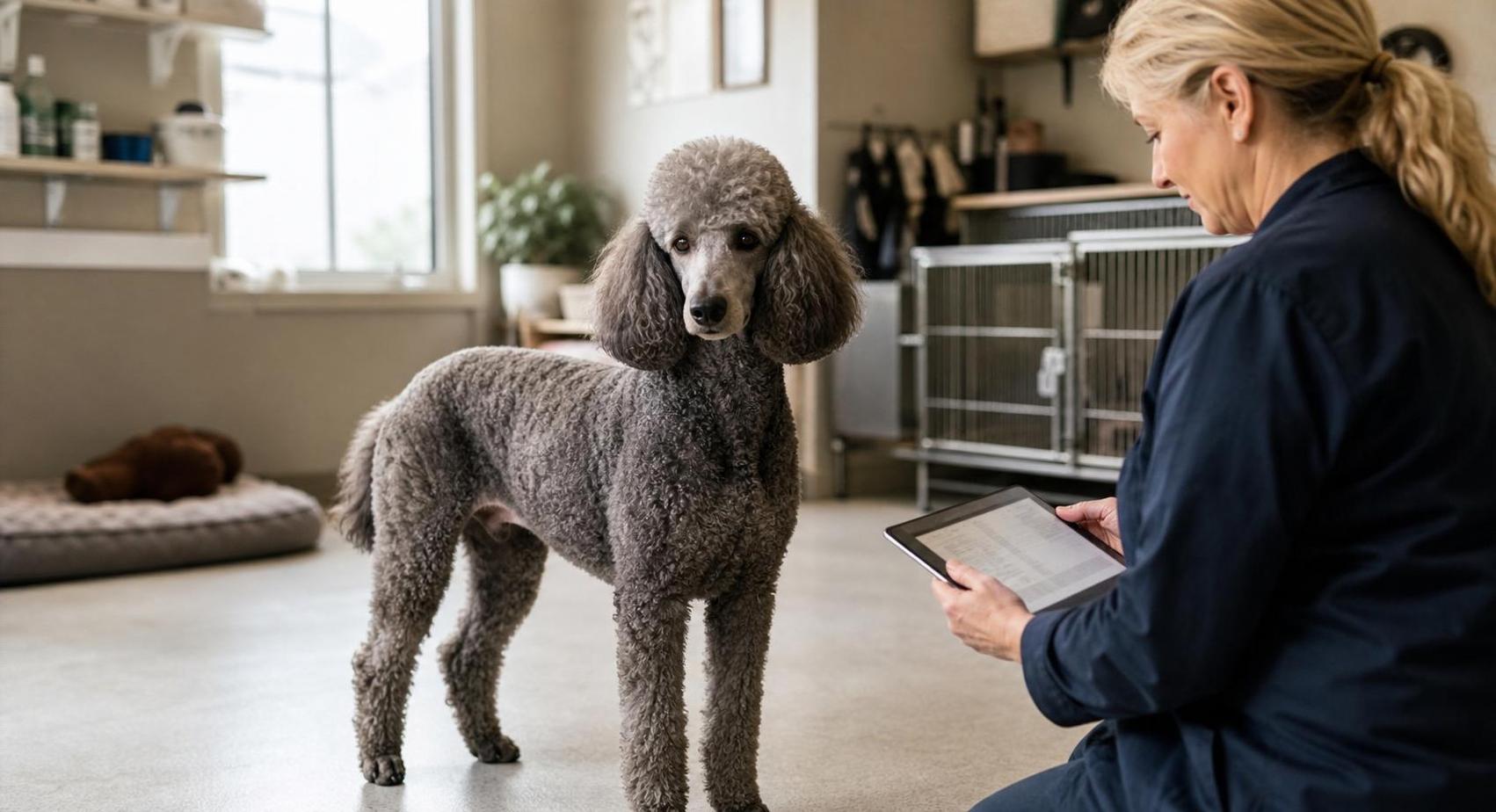
A proven female Poodle can be valuable for the right breeder, but she should never be evaluated only by her coat, pedigree names, or the fact that she has produced puppies before. Poodles are highly intelligent, people-oriented dogs with a long history as water retrievers and versatile companions. A buyer looking at a proven female should ask whether her production record, temperament, health documentation, grooming tolerance, and day-to-day manners support the goals of a responsible program.
This guide focuses on practical evaluation. It does not assume every Poodle is a hunting dog, show dog, or breeding prospect. Standard Poodles in particular have working roots and may still enjoy water, retrieving, and structured training, while Miniature and Toy Poodles are more often evaluated for companion, performance, or size-specific goals. The right questions help you separate a genuinely useful brood female from a dog being moved along without enough transparency.
Production Record for a Proven Female Poodle
Start with the female's actual production record. A seller should be able to describe how many litters she has had, approximate litter sizes, whether whelping was natural or assisted, and how puppies matured in temperament, structure, coat, and general health. For a Poodle, pay attention to whether offspring inherited the breed's best qualities: trainability, alertness, people focus, athletic balance, and a dense curly or corded coat that owners could maintain with regular grooming.
Ask for examples, not vague praise. Useful records may include puppy updates, owner references, photos of mature offspring, training or performance notes, and veterinary documentation where appropriate. If a female has produced puppies that excel in obedience, agility, rally, retrieving games, service work, companionship, or conformation, ask what proof is available and whether those results are consistent across more than one puppy.
- How many litters has she produced, and at what ages?
- Were there any complications with breeding, pregnancy, whelping, or nursing?
- What traits did she reliably pass to her puppies?
- Have any offspring been returned, rehomed, or reported with serious concerns?
- Can the seller connect you with owners of previous puppies?
Prior Litters and Puppy Outcomes
Prior litters matter because they show whether the female has produced healthy, stable, manageable puppies in real homes. A proven female Poodle should be assessed by outcomes, not just by the number of puppies born. Since Poodles are clever and sensitive, strong early handling and appropriate socialization can shape how puppies adjust to grooming, crates, strangers, household noise, and training pressure.
Review how previous puppies were raised. Were they introduced to gentle handling, nail trims, brushing, bathing sounds, safe surfaces, and age-appropriate play? Were buyers matched carefully by size variety and lifestyle? A Standard Poodle puppy from active lines may need a very different outlet than a Toy Poodle placed primarily as a companion. A responsible seller should understand those differences and explain what the dam contributed.
Maternal Ability in the Poodle
Maternal ability is one of the main reasons to consider a proven female rather than an unbred prospect. Ask whether the Poodle settled well with her puppies, accepted handling around the whelping area, nursed reliably, kept puppies clean, and remained emotionally steady as the litter became more active. Good maternal behavior is not the same as being protective to the point of stress or unsafe handling.
Because Poodles bond closely with people and notice patterns quickly, their behavior during motherhood can reveal a lot about nerve, trust, and resilience. A female who can care for puppies while still responding calmly to routine human support is usually easier to manage than one who becomes frantic, defensive, or disengaged. If the seller reports problems, ask what happened and whether a veterinarian or experienced breeder was involved.
Age and Breeding History
Age should be reviewed carefully. A proven female may be in the prime of maturity, nearing retirement, or being sold after a program change. None of those situations is automatically wrong, but the details matter. Ask for dates of previous heats, breedings, whelpings, recoveries, and any skipped cycles. A fair seller should be transparent about why she is available and what future breeding, if any, is realistic.
Do not rely on assumptions about fertility. Fertility can vary by individual, age, timing, reproductive history, and veterinary factors. If the purchase is specifically for breeding, discuss reproductive evaluation with your veterinarian before committing. If the female is being placed as a retired companion, clarify spay timing, recovery expectations, and whether she has any restrictions in the sales agreement.
Health Clearances and Veterinary Records
Health documentation is essential, but the relevant tests may vary by Poodle size, family history, registry expectations, and breeding goals. Standards, Miniatures, and Toys share the same breed identity but can have different risk patterns. Orthopedic issues, eye disease, dental concerns in smaller dogs, and endocrine or immune-related conditions are commonly discussed by responsible Poodle breeders. Ask what testing was done, who performed it, and whether results can be verified independently.
OFA records, eye exams, DNA testing, or other registry-linked health tools may be relevant, but never assume every clearance applies to every Poodle or that a verbal claim is enough. Ask for registered names or numbers when available, copies of certificates, and your veterinarian's review. Health testing does not guarantee future puppies, but it helps show whether the seller is making informed decisions instead of relying on appearance or popularity.
- Request veterinary records for breeding, pregnancy, delivery, and routine care.
- Verify any OFA, eye, DNA, or registry claims through the issuing source when possible.
- Ask whether any offspring have reported health concerns.
- Discuss bloat risk and prevention with a veterinarian for Standard Poodles or deep-chested individuals.
- Confirm current weight, dental condition, coat condition, ears, and mobility.
Temperament and Everyday Manageability
A proven female Poodle should be judged as a complete dog. The breed is known for intelligence, trainability, friendliness, and adaptability, but individual temperament depends on breeding, socialization, and handling. Spend time watching how she responds to normal life: greetings, grooming tools, leash walking, crate time, other dogs, household movement, and calm separation from her current owner.
For breeding, temperament is not optional. A nervous, sharp, hard-to-handle, or chronically over-aroused female can pass tendencies to puppies and create management problems during whelping and placement. A good Poodle brood female should have a stable mind, recover from surprises, accept reasonable handling, and show the biddable quality that makes the breed so valued in homes and training environments.
Working Proof, Performance, and Pedigree Strength
Poodles began as water retrievers, and some Standard Poodles are still evaluated through field work, retrieving, water confidence, obedience, agility, rally, or other performance venues. However, not every Poodle line is bred or proven for gun dog work. If hunting ability, water drive, or retrieving style matters to you, ask for direct proof from the female, her relatives, and previous offspring rather than assuming it from breed history.
Pedigree can add context, but it should not replace the dog in front of you. Review the female's relatives for health, longevity, temperament, trainability, grooming practicality, size consistency, and the type of homes where puppies have succeeded. If a seller mentions AKC titles, hunt tests, trial results, therapy work, or performance awards, verify the records through the appropriate organization and ask how those achievements relate to your goals.
Fertility Considerations
If you are buying the female for future breeding, fertility needs a sober review. Ask whether previous breedings required timing tests, artificial insemination, repeat attempts, or veterinary intervention. Ask whether she cycled regularly and recovered well after each litter. Frozen semen, live cover, and AI may or may not be relevant depending on the seller's program, the chosen stud, location, veterinary access, and registry rules, so verify the practical and contractual details before purchase.
A proven female should not be treated as a guaranteed income source. Even a female with an excellent past record may miss, have a small litter, need emergency care, or be retired sooner than expected. Build your evaluation around welfare first, then program fit, and only then financial assumptions.
Fair Purchase Evaluation
Fair value depends on age, health documentation, reproductive history, temperament, pedigree, training, grooming condition, and whether the sale includes breeding rights. Avoid exact price assumptions unless the seller provides them in writing and you can compare them with current market conditions. A female sold with transparent records, realistic expectations, and support from the seller is usually worth more than a cheaper dog with missing information.
Read the contract carefully. It should address registration transfer if applicable, breeding rights or limitations, known health history, return policy, payment terms, possession date, and what happens if the female does not conceive. If the Poodle is being sold as a companion after producing litters, the contract should be clear about spay expectations and ongoing care.
Red Flags When Buying a Proven Female Poodle
- The seller cannot provide dates, litter records, or basic veterinary history.
- Health clearances are claimed but not verifiable.
- The female is underweight, matted, fearful, or difficult to handle without explanation.
- The seller focuses only on color, coat, or profit potential.
- Previous puppy outcomes are unknown or buyers cannot be referenced.
- The contract is vague about breeding rights, fertility, or returns.
Conclusion: Buying a Proven Female Poodle Wisely
A proven female Poodle can be an excellent foundation or a wonderful retired companion when her record is clear and her welfare comes first. Look for honest documentation, stable temperament, thoughtful prior litters, appropriate health testing, and a seller who can explain both strengths and limitations. The best purchase is not simply the female who has produced puppies before; it is the Poodle whose history, health, temperament, and future role make sense for your home or breeding program.


