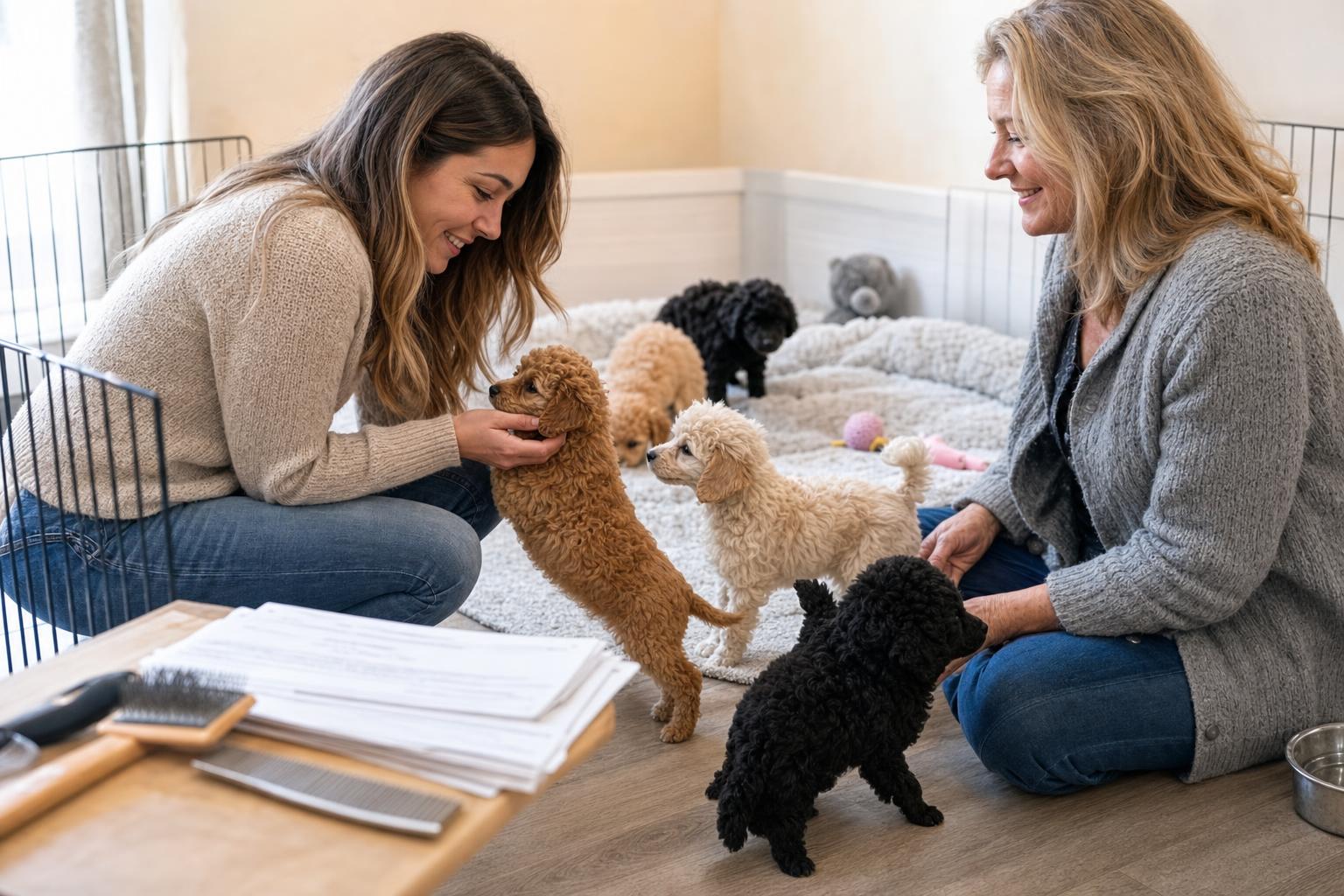
Looking at Poodle puppies for sale can be exciting, but the smartest buyers slow down long enough to understand the breed, the breeder, and the individual litter. The Poodle is widely recognized for intelligence, trainability, athleticism, and a distinctive curly or corded coat. Although many people picture an elegant show dog, the breed also has deep roots as a water retriever. That background matters for buyers because a well-bred Poodle puppy is usually more than a pretty companion. This is a bright, people-focused dog that needs grooming, structure, socialization, and daily mental work.
Working Dog Central buyers may be comparing family companions, prospects for retrieving or performance work, and versatile household dogs. The breed facts available here describe Poodles as alert, adaptable, quick learners that bond closely with their family and often enjoy active outdoor work such as swimming, fetching, hiking, obedience, rally, agility, and retrieving games. Those strengths are valuable, but they also mean the wrong match can become bored, noisy, or difficult to manage. A good purchase is not just about finding an available puppy; it is about finding the right breeder, the right litter, and the right fit for your home.
Understanding the Poodle Before You Buy
Poodles are recognized in three sizes in the United States: Standard, Miniature, and Toy. All share the same general breed type, but size affects exercise style, handling, travel, grooming logistics, and some health conversations. Standard Poodles are the largest and generally need the most physical outlet, while Miniature and Toy Poodles can often meet their needs with shorter sessions spread through the day. Buyers should confirm which size variety a litter represents and ask how the breeder selects for temperament, structure, and purpose.
The coat is a major part of Poodle ownership. Poodle hair continues to grow and can mat close to the skin if ignored. Puppies need early, positive introduction to brushing, bathing, nail trimming, ear care, and clipping. A breeder who starts gentle handling early gives buyers a useful head start. If you are new to the breed, budget for professional grooming or learn what equipment and schedule will be needed at home. A low-shedding coat is not the same as a low-maintenance coat.
Choosing a breeder
Choosing a breeder is the most important step when evaluating Poodle puppies for sale. Responsible breeders can explain why they planned the litter, what they hoped to preserve or improve, and how the sire and dam complement each other. They should be comfortable discussing temperament, coat care, size expectations, socialization, and known health considerations in their line. They should also ask you questions. A breeder who cares where puppies go will want to know about your household, experience level, activity plans, grooming expectations, and whether you are seeking a companion, performance prospect, or hunting-oriented retriever.
Ask to see the dam when practical and ask what can be shared about the sire. If either parent is not on site, that is not automatically a problem, but the breeder should still provide clear information about pedigree, temperament, health testing, and why that pairing was chosen. Because Poodles are intelligent and sensitive, early environment matters. Look for puppies raised with clean housing, regular human interaction, gradual exposure to household sounds, and age-appropriate handling. For buyers interested in field or performance work, ask whether the puppies are introduced to safe surfaces, toys, retrieving play, water exposure when age and weather allow, and confident exploration.
- Ask what health testing or screening was completed on the parents and request documentation rather than verbal assurances.
- Ask how puppies are matched to buyers and whether temperament observations influence placement.
- Ask what grooming and handling exposure puppies receive before going home.
- Ask what support the breeder provides after pickup.
- Be cautious of sellers who always have puppies available, avoid questions, or pressure you to send money quickly.
AKC registration
AKC registration may be relevant for many Poodle buyers, but it should be verified rather than assumed. Registration is a record of parentage with a registry; it is not, by itself, a guarantee of health, temperament, working ability, or ethical breeding. If a seller advertises AKC registration, ask whether the litter is registered or eligible, whether the puppy will be sold with full or limited registration, and what paperwork you will receive. Full registration may be relevant for future breeding or certain competition goals, while limited registration is common for companion placements.
Buyers should also remember that registry labels can vary by size variety, country, and breeder goals. If you intend to compete in AKC events, hunt tests, obedience, rally, agility, or other venues, confirm the exact requirements with the organization before buying. If your interest is primarily field work or retrieving, ask the breeder for evidence of ability in relatives instead of relying on registration alone. Titles, training history, and honest owner references can be more meaningful than a line on a sales page.
Vaccinations
Vaccinations are part of responsible puppy care, but buyers should avoid sellers who make broad medical promises or replace veterinary advice with sales talk. A Poodle puppy should leave with a written record of any vaccines, deworming, parasite prevention, veterinary exams, and dates completed. Take that record to your own veterinarian soon after pickup so your vet can continue an appropriate schedule based on the puppy's age, local disease risk, lifestyle, and current medical guidance.
Ask the breeder what food the puppies are eating, how stools have been, whether any puppy in the litter has needed special care, and whether the puppy has been examined by a veterinarian. A clean record is helpful, but transparency is even more important. Puppies are living animals, and minor issues can occur. What matters is whether the breeder communicates honestly, documents care, and encourages veterinary follow-up. Do not accept a verbal statement such as "all shots done" without dates, product information, and a plan for your vet to review.
Bringing puppy home
Bringing a Poodle puppy home should be planned before pickup day. Set up a crate or safe sleeping area, puppy-proof rooms, choose a veterinarian, schedule grooming introductions, and decide on house-training routines. Poodles learn quickly, so the first weeks can shape habits that last. Reward calm behavior, teach the puppy to settle, keep greetings polite, and introduce leash walking in short, positive sessions. Because the breed is people-oriented, build alone-time skills gradually instead of waiting until separation becomes stressful.
For active and gundog-minded homes, keep early work playful. Short retrieves, name response, recall games, gentle handling, and supervised exploration are better than drilling. Swimming and water introduction should be safe, warm, shallow, and pressure-free. Gunfire, heavy training pressure, and long sessions are not appropriate for a young puppy. If you hope to develop a retriever, focus first on confidence, trust, curiosity, and basic manners. A thoughtful foundation protects the puppy's attitude.
- Bring the breeder's feeding instructions and transition food slowly if changing diets.
- Book an early wellness visit with your veterinarian.
- Start grooming handling immediately with tiny, positive sessions.
- Use a predictable potty routine after sleep, meals, play, and excitement.
- Socialize carefully with safe people, places, surfaces, and sounds while respecting your veterinarian's vaccine guidance.
Typical puppy prices
Typical puppy prices for Poodle puppies can vary widely, and buyers should treat any single number as a snapshot rather than a promise. Cost may be influenced by size variety, breeder reputation, parent health testing, pedigree, region, grooming and early socialization investment, performance or show background, and demand at the time of the litter. A higher price does not automatically prove quality, and a bargain price can become expensive if the puppy lacks proper care, documentation, or support.
Instead of shopping by price alone, compare what is included. Does the breeder provide health-testing documentation for the parents? Are puppies examined by a veterinarian? Is there a written contract? What happens if a serious issue appears after purchase? Does the breeder require return or rehoming support if the buyer cannot keep the dog? Are registration terms, spay/neuter expectations, breeding rights, and deposit policies clear? Avoid sellers who advertise urgency, refuse to answer basic questions, or request unusual payment methods before you have verified the litter.
Health, temperament, and buyer due diligence
The breed information available for Poodles notes that responsible owners should plan for preventive care, screening, and breed-appropriate risk management. Depending on size and bloodline, breeders and veterinarians may discuss orthopedic concerns, eye disease, endocrine or immune-related conditions, dental care in smaller dogs, and bloat risk in Standard Poodles or deep-chested individuals. Buyers should not assume every test applies to every variety, but they should ask what testing is recommended for the specific parents and why.
Temperament deserves the same attention as health. A good Poodle puppy should be curious, responsive, and able to recover from normal surprises. The boldest puppy is not always the best working prospect, and the quietest puppy is not automatically the best family companion. Ask the breeder how the litter behaves during feeding, play, handling, grooming practice, and new experiences. If possible, describe your household honestly so the breeder can help match energy level and confidence to your situation.
Red flags when viewing Poodle puppies for sale
Walk away from listings that use beautiful photos but provide little detail. Be cautious if the seller cannot identify the puppy's size variety, avoids questions about the parents, has no records, will not provide a contract, or claims that registration alone proves quality. Another warning sign is a seller who minimizes grooming needs or describes the breed as automatically hypoallergenic for every household. Poodles are often a good fit for many allergy-conscious families, but individual reactions vary and coat care is still essential.
For online purchases, verify identity, location, and puppy details before sending a deposit. Ask for current photos or video, references when appropriate, and a clear written agreement. If shipping or transport is involved, understand who is responsible for the puppy at each stage and whether the plan is safe and legal. A responsible breeder will not be offended by careful questions; they will usually appreciate them.
Conclusion: Buying the right Poodle puppy
The best Poodle puppies for sale are not simply the ones available today. They come from thoughtful pairings, transparent breeders, and early care that respects the breed's intelligence, grooming needs, athletic ability, and sensitivity. Take time to verify registration claims, health information, vaccination records, contract terms, and the breeder's approach to placement. Whether you want a family companion, performance partner, or water-loving retriever prospect, a careful buying process gives your puppy the strongest possible start.


