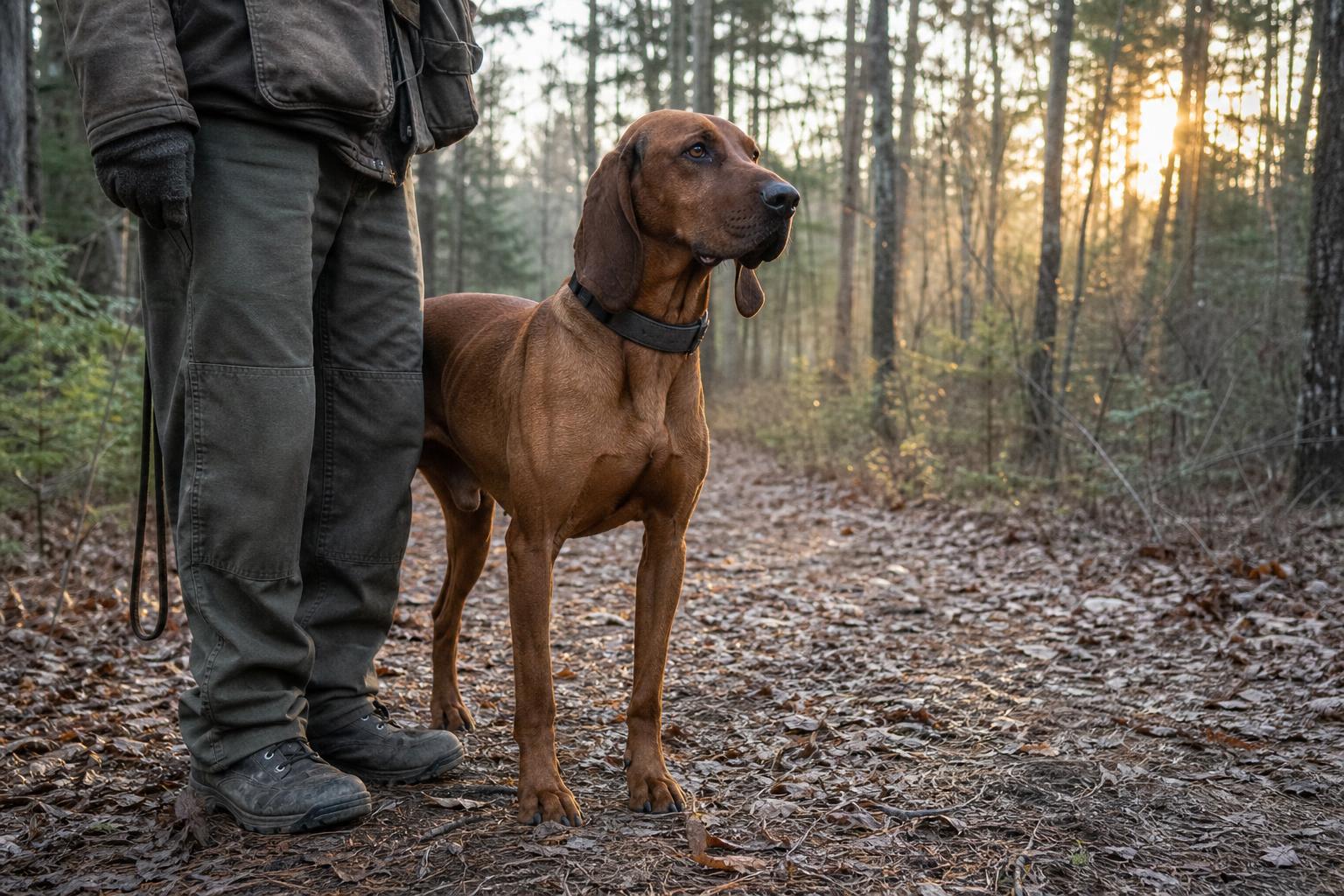
A finished Redbone Coonhound should be more than an attractive red hound with a good story behind it. For most buyers, finished means the dog has already proven it can hunt in a dependable, repeatable way, handle properly for its owner, and show the kind of sense that makes a long night in the woods enjoyable instead of frustrating. Because the Redbone Coonhound was developed as an American scent hound for trailing and treeing raccoons and other game, the most important evaluation is practical field performance, not advertising language.
Redbones are known for stamina, scenting ability, independence, and a friendly nature at home. Those same strengths can make finished-dog shopping tricky. A bold, hard-going hound may look impressive, but the buyer still needs to know whether the dog opens honestly, stays treed, handles well, hunts the way you prefer, and fits your household. Use this guide to ask better questions, arrange a fair evaluation, and separate a truly finished Redbone Coonhound from a dog that is simply older or partially trained.
What makes a finished dog
In the Redbone Coonhound world, a finished dog usually means a dog that has moved beyond basic exposure and can perform its job with consistency. The dog should understand hunting routines, load and travel reasonably, cast out or hunt with purpose, work scent, locate game, tree with confidence, and remain manageable before and after the hunt. The exact standard depends on the buyer. A competition hunter may care about speed, accuracy, pressure, and record. A pleasure hunter may value a steady, honest dog that is easy to live with and enjoyable to hunt alone.
Finished should not mean perfect. Hounds are living animals, and even good ones have preferences, weaknesses, and off nights. What matters is whether the seller can describe the dog accurately and demonstrate the work. Ask how the Redbone hunts alone and with company, how far it ranges, how it handles rough terrain, whether it has hunted swamps, hills, or dense timber, and what type of game it has been used on. Because the breed has historically been used for raccoon and larger game, make sure the dog’s experience matches your legal hunting plans and local conditions.
Practical signs of a finished Redbone Coonhound
- The dog has repeated, recent hunting experience rather than only old claims.
- It can be evaluated in the woods, preferably in conditions similar to yours.
- It handles, loads, leads, and kennels in a way you can manage.
- The seller can explain the dog’s strengths, faults, range, mouth, tree style, and accuracy.
- The dog’s temperament fits your household, kennel setup, and hunting partners.
Hunt tests
Hunt tests can be useful, but buyers should verify which programs are actually relevant to a Redbone Coonhound and to the kind of hunting they plan to do. Some buyers hear the phrase hunt test and assume it works the same across retrievers, pointing dogs, versatile breeds, and hounds. It does not. For a coonhound, the most meaningful proof may come from coonhound-specific events, scorecards, titles, or direct observation rather than a generic claim that the dog is hunt tested.
Ask the seller for the registry or organization name, the exact title or pass record, dates, locations, and the dog’s registered name. Then verify the information through the registry, club, or event records when possible. A title can support the story, but it should not replace seeing the dog work. A finished Redbone Coonhound that suits one hunter may not suit another if its range, mouth, independence, or handling style is wrong for the buyer.
Verify working records and breed eligibility
Verify reported working titles and test results with the issuing organisation. Confirm that the programme applies to the breed and ask what the result demonstrates about the individual dog.
Verify reported working titles and test results with the issuing organisation. Confirm that the programme applies to the breed and ask what the result demonstrates about the individual dog.
Trial records
Trial records can help establish that a Redbone has been evaluated outside the seller’s backyard. Many coonhound buyers look for UKC, AKC, PKC, or other coonhound event records depending on the circles they hunt in. Do not assume every title carries the same meaning. Ask what the record proves: consistency, independence, accuracy, speed, tree power, or simply participation. A titled dog may be impressive, but it still needs to fit your hunting style.
Request the dog’s registered name, registration number if the seller is willing to provide it, event history, titles, wins, and any available score information. Then confirm with the appropriate organization. Also ask whether the dog has been hunted mostly in competition casts, pleasure hunts, alone, or in a small pack. A dog that shines in one setting may need adjustment in another. The best sellers are comfortable discussing both wins and limitations.
Questions to ask about records
- Which organization issued the title or recorded the win?
- What dates and events support the claim?
- Was the dog handled by the owner, a trainer, or a professional handler?
- Does the dog hunt alone with the same confidence it shows in company?
- Are there faults a buyer should know about, such as excessive range, slick treeing, or poor handling?
Age expectations
Age matters when buying a finished Redbone Coonhound. A very young hound may be talented and advanced, but still developing judgment. A mature dog may be more settled, easier to read, and more consistent across different conditions. Older finished dogs can offer tremendous value if they are sound, honest, and still eager to hunt, but buyers should evaluate condition, stamina, teeth, feet, ears, and recovery after work.
There is no single ideal age. Many buyers prefer a dog old enough to have a clear track record but young enough to provide several useful seasons. Ask how long the dog has been hunted, how often it was in the woods during the past year, what terrain it has handled, and whether it has had any recurring soreness or veterinary issues. Redbones are athletic hounds, and a lean body condition, good feet, clean ears, and practical conditioning matter more than polished photos.
Investment value
A finished Redbone Coonhound often costs more than a puppy or started dog because the seller has already invested time, fuel, birds or game exposure where applicable, equipment, training, and many nights of evaluation. The value is not just the training; it is the reduced uncertainty. You are paying for a clearer picture of what the dog is and how it performs. Still, higher price does not automatically mean higher quality.
Evaluate investment value by comparing the dog’s proven ability, health and soundness, age, temperament, registration or records, and fit for your goals. Avoid pressure to buy based only on rarity, color, pedigree, or dramatic claims. A fair seller should allow reasonable questions, provide documentation when available, and help you understand whether the dog is a match. If possible, hunt with the dog before purchase or arrange a written trial period that clearly states expectations, return terms, and who is responsible for care, transport, and risk.
Final buyer checklist
- Watch the Redbone Coonhound work in person when possible.
- Verify registration, titles, hunt records, and ownership claims directly with the relevant source.
- Ask for veterinary history, current condition, and any known limitations.
- Confirm the dog’s experience matches your game, terrain, and hunting style.
- Put purchase terms, trial periods, deposits, and guarantees in writing.
Conclusion: choosing the right finished Redbone Coonhound
The right finished Redbone Coonhound can save a buyer years of uncertainty and put a capable, enjoyable hound in the woods right away. Focus on evidence over excitement. Look for recent work, honest records, sound temperament, clear documentation, and a seller who can explain the dog in plain language. When the dog’s ability, age, health, and style line up with your needs, a finished Redbone can be a practical investment and a rewarding hunting companion.
Explore Redbone Coonhound on Working Dog Central
View the Redbone Coonhound breed profile or browse Redbone Coonhound listings.


