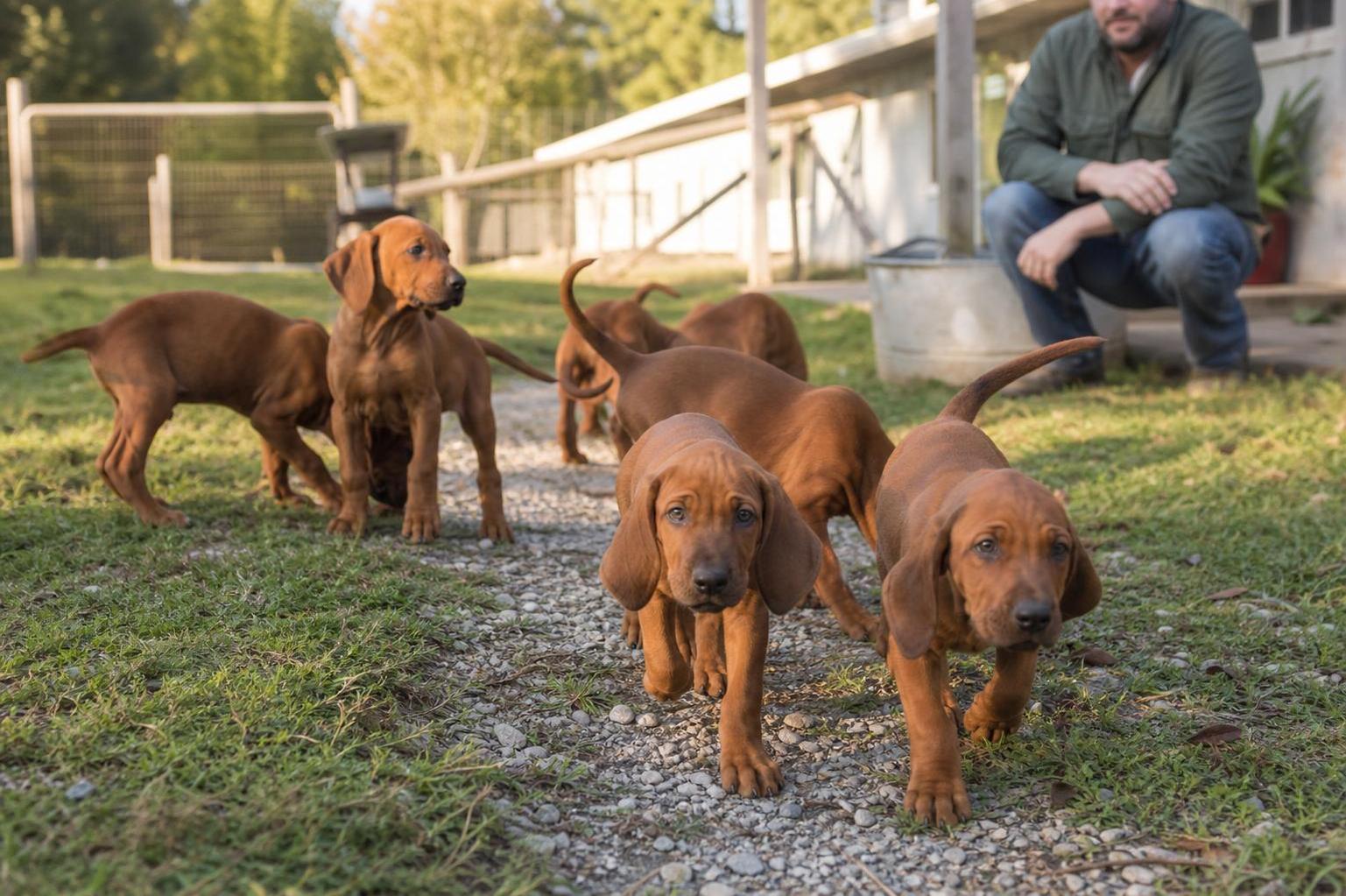
The Redbone Coonhound is a classic American scent hound: athletic, friendly, vocal when excited, and deeply driven by its nose. If you are looking at Redbone Coonhound puppies for sale, the goal is not just to find the closest litter or the flashiest photo. The better goal is to find a puppy whose breeder understands the breed's hunting background, temperament, structure, and long-term care needs.
Redbones were developed for trailing and treeing game across rough country, including forests, swamps, hills, and mountains. That history still matters. A good Redbone puppy buyer should expect a dog with stamina, independence, a strong scent drive, and a social nature when properly raised. These traits can make the breed a rewarding hunting partner and family companion, but they also require secure fencing, patient training, and regular opportunities to use the dog's mind.
Choosing a breeder
Choosing a breeder is the most important step when comparing Redbone Coonhound puppies for sale. Look for someone who can explain why a particular sire and dam were paired, what traits they are trying to preserve, and how their dogs perform or live day to day. For a hunting home, ask about tracking ability, treeing style, voice, endurance, handle, and how the line tends to mature. For a companion home, ask about noise level, prey drive, social confidence, and how puppies are introduced to normal household life.
A responsible breeder should welcome practical questions. They should be able to discuss the dam's temperament, the sire's strengths, the age of the puppies, feeding routines, worming history, veterinary care, and what support they provide after the sale. They may not have every document a buyer asks for, but they should be honest about what they do and do not have. Avoid sellers who pressure you to decide immediately, cannot identify the parents, refuse reasonable questions, or treat every puppy as interchangeable.
Questions to ask before placing a deposit
- What are the sire and dam like in the field and at home?
- Have the puppies been handled regularly and exposed to normal sounds and surfaces?
- What traits are common in this line: voice, nose, independence, biddability, and energy?
- What veterinary care has already been completed, and what records come with the puppy?
- What does the breeder recommend for training, socialization, and secure containment?
- Is there a written bill of sale or puppy agreement?
AKC registration
The Redbone Coonhound is recognized by the American Kennel Club, but buyers should still verify registration details rather than assume every litter is AKC registered. Ask whether the litter is AKC registered, UKC registered, both, or registered through another organization. Registration can document parentage and breed identity, but it is not a substitute for a sound puppy, a thoughtful breeder, or a good match for your home.
If AKC registration matters to you for events, breeding plans, or record keeping, ask to see the registration information before money changes hands. Confirm the registered names or numbers of the parents when available, the exact process for transferring puppy papers, and whether there are limited or full registration terms. Limited registration may be appropriate for companion or non-breeding homes, while full registration is usually a separate discussion tied to breeding rights and breeder expectations.
Do not treat registration as a guarantee of hunting talent, health, or temperament. It is one piece of the buying decision. A Redbone Coonhound puppy still needs appropriate socialization, fair training, exercise, and management to develop into a steady adult.
Vaccinations
Vaccination details should be handled with clear records and veterinary guidance. When evaluating Redbone Coonhound puppies for sale, ask what vaccines the puppies have received, at what age they were given, and whether a veterinarian administered or reviewed them. Also ask about deworming dates, fecal checks if available, parasite prevention, and any health observations the breeder has made.
Because vaccine schedules can vary by region, age, lifestyle, and veterinarian, avoid relying on generic promises like "fully vaccinated" unless the puppy is old enough for the relevant series to be complete. Most young puppies will still need follow-up appointments after going home. Bring the breeder's records to your veterinarian promptly so your vet can recommend the next steps based on the puppy's age and exposure risk.
Redbones often grow into active outdoor dogs, so preventive care matters. Discuss flea, tick, and heartworm prevention with your veterinarian, especially if the dog will be in fields, woods, kennels, or hunting camps. Long ears should also be checked regularly because moisture and debris can build up after swimming, rain, or time in brush.
Bringing puppy home
A Redbone Coonhound puppy needs structure from the first day home. Before pickup, prepare a secure crate, a safe sleeping area, food and water bowls, the same food the breeder has been feeding, a leash, a properly fitted collar, cleanup supplies, and safe chew items. If you have a yard, inspect fencing carefully. Many hounds will follow scent with determination, and a small gap can become a big problem.
Plan the first week around routine rather than excitement. Keep introductions calm, show the puppy where to sleep and potty, and begin short sessions around name response, handling, and leash comfort. Because the breed can be vocal and independent, reward quiet attention and check-ins early. Do not expect a young Redbone to ignore every smell or come reliably off leash without a long foundation of training.
Early training priorities for a Redbone Coonhound puppy
- Build a positive recall using a long line and high-value rewards.
- Reward voluntary check-ins during walks and yard time.
- Introduce crate time gradually so the puppy learns to settle.
- Socialize thoughtfully with people, surfaces, vehicles, sounds, and appropriate dogs.
- Provide sniffing games and simple scent work to satisfy the breed's natural instincts.
If the puppy is intended for hunting, keep early exposure positive and age appropriate. Let the puppy develop confidence before adding pressure. Bird, raccoon, or other game exposure should be guided by an experienced handler who understands the breed and local laws. Good early work builds curiosity and confidence; it does not rush a puppy into situations it is not ready to handle.
Typical puppy prices
Typical Redbone Coonhound puppy prices can vary widely by region, pedigree, registration, breeder reputation, hunting background, veterinary care, and demand. It is better to think in terms of value and transparency than a single exact price. A lower price is not automatically a bargain if the seller cannot provide basic records or explain the breeding. A higher price is not automatically justified unless it reflects real investment in the dogs, the litter, and buyer support.
When discussing price, ask what is included. Some breeders include initial vaccinations, deworming, registration paperwork, a written agreement, microchipping, starter food, or ongoing guidance. Others may keep the sale simpler. Either approach can be legitimate if it is clearly explained. Be cautious with sellers who advertise vague rare qualities, make guaranteed claims about future hunting ability, or use urgency to push deposits before answering questions.
Evaluating value without relying on hype
- Compare the quality of communication, not just the advertised price.
- Look for records that match the seller's claims.
- Ask how the breeder chooses puppy placements for different homes.
- Budget for training, fencing, veterinary care, travel, feed, and equipment after purchase.
- Remember that the purchase price is only one part of the lifetime cost of owning a working hound.
Is a Redbone Coonhound puppy the right fit?
Redbone Coonhounds can be affectionate, steady companions and capable hunting dogs, but they are not the best choice for every household. They often do best with people who enjoy outdoor activity, understand scent hound independence, and can manage voice, prey drive, and secure containment. A home that wants a silent, instantly obedient off-leash dog may find the breed frustrating. A home that appreciates a friendly hound with drive and character may find the Redbone deeply rewarding.
Before committing, talk honestly with breeders and owners about daily life with the breed. Ask what they love, what they manage, and what surprised them. The best purchase is not the fastest one. It is the one that matches the puppy's likely future with the buyer's real lifestyle.
Buyer-focused conclusion
When reviewing Redbone Coonhound puppies for sale, slow down and verify the details. Choose a breeder who knows the breed, communicates clearly, provides records, and wants the puppy placed in a suitable home. Confirm registration if it matters to you, review vaccination and veterinary information, prepare your home for a scent-driven hound, and approach price as part of a larger value picture. A thoughtful start gives your Redbone Coonhound the best chance to become the hunting partner, adventure companion, and loyal family dog the breed is known to be.
Explore Redbone Coonhound on Working Dog Central
View the Redbone Coonhound breed profile or browse Redbone Coonhound listings.


