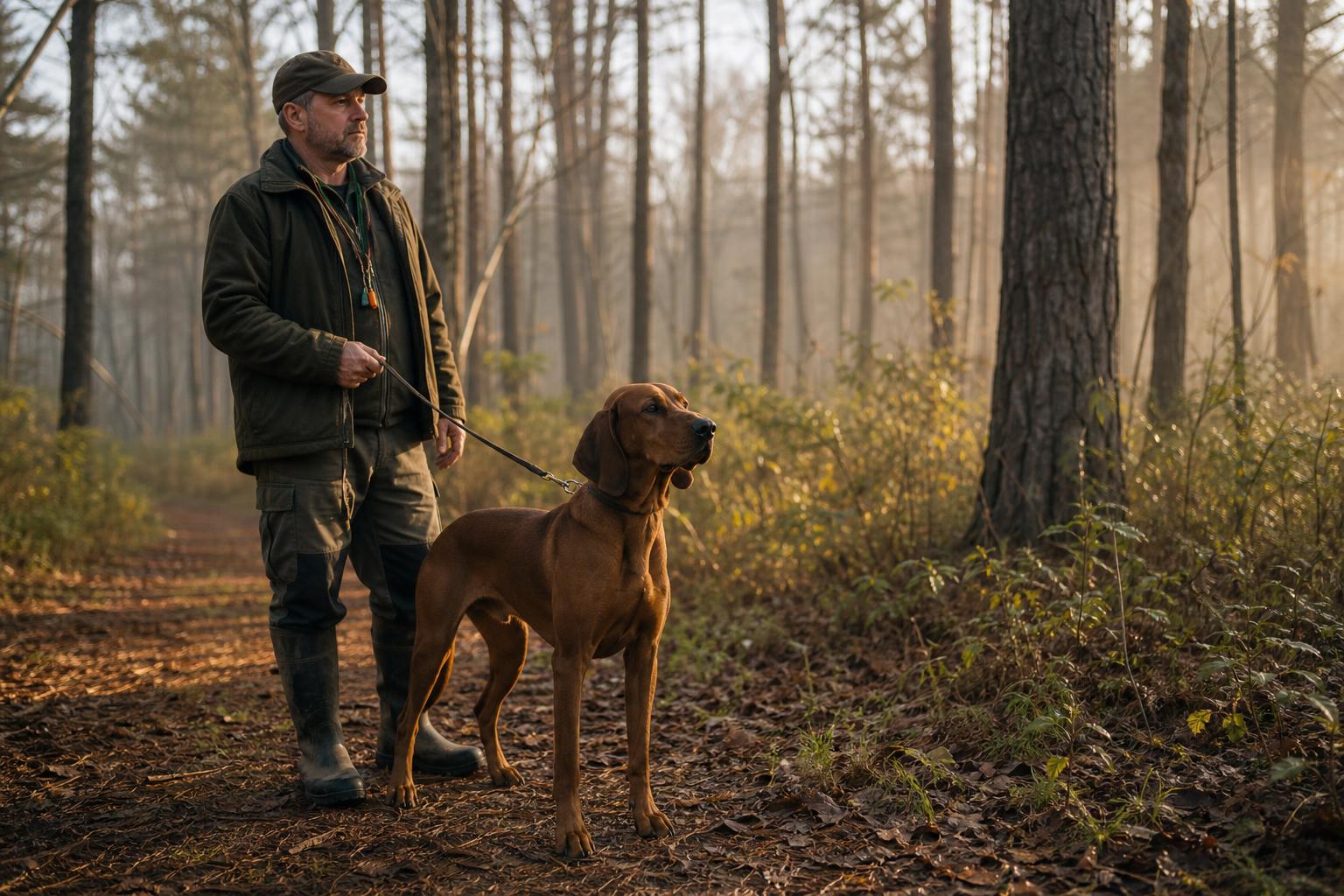
A Redbone Coonhound started dog can be a smart choice for a buyer who wants to skip the earliest puppy months and see more of the dog’s natural hunting style before making a commitment. With this breed, “started” should not mean finished, polished, or guaranteed. It usually means the dog has had meaningful exposure to people, handling, basic manners, and breed-appropriate field work, but still needs time, consistency, and a clear plan to become a dependable hunting partner.
The Redbone Coonhound is an American scent hound developed for trailing and treeing game in rough country. The breed is known for stamina, a strong nose, a musical hound voice, and an independent working style. Those traits are valuable in the woods, but they also make buyer evaluation important. A started dog may look impressive when it opens on track or trees with enthusiasm, yet still need work on handling, recall, kennel manners, hauling, and settling around the house.
Use this guide to evaluate Redbone Coonhound started dogs with practical expectations. The goal is not to find a perfect dog; it is to understand what training has actually been done, what the dog naturally offers, and what work remains after purchase.
What qualifies as “started” in a Redbone Coonhound
For a Redbone Coonhound, a started dog should have moved beyond simple socialization and into structured exposure that matches the breed’s purpose. At minimum, the dog should be comfortable being handled, loading or learning to load, wearing a collar, walking on lead, and spending time in a kennel or crate. In the field, the dog should have had age-appropriate chances to use its nose, explore cover, and show interest in scent or game.
Because Redbones are scent hounds rather than pointing or flushing bird dogs, started work is usually measured by trailing interest, track drive, treeing instinct, independence, and willingness to hunt with or for the handler. A seller may describe a dog as lightly started if it has been hauled, exposed to woods, and shown interest in coon scent. A more advanced started dog may have been hunted at night, run with experienced dogs, opened on track, located trees, or shown the beginning of staying treed.
Ask the seller to define the word “started” in plain language. Good answers include specific experiences, dates, frequency of work, the dog’s strengths, and the dog’s weak spots. Vague answers such as “doing great” or “ready to hunt” are not enough. A serious buyer should know whether the dog has been hunted alone, hunted with other dogs, introduced to live game where legal, exposed only to drag scent, or simply taken along on walks in the woods.
- Ask how many times the dog has been hunted or trained in the field.
- Ask whether it has trailed, opened, located, or treed.
- Ask if the dog works alone, only with company, or not yet independently.
- Ask what the seller would work on next if keeping the dog.
Birds introduced or breed-appropriate game exposure
For a Redbone Coonhound, the more relevant question is usually breed-appropriate game exposure rather than bird introduction. Redbone Coonhounds were developed for trailing and treeing raccoons and have also been used on other game in some regions. Buyers should focus on whether the dog has been exposed to the kind of scent work they actually intend to pursue, and whether that exposure was legal, controlled, and age appropriate.
A started Redbone may have seen caged coon in a controlled training setup, worked drags, hunted with older dogs, or been taken into real hunting situations. Each type of exposure tells you something different. Drag work can reveal nose use and interest, but it does not prove the dog can handle an old track, difficult terrain, pressure, or the confusion of a real hunt. Running with an older dog can build confidence, but it may also hide whether the started dog is doing its own work.
If your goal is pleasure coon hunting, ask to see the dog in conditions similar to your own. A dog trained in flat country may need adjustment in steep hills. A dog used to short, easy turnouts may need conditioning for longer nights. If you plan to use the dog around livestock, other dogs, or family property, ask how it has behaved in those situations. Do not assume exposure to one type of game or terrain transfers automatically to every setting.
- Verify what game or scent the dog has actually encountered.
- Ask whether the dog has shown unwanted interest in livestock, deer, or small household animals.
- Ask if the dog has been corrected for off-game and how it responded.
- Whenever possible, watch the dog work instead of relying only on stories.
Gun introduction when relevant
Gun introduction can matter for a Redbone Coonhound, but buyers should verify what has actually been done rather than assuming every started hound is comfortable with gunfire. Some Redbones are introduced to shooting around the tree or around hunting activity; others may have had little or no gun exposure if the seller focused only on scent and tree work.
A careful introduction should be gradual and paired with positive, exciting field experiences. The dog should not be startled at close range to “see what happens.” Ask whether the dog has heard firearms, what type, at what distance, and in what context. A dog that is calm around distant shots may still need careful work before shots are fired close overhead at night. Likewise, a dog that ignores gunfire while excited at a tree may react differently in a yard or kennel.
If gun introduction is important to your use, request a demonstration that is safe and fair to the dog. Watch body language closely. Recovery matters as much as the initial reaction. A brief startle followed by returning to work is different from panic, avoidance, shutting down, or refusing to load afterward. If the seller cannot document gun exposure, treat it as unfinished training and plan to introduce it patiently after purchase.
Obedience level
Obedience in a started Redbone Coonhound should be judged realistically. This is a scent hound bred to solve problems away from the handler, not a dog selected primarily for close obedience. Still, basic manners matter. A started dog should be reasonably handleable, accept a lead, tolerate loading, allow collaring, and show some response to its name or a recall cue when distractions are low.
The hardest skills are often recall and attention when scent is present. A Redbone that checks in nicely in the yard may become highly focused once it hits a track. That does not make the dog bad; it means the buyer needs to understand the breed. Long-line work, rewards, repetition, and good timing are usually more productive than harsh drilling. Ask what commands the dog knows, what equipment has been used, and whether the dog has been trained with e-collar conditioning. If an e-collar has been used, ask exactly how and for what behaviors.
- Look for calm handling, not robotic obedience.
- Test lead manners, loading, name response, and kennel behavior.
- Ask whether the dog has lived in a kennel, house, or both.
- Clarify whether recall is reliable, developing, or mostly untested around scent.
For family buyers, house manners and social behavior may be just as important as field promise. Redbones are often affectionate and people-oriented, but they can be vocal, energetic, and determined when bored. Ask about noise, crate habits, chewing, interactions with children, and behavior around other dogs. A started dog should fit your daily life, not just your hunting plans.
Evaluating training before you buy
The best way to evaluate a Redbone Coonhound started dog is to see the dog work in person. If that is not possible, ask for current, unedited video that shows the dog from turnout through the end of the exercise. Short clips of a dog barking at a tree can be useful, but they do not show how the dog found the track, whether it honored another dog, whether it located accurately, or how it handled pressure.
During an evaluation, separate natural ability from trained behavior. Nose, desire, confidence, and tree interest are partly inherited and partly developed through opportunity. Handling, loading, recall, steadiness, and manners are trained over time. A dog with strong natural tools but rough manners may be a good fit for an experienced hound person. A first-time hound buyer may be better served by a steadier, more managed dog even if it is less flashy.
Ask the seller direct questions and expect honest nuance. No started dog is perfect. A trustworthy seller will tell you if the dog is too independent, too dependent on company, noisy in the kennel, slow to load, soft under correction, or still inconsistent on track. Those details do not necessarily disqualify the dog; they help you decide whether the dog matches your skill level and goals.
- Request a live demonstration or full-length recent video.
- Ask for the dog’s age, training timeline, and hunting exposure.
- Verify registration only if it matters to your plans; AKC, UKC, or other records should be checked directly with paperwork rather than assumed.
- Discuss health history, veterinary care, and any known injuries without expecting unsupported guarantees.
- Use a written bill of sale that describes the dog, price, included paperwork, and any trial period or return terms.
Health, records, and paperwork
Started dogs are often old enough for buyers to evaluate structure, movement, temperament, and conditioning better than they could with a young puppy. Watch the dog walk, trot, load, jump down, and recover after activity. A lean, athletic hound should move freely and breathe comfortably during appropriate work. Long ears should be checked regularly, especially in dogs hunted in wet or brushy conditions, but do not treat any article or seller statement as a substitute for veterinary advice.
Ask for vaccination and deworming records, ownership history, and any registration documents the seller claims are included. The Redbone Coonhound is recognized by major registries, but the individual dog’s registration status must be verified through actual papers and matching identification. If competition records, titles, or hunt test results are mentioned, ask for the registered name and verify the records with the relevant organization. Do not pay finished-dog money for claims that cannot be documented.
Buyer-focused conclusion
A Redbone Coonhound started dog can offer a valuable head start: you can see more size, personality, voice, drive, and early hunting style than you can in a puppy. The tradeoff is that you are also buying the dog’s existing habits, training gaps, and experiences. Define “started,” verify breed-appropriate game exposure, ask about gun introduction when it matters, check obedience honestly, and watch the dog work whenever possible. The right Redbone is not just the one with the most exciting story; it is the one whose ability, temperament, and remaining training fit your hunting life and your home.
Explore Redbone Coonhound on Working Dog Central
View the Redbone Coonhound breed profile or browse Redbone Coonhound listings.


