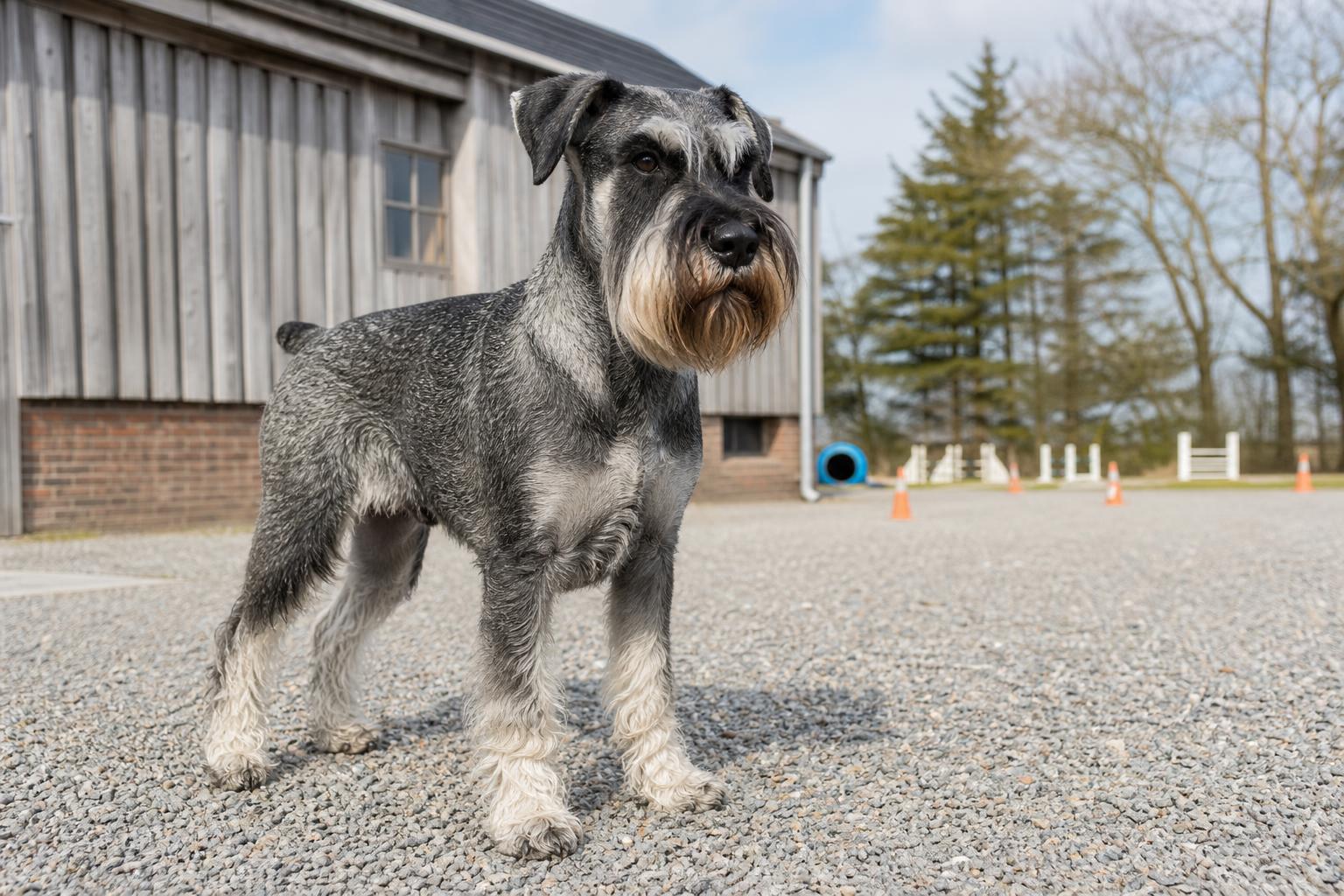
The Standard Schnauzer is the original Schnauzer: a medium-sized, square-built German working dog developed for real farm jobs. Historically, this breed helped guard property, manage daily farm life, and catch vermin, which explains much of the dog people still meet today. A good Standard Schnauzer is alert, purposeful, intelligent, and deeply involved with its household.
This is not usually a background dog. The breed tends to notice what is happening, form opinions, and look for something useful to do. For the right owner, that makes the Standard Schnauzer a rewarding companion: trainable, expressive, loyal, and sturdy enough for an active lifestyle. For an unprepared owner, the same traits can feel like stubbornness, noise, or constant management.
History and Original Purpose
The Standard Schnauzer traces back to Germany, where it was known historically as a practical all-purpose farm dog. Before the Miniature and Giant Schnauzer varieties became established, the Standard Schnauzer served as the prototype of the family. Its older role included guarding, rat catching, and general farm assistance, which required a dog with courage, quick reactions, and enough independence to make decisions.
The breed's older name, Wire-Haired Pinscher, reflects its harsh coat and working-dog background. The familiar beard, mustache, and eyebrows were not just decorative; the rugged coat and facial furnishings suited an outdoor, hands-on dog that worked around weather, dirt, livestock areas, and pests. Over time, the breed became recognized for both its distinctive appearance and its versatile, trainable mind.
Temperament and Personality
Standard Schnauzers are commonly described as confident, lively, and devoted to their families. Many are naturally watchful and take household security seriously. That does not mean every dog should be sharp or suspicious, but owners should expect alert barking, close observation of strangers, and a strong desire to understand who belongs and who does not.
The breed can be affectionate and playful with its people while remaining reserved in new situations. Early socialization matters. A young Standard Schnauzer should meet different people, surfaces, sounds, places, and polite dogs in a controlled way so confidence develops into steadiness rather than pushiness. Their intelligence is a strength, but it also means they quickly learn loopholes in unclear rules.
Size, Build, and Appearance
The Standard Schnauzer is typically a medium-sized dog, often described around 17 to 20 inches tall and roughly 30 to 50 pounds. The outline should look square, compact, and athletic rather than bulky. This build supports efficient movement and reflects the breed's practical roots as a dog meant to work, move, and stay ready.
The coat is harsh and wiry, with the classic Schnauzer face: arched brows, a bristly mustache, and a beard. Common colors include pepper and salt and solid black. Grooming choices influence the look and texture. Some owners maintain the coat through hand-stripping, while others clip for convenience. Either way, the beard, legs, and furnishings need regular attention to prevent tangles and mess.
Working Style and Activity Needs
Although the Standard Schnauzer is not a specialist gundog in the way pointing, flushing, or retrieving breeds are, it is very much a working dog. Its traditional jobs were broad rather than narrow: guard, patrol, catch vermin, and assist around the farm. That background creates a dog that tends to enjoy tasks with structure, movement, and a clear purpose.
Daily exercise should include more than a short stroll. Many Standard Schnauzers do well with brisk walks, training games, scent work, obedience, rally, agility, barn-hunt style activities, or active play. Mental work is just as important as physical work. Without it, a smart Schnauzer may invent its own entertainment, which can include barking, digging, chasing small animals, or testing household boundaries.
Training a Standard Schnauzer
Training should begin early and stay consistent. This breed usually responds best to clear rules, fair rewards, and confident handling. Harsh, repetitive, or confusing methods can create resistance in a dog that is already bold and independent. Short sessions with practical goals often work better than long drills.
- Prioritize polite greetings so alertness does not become rude behavior.
- Teach leash manners early, especially around movement and distractions.
- Build a reliable recall in safe, controlled settings before expecting it in harder places.
- Practice impulse control around doors, visitors, food, toys, and small animals.
- Use training outlets such as rally, obedience, scent games, or agility to satisfy the dog's brain.
Because many Standard Schnauzers have a strong interest in small moving things, supervision around cats, poultry, rabbits, and other small pets is wise. Some individuals can live peacefully with animals they know, but management and early training are important.
Grooming and Care
The Standard Schnauzer's coat is one of the breed's defining features, and it requires a plan. A clipped coat may be easier for many households, while hand-stripping is often chosen by owners who want to preserve the harsher texture. Regular brushing and combing are needed, especially through the legs, beard, and furnishings. The beard can collect water, food, and outdoor debris, so routine cleaning helps keep the dog comfortable.
Basic care also includes nail trims, dental care, ear checks, and maintaining a lean body condition. Because this is an active, clever breed, enrichment should be part of care, not an afterthought. Food puzzles, training repetitions, structured walks, and calm household routines all help a Standard Schnauzer settle into family life.
Health Considerations
The breed is often described as hardy, but responsible ownership still means planning ahead. Buyers should ask breeders what health testing is used in their program and should request documentation when available. A veterinarian can also help owners plan age-appropriate preventive care, weight management, dental maintenance, and monitoring for issues that can affect medium-sized dogs.
Avoid claims that any breed is problem-free. Instead, look for a breeder or rescue that discusses health openly, knows their dogs well, and can explain temperament, structure, and care needs in practical terms. A sound Standard Schnauzer should be active and capable, but long-term wellbeing depends on good breeding decisions, steady care, and realistic ownership.
Best Homes for a Standard Schnauzer
The best fit is usually an active home that enjoys training and wants a dog involved in everyday life. Standard Schnauzers often do well with people who appreciate a dog with presence: alert, expressive, and ready to participate. They can adapt to suburban homes and some apartment settings if exercise, training, enrichment, and barking management are handled responsibly.
This breed may be less ideal for someone who wants a very soft, low-maintenance, or highly casual pet. A Standard Schnauzer needs boundaries, grooming, exercise, and mental engagement. Families with children should teach respectful handling and supervise interactions, as with any breed. The dog should learn calm behavior around kids, visitors, and busy household routines.
Practical Buying Considerations
When researching a Standard Schnauzer puppy or adult dog, focus on temperament, health transparency, and the breeder's or rescue's understanding of the individual dog. Ask how the dogs are socialized, what grooming routine they are used to, how they respond to strangers, and what kind of home is the best match. A responsible source should be comfortable discussing both strengths and challenges.
- Ask about the parents' temperament and daily behavior, not only appearance.
- Discuss grooming expectations before bringing the dog home.
- Ask what training foundations puppies or adults have started.
- Be honest about your activity level, small pets, children, and noise tolerance.
- Look for stable, confident dogs rather than choosing only by color or markings.
Is the Standard Schnauzer Right for You?
The Standard Schnauzer is a strong choice for owners who want a medium-sized working companion with intelligence, loyalty, and character. The breed's history as a German farm dog still shows in its alert nature, wiry coat, confidence, and need for meaningful activity. With fair training, good grooming habits, and enough exercise, a Standard Schnauzer can be a deeply rewarding partner.
If you want a dog that learns quickly, watches the household, and thrives on structure, this breed deserves serious consideration. If you prefer a quiet, low-effort companion that asks little of you, it may be too much dog. The right match comes from respecting what the Standard Schnauzer was bred to be: practical, clever, protective, energetic, and happiest when it has a place in the work and rhythm of the home.
Explore Standard Schnauzer on Working Dog Central
View the Standard Schnauzer breed profile or browse Standard Schnauzer listings.


