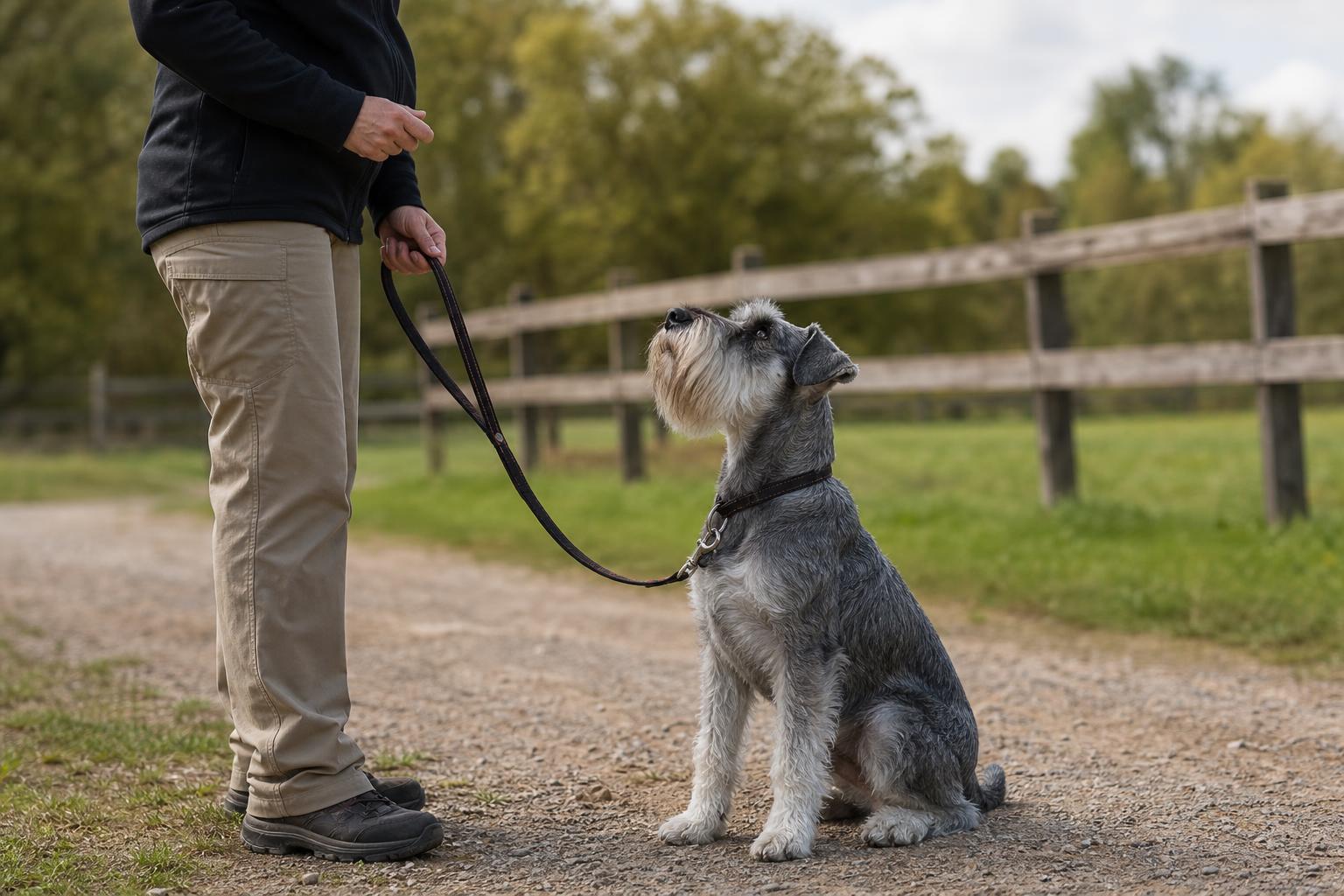
A started Standard Schnauzer can be a smart choice for a buyer who likes the breed’s intelligence, confidence, and working-dog energy but wants more information than a young puppy can provide. The Standard Schnauzer is a medium-sized German farm dog with a history of guarding, herding assistance, rat catching, and close partnership with people. That background matters when evaluating a started dog. This is not a passive breed that simply waits to be managed. A good Standard Schnauzer usually wants structure, routine, and a useful role in the household.
For this breed, the word started should be treated as a description of actual experience, not a guarantee of finished behavior. A started Standard Schnauzer may have basic obedience, crate manners, leash exposure, house routine, grooming familiarity, and early work around distractions. Some may also have introduction to scent games, barn-hunt style work, farm chores, or other breed-appropriate outlets. The right dog should show trainability, confidence, and recovery from pressure without being frantic or overly sharp.
What Qualifies as Started
Before buying, ask the seller to define exactly what started means for this individual dog. A useful answer should include the dog’s age, daily routine, handling history, obedience foundation, social exposure, and any work or sport experiences. Vague phrases like well started or ready to go are not enough. Standard Schnauzers are intelligent and persistent, so details matter. A dog that knows cues in the seller’s yard may still need patient transition work in a new home.
- Ask which commands the dog understands and whether they work on leash, off leash in a safe area, or only in familiar settings.
- Ask about crate training, house manners, grooming table experience, nail trims, ear checks, and beard maintenance.
- Ask how the dog behaves around strangers, children, other dogs, cats, poultry, and small animals.
- Ask what the dog does when excited, frustrated, corrected, or asked to settle.
Breed-Appropriate Exposure and Work
The Standard Schnauzer is not primarily described as a pointing or retrieving gun dog in the selector facts, so exposure should be evaluated through the breed’s broader working background. Historically, this breed was valued as a farm guardian, rat catcher, and versatile helper. Good started exposure may include controlled introductions to busy environments, livestock areas where appropriate, scent-based games, agility foundations, obedience settings, or supervised work around small moving distractions. The goal is not to invent a hunting resume, but to see whether the dog has been developed in a way that fits its natural alertness and drive.
If the seller mentions birds, gunfire, or field work, ask for specifics and proof. Find out whether the dog was calmly introduced or simply exposed without training. For a Standard Schnauzer, the more important question is often whether the dog can think, respond to the handler, and remain manageable around motion and noise. A strong prey drive can be useful in structured work, but it also requires boundaries in a family home.
Obedience Level to Expect
A started Standard Schnauzer should have more than enthusiasm. Look for reliable basics such as name recognition, coming when called in controlled conditions, walking on leash without constant pulling, sitting or standing for handling, waiting at doors, and settling in a crate or designated place. Because the breed is confident and can be independent, consistency is more valuable than flash. A dog that performs simple behaviors calmly is often a better prospect than one that shows tricks while ignoring the handler’s timing.
- Watch the dog work before you handle it, then ask to handle it yourself.
- Observe whether the dog checks in with the handler or scans constantly for its own agenda.
- Look for recovery after mistakes, distractions, or mild frustration.
- Notice whether food, toys, praise, or access to work motivate the dog.
Evaluating Training Quality
Training quality shows in the dog’s attitude. A well-started Standard Schnauzer should appear alert and engaged, not worried, shut down, or wild. This breed often responds best to clear rules and fair rewards. Harsh handling can create resistance, while loose handling can create pushy behavior. Ask the trainer what methods were used, how corrections were introduced, and what the dog still needs to improve. Honest answers are a good sign.
Request a simple demonstration: leash walk, recall in a safe enclosed area, crate entry, grooming-style handling, and calm greeting. If the dog is being sold for sport, farm, or active companion work, ask to see the dog in the environment that matches the claim. For example, a dog advertised as comfortable around a busy property should be able to move through noise and activity without losing all focus.
Fit for Home, Work, and Family Life
The Standard Schnauzer is usually best for an active owner who enjoys training. The breed’s wiry coat requires a grooming plan, and its mind requires daily engagement. A started dog can reduce some uncertainty, but it does not remove the need for leadership. Ask whether the dog is vocal, protective, reserved with strangers, or intense around small animals. Those traits can be normal for the breed, but buyers need to know how they show up in daily life.
A started Standard Schnauzer may suit a family that wants a loyal watchdog, training partner, and energetic companion. It may be a poor fit for someone who wants a low-maintenance dog that needs little exercise or structure. If the home includes small pets, ask for observed behavior rather than assumptions. Supervision and management are still important, especially during the transition period.
Questions to Ask Before Buying
- What specific training has the dog completed, and who did the training?
- What does the dog do well, and what still needs work?
- How does the dog respond to grooming, restraint, and routine care?
- How much exercise and mental work does the dog currently receive each day?
- What health records, veterinary care, and breeder documentation are available?
- Is there a trial period, written agreement, or support after placement?
Bottom Line
A good Standard Schnauzer started dog should give you a clearer picture of temperament, trainability, and daily needs than a puppy can. Focus on evidence: demonstrated obedience, appropriate exposure, stable handling, grooming tolerance, and honest discussion of the dog’s strengths and limits. When matched with an active, consistent owner, the Standard Schnauzer’s intelligence, loyalty, and strong work ethic can make a started dog a practical and rewarding choice.
Explore Standard Schnauzer on Working Dog Central
View the Standard Schnauzer breed profile or browse Standard Schnauzer listings.


