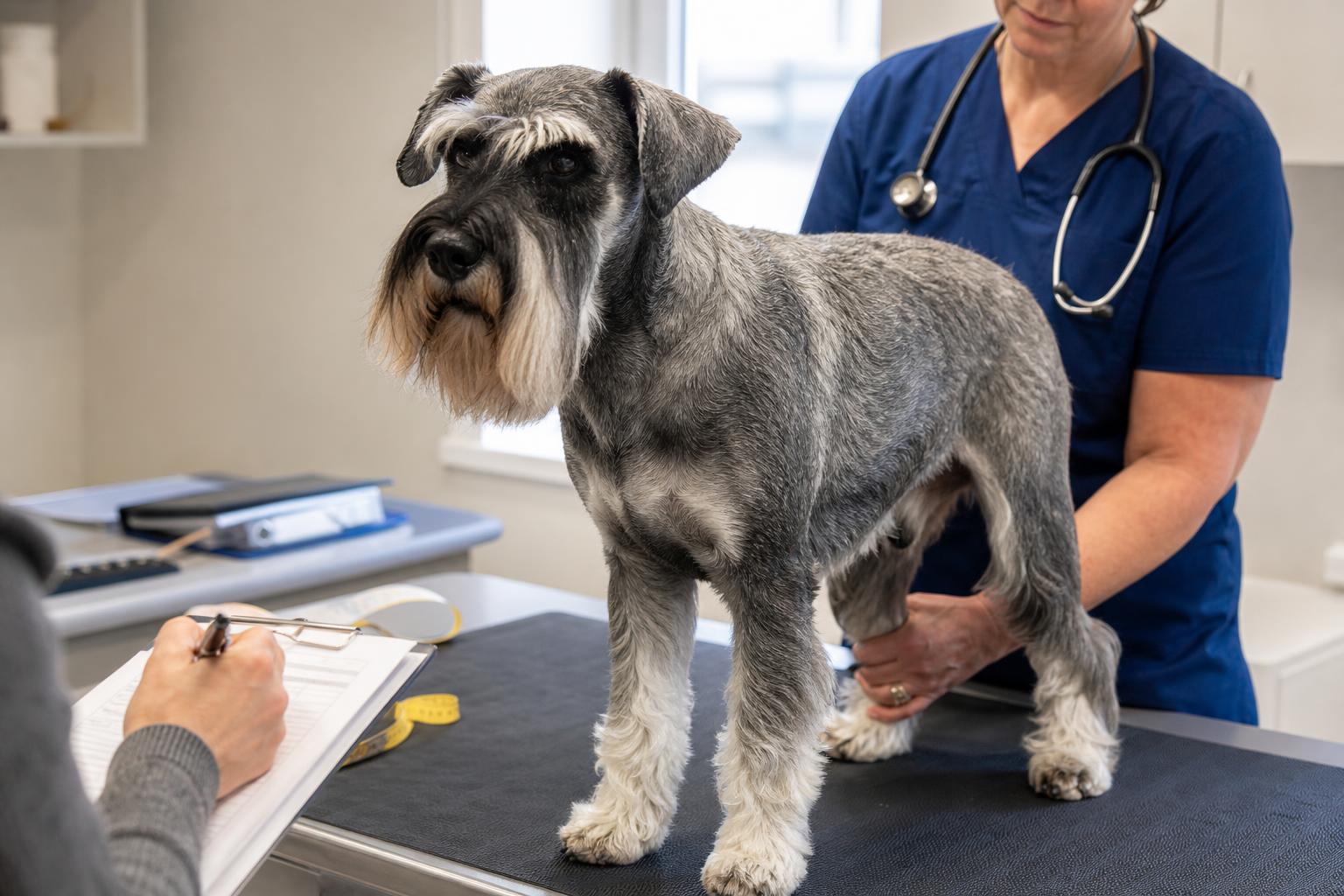
The Standard Schnauzer is a medium-sized, intelligent working breed with deep roots as a German farm dog, guardian, herder's helper, and rat catcher. When evaluating Standard Schnauzer stud dogs, the goal is not simply to find a handsome male. A good stud prospect should represent the breed's square, athletic build, harsh wiry coat, alert expression, stable temperament, and useful working character while also fitting the goals of the female being bred.
Because every breeding decision affects future puppies, buyers should slow down and verify claims. Some Standard Schnauzers may have show records, performance titles, health testing, or working achievements, while others may be valued mainly for temperament, structure, and family suitability. None of those categories automatically makes a dog right or wrong. The best choice is the dog whose documentation, pedigree, health, and temperament honestly support the planned litter.
Health clearances for Standard Schnauzer stud dogs
Health clearances are the foundation of any serious stud dog discussion. The breed is often described as hardy, but that does not remove the need for responsible screening. Ask the stud owner what testing is commonly used in their lines, what results are available for the male, and whether related dogs have had orthopedic, eye, reproductive, or temperament concerns. Documentation matters more than verbal reassurance.
A thoughtful stud owner should be willing to share copies of relevant reports, explain what they mean, and discuss how the male complements the female. If a clearance is not available, that does not always mean the dog is unsuitable, but it does mean the buyer should understand why it is missing and what risk remains. Avoid any arrangement where health questions are dismissed as unnecessary or where the answer is simply that the dog has never looked sick.
What to ask for
- Copies of completed health tests or registry database links when applicable.
- Information about age, fertility history, and any prior litters.
- Notes on temperament, confidence, prey drive, sociability, and trainability.
- Details about relatives, including longevity and recurring issues in the line.
- A clear explanation of how the stud suits the female and the breeding goal.
OFA and other orthopedic documentation
OFA results can be useful when they apply to the testing recommended by the breeder, parent club, or veterinary team. Buyers should verify relevance instead of assuming every possible OFA category is standard for every Standard Schnauzer breeding. Orthopedic screening can help breeders reduce avoidable risk, but it should be interpreted in context with age, relatives, structure, activity level, and the female's own background.
If a stud dog is advertised with OFA results, ask for the registered name or direct database information so you can confirm the record independently. Check that the dog in the report is the same dog being offered at stud. Also ask whether the female has compatible documentation. A breeding between one tested dog and one completely unknown dog still leaves major unanswered questions.
DNA testing and genetic risk
DNA testing can be a valuable tool, but it is not a magic certificate of overall health. A clear DNA panel does not prove a dog has excellent hips, strong temperament, correct coat, or sound structure. It only speaks to the specific variants included in that test. For Standard Schnauzer stud dogs, ask which laboratory was used, which conditions were included, and whether the test is known to be relevant to the breed or the family line.
The most useful DNA conversations compare the stud's results with the female's results. Carrier status is not automatically disqualifying if it is managed responsibly, but breeding two dogs that can produce affected puppies is a serious concern. If a stud owner cannot explain the results clearly, ask your veterinarian, a reproduction specialist, or an experienced breed mentor to review the paperwork before committing.
Frozen semen from Standard Schnauzer stud dogs
Frozen semen can widen access to a male that lives far away, is no longer actively breeding, or has important qualities a breeder wants to preserve. Still, frozen semen is not always available and should never be assumed. Ask whether collection has already been completed, where it is stored, how many breeding units are available, and whether there is a record of successful pregnancies from frozen semen.
Costs and logistics can add up quickly. Storage fees, shipping, timing, progesterone testing, veterinary reproductive work, and contract terms all matter. Buyers should confirm that the semen is properly identified and that the ownership and release paperwork are clear. If frozen semen is advertised from an older or deceased Standard Schnauzer stud dog, verify the chain of custody carefully before paying.
Live cover vs AI
Live cover and artificial insemination each have practical advantages and risks. Live cover may be simpler when both dogs are nearby, healthy, experienced, and compatible, but it requires careful supervision and biosecurity. Artificial insemination may be preferred when distance, timing, safety, or reproductive management makes live breeding impractical. Some stud owners may offer one method, both methods, or neither depending on the dog and their veterinarian's advice.
For Standard Schnauzers, the right choice depends on the dogs involved rather than a universal rule. Discuss timing, veterinary support, brucellosis testing where appropriate, travel expectations, boarding, and who is responsible if the breeding does not take. If a method sounds convenient but the contract is vague, slow down until the details are in writing.
Stud contracts
A stud contract protects both sides and should be reviewed before money changes hands. At minimum, it should identify the stud dog and female, state the stud fee, define what counts as a completed breeding, and explain what happens if no pregnancy or no live puppies result. It should also spell out registration expectations, health testing requirements, shipping or veterinary costs, and any limits on how resulting puppies may be represented or sold.
Do not rely on casual messages alone for a breeding agreement. Standard Schnauzer stud dogs may be offered by experienced breeders, newer owners, or families with a good male but limited breeding background. A clear contract helps everyone avoid assumptions. If terms include a repeat breeding, puppy-back arrangement, co-ownership, or special naming requirements, make sure the language is specific enough to enforce and easy enough to understand.
Contract points to confirm
- Exact stud fee and payment schedule.
- Whether a return service is offered if the female does not conceive.
- Who pays for veterinary care, semen collection, shipment, storage, and progesterone testing.
- Required health tests for the female before breeding.
- Registration, litter documentation, and any advertising restrictions.
- Signatures from the legal owners of both dogs.
Pedigree analysis for Standard Schnauzer stud dogs
Pedigree analysis is more than counting famous names. A strong pedigree review looks at the dogs behind the stud, what they produced, how long they lived, what temperaments they passed on, and whether their strengths and weaknesses match the female. The Standard Schnauzer should be athletic, alert, confident, and trainable, but the breed can also be independent and persistent. A pedigree that repeatedly produces stable nerves and biddability may be especially valuable for active homes.
Ask the stud owner to explain why this male is worth breeding. The answer should include more than wins or appearance. Useful details include coat quality, grooming needs, working attitude, watchdog behavior, prey drive, comfort around people, and suitability for family life. If the planned litter is intended for sport, companion, farm, or versatile working homes, the pedigree should support that purpose honestly.
Evaluating the individual male
Whenever possible, meet the stud dog in person or study clear video of him moving, standing, interacting, and working. Look for a balanced, square dog with efficient movement and a temperament that feels confident without being frantic or sharp. A Standard Schnauzer should have presence and alertness, but he should also be manageable and responsive to his handler.
Photos can hide faults, and titles can miss everyday behavior. Ask how the dog lives, how he handles strangers, whether he has been around children or other animals, and what kind of training he enjoys. Since the breed often thrives on mental engagement, a male that is stable, focused, and willing to work may offer more long-term value than one promoted only for looks.
Buyer-focused conclusion
Choosing among Standard Schnauzer stud dogs is a careful breeding decision, not a quick transaction. Start with the breed facts: this is a versatile, energetic, intelligent working dog with a distinctive wiry coat and a strong personality. Then verify the individual male through health clearances, OFA or other applicable documentation, DNA testing when relevant, semen options, contract terms, and a thoughtful pedigree review. The right stud should improve the planned litter, fit the female, and be backed by records you can actually confirm.
Explore Standard Schnauzer on Working Dog Central
View the Standard Schnauzer breed profile or browse Standard Schnauzer listings.


