Tactical Vests for Police and Military Dogs
Protecting the K9s on the Front Line
Jeff Davis | https://workingdogcentral.com
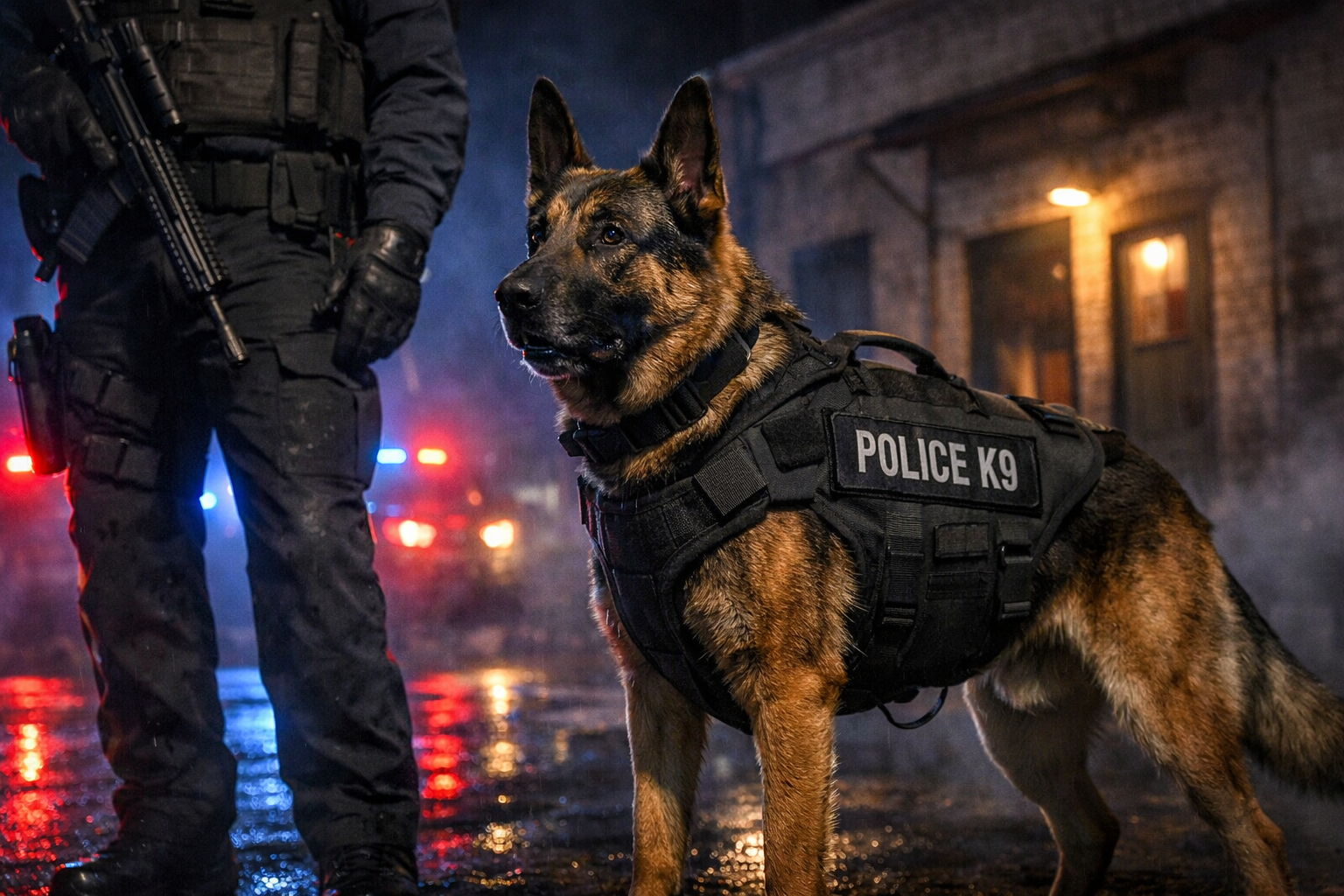
Anyone who has spent much time around working dogs knows one thing quickly: these animals go where people cannot.
Whether it’s a police K9 tracking a suspect through thick brush outside a rural town or a military dog searching a dusty compound overseas, these dogs are often the first ones into danger. They work with a drive and focus that most people never fully understand. The handler may guide the mission, but the dog carries it out.
Because of that reality, the equipment used for police and military dogs has evolved dramatically over the past few decades. Among the most important pieces of gear today is the tactical vest — sometimes called K9 body armor — designed to protect the dog while allowing it to move, track, and engage just as effectively as if it were running free.
To someone unfamiliar with working dogs, a tactical vest may look like a simple harness. In truth, modern K9 vests represent years of development driven by hard lessons learned in real-world deployments.
And when you talk with handlers who have seen these dogs in action, you quickly understand why that protection matters.
The Reality of Working Dogs in Dangerous Situations
Police and military dogs operate in environments that are unpredictable and often violent. A patrol dog may be sent into a dark building to locate an armed suspect. A military dog might be searching vehicles or compounds where hidden explosives could be waiting.
These dogs aren’t just companions to their handlers. They are operational partners.
For many police departments, the K9 unit is one of the most effective tools they have for apprehension, detection, and tracking. A well-trained dog can locate suspects hidden in woods, track someone across miles of terrain, or detect narcotics and explosives long before a human officer could.
Military working dogs perform similar roles on a larger stage. In combat zones, they search for improvised explosive devices, patrol military bases, and assist soldiers during tactical operations.
The danger in those situations is obvious.
Gunfire, sharp debris, aggressive suspects, and explosive threats are all part of the job. While no equipment can eliminate those risks entirely, tactical vests give these dogs a layer of protection that simply didn’t exist years ago.
From Simple Harnesses to Modern K9 Armor
Early working dogs often wore little more than a basic leather harness. Those harnesses helped handlers control the dog, but they offered no real protection.
As law enforcement and military agencies began relying more heavily on K9 units, equipment manufacturers started looking for ways to improve both safety and functionality.
The result was the development of purpose-built tactical vests designed specifically for working dogs.
Modern police and military dog vests are engineered with a clear balance in mind: protection without limiting the dog’s mobility. Unlike a human body armor vest, a K9 vest must allow the animal to run, climb, track scent, and bite without restriction.
To achieve that, manufacturers use lightweight ballistic materials, flexible panel construction, and designs that contour closely to the dog’s body.
Many of these vests now provide protection against both ballistic threats and edged weapons. While they are not invincible, they dramatically improve a dog’s chances of avoiding serious injury in dangerous encounters.
Mobility Matters More Than Armor
Anyone who has watched a good working dog operate understands just how athletic these animals are.
Police dogs leap fences, crawl through tight spaces, and sprint at full speed during pursuits. Military dogs may climb obstacles or jump into vehicles during searches. A vest that restricts that movement would defeat its own purpose.
Because of that, one of the biggest design priorities for modern tactical vests is mobility.
The vest must protect vital areas like the chest, ribs, and abdomen while leaving the shoulders and legs free to move naturally. A properly fitted vest should feel almost invisible to the dog after a short period of adjustment.
Handlers often spend time conditioning their dogs to the vest before using it in the field. Much like a hunting dog becoming accustomed to a GPS collar or chest protector, the dog eventually ignores the equipment entirely and focuses on the work.
When done right, the vest becomes simply another part of the dog’s working gear.
More Than Just Protection
Protection is the primary reason tactical vests exist, but modern K9 vests serve several additional roles that make them invaluable in the field.
Many vests include handles that allow handlers to lift or guide their dog over obstacles. In tactical environments where speed and coordination matter, that handle can be incredibly useful.
Some designs also include attachment points for cameras, lights, or communication devices. These tools allow handlers and command teams to see what the dog sees when it enters confined spaces or buildings.
Identification panels are another important feature. Clear markings such as “POLICE K9” or “MILITARY WORKING DOG” can help reduce confusion during chaotic situations and alert civilians that a working dog is present.
In many cases, these vests also provide protection from environmental hazards such as thorny brush, broken glass, and rough terrain.
Anyone who has hunted behind dogs long enough knows how quickly sharp brush or briars can tear into a dog’s chest and shoulders. Tactical units face those same challenges in urban environments filled with debris and obstacles.
The Bond Between Handler and Dog
If you ever talk to a K9 handler about their partner, you’ll hear something that sounds very familiar to anyone who hunts with dogs.
Handlers speak about their dogs with respect.
These dogs are more than equipment. They are teammates who trust their handlers completely. When a dog is sent into a dark room or down a trail toward a dangerous suspect, it does so with full confidence in the person behind the leash.
That bond is one of the strongest partnerships in the working-dog world.
Because of that connection, most handlers care deeply about the safety of their dogs. Tactical vests are part of that responsibility. They represent an effort to protect an animal that is willing to do a dangerous job without hesitation.
Many handlers will tell you that their dog would run straight into danger whether the vest was there or not.
The vest simply gives them a better chance of coming home safely afterward.
A Growing Standard for Working Dogs
Over the past twenty years, tactical vests have become increasingly common among police and military K9 units. In many agencies, they are now considered standard equipment.
Advances in materials continue to improve these vests, making them lighter, stronger, and more comfortable for the dogs wearing them.
Some organizations and charities have also stepped in to help provide ballistic vests to departments that cannot afford them. These efforts have equipped thousands of police dogs with protective gear that may ultimately save their lives.
As working dog programs continue to evolve, equipment like tactical vests will likely become even more advanced.
But the core idea behind them remains simple.
These dogs stand on the front line beside their handlers.
And anything that improves their chances of staying safe while doing that job is worth having.
Whether it’s a police K9 tracking a suspect through thick brush outside a rural town or a military dog searching a dusty compound overseas, these dogs are often the first ones into danger. They work with a drive and focus that most people never fully understand. The handler may guide the mission, but the dog carries it out.
Because of that reality, the equipment used for police and military dogs has evolved dramatically over the past few decades. Among the most important pieces of gear today is the tactical vest — sometimes called K9 body armor — designed to protect the dog while allowing it to move, track, and engage just as effectively as if it were running free.
To someone unfamiliar with working dogs, a tactical vest may look like a simple harness. In truth, modern K9 vests represent years of development driven by hard lessons learned in real-world deployments.
And when you talk with handlers who have seen these dogs in action, you quickly understand why that protection matters.
The Reality of Working Dogs in Dangerous Situations
Police and military dogs operate in environments that are unpredictable and often violent. A patrol dog may be sent into a dark building to locate an armed suspect. A military dog might be searching vehicles or compounds where hidden explosives could be waiting.
These dogs aren’t just companions to their handlers. They are operational partners.
For many police departments, the K9 unit is one of the most effective tools they have for apprehension, detection, and tracking. A well-trained dog can locate suspects hidden in woods, track someone across miles of terrain, or detect narcotics and explosives long before a human officer could.
Military working dogs perform similar roles on a larger stage. In combat zones, they search for improvised explosive devices, patrol military bases, and assist soldiers during tactical operations.
The danger in those situations is obvious.
Gunfire, sharp debris, aggressive suspects, and explosive threats are all part of the job. While no equipment can eliminate those risks entirely, tactical vests give these dogs a layer of protection that simply didn’t exist years ago.
From Simple Harnesses to Modern K9 Armor
Early working dogs often wore little more than a basic leather harness. Those harnesses helped handlers control the dog, but they offered no real protection.
As law enforcement and military agencies began relying more heavily on K9 units, equipment manufacturers started looking for ways to improve both safety and functionality.
The result was the development of purpose-built tactical vests designed specifically for working dogs.
Modern police and military dog vests are engineered with a clear balance in mind: protection without limiting the dog’s mobility. Unlike a human body armor vest, a K9 vest must allow the animal to run, climb, track scent, and bite without restriction.
To achieve that, manufacturers use lightweight ballistic materials, flexible panel construction, and designs that contour closely to the dog’s body.
Many of these vests now provide protection against both ballistic threats and edged weapons. While they are not invincible, they dramatically improve a dog’s chances of avoiding serious injury in dangerous encounters.
Mobility Matters More Than Armor
Anyone who has watched a good working dog operate understands just how athletic these animals are.
Police dogs leap fences, crawl through tight spaces, and sprint at full speed during pursuits. Military dogs may climb obstacles or jump into vehicles during searches. A vest that restricts that movement would defeat its own purpose.
Because of that, one of the biggest design priorities for modern tactical vests is mobility.
The vest must protect vital areas like the chest, ribs, and abdomen while leaving the shoulders and legs free to move naturally. A properly fitted vest should feel almost invisible to the dog after a short period of adjustment.
Handlers often spend time conditioning their dogs to the vest before using it in the field. Much like a hunting dog becoming accustomed to a GPS collar or chest protector, the dog eventually ignores the equipment entirely and focuses on the work.
When done right, the vest becomes simply another part of the dog’s working gear.
More Than Just Protection
Protection is the primary reason tactical vests exist, but modern K9 vests serve several additional roles that make them invaluable in the field.
Many vests include handles that allow handlers to lift or guide their dog over obstacles. In tactical environments where speed and coordination matter, that handle can be incredibly useful.
Some designs also include attachment points for cameras, lights, or communication devices. These tools allow handlers and command teams to see what the dog sees when it enters confined spaces or buildings.
Identification panels are another important feature. Clear markings such as “POLICE K9” or “MILITARY WORKING DOG” can help reduce confusion during chaotic situations and alert civilians that a working dog is present.
In many cases, these vests also provide protection from environmental hazards such as thorny brush, broken glass, and rough terrain.
Anyone who has hunted behind dogs long enough knows how quickly sharp brush or briars can tear into a dog’s chest and shoulders. Tactical units face those same challenges in urban environments filled with debris and obstacles.
The Bond Between Handler and Dog
If you ever talk to a K9 handler about their partner, you’ll hear something that sounds very familiar to anyone who hunts with dogs.
Handlers speak about their dogs with respect.
These dogs are more than equipment. They are teammates who trust their handlers completely. When a dog is sent into a dark room or down a trail toward a dangerous suspect, it does so with full confidence in the person behind the leash.
That bond is one of the strongest partnerships in the working-dog world.
Because of that connection, most handlers care deeply about the safety of their dogs. Tactical vests are part of that responsibility. They represent an effort to protect an animal that is willing to do a dangerous job without hesitation.
Many handlers will tell you that their dog would run straight into danger whether the vest was there or not.
The vest simply gives them a better chance of coming home safely afterward.
A Growing Standard for Working Dogs
Over the past twenty years, tactical vests have become increasingly common among police and military K9 units. In many agencies, they are now considered standard equipment.
Advances in materials continue to improve these vests, making them lighter, stronger, and more comfortable for the dogs wearing them.
Some organizations and charities have also stepped in to help provide ballistic vests to departments that cannot afford them. These efforts have equipped thousands of police dogs with protective gear that may ultimately save their lives.
As working dog programs continue to evolve, equipment like tactical vests will likely become even more advanced.
But the core idea behind them remains simple.
These dogs stand on the front line beside their handlers.
And anything that improves their chances of staying safe while doing that job is worth having.