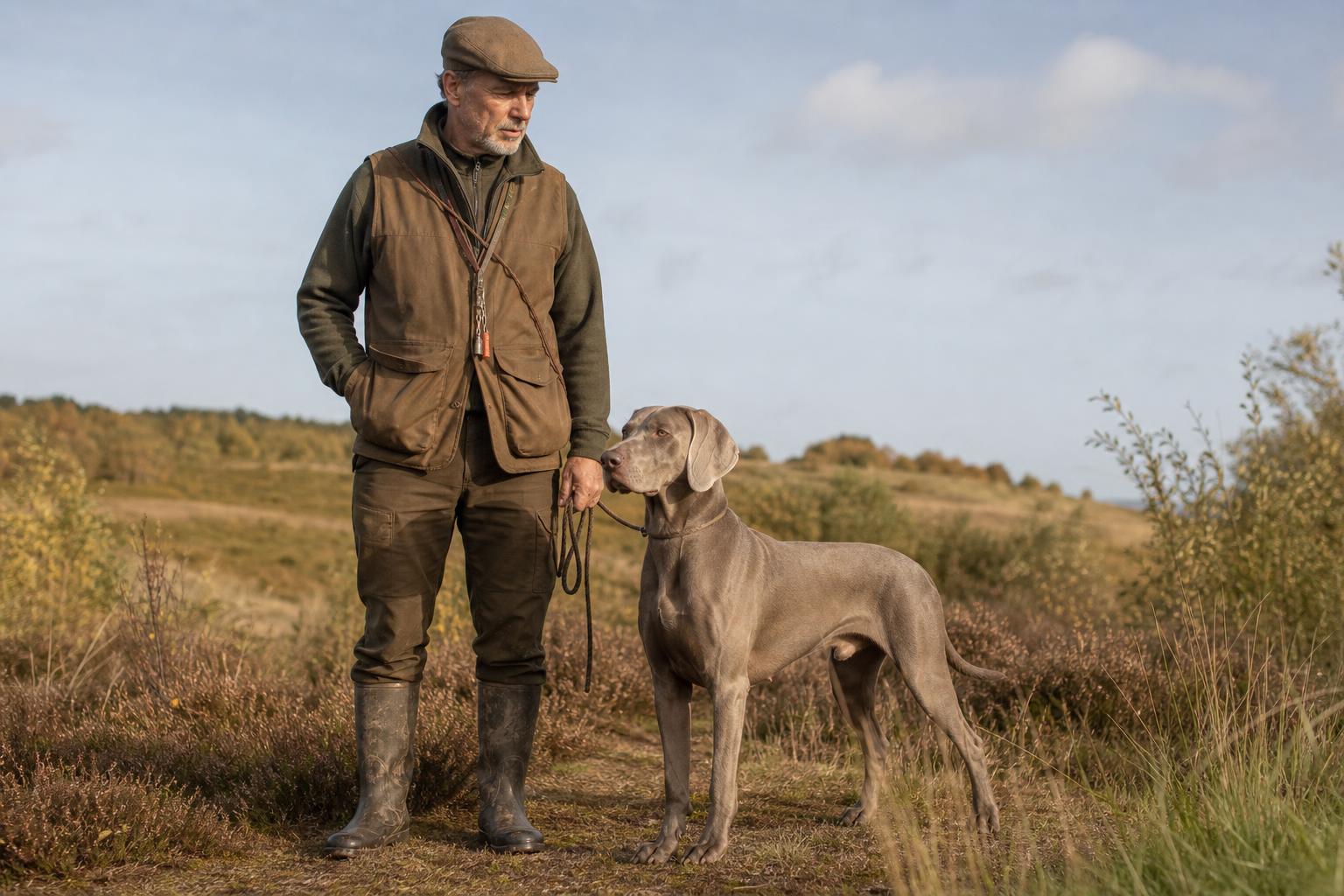
A finished Weimaraner can be an exciting option for hunters and active homes that want a mature, trained dog instead of starting with a puppy. The Weimaraner is an athletic German sporting breed known for its silver-gray coat, close bond with people, intelligence, stamina, and versatile hunting background. Historically developed for large game and later adapted for birds and smaller game, the breed can be a powerful field companion when its training, temperament, and energy are matched to the buyer.
The challenge is that finished does not mean the same thing to every seller. One trainer may use the term for a polished hunting dog that handles birds, retrieves reliably, responds to commands under distraction, and works calmly around gunfire. Another seller may mean only that the dog has hunted a few seasons and knows basic obedience. Before paying finished-dog money, buyers should ask for proof, demonstrations, references, and a clear explanation of what the dog has actually done.
What makes a finished dog
For a Weimaraner, a finished dog should be more than a well-exercised pet with some field exposure. At minimum, the dog should show reliable obedience, field control, bird or game understanding appropriate to the buyer's hunting goals, steadiness expectations that are clearly described, and the ability to work with a handler without constant conflict. Because Weimaraners are people-oriented and energetic, the best finished dogs usually combine drive with cooperation.
Ask the seller to define each trained behavior in plain language. Does the dog point and hold? Retrieve to hand? Hunt within range? Honor another dog? Handle water retrieves? Remain steady to wing, shot, or fall? Load, kennel, travel, and settle in the house? Not every finished Weimaraner needs every skill, but the advertised price should match the actual level of training.
- Watch the dog work in conditions similar to how you will hunt.
- Ask whether commands are verbal, whistle, hand signal, e-collar supported, or a combination.
- Confirm whether the dog works for only the trainer or transfers readily to a new handler.
- Look for calm recovery after excitement, not just high drive.
Hunt tests
Hunt tests can be useful evidence, but buyers should verify which organization, level, date, and passing record apply to the individual Weimaraner. A hunt test title may show exposure to standardized field situations, but it does not automatically prove that the dog fits your hunting style, terrain, game, or household. Ask to see certificates or database records when available, and ask the owner what the dog had to demonstrate to earn them.
If hunt tests are not part of the dog's history, that is not automatically a problem. Many capable hunting dogs never run formal tests. In that case, replace title claims with practical evaluation: live field demonstrations, trainer references, hunting references, video from multiple days, and a trial period or written agreement when possible. The key is verification, not alphabet soup.
Verify working records and breed eligibility
Verify reported working titles and test results with the issuing organisation. Confirm that the programme applies to the breed and ask what the result demonstrates about the individual dog.
Verify reported working titles and test results with the issuing organisation. Confirm that the programme applies to the breed and ask what the result demonstrates about the individual dog.
Trial records
Trial records can signal competitive performance, but they should be interpreted carefully. Field trial success may emphasize range, speed, style, independence, or a specific format that may or may not match the average buyer's needs. A trial-bred or trial-proven Weimaraner can be outstanding for the right handler, but too much range or intensity can frustrate someone who wants a closer-working foot hunting dog.
Ask for the name of the event, placements, sanctioning body, dates, and the handler involved. Then ask practical questions: How does the dog handle wild birds? How does it perform after a missed bird, a poor shot, or a long day? Does it kennel quietly at a motel or in a truck? Will it live peacefully in a family routine? Records are helpful, but they should support the buying decision rather than replace direct evaluation.
Age expectations
Most finished dogs are mature enough to have meaningful field experience, but age alone does not prove training quality. A three-year-old Weimaraner may be entering a strong working prime, while an older dog may bring steadiness, judgment, and a calmer home presence. Younger finished dogs can offer more working years ahead, but they may still need handling polish and continued reinforcement.
Because Weimaraners are active, deep-chested sporting dogs, buyers should also consider conditioning and veterinary history. Ask about injuries, lameness, endurance, recovery after hard work, heat tolerance, feeding routines, and any health testing or veterinary records the seller can document. Avoid sellers who make broad medical guarantees without paperwork. A pre-purchase veterinary exam is a sensible step, especially when the dog represents a significant investment.
Investment value
A finished Weimaraner often costs more than a puppy because the seller has invested time, birds, travel, training equipment, entry fees, and hunting seasons into the dog. The value is not just age; it is proven ability and reduced uncertainty. Still, buyers should be cautious about paying a premium for vague claims. The price should reflect documented training, temperament, health information, transferability, and the dog's fit for your goals.
Instead of focusing only on the purchase price, consider the total value. A truly finished dog may save months or years of training time and may allow a hunter to step into the season with a capable partner. On the other hand, a poorly matched finished dog can be expensive to retrain, hard to manage, or stressful in the home. Written terms matter: clarify deposits, trial periods, return policies, registration papers if applicable, included equipment, and exactly what the seller promises.
Evaluating a finished Weimaraner before buying
Plan to see the dog in person whenever possible. Watch obedience first, then field work, then everyday manners. A Weimaraner should not be judged only by speed and style; this breed's close attachment to people means household behavior and handler relationship matter. Look for a dog that is eager, athletic, responsive, and able to settle after work.
- Ask for the dog's full name, age, pedigree information, and ownership history.
- Request videos from different days, not just one polished highlight reel.
- Confirm what birds or game the dog has actually hunted.
- Ask who trained the dog and whether follow-up handling help is available.
- Meet the dog away from the field to evaluate temperament and manners.
Buyer-focused conclusion
Verify reported working titles and test results with the issuing organisation. Confirm that the programme applies to the breed and ask what the result demonstrates about the individual dog.
Explore Weimaraner on Working Dog Central
View the Weimaraner breed profile or browse Weimaraner listings.


