Agricultural Detection Dogs Protecting Borders
Jeff Davis | https://workingdogcentral.com
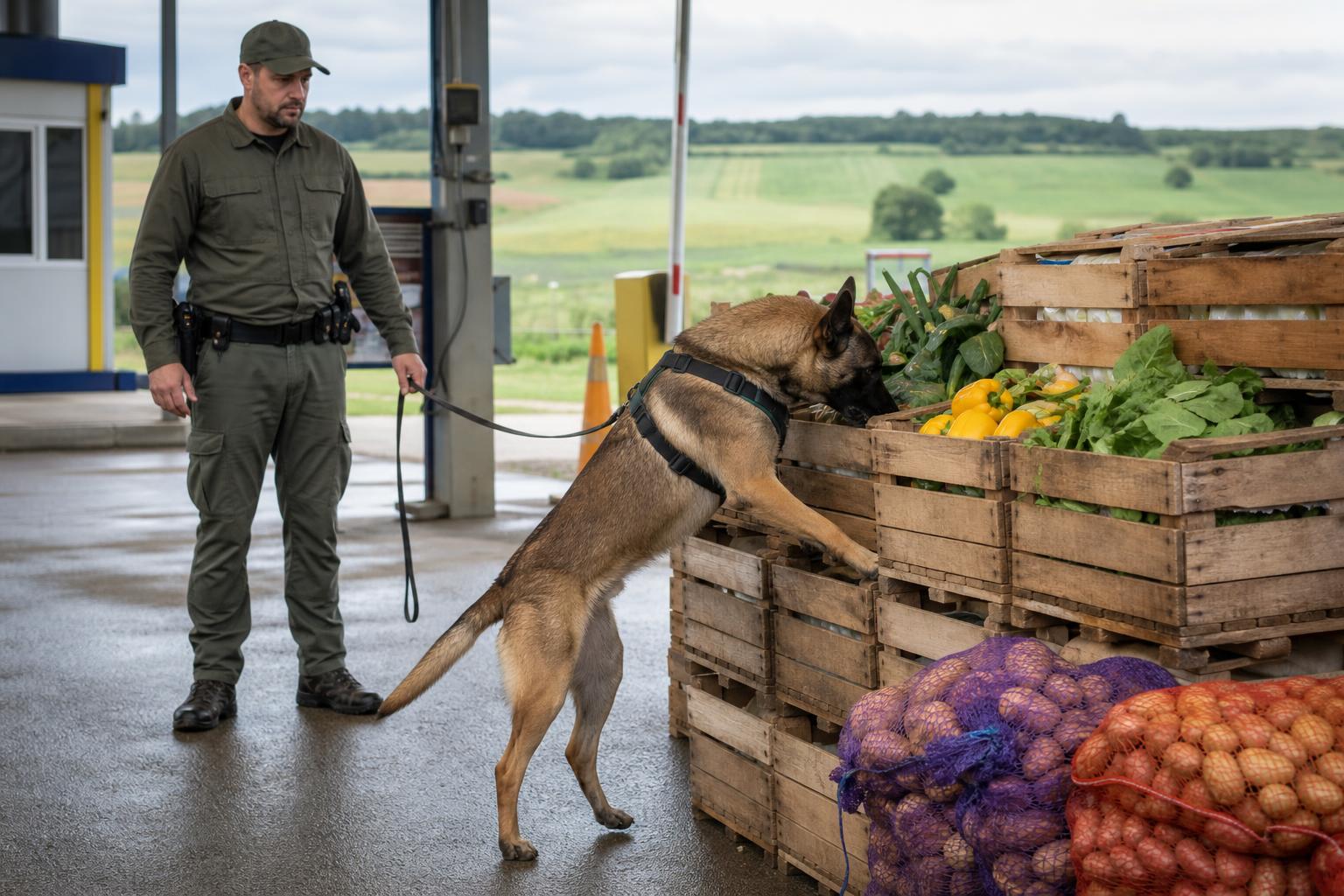
Why Agricultural Detection Dogs Matter at the Border
Most folks think of border dogs and picture narcotics, patrol work, or tracking fugitives through rough country. Those jobs matter, no doubt about it. But there is another class of working dog doing just as much good with far less attention, and that is the agricultural detection dog. These dogs are often the first line of defense against invasive insects, foreign animal disease, contaminated meat, prohibited fruits, and plant materials that can do real damage once they slip into the country.
If you have spent any time around farms, kennels, or wild bird habitat, you already understand how quickly one outside threat can spread. It does not take much. One piece of infected sausage in a suitcase, one orange carrying larvae, one bundle of untreated plant matter, and suddenly you are looking at quarantines, crop loss, sick livestock, and a bill that lands hard on ranchers and taxpayers alike. Agricultural detection dogs help stop that chain before it starts. They work cargo terminals, mail facilities, seaports, highways, and especially airports, where thousands of bags and packages move faster than any human team could ever inspect by hand.
What makes this work impressive is not just the nose. It is the combination of drive, steadiness, and trust between handler and dog. A good detection dog can move through crowds, ignore noise, pass food courts and fuel odors, and still lock onto the scent that matters. That kind of work is not glamorous, but it is the sort of practical, boots-on-the-ground service that protects agriculture in a very real way.
How These Dogs Detect Agricultural Threats
A dog’s nose is the engine behind the whole operation. Anyone who has hunted over a serious bird dog or watched a trailing hound unravel old scent knows there is no machine on earth that works quite the same way. Agricultural detection dogs are trained to identify odor profiles tied to prohibited items such as fresh produce, meats, seeds, animal products, and plant materials. In some programs, they may also be used in work connected to invasive species or disease prevention efforts, depending on the agency and region.
The dogs are not guessing. They are trained through repetition, reward, and very careful scent association. When they encounter the target odor, they are taught to give a clear final response, often a sit or a focused indication at the source. That response needs to be reliable in crowded, distracting places. A suitcase rolling by on a belt, a backpack under an airport bench, a parcel among hundreds of boxes, all of it has to be checked with speed and discipline.
The Nose That Beats the Checklist
Human inspectors do excellent work, but people are limited by time, eyesight, and the simple fact that travelers do not always declare what they are carrying. A detection dog closes that gap. The dog does not care whether the item is hidden under laundry, wrapped in foil, or tucked inside a cooler. If odor is present and the dog is conditioned on that scent, there is a strong chance the dog will find it.
I have seen enough working dogs over the years to appreciate the honesty of a dog on odor. A well-trained dog does not posture. It does not bluff. It either has the scent or it does not. That clean sort of truth is why these dogs are so effective in agriculture protection work.
Where Agricultural Detection Dogs Work
Airports are where most people first notice agricultural detector dogs, especially near baggage claim and customs lines. A dog weaving through stacked luggage may look almost casual until it snaps into focus and alerts on one bag out of a hundred. That one bag might contain undeclared fruit, homemade meat products, or plant cuttings that could carry pests or pathogens.
But the work goes well beyond airports. These dogs are useful at international mail centers where parcels arrive from all over the world, at shipping terminals where cargo changes hands by the ton, and at land border crossings where food items and agricultural products move in private vehicles every day. Some programs also support inspection operations tied to state agriculture departments and conservation concerns. Wherever goods move, there is a need for scent detection backed by a dog that can search quickly and stay accurate.
This is where the value becomes plain. One dog-handler team can screen a high volume of luggage or cargo in a short window. That efficiency matters because border protection is a numbers game as much as anything. The more ground you can cover without sacrificing reliability, the better your odds of keeping threats out.
The Breeds and Traits That Fit the Job
Not every good dog is built for this kind of work. Agricultural detection dogs need strong hunt drive, social stability, confidence on slick floors and strange surfaces, and the ability to work around crowds without showing sharpness or nerves. In many programs, Labrador Retrievers have become a natural fit. They are biddable, food motivated, people-safe, and generally steady in public spaces. Beagles are also well known in airport agricultural work because of their manageable size, sociable nature, and excellent noses.
That said, breed alone does not make the dog. The individual matters more. I have watched plenty of fine-looking dogs wash out of hard work because they could not handle pressure, novelty, or repetition. Then you get another dog that may not turn heads in a kennel run, but once it starts searching, it is all business. Those are the dogs you remember.
Drive Must Be Balanced With Control
The best agricultural detection dogs carry enough desire to hunt odor all day, but not so much edge that they become difficult in public. This is not a field trial cast where big speed covers rough country. It is methodical work in tight lanes, crowds, vehicles, and buildings. The dog has to stay in partnership with the handler, make clean decisions, and recover quickly from distractions. That balance is what separates a useful detection prospect from a dog that is simply energetic.
Training for Real-World Border Protection
Training starts with odor recognition, but it does not end there. Border environments are full of distractions that can pull a young dog off task. There are food smells everywhere, rolling carts, loudspeaker announcements, slick tile, children running past, and the general confusion that comes with heavy travel traffic. A good training program builds the dog up gradually until the search itself becomes the favorite game in the world.
Handlers also train for reading subtle changes in behavior. A seasoned handler can often tell when the dog has caught trace odor, when it is working toward source, and when it is unsure. That kind of teamwork takes time. It reminds me a lot of hunting behind a finished dog. If you know your dog, you notice the little details before anyone else does. The head carriage shifts, the breathing changes, the tail tells a story, and all at once you know game is close. Detection work carries that same quiet communication, only the quarry is contraband produce or animal products instead of birds in the cover.
Proofing is another major piece. Dogs have to generalize odors across packaging types, concealment styles, and environments. It is not enough to find an apple in a training room. The dog must find fruit mixed among clothing, inside coolers, under layers of scent contamination, and in places where thousands of competing odors are present. Reliable certification and ongoing maintenance training keep standards high.
The Stakes for Farmers, Wildlife, and Dog Owners
For dog owners interested in working dogs, it is worth understanding that agricultural detection is not some narrow government task with little connection to everyday life. It affects food security, livestock health, hunting habitat, and the cost of doing business across rural communities. An invasive pest can wreck orchard production. A foreign animal disease can hit pork or poultry producers hard. Harmful plant material can threaten native landscapes and the wildlife that depend on them.
That means these dogs are protecting more than a checkpoint. They are protecting the ground beneath all of us, from backyard gardens to big cattle operations. Anyone who values sound land management, healthy game populations, or stable farm country ought to appreciate that.
There is also something valuable here for everyday dog owners. Agricultural detection dogs show what happens when natural canine ability is shaped with purpose. They are proof that a dog’s nose is not just a curiosity or a party trick. In the right hands, it becomes a tool of national importance. That ought to give any working-dog person a deeper respect for scent training, structure, temperament, and breeding for useful traits.
The Future of Agricultural Detection Dogs Protecting Borders
As travel and shipping volumes continue to rise, the need for agricultural detection dogs protecting borders will only grow. Technology helps, and inspection systems are improving all the time, but there is still no replacing a trained dog when speed, mobility, and scent discrimination matter. A good dog can move where machines cannot, adapt in real time, and pinpoint source odor with remarkable efficiency.
I suspect these programs will keep expanding in both sophistication and public visibility. More agencies are recognizing that prevention is cheaper than response. Once an invasive pest is established or a serious disease enters the chain, the fight becomes longer and far more expensive. Stopping the threat at the border is simply the smart play, and dogs are still among the best tools for doing it.
At the end of the day, agricultural detection dogs represent the finest side of working-dog culture. They are practical, disciplined, and useful in a way that most people never fully see. They do not ask for applause. They just go to work, nose down, tail steady, hunting for what does not belong. And in that quiet search, they protect farms, forests, wildlife, and communities from trouble that might otherwise pass unseen.
Most folks think of border dogs and picture narcotics, patrol work, or tracking fugitives through rough country. Those jobs matter, no doubt about it. But there is another class of working dog doing just as much good with far less attention, and that is the agricultural detection dog. These dogs are often the first line of defense against invasive insects, foreign animal disease, contaminated meat, prohibited fruits, and plant materials that can do real damage once they slip into the country.
If you have spent any time around farms, kennels, or wild bird habitat, you already understand how quickly one outside threat can spread. It does not take much. One piece of infected sausage in a suitcase, one orange carrying larvae, one bundle of untreated plant matter, and suddenly you are looking at quarantines, crop loss, sick livestock, and a bill that lands hard on ranchers and taxpayers alike. Agricultural detection dogs help stop that chain before it starts. They work cargo terminals, mail facilities, seaports, highways, and especially airports, where thousands of bags and packages move faster than any human team could ever inspect by hand.
What makes this work impressive is not just the nose. It is the combination of drive, steadiness, and trust between handler and dog. A good detection dog can move through crowds, ignore noise, pass food courts and fuel odors, and still lock onto the scent that matters. That kind of work is not glamorous, but it is the sort of practical, boots-on-the-ground service that protects agriculture in a very real way.
How These Dogs Detect Agricultural Threats
A dog’s nose is the engine behind the whole operation. Anyone who has hunted over a serious bird dog or watched a trailing hound unravel old scent knows there is no machine on earth that works quite the same way. Agricultural detection dogs are trained to identify odor profiles tied to prohibited items such as fresh produce, meats, seeds, animal products, and plant materials. In some programs, they may also be used in work connected to invasive species or disease prevention efforts, depending on the agency and region.
The dogs are not guessing. They are trained through repetition, reward, and very careful scent association. When they encounter the target odor, they are taught to give a clear final response, often a sit or a focused indication at the source. That response needs to be reliable in crowded, distracting places. A suitcase rolling by on a belt, a backpack under an airport bench, a parcel among hundreds of boxes, all of it has to be checked with speed and discipline.
The Nose That Beats the Checklist
Human inspectors do excellent work, but people are limited by time, eyesight, and the simple fact that travelers do not always declare what they are carrying. A detection dog closes that gap. The dog does not care whether the item is hidden under laundry, wrapped in foil, or tucked inside a cooler. If odor is present and the dog is conditioned on that scent, there is a strong chance the dog will find it.
I have seen enough working dogs over the years to appreciate the honesty of a dog on odor. A well-trained dog does not posture. It does not bluff. It either has the scent or it does not. That clean sort of truth is why these dogs are so effective in agriculture protection work.
Where Agricultural Detection Dogs Work
Airports are where most people first notice agricultural detector dogs, especially near baggage claim and customs lines. A dog weaving through stacked luggage may look almost casual until it snaps into focus and alerts on one bag out of a hundred. That one bag might contain undeclared fruit, homemade meat products, or plant cuttings that could carry pests or pathogens.
But the work goes well beyond airports. These dogs are useful at international mail centers where parcels arrive from all over the world, at shipping terminals where cargo changes hands by the ton, and at land border crossings where food items and agricultural products move in private vehicles every day. Some programs also support inspection operations tied to state agriculture departments and conservation concerns. Wherever goods move, there is a need for scent detection backed by a dog that can search quickly and stay accurate.
This is where the value becomes plain. One dog-handler team can screen a high volume of luggage or cargo in a short window. That efficiency matters because border protection is a numbers game as much as anything. The more ground you can cover without sacrificing reliability, the better your odds of keeping threats out.
The Breeds and Traits That Fit the Job
Not every good dog is built for this kind of work. Agricultural detection dogs need strong hunt drive, social stability, confidence on slick floors and strange surfaces, and the ability to work around crowds without showing sharpness or nerves. In many programs, Labrador Retrievers have become a natural fit. They are biddable, food motivated, people-safe, and generally steady in public spaces. Beagles are also well known in airport agricultural work because of their manageable size, sociable nature, and excellent noses.
That said, breed alone does not make the dog. The individual matters more. I have watched plenty of fine-looking dogs wash out of hard work because they could not handle pressure, novelty, or repetition. Then you get another dog that may not turn heads in a kennel run, but once it starts searching, it is all business. Those are the dogs you remember.
Drive Must Be Balanced With Control
The best agricultural detection dogs carry enough desire to hunt odor all day, but not so much edge that they become difficult in public. This is not a field trial cast where big speed covers rough country. It is methodical work in tight lanes, crowds, vehicles, and buildings. The dog has to stay in partnership with the handler, make clean decisions, and recover quickly from distractions. That balance is what separates a useful detection prospect from a dog that is simply energetic.
Training for Real-World Border Protection
Training starts with odor recognition, but it does not end there. Border environments are full of distractions that can pull a young dog off task. There are food smells everywhere, rolling carts, loudspeaker announcements, slick tile, children running past, and the general confusion that comes with heavy travel traffic. A good training program builds the dog up gradually until the search itself becomes the favorite game in the world.
Handlers also train for reading subtle changes in behavior. A seasoned handler can often tell when the dog has caught trace odor, when it is working toward source, and when it is unsure. That kind of teamwork takes time. It reminds me a lot of hunting behind a finished dog. If you know your dog, you notice the little details before anyone else does. The head carriage shifts, the breathing changes, the tail tells a story, and all at once you know game is close. Detection work carries that same quiet communication, only the quarry is contraband produce or animal products instead of birds in the cover.
Proofing is another major piece. Dogs have to generalize odors across packaging types, concealment styles, and environments. It is not enough to find an apple in a training room. The dog must find fruit mixed among clothing, inside coolers, under layers of scent contamination, and in places where thousands of competing odors are present. Reliable certification and ongoing maintenance training keep standards high.
The Stakes for Farmers, Wildlife, and Dog Owners
For dog owners interested in working dogs, it is worth understanding that agricultural detection is not some narrow government task with little connection to everyday life. It affects food security, livestock health, hunting habitat, and the cost of doing business across rural communities. An invasive pest can wreck orchard production. A foreign animal disease can hit pork or poultry producers hard. Harmful plant material can threaten native landscapes and the wildlife that depend on them.
That means these dogs are protecting more than a checkpoint. They are protecting the ground beneath all of us, from backyard gardens to big cattle operations. Anyone who values sound land management, healthy game populations, or stable farm country ought to appreciate that.
There is also something valuable here for everyday dog owners. Agricultural detection dogs show what happens when natural canine ability is shaped with purpose. They are proof that a dog’s nose is not just a curiosity or a party trick. In the right hands, it becomes a tool of national importance. That ought to give any working-dog person a deeper respect for scent training, structure, temperament, and breeding for useful traits.
The Future of Agricultural Detection Dogs Protecting Borders
As travel and shipping volumes continue to rise, the need for agricultural detection dogs protecting borders will only grow. Technology helps, and inspection systems are improving all the time, but there is still no replacing a trained dog when speed, mobility, and scent discrimination matter. A good dog can move where machines cannot, adapt in real time, and pinpoint source odor with remarkable efficiency.
I suspect these programs will keep expanding in both sophistication and public visibility. More agencies are recognizing that prevention is cheaper than response. Once an invasive pest is established or a serious disease enters the chain, the fight becomes longer and far more expensive. Stopping the threat at the border is simply the smart play, and dogs are still among the best tools for doing it.
At the end of the day, agricultural detection dogs represent the finest side of working-dog culture. They are practical, disciplined, and useful in a way that most people never fully see. They do not ask for applause. They just go to work, nose down, tail steady, hunting for what does not belong. And in that quiet search, they protect farms, forests, wildlife, and communities from trouble that might otherwise pass unseen.