War Dogs of the Ancient World
How Dogs Fought Beside Warriors
Jeff Davis | https://workingdogcentral.com
 0
0 0
0 0
0 0
0 0
0
Anyone who has spent time around working dogs understands something most people overlook—the bond between a handler and a dog is older than civilization itself.
Long before police K9 units, search-and-rescue teams, or modern military dogs wearing tactical harnesses, warriors were already marching into battle with dogs at their side. The idea of dogs serving in warfare isn’t some modern innovation. It stretches back thousands of years into the earliest recorded history of mankind.
And if you’ve ever watched a determined working dog focus on a task—nose down, muscles tight, eyes locked—you can easily imagine how useful that instinct would be on a battlefield.
Ancient armies certainly figured it out.
The Earliest War Dogs
The use of dogs in warfare likely began soon after humans first domesticated them. Archaeological evidence suggests that humans and dogs have lived together for at least 15,000 years, and some historians believe the partnership could go back even further.
In early tribal societies, dogs were first used as camp guardians. A dog’s hearing and sense of smell far exceeded that of humans, and a barking dog could warn a village of approaching strangers long before anyone else realized danger was near.
Over time, people began to recognize another trait that made dogs valuable in conflict—their willingness to defend their people.
Some of the earliest written references to war dogs come from the civilizations of Mesopotamia nearly four thousand years ago. Ancient relief carvings from Assyria show powerful mastiff-type dogs wearing heavy collars and accompanying soldiers and hunters. These dogs weren’t small camp companions. They were massive animals bred for strength and intimidation.
The same traits that made them formidable hunting dogs made them even more useful in battle.
War Dogs of the Ancient Greeks
The ancient Greeks are often credited with some of the earliest organized use of dogs in military settings. Greek city-states used dogs as sentries, patrol animals, and sometimes battlefield fighters.
Large Molossian dogs—ancestors of many modern mastiff breeds—were particularly prized. These dogs came from the region of Epirus and were known for their size, courage, and fierce loyalty.
Greek soldiers reportedly used them to guard camps and military supply routes. In an age where nighttime raids and surprise attacks were common, a good dog could mean the difference between being caught off guard and having enough warning to prepare a defense.
Some accounts suggest these dogs were even trained to charge enemy troops or disrupt cavalry horses, creating chaos in the enemy ranks.
Anyone who has hunted behind a bold dog understands that kind of courage. A determined dog doesn’t hesitate when it believes it has a job to do.
Rome and the Organized War Dog
If any ancient civilization truly embraced the idea of war dogs, it was the Romans.
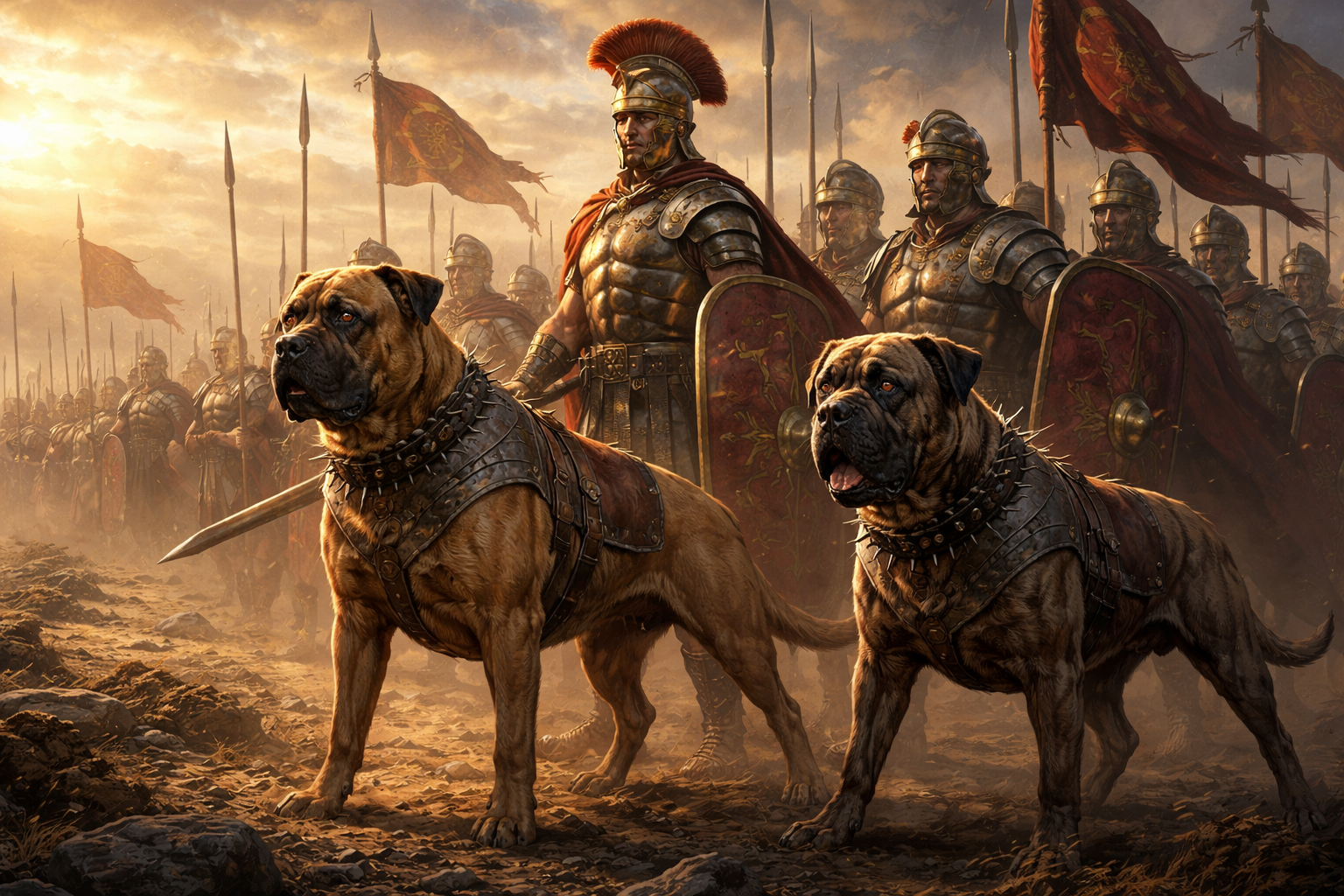
The Roman Empire built one of the most disciplined and organized military forces the world had ever seen, and dogs were part of that structure. Roman legions used powerful mastiff-type dogs known as Canis Molossus as guard animals and battlefield companions.
These dogs were often equipped with protective gear. Historical accounts describe war dogs wearing spiked collars or light armor designed to protect their necks and chests while allowing them to move quickly.
Some were trained to attack enemy soldiers directly. Others served as sentries that guarded camps and supply lines.
Roman war dogs were also used to carry messages between units. On chaotic battlefields where communication could break down quickly, a trained dog could slip through terrain faster and more quietly than a human runner.
In many ways, these early dogs were performing roles similar to modern military working dogs—scouting, guarding, and supporting soldiers in dangerous conditions.
The technology may have changed, but the partnership between man and dog remained the same.
Persian and Eastern War Dogs
The Persian Empire also relied heavily on war dogs, particularly large mastiff breeds imported from regions that are now part of modern Turkey and Central Asia.
Persian kings reportedly valued these animals so highly that entire villages were assigned to breeding and raising war dogs for the army.
These dogs were trained to fight alongside infantry units and were sometimes released ahead of advancing soldiers to break enemy formations. Their size alone could frighten horses and cause confusion among opposing troops.
In an era where warfare often depended on maintaining formation and discipline, even a brief moment of chaos could shift the outcome of a battle.
Dogs, with their speed and aggression, were capable of creating exactly that kind of disruption.
The Celts and Their Battle Dogs
Across Europe, Celtic tribes also developed strong traditions of using dogs in warfare.
Roman writers frequently mentioned the enormous dogs used by Celtic warriors in Britain and Ireland. These dogs were described as powerful, fearless animals that would charge enemies without hesitation.
Some historians believe these Celtic war dogs were early ancestors of breeds such as the Irish Wolfhound.
In battle, these dogs were sometimes released in groups to attack enemy soldiers or disrupt formations. The sight of large, aggressive dogs charging across the battlefield would have been intimidating even to seasoned warriors.
It’s not difficult to imagine the effect on soldiers already facing the chaos of ancient combat.
Beyond the Battlefield
While many stories of ancient war dogs focus on combat, their roles extended well beyond direct fighting.
Dogs served as sentries, patrol animals, and camp guardians. In a time before electric lights, surveillance cameras, or radio communication, a dog’s senses provided a critical early warning system.
Dogs could hear footsteps long before a human guard noticed movement. They could smell unfamiliar people approaching from a distance.
More importantly, they were alert when humans were tired.
After long marches or exhausting battles, soldiers needed sleep. Dogs remained on watch.
That simple role may have saved countless lives.
The Legacy of Ancient War Dogs
When people think about military working dogs today, they often picture modern breeds like Belgian Malinois or German Shepherds wearing tactical gear and operating alongside elite military units.
But the roots of that partnership stretch far deeper into history.
Ancient war dogs helped guard empires, protect soldiers, and shape battles long before modern training techniques or specialized breeding programs existed. Their roles were driven by the same instincts we see in working dogs today—loyalty, courage, and an intense desire to work beside their human partners.
As someone who has spent a lifetime around working dogs, that part of the story rings especially true.
Whether it’s a bird dog locking up on point in a pine thicket, a hound pushing a track through the woods, or a military dog searching a battlefield, the relationship remains the same.
Humans give the direction.
Dogs bring the heart.
And together they accomplish things neither could do alone.
The soldiers of ancient Rome or Greece might not recognize the modern equipment used by today’s military K9 teams, but they would certainly understand the partnership.
Because thousands of years ago, just as today, a good dog was more than an animal.
He was a fellow warrior.
Long before police K9 units, search-and-rescue teams, or modern military dogs wearing tactical harnesses, warriors were already marching into battle with dogs at their side. The idea of dogs serving in warfare isn’t some modern innovation. It stretches back thousands of years into the earliest recorded history of mankind.
And if you’ve ever watched a determined working dog focus on a task—nose down, muscles tight, eyes locked—you can easily imagine how useful that instinct would be on a battlefield.
Ancient armies certainly figured it out.
The Earliest War Dogs
The use of dogs in warfare likely began soon after humans first domesticated them. Archaeological evidence suggests that humans and dogs have lived together for at least 15,000 years, and some historians believe the partnership could go back even further.
In early tribal societies, dogs were first used as camp guardians. A dog’s hearing and sense of smell far exceeded that of humans, and a barking dog could warn a village of approaching strangers long before anyone else realized danger was near.
Over time, people began to recognize another trait that made dogs valuable in conflict—their willingness to defend their people.
Some of the earliest written references to war dogs come from the civilizations of Mesopotamia nearly four thousand years ago. Ancient relief carvings from Assyria show powerful mastiff-type dogs wearing heavy collars and accompanying soldiers and hunters. These dogs weren’t small camp companions. They were massive animals bred for strength and intimidation.
The same traits that made them formidable hunting dogs made them even more useful in battle.
War Dogs of the Ancient Greeks
The ancient Greeks are often credited with some of the earliest organized use of dogs in military settings. Greek city-states used dogs as sentries, patrol animals, and sometimes battlefield fighters.
Large Molossian dogs—ancestors of many modern mastiff breeds—were particularly prized. These dogs came from the region of Epirus and were known for their size, courage, and fierce loyalty.
Greek soldiers reportedly used them to guard camps and military supply routes. In an age where nighttime raids and surprise attacks were common, a good dog could mean the difference between being caught off guard and having enough warning to prepare a defense.
Some accounts suggest these dogs were even trained to charge enemy troops or disrupt cavalry horses, creating chaos in the enemy ranks.
Anyone who has hunted behind a bold dog understands that kind of courage. A determined dog doesn’t hesitate when it believes it has a job to do.
Rome and the Organized War Dog
If any ancient civilization truly embraced the idea of war dogs, it was the Romans.
The Roman Empire built one of the most disciplined and organized military forces the world had ever seen, and dogs were part of that structure. Roman legions used powerful mastiff-type dogs known as Canis Molossus as guard animals and battlefield companions.
These dogs were often equipped with protective gear. Historical accounts describe war dogs wearing spiked collars or light armor designed to protect their necks and chests while allowing them to move quickly.
Some were trained to attack enemy soldiers directly. Others served as sentries that guarded camps and supply lines.
Roman war dogs were also used to carry messages between units. On chaotic battlefields where communication could break down quickly, a trained dog could slip through terrain faster and more quietly than a human runner.
In many ways, these early dogs were performing roles similar to modern military working dogs—scouting, guarding, and supporting soldiers in dangerous conditions.
The technology may have changed, but the partnership between man and dog remained the same.
Persian and Eastern War Dogs
The Persian Empire also relied heavily on war dogs, particularly large mastiff breeds imported from regions that are now part of modern Turkey and Central Asia.
Persian kings reportedly valued these animals so highly that entire villages were assigned to breeding and raising war dogs for the army.
These dogs were trained to fight alongside infantry units and were sometimes released ahead of advancing soldiers to break enemy formations. Their size alone could frighten horses and cause confusion among opposing troops.
In an era where warfare often depended on maintaining formation and discipline, even a brief moment of chaos could shift the outcome of a battle.
Dogs, with their speed and aggression, were capable of creating exactly that kind of disruption.
The Celts and Their Battle Dogs
Across Europe, Celtic tribes also developed strong traditions of using dogs in warfare.
Roman writers frequently mentioned the enormous dogs used by Celtic warriors in Britain and Ireland. These dogs were described as powerful, fearless animals that would charge enemies without hesitation.
Some historians believe these Celtic war dogs were early ancestors of breeds such as the Irish Wolfhound.
In battle, these dogs were sometimes released in groups to attack enemy soldiers or disrupt formations. The sight of large, aggressive dogs charging across the battlefield would have been intimidating even to seasoned warriors.
It’s not difficult to imagine the effect on soldiers already facing the chaos of ancient combat.
Beyond the Battlefield
While many stories of ancient war dogs focus on combat, their roles extended well beyond direct fighting.
Dogs served as sentries, patrol animals, and camp guardians. In a time before electric lights, surveillance cameras, or radio communication, a dog’s senses provided a critical early warning system.
Dogs could hear footsteps long before a human guard noticed movement. They could smell unfamiliar people approaching from a distance.
More importantly, they were alert when humans were tired.
After long marches or exhausting battles, soldiers needed sleep. Dogs remained on watch.
That simple role may have saved countless lives.
The Legacy of Ancient War Dogs
When people think about military working dogs today, they often picture modern breeds like Belgian Malinois or German Shepherds wearing tactical gear and operating alongside elite military units.
But the roots of that partnership stretch far deeper into history.
Ancient war dogs helped guard empires, protect soldiers, and shape battles long before modern training techniques or specialized breeding programs existed. Their roles were driven by the same instincts we see in working dogs today—loyalty, courage, and an intense desire to work beside their human partners.
As someone who has spent a lifetime around working dogs, that part of the story rings especially true.
Whether it’s a bird dog locking up on point in a pine thicket, a hound pushing a track through the woods, or a military dog searching a battlefield, the relationship remains the same.
Humans give the direction.
Dogs bring the heart.
And together they accomplish things neither could do alone.
The soldiers of ancient Rome or Greece might not recognize the modern equipment used by today’s military K9 teams, but they would certainly understand the partnership.
Because thousands of years ago, just as today, a good dog was more than an animal.
He was a fellow warrior.