Search & Rescue
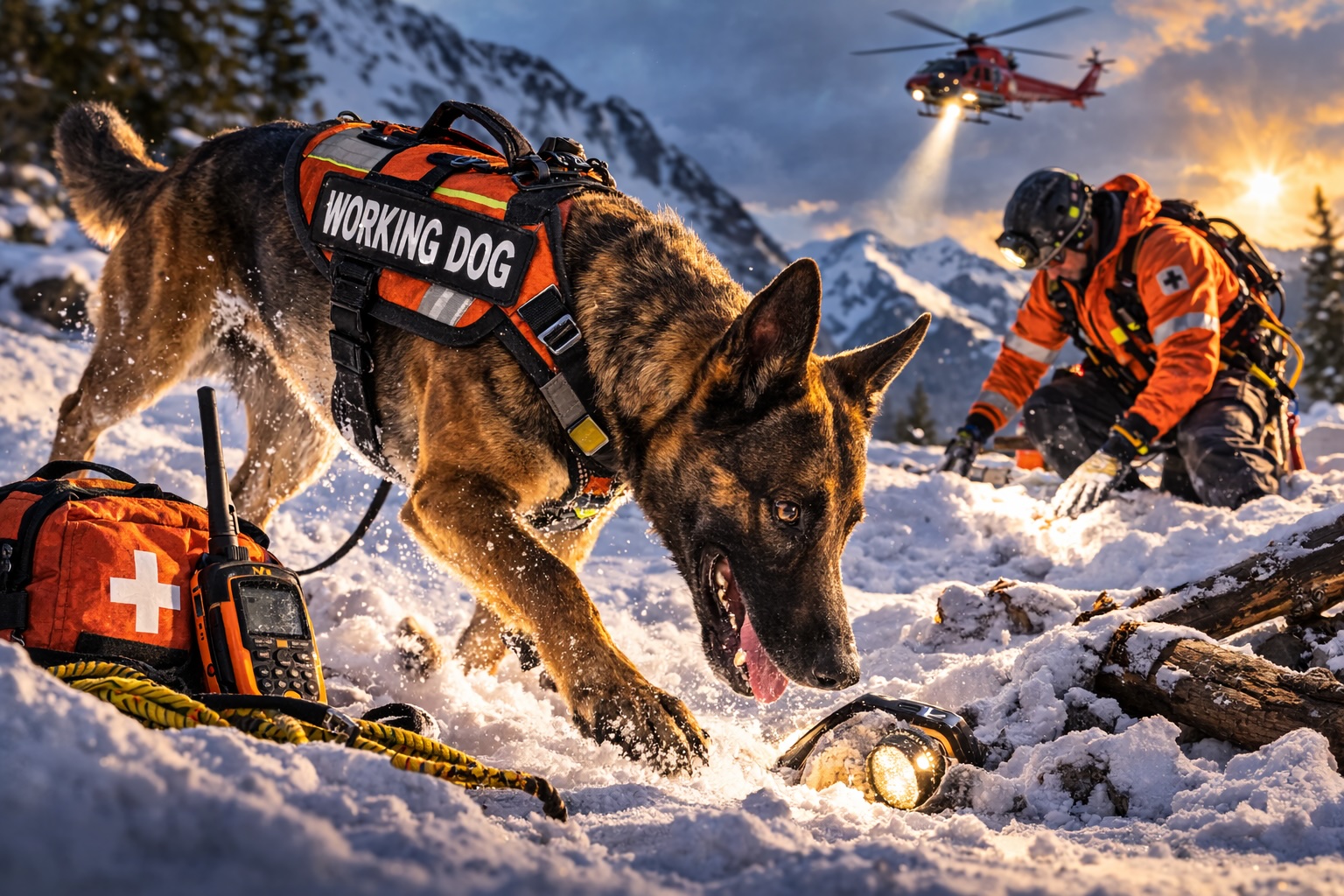
A search and rescue dog is a specialized working dog trained to locate missing or lost individuals in wilderness, disaster, or urban environments. Unlike tracking dogs that follow a specific trail on the ground, search and rescue dogs typically work using airborne scent, allowing them to detect human odor carried by the wind. This ability enables them to cover large areas quickly and locate people who may be injured, trapped, or unable to call for help.
Search and rescue teams are often deployed during emergencies such as natural disasters, wilderness disappearances, building collapses, avalanches, or major accidents. The dogs are trained to search independently while remaining responsive to their handler’s direction, using their powerful sense of smell to detect even faint traces of human scent. When they locate a person, many SAR dogs are trained to give a clear alert—such as barking, returning to the handler, or indicating the location directly—so rescuers can quickly move in to assist.
Successful search and rescue dogs must possess exceptional drive, stamina, and confidence in difficult environments. They regularly work in rugged terrain, dense forests, rubble piles, or harsh weather conditions, often for extended periods. Breeds commonly used in search and rescue include German Shepherds, Labrador Retrievers, Golden Retrievers, and Belgian Malinois, though many dogs with strong scenting ability and high motivation can excel. Through their training and partnership with handlers, search and rescue dogs have become vital tools in saving lives when time and conditions are working against human searchers.