Future Uses for Tracking Dogs
Where Instinct, Training, and Modern Work Meet
Jeff Davis | https://workingdogcentral.com
 0
0 0
0 0
0 0
0 0
0
Anyone who has spent real time behind a good working dog knows one truth better than most people in a lab ever will: a dog's nose still outperforms just about anything man has built when scent is the game. I have watched dogs sort through wind, dust, old tracks, crowded ground, and human error, then put their handler exactly where the answer was hiding. That kind of work earns respect. It also raises a fair question for the years ahead. As technology keeps moving faster, where do detection dogs fit in?
The answer is simple, though the details matter. Future technology is not likely to replace detection dogs. More often, it will sharpen how they are trained, deployed, monitored, and supported. For dog owners interested in working dogs, that matters because the future of scent detection will belong to teams that blend instinct, experience, and smart tools without losing sight of what makes a dog effective in the first place.
The Detection Dog Still Sets the Standard
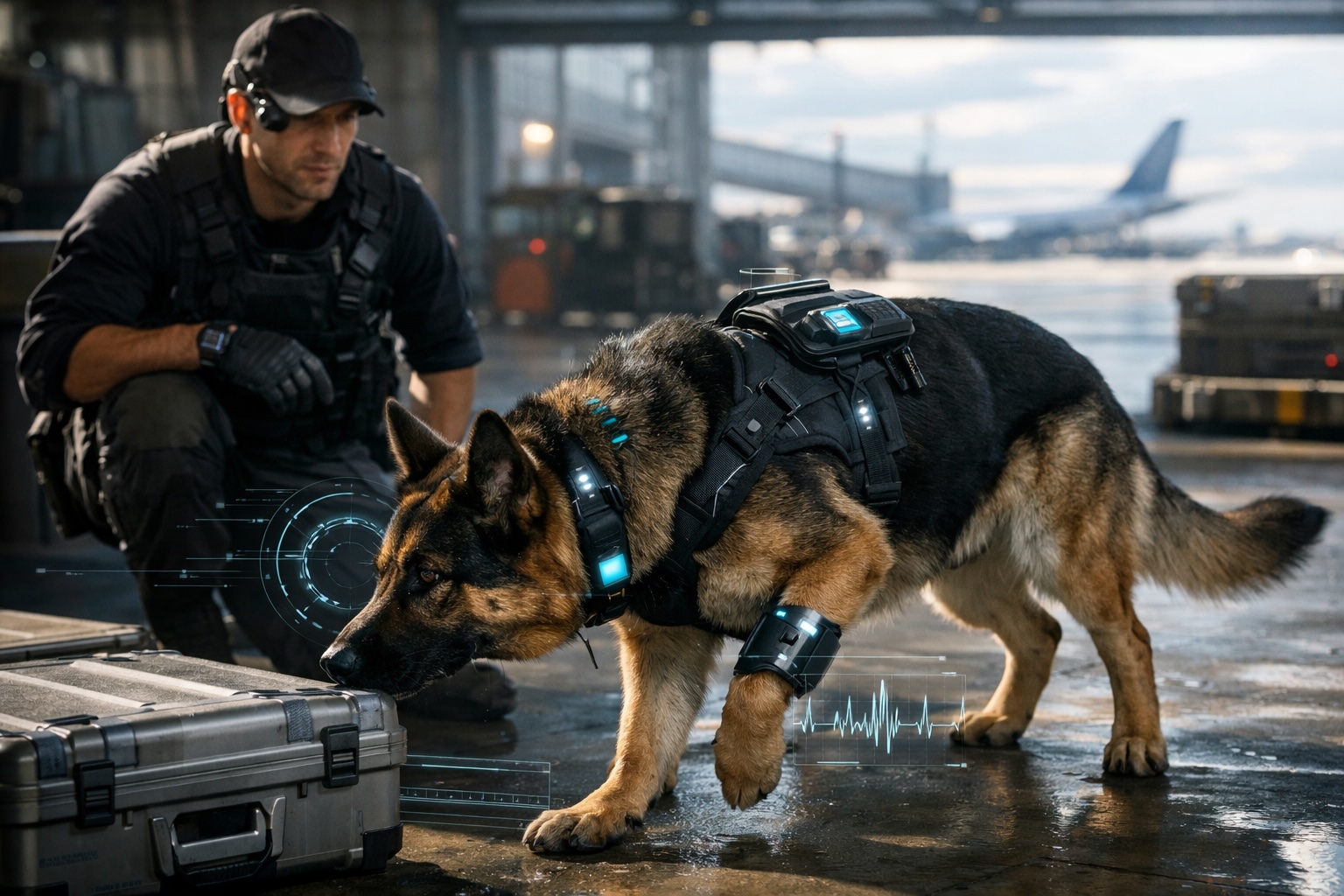
People love to talk about machines as if every new sensor means the old way is finished. I have heard that kind of talk for years in hunting camps, kennels, and training grounds. Then the real work starts, weather shifts, terrain gets ugly, contamination enters the scene, and suddenly everyone is looking back to the dog. Detection dogs remain essential because they process odor in a living, flexible, adaptive way. They do not simply read a number. They interpret a scent picture in motion.
That difference is critical in explosives detection, narcotics work, conservation projects, medical scent detection, search and rescue, and agricultural screening. A machine can be precise under controlled conditions. A trained dog can work through changing environments, track odor movement, and make decisions in real time with remarkable speed. In future operations, that ability will still be a major asset.
Why the Canine Nose Remains Hard to Replace
A dog does not just smell stronger than we do. A detection dog can separate odors, follow faint traces, and alert on target scent even when the environment is cluttered. Technology has made huge strides in chemical analysis, but field conditions are rarely neat. Odor drifts. Surfaces hold scent differently. Heat changes behavior. Moisture changes everything. A good detection dog reads those changes the way an old bird dog reads shifting cover and wind on a tough morning.
That is why the future role of detection dogs will continue to be central in jobs where mobility, speed, adaptability, and judgment are needed. Machines may assist, but the dog-handler team remains the working heart of the mission.
How Future Technology Will Support Detection Dogs
The smartest view of the future is not dog versus machine. It is dog and machine working together. That partnership is already taking shape, and over the next decade it will likely become standard across many areas of detection work.
One of the biggest changes will come through wearable technology. GPS tracking collars, biometric monitors, and heat-stress sensors are becoming more refined. For handlers, that means better awareness of a dog's physical condition during long searches or demanding operational deployments. A dog that shows subtle signs of fatigue, overheating, or stress may still look eager on the surface. Technology can catch what the eye misses and help handlers protect performance without pushing the dog too far.
Body-mounted cameras and remote video systems will also improve training and deployment review. In the old days, a handler might rely on memory and instinct after a search, trying to piece together what happened on a difficult hide. Video changes that. It allows trainers to study body language, environmental conditions, and handler timing in fine detail. Over time, that creates better dogs and better decisions.
Data-Driven Training Without Losing the Craft
There is real promise in data-based canine training, but it has to be handled carefully. Numbers can help. They can show false alert patterns, search efficiency, environmental effects, and handler influence. That kind of information is valuable. Still, no spreadsheet can replace a seasoned trainer who understands motivation, scent behavior, nerve, and timing.
The best future training programs will use technology to sharpen the craft, not flatten it. Expect to see more digital scent logs, performance tracking software, virtual scenario mapping, and environmental analytics. These tools can help identify trends that would otherwise go unnoticed. Maybe a dog loses accuracy in high crosswind conditions. Maybe a handler rushes vehicle searches under time pressure. Technology can expose weak spots before they become failures in the field.
But the old truths remain. A detection dog is built through repetition, trust, clear reward systems, and the kind of observation that only comes from hands-on work. Technology may improve the map, but it will never walk the ground for you.
Artificial Intelligence and Scent Detection Operations
Artificial intelligence is likely to play a larger role in how detection dogs are deployed and evaluated. That does not mean a robot dog or some cold replacement coming over the hill. More likely, AI will assist human teams by processing large amounts of operational data quickly.
In airports, ports, border zones, and large event security, AI systems may help prioritize search areas based on traffic flow, risk signals, weather data, and previous detection records. In conservation work, AI could help identify poaching patterns or wildlife movement, allowing detection dogs to be sent where they are most effective. In medical detection research, AI may help compare canine alerts with lab-confirmed results and refine training protocols over time.
Used correctly, artificial intelligence can make detection dog teams more efficient. Used poorly, it can lead decision-makers to trust the screen more than the dog. That is where experienced handlers and trainers will matter most. A dog's change of behavior, commitment to odor, and final response still require human judgment grounded in field experience.
The Risk of Overreliance on Devices
Every generation gets tempted by convenience. I have seen hunters trust gadgets over wind, maps over land sense, and fancy gear over dog work. Detection operations face the same risk. If agencies or owners begin treating technology as the primary answer, they may weaken the very skill set that makes canine teams powerful.
A detection dog is not a moving sensor package. It is a living partner with drive, memory, judgment, and limits. Future technology should support that partnership, not reduce the dog to a data point. The strongest programs will be the ones that invest in good breeding, strong foundational training, capable handlers, and sound welfare practices first, then layer technology on top.
New Frontiers for Detection Dogs
As the world changes, new jobs continue to open for scent detection dogs. Some are already established, while others are just beginning to gain momentum. Conservation detection dogs are helping locate invasive species, endangered wildlife scat, illegal animal products, and environmental contaminants. Medical detection dogs are being studied for their ability to detect disease-related odor changes. Agricultural dogs help protect food systems by identifying pests, plant disease, and contraband biological material.
Technology will likely expand these roles rather than limit them. Portable field testing kits, improved scent storage methods, remote reporting systems, and faster lab confirmation can all make canine detection more practical across industries. A dog may locate the target, while the technology confirms, records, and communicates the result. That kind of teamwork is efficient, scalable, and still rooted in the dog's unmatched ability to find what humans cannot.
I suspect we will also see more crossover between civilian and professional dog work. As training tools become more available and public understanding grows, more dog owners interested in working dogs will look beyond obedience and into scent-based activities. That is a good thing. It builds appreciation for the discipline, and in some cases it helps identify dogs with real working potential.
The Future Depends on the Handler
No matter how sophisticated the equipment becomes, the handler remains the hinge point. A good handler understands odor theory, canine behavior, environmental pressure, timing, reward, and when to step back and trust the dog. Technology may provide extra information, but it cannot replace the bond that makes detection work clean and dependable.
I have seen average dogs improve under excellent handlers, and talented dogs wasted under poor ones. That will not change in the future. If anything, advanced tools will make handler education even more important. People will need to know how to use the data without becoming trapped by it. They will need to read both the screen and the dog, and when those two conflict, they had better know which one has earned their confidence.
Protecting the Dog in a High-Tech Future
One of the more encouraging parts of future technology is its potential to improve canine welfare. Better conditioning programs, recovery monitoring, environmental safety tools, and health tracking can all help working dogs stay safer and perform longer. That matters because a detection dog gives everything it has when properly trained and motivated. It is our job to return that effort with responsible care.
The future should not just ask what dogs can do for us. It should also ask how new tools can help us understand fatigue, stress, injury risk, and long-term health more clearly. A better-protected dog is not only more humane. It is also more reliable in the field.
Final Thoughts on Detection Dogs and Technology
If you strip away the marketing language and the shiny promises, the future of detection dogs looks a lot like the best days of dog work always have. It starts with a capable dog, a knowledgeable handler, honest training, and respect for the conditions on the ground. Technology will add reach, speed, and precision, but the dog will still be the nose out front, sorting truth from confusion one breath at a time.
For dog owners interested in working dogs, that is worth remembering. The future is not pushing the detection dog aside. It is proving, once again, just how valuable that animal remains when the job is serious and the stakes are high. The handlers who thrive will be the ones who welcome new tools without forgetting old lessons. Trust the dog. Learn the craft. Use technology where it helps. And never confuse support equipment with the living instinct that has carried working dogs this far.
The answer is simple, though the details matter. Future technology is not likely to replace detection dogs. More often, it will sharpen how they are trained, deployed, monitored, and supported. For dog owners interested in working dogs, that matters because the future of scent detection will belong to teams that blend instinct, experience, and smart tools without losing sight of what makes a dog effective in the first place.
The Detection Dog Still Sets the Standard
People love to talk about machines as if every new sensor means the old way is finished. I have heard that kind of talk for years in hunting camps, kennels, and training grounds. Then the real work starts, weather shifts, terrain gets ugly, contamination enters the scene, and suddenly everyone is looking back to the dog. Detection dogs remain essential because they process odor in a living, flexible, adaptive way. They do not simply read a number. They interpret a scent picture in motion.
That difference is critical in explosives detection, narcotics work, conservation projects, medical scent detection, search and rescue, and agricultural screening. A machine can be precise under controlled conditions. A trained dog can work through changing environments, track odor movement, and make decisions in real time with remarkable speed. In future operations, that ability will still be a major asset.
Why the Canine Nose Remains Hard to Replace
A dog does not just smell stronger than we do. A detection dog can separate odors, follow faint traces, and alert on target scent even when the environment is cluttered. Technology has made huge strides in chemical analysis, but field conditions are rarely neat. Odor drifts. Surfaces hold scent differently. Heat changes behavior. Moisture changes everything. A good detection dog reads those changes the way an old bird dog reads shifting cover and wind on a tough morning.
That is why the future role of detection dogs will continue to be central in jobs where mobility, speed, adaptability, and judgment are needed. Machines may assist, but the dog-handler team remains the working heart of the mission.
How Future Technology Will Support Detection Dogs
The smartest view of the future is not dog versus machine. It is dog and machine working together. That partnership is already taking shape, and over the next decade it will likely become standard across many areas of detection work.
One of the biggest changes will come through wearable technology. GPS tracking collars, biometric monitors, and heat-stress sensors are becoming more refined. For handlers, that means better awareness of a dog's physical condition during long searches or demanding operational deployments. A dog that shows subtle signs of fatigue, overheating, or stress may still look eager on the surface. Technology can catch what the eye misses and help handlers protect performance without pushing the dog too far.
Body-mounted cameras and remote video systems will also improve training and deployment review. In the old days, a handler might rely on memory and instinct after a search, trying to piece together what happened on a difficult hide. Video changes that. It allows trainers to study body language, environmental conditions, and handler timing in fine detail. Over time, that creates better dogs and better decisions.
Data-Driven Training Without Losing the Craft
There is real promise in data-based canine training, but it has to be handled carefully. Numbers can help. They can show false alert patterns, search efficiency, environmental effects, and handler influence. That kind of information is valuable. Still, no spreadsheet can replace a seasoned trainer who understands motivation, scent behavior, nerve, and timing.
The best future training programs will use technology to sharpen the craft, not flatten it. Expect to see more digital scent logs, performance tracking software, virtual scenario mapping, and environmental analytics. These tools can help identify trends that would otherwise go unnoticed. Maybe a dog loses accuracy in high crosswind conditions. Maybe a handler rushes vehicle searches under time pressure. Technology can expose weak spots before they become failures in the field.
But the old truths remain. A detection dog is built through repetition, trust, clear reward systems, and the kind of observation that only comes from hands-on work. Technology may improve the map, but it will never walk the ground for you.
Artificial Intelligence and Scent Detection Operations
Artificial intelligence is likely to play a larger role in how detection dogs are deployed and evaluated. That does not mean a robot dog or some cold replacement coming over the hill. More likely, AI will assist human teams by processing large amounts of operational data quickly.
In airports, ports, border zones, and large event security, AI systems may help prioritize search areas based on traffic flow, risk signals, weather data, and previous detection records. In conservation work, AI could help identify poaching patterns or wildlife movement, allowing detection dogs to be sent where they are most effective. In medical detection research, AI may help compare canine alerts with lab-confirmed results and refine training protocols over time.
Used correctly, artificial intelligence can make detection dog teams more efficient. Used poorly, it can lead decision-makers to trust the screen more than the dog. That is where experienced handlers and trainers will matter most. A dog's change of behavior, commitment to odor, and final response still require human judgment grounded in field experience.
The Risk of Overreliance on Devices
Every generation gets tempted by convenience. I have seen hunters trust gadgets over wind, maps over land sense, and fancy gear over dog work. Detection operations face the same risk. If agencies or owners begin treating technology as the primary answer, they may weaken the very skill set that makes canine teams powerful.
A detection dog is not a moving sensor package. It is a living partner with drive, memory, judgment, and limits. Future technology should support that partnership, not reduce the dog to a data point. The strongest programs will be the ones that invest in good breeding, strong foundational training, capable handlers, and sound welfare practices first, then layer technology on top.
New Frontiers for Detection Dogs
As the world changes, new jobs continue to open for scent detection dogs. Some are already established, while others are just beginning to gain momentum. Conservation detection dogs are helping locate invasive species, endangered wildlife scat, illegal animal products, and environmental contaminants. Medical detection dogs are being studied for their ability to detect disease-related odor changes. Agricultural dogs help protect food systems by identifying pests, plant disease, and contraband biological material.
Technology will likely expand these roles rather than limit them. Portable field testing kits, improved scent storage methods, remote reporting systems, and faster lab confirmation can all make canine detection more practical across industries. A dog may locate the target, while the technology confirms, records, and communicates the result. That kind of teamwork is efficient, scalable, and still rooted in the dog's unmatched ability to find what humans cannot.
I suspect we will also see more crossover between civilian and professional dog work. As training tools become more available and public understanding grows, more dog owners interested in working dogs will look beyond obedience and into scent-based activities. That is a good thing. It builds appreciation for the discipline, and in some cases it helps identify dogs with real working potential.
The Future Depends on the Handler
No matter how sophisticated the equipment becomes, the handler remains the hinge point. A good handler understands odor theory, canine behavior, environmental pressure, timing, reward, and when to step back and trust the dog. Technology may provide extra information, but it cannot replace the bond that makes detection work clean and dependable.
I have seen average dogs improve under excellent handlers, and talented dogs wasted under poor ones. That will not change in the future. If anything, advanced tools will make handler education even more important. People will need to know how to use the data without becoming trapped by it. They will need to read both the screen and the dog, and when those two conflict, they had better know which one has earned their confidence.
Protecting the Dog in a High-Tech Future
One of the more encouraging parts of future technology is its potential to improve canine welfare. Better conditioning programs, recovery monitoring, environmental safety tools, and health tracking can all help working dogs stay safer and perform longer. That matters because a detection dog gives everything it has when properly trained and motivated. It is our job to return that effort with responsible care.
The future should not just ask what dogs can do for us. It should also ask how new tools can help us understand fatigue, stress, injury risk, and long-term health more clearly. A better-protected dog is not only more humane. It is also more reliable in the field.
Final Thoughts on Detection Dogs and Technology
If you strip away the marketing language and the shiny promises, the future of detection dogs looks a lot like the best days of dog work always have. It starts with a capable dog, a knowledgeable handler, honest training, and respect for the conditions on the ground. Technology will add reach, speed, and precision, but the dog will still be the nose out front, sorting truth from confusion one breath at a time.
For dog owners interested in working dogs, that is worth remembering. The future is not pushing the detection dog aside. It is proving, once again, just how valuable that animal remains when the job is serious and the stakes are high. The handlers who thrive will be the ones who welcome new tools without forgetting old lessons. Trust the dog. Learn the craft. Use technology where it helps. And never confuse support equipment with the living instinct that has carried working dogs this far.