The History of Military Working Dogs
From Ancient War Dogs to Modern K9 Operators
Jeff Davis | https://workingdogcentral.com
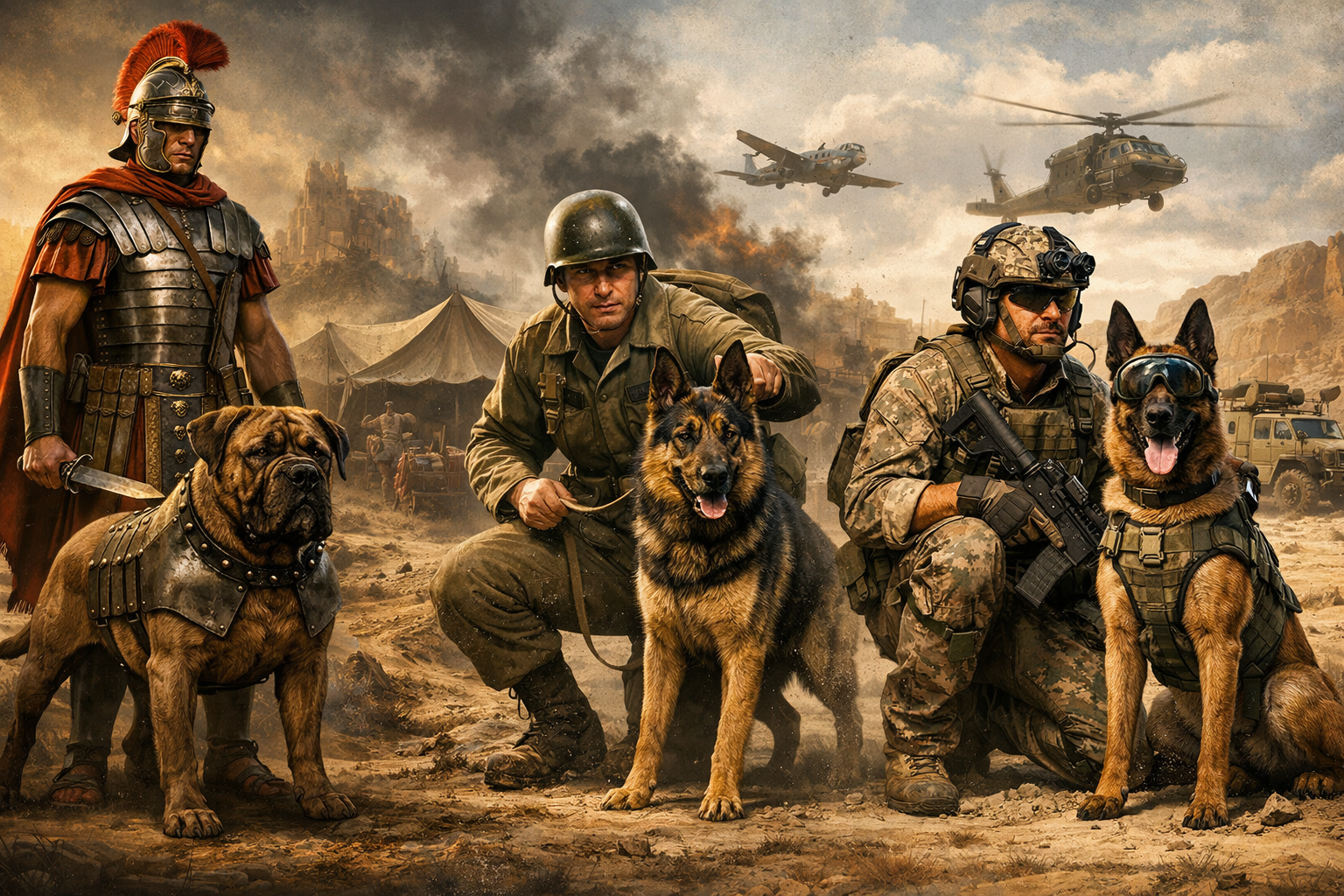
Spend enough time around working dogs and you start to realize something that soldiers, hunters, and shepherds have known for centuries. A good dog is more than just an animal following commands. He becomes a partner. A teammate. Sometimes even the difference between life and death.
That truth has echoed across battlefields for thousands of years. Long before modern special operations units deployed elite K9 teams overseas, dogs were already marching beside armies, guarding camps, scouting enemy positions, and charging into combat.
The history of military working dogs is a long one—older than most people realize—and it tells a powerful story about loyalty, instinct, and the remarkable bond between humans and dogs.
War Dogs of the Ancient World
The idea of dogs in warfare is far from a modern concept. In fact, some of the earliest organized armies in history relied on them.
Ancient civilizations quickly realized that dogs possessed natural abilities perfectly suited for war. Their senses were sharper than any human scout, their courage was unquestionable, and their loyalty made them reliable even in the chaos of battle.
The Assyrians and Babylonians are believed to have used large mastiff-type dogs as early as 600–700 BC. These dogs were bred for size and aggression, often wearing primitive armor or spiked collars before being released against enemy infantry.
Later, the Greeks and Romans refined the use of war dogs even further. Roman armies frequently employed powerful Molossian dogs—ancestors of modern mastiffs—to guard camps, patrol perimeters, and sometimes charge enemy formations. Historical accounts describe dogs fitted with metal collars or armor designed to intimidate opposing soldiers.
But even in those early days, their value wasn’t just brute force.
A dog’s ability to detect strangers approaching camp at night made them invaluable sentries. Their hearing and scenting ability could alert soldiers long before an enemy attack arrived.
For thousands of years afterward, that same instinctive ability would remain the dog’s greatest military advantage.
Dogs in the Middle Ages and Early Warfare
Throughout the Middle Ages, dogs continued to accompany armies across Europe and Asia. While large war dogs were sometimes used in battle, their most consistent role became that of guard and messenger.
Armies on the march needed protection at night. Camps were vulnerable places, filled with sleeping soldiers and supply wagons. A well-trained dog could patrol the perimeter quietly and alert handlers to movement long before human guards noticed anything unusual.
Messengers were another important task.
Before modern communications, getting information across the battlefield could be dangerous and slow. Dogs proved remarkably capable of carrying small messages between units or back to command posts.
These early military dogs weren’t trained with the same structured programs we see today. Much of their effectiveness came from natural instinct and the bond between the dog and its handler.
Even so, their presence became a familiar sight in military camps across the world.
World War I: The First Modern Military Dog Programs
The real turning point for military working dogs came during World War I.
As warfare grew more industrialized, armies began looking for ways to use dogs more systematically. European nations in particular started formal programs to train dogs for specific battlefield roles.
Germany was especially advanced in this area. By the time the war erupted in 1914, German forces had already established training centers for military dogs.
These dogs served a variety of functions.
Messenger dogs carried communications across dangerous terrain when telephone lines were cut. Ambulance dogs searched battlefields for wounded soldiers. Guard dogs protected supply depots and ammunition dumps.
One of the most remarkable roles belonged to Red Cross search dogs.
These dogs were trained to locate wounded soldiers lying injured on the battlefield, sometimes hours or days after fighting had ended. When they found a survivor, they would either return to the handler or carry a small medical pouch so the soldier could treat himself while waiting for help.
Stories from the war tell of dogs finding dozens of wounded men who otherwise would have died alone in the mud of the trenches.
World War II and the Rise of American War Dogs
While European countries had used military dogs for years, the United States was slower to adopt them.
That changed dramatically after the attack on Pearl Harbor in 1941.
American military leaders quickly recognized the need for trained dogs to assist in guarding bases, detecting enemies, and supporting troops overseas. In response, the U.S. War Department launched a program known as Dogs for Defense.
Civilians across the country donated thousands of dogs for military service. Trainers evaluated them for temperament, intelligence, and physical ability before assigning them to specific roles.
German Shepherds, Doberman Pinschers, and Belgian Sheepdogs became some of the most common breeds used during the war.
One of the most famous deployments occurred in the Pacific Theater, where Marine war dogs helped detect ambushes in dense jungle environments.
A dog’s nose could pick up the scent of hidden Japanese soldiers long before American patrols stumbled into danger. In many cases, these dogs saved entire squads from walking straight into deadly traps.
By the end of World War II, more than 10,000 American dogs had served in the military.
Vietnam and the Evolution of Combat Dogs
If World War II proved the value of military dogs, the Vietnam War demonstrated just how critical they could be.
Vietnam presented a uniquely dangerous battlefield. Dense jungle, hidden tunnels, and guerrilla tactics made it extremely difficult for soldiers to detect enemy fighters.
Dogs changed that equation.
Scout dogs accompanied infantry patrols, using their noses and ears to detect enemy presence ahead of the unit. Mine and tunnel detection dogs helped locate hidden explosives or underground entrances used by Viet Cong fighters.
Handlers often said their dogs could sense danger before any human realized it was there. A sudden pause, a stiff tail, or a change in breathing might be the only warning that enemy fighters were nearby.
Thousands of lives were saved because of those dogs.
Unfortunately, many of those Vietnam war dogs were not returned home after the conflict ended—a painful chapter that later led to policy changes regarding the treatment and retirement of military working dogs.
The Modern Military Working Dog
Today’s military working dogs are some of the most highly trained animals on earth.
Modern K9 teams operate alongside elite military units in roles that would have been unimaginable centuries ago.
Explosive detection remains one of their most important missions. A trained dog can detect trace odors of explosives with remarkable precision, even in crowded environments like airports, military bases, or urban combat zones.
Dogs are also used in patrol, tracking, and special operations missions.
One of the most widely recognized modern military breeds is the Belgian Malinois, a dog known for its intelligence, speed, and intense drive to work. These dogs are frequently deployed with special forces units, where they assist in tracking targets, searching buildings, and apprehending suspects.
Some military dogs even wear specialized protective gear, including ballistic vests and camera systems that allow handlers to see what the dog sees during dangerous missions.
Despite all the advanced technology surrounding modern warfare, the dog’s greatest weapon remains the same as it was thousands of years ago.
Its nose.
A Partnership Forged in Loyalty
Across history, from Roman battlefields to modern counterterrorism operations, military working dogs have proven something remarkable.
Technology changes. Weapons evolve. Warfare becomes more complex.
But the partnership between a handler and a dog remains timeless.
Spend time around a working dog and you quickly understand why soldiers trust them so deeply. A good dog doesn’t hesitate. He doesn’t question orders or lose focus when things get dangerous.
He simply does his job.
And often, he does it better than any machine ever could.
For thousands of years, that quiet partnership has saved lives on battlefields around the world. There’s a reason so many veterans speak about their military dogs with deep respect.
Those dogs weren’t just equipment.
They were brothers in arms.
That truth has echoed across battlefields for thousands of years. Long before modern special operations units deployed elite K9 teams overseas, dogs were already marching beside armies, guarding camps, scouting enemy positions, and charging into combat.
The history of military working dogs is a long one—older than most people realize—and it tells a powerful story about loyalty, instinct, and the remarkable bond between humans and dogs.
War Dogs of the Ancient World
The idea of dogs in warfare is far from a modern concept. In fact, some of the earliest organized armies in history relied on them.
Ancient civilizations quickly realized that dogs possessed natural abilities perfectly suited for war. Their senses were sharper than any human scout, their courage was unquestionable, and their loyalty made them reliable even in the chaos of battle.
The Assyrians and Babylonians are believed to have used large mastiff-type dogs as early as 600–700 BC. These dogs were bred for size and aggression, often wearing primitive armor or spiked collars before being released against enemy infantry.
Later, the Greeks and Romans refined the use of war dogs even further. Roman armies frequently employed powerful Molossian dogs—ancestors of modern mastiffs—to guard camps, patrol perimeters, and sometimes charge enemy formations. Historical accounts describe dogs fitted with metal collars or armor designed to intimidate opposing soldiers.
But even in those early days, their value wasn’t just brute force.
A dog’s ability to detect strangers approaching camp at night made them invaluable sentries. Their hearing and scenting ability could alert soldiers long before an enemy attack arrived.
For thousands of years afterward, that same instinctive ability would remain the dog’s greatest military advantage.
Dogs in the Middle Ages and Early Warfare
Throughout the Middle Ages, dogs continued to accompany armies across Europe and Asia. While large war dogs were sometimes used in battle, their most consistent role became that of guard and messenger.
Armies on the march needed protection at night. Camps were vulnerable places, filled with sleeping soldiers and supply wagons. A well-trained dog could patrol the perimeter quietly and alert handlers to movement long before human guards noticed anything unusual.
Messengers were another important task.
Before modern communications, getting information across the battlefield could be dangerous and slow. Dogs proved remarkably capable of carrying small messages between units or back to command posts.
These early military dogs weren’t trained with the same structured programs we see today. Much of their effectiveness came from natural instinct and the bond between the dog and its handler.
Even so, their presence became a familiar sight in military camps across the world.
World War I: The First Modern Military Dog Programs
The real turning point for military working dogs came during World War I.
As warfare grew more industrialized, armies began looking for ways to use dogs more systematically. European nations in particular started formal programs to train dogs for specific battlefield roles.
Germany was especially advanced in this area. By the time the war erupted in 1914, German forces had already established training centers for military dogs.
These dogs served a variety of functions.
Messenger dogs carried communications across dangerous terrain when telephone lines were cut. Ambulance dogs searched battlefields for wounded soldiers. Guard dogs protected supply depots and ammunition dumps.
One of the most remarkable roles belonged to Red Cross search dogs.
These dogs were trained to locate wounded soldiers lying injured on the battlefield, sometimes hours or days after fighting had ended. When they found a survivor, they would either return to the handler or carry a small medical pouch so the soldier could treat himself while waiting for help.
Stories from the war tell of dogs finding dozens of wounded men who otherwise would have died alone in the mud of the trenches.
World War II and the Rise of American War Dogs
While European countries had used military dogs for years, the United States was slower to adopt them.
That changed dramatically after the attack on Pearl Harbor in 1941.
American military leaders quickly recognized the need for trained dogs to assist in guarding bases, detecting enemies, and supporting troops overseas. In response, the U.S. War Department launched a program known as Dogs for Defense.
Civilians across the country donated thousands of dogs for military service. Trainers evaluated them for temperament, intelligence, and physical ability before assigning them to specific roles.
German Shepherds, Doberman Pinschers, and Belgian Sheepdogs became some of the most common breeds used during the war.
One of the most famous deployments occurred in the Pacific Theater, where Marine war dogs helped detect ambushes in dense jungle environments.
A dog’s nose could pick up the scent of hidden Japanese soldiers long before American patrols stumbled into danger. In many cases, these dogs saved entire squads from walking straight into deadly traps.
By the end of World War II, more than 10,000 American dogs had served in the military.
Vietnam and the Evolution of Combat Dogs
If World War II proved the value of military dogs, the Vietnam War demonstrated just how critical they could be.
Vietnam presented a uniquely dangerous battlefield. Dense jungle, hidden tunnels, and guerrilla tactics made it extremely difficult for soldiers to detect enemy fighters.
Dogs changed that equation.
Scout dogs accompanied infantry patrols, using their noses and ears to detect enemy presence ahead of the unit. Mine and tunnel detection dogs helped locate hidden explosives or underground entrances used by Viet Cong fighters.
Handlers often said their dogs could sense danger before any human realized it was there. A sudden pause, a stiff tail, or a change in breathing might be the only warning that enemy fighters were nearby.
Thousands of lives were saved because of those dogs.
Unfortunately, many of those Vietnam war dogs were not returned home after the conflict ended—a painful chapter that later led to policy changes regarding the treatment and retirement of military working dogs.
The Modern Military Working Dog
Today’s military working dogs are some of the most highly trained animals on earth.
Modern K9 teams operate alongside elite military units in roles that would have been unimaginable centuries ago.
Explosive detection remains one of their most important missions. A trained dog can detect trace odors of explosives with remarkable precision, even in crowded environments like airports, military bases, or urban combat zones.
Dogs are also used in patrol, tracking, and special operations missions.
One of the most widely recognized modern military breeds is the Belgian Malinois, a dog known for its intelligence, speed, and intense drive to work. These dogs are frequently deployed with special forces units, where they assist in tracking targets, searching buildings, and apprehending suspects.
Some military dogs even wear specialized protective gear, including ballistic vests and camera systems that allow handlers to see what the dog sees during dangerous missions.
Despite all the advanced technology surrounding modern warfare, the dog’s greatest weapon remains the same as it was thousands of years ago.
Its nose.
A Partnership Forged in Loyalty
Across history, from Roman battlefields to modern counterterrorism operations, military working dogs have proven something remarkable.
Technology changes. Weapons evolve. Warfare becomes more complex.
But the partnership between a handler and a dog remains timeless.
Spend time around a working dog and you quickly understand why soldiers trust them so deeply. A good dog doesn’t hesitate. He doesn’t question orders or lose focus when things get dangerous.
He simply does his job.
And often, he does it better than any machine ever could.
For thousands of years, that quiet partnership has saved lives on battlefields around the world. There’s a reason so many veterans speak about their military dogs with deep respect.
Those dogs weren’t just equipment.
They were brothers in arms.