The History of the Rottweiler as a Working Dog
Jeff Davis | https://workingdogcentral.com
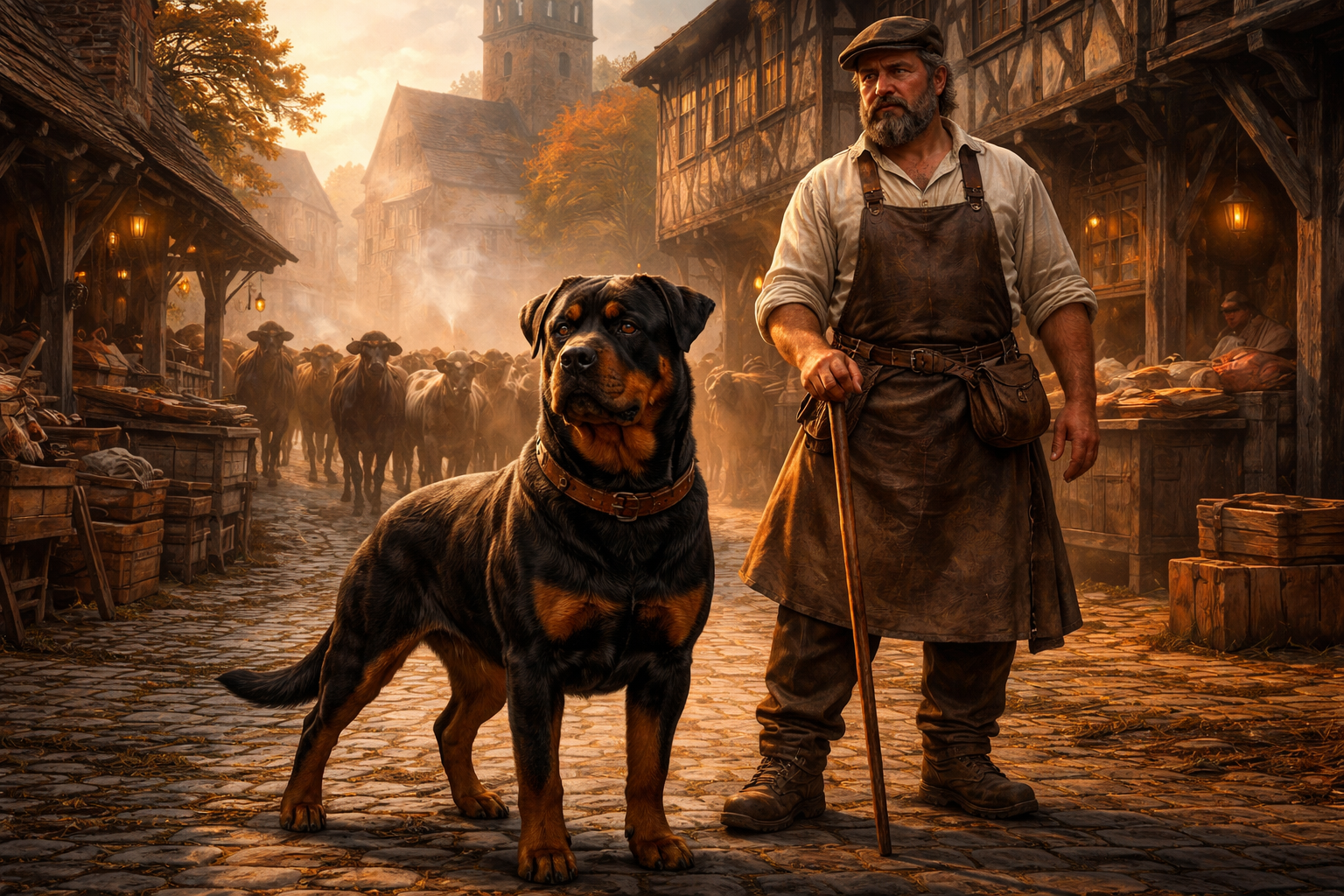
Spend enough time around working dogs and you start to notice something. Certain breeds carry themselves with a kind of quiet seriousness. They’re not flashy. They don’t waste motion. They simply go about the job they were built for.
The Rottweiler is one of those dogs.
Long before the breed became a familiar sight in police units, protection work, or family homes, the Rottweiler earned its reputation the hard way—through centuries of honest labor. Like many of the world’s best working breeds, the story of the Rottweiler begins not in dog shows or suburban yards, but in mud, livestock, and long miles of hard country.
To understand the Rottweiler, you have to go back nearly two thousand years.
Roman Roots and the March Across Europe
The earliest ancestors of the Rottweiler traveled with the armies of the Roman Empire. Roman legions moved across Europe with enormous supply trains, and those supply trains included cattle. The armies needed fresh meat, and the cattle needed to be driven along the long military roads that stretched across the continent.
Managing large herds of cattle across mountains, rivers, and rough countryside required tough dogs—dogs with strength, endurance, and the nerve to control stubborn livestock.
Roman drover dogs filled that role.
These early working dogs were mastiff-type animals: muscular, confident, and strong enough to push cattle when necessary. They served multiple purposes. During the day they drove and controlled livestock. At night they guarded the herds and camps from thieves and predators.
As the Roman legions pushed north through what is now southern Germany, some of these dogs were left behind. Over generations they bred with local dogs and gradually developed into a regional working type.
The place where that lineage truly took hold was the town of Rottweil.
The Butcher’s Dog of Rottweil
Rottweil was an important livestock trading center during the Middle Ages. Farmers and traders drove cattle from across the region into the town’s markets, where animals were bought, sold, and butchered.
Working around that trade were powerful drover dogs—the ancestors of the modern Rottweiler.
The breed became so closely associated with the livestock trade that locals called them “Rottweiler Metzgerhund,” which translates to Rottweil butcher’s dog.
These dogs had several jobs, and they did them well.
They drove cattle to market, keeping the animals moving down narrow roads and through crowded streets. Anyone who has spent time around livestock understands that controlling cattle takes a dog with confidence and strength. A weak or hesitant dog doesn’t last long in that line of work.
But the Rottweiler’s responsibilities didn’t stop there.
Butchers often traveled long distances to sell their meat and livestock. They carried the day’s earnings in money pouches tied around their waists. Those pouches could attract thieves, especially on lonely stretches of road.
The solution was simple.
The butcher would tie the money pouch around the dog’s neck.
Few criminals were eager to test their luck against a powerful, protective drover dog with a reputation for courage.
The Rottweiler became both livestock driver and guardian, a dual role that shaped the breed’s temperament for centuries.
Decline of the Drover Dogs
Like many traditional working breeds, the Rottweiler nearly faded into obscurity as technology changed the world.
In the late 1800s, railroads began replacing long-distance cattle drives across Europe. Livestock could be transported quickly by train instead of being driven on foot along old drover roads.
With the disappearance of those drives, the need for drover dogs declined.
For a time, the Rottweiler population dropped sharply. Without a clear job, the breed began disappearing from farms and markets.
But a good working dog rarely stays unemployed for long.
The Rottweiler’s strength, intelligence, and protective instincts soon attracted attention in new areas of work.
The Rise of the Rottweiler as a Police Dog
At the turn of the twentieth century, European police forces began experimenting with working dogs for patrol and protection duties.
German Shepherds would eventually dominate the field, but early police programs evaluated several breeds.
The Rottweiler quickly proved it had the right qualities.
A good police dog needs several things: courage, intelligence, a strong work drive, and a stable temperament under pressure. The Rottweiler possessed all of those traits.
In 1910, the breed was officially recognized in Germany as a police dog, marking a major turning point in its history.
From that point forward, the Rottweiler transitioned from livestock work into security, military, and law enforcement roles.
Strength, Nerve, and Natural Protection
Spend time around a well-bred Rottweiler and you’ll notice something that old stockmen would have appreciated.
The dog is calm until it needs to act.
That trait comes directly from its working past. A drover dog couldn’t panic around livestock, and a guard dog couldn’t waste energy on every little distraction. The job required a steady mind and good judgment.
Rottweilers developed into dogs that are confident and deliberate rather than frantic or reactive.
When properly trained, they are powerful protection animals capable of confronting threats without hesitation. Yet they also possess a strong bond with their handlers and families, which is why many Rottweilers today serve as loyal household guardians.
The balance between strength and steadiness is what has allowed the breed to transition into so many different modern working roles.
Modern Working Roles
Although cattle droving has mostly faded into history, the Rottweiler continues to prove its worth in modern working environments.
Police and military units around the world still utilize the breed for patrol, tracking, and protection work. Their physical strength and determination make them effective working partners in situations that demand courage.
Rottweilers have also found success in search and rescue, personal protection, security work, and service dog roles. Their intelligence and willingness to work closely with handlers make them adaptable to many types of training.
In the protection dog world especially, the Rottweiler remains one of the most respected breeds.
There’s a reason experienced handlers often say the Rottweiler doesn’t bluff. When a well-trained Rottweiler commits to a task, it does so with full determination.
The Importance of Responsible Breeding
Like many powerful working breeds, the Rottweiler’s reputation has sometimes been shaped by irresponsible ownership and poor breeding.
A dog originally built to control cattle and guard property carries a great deal of physical power. In the wrong hands—or bred without attention to temperament—that power can create problems.
Responsible breeders have spent decades preserving the breed’s original working temperament: confident, stable, and controllable.
The best Rottweilers remain level-headed dogs that think before they act. Those qualities are exactly what made them valuable drover dogs centuries ago.
A Breed Built for Work
When you look at the Rottweiler today, you’re seeing a living piece of working dog history.
The broad head, powerful shoulders, and steady eyes all reflect generations of dogs that earned their keep driving cattle, guarding property, and standing beside hardworking people.
Plenty of modern Rottweilers live comfortable lives as family companions, but the working instinct is still there. Give the breed a job—training, protection work, obedience, tracking—and it often thrives.
That’s the mark of a true working dog.
The Rottweiler didn’t become one of the world’s most respected working breeds by accident. It earned that reputation through centuries of honest labor, from Roman cattle drives to modern police patrols.
And if history is any guide, the breed isn’t finished working yet.
The Rottweiler is one of those dogs.
Long before the breed became a familiar sight in police units, protection work, or family homes, the Rottweiler earned its reputation the hard way—through centuries of honest labor. Like many of the world’s best working breeds, the story of the Rottweiler begins not in dog shows or suburban yards, but in mud, livestock, and long miles of hard country.
To understand the Rottweiler, you have to go back nearly two thousand years.
Roman Roots and the March Across Europe
The earliest ancestors of the Rottweiler traveled with the armies of the Roman Empire. Roman legions moved across Europe with enormous supply trains, and those supply trains included cattle. The armies needed fresh meat, and the cattle needed to be driven along the long military roads that stretched across the continent.
Managing large herds of cattle across mountains, rivers, and rough countryside required tough dogs—dogs with strength, endurance, and the nerve to control stubborn livestock.
Roman drover dogs filled that role.
These early working dogs were mastiff-type animals: muscular, confident, and strong enough to push cattle when necessary. They served multiple purposes. During the day they drove and controlled livestock. At night they guarded the herds and camps from thieves and predators.
As the Roman legions pushed north through what is now southern Germany, some of these dogs were left behind. Over generations they bred with local dogs and gradually developed into a regional working type.
The place where that lineage truly took hold was the town of Rottweil.
The Butcher’s Dog of Rottweil
Rottweil was an important livestock trading center during the Middle Ages. Farmers and traders drove cattle from across the region into the town’s markets, where animals were bought, sold, and butchered.
Working around that trade were powerful drover dogs—the ancestors of the modern Rottweiler.
The breed became so closely associated with the livestock trade that locals called them “Rottweiler Metzgerhund,” which translates to Rottweil butcher’s dog.
These dogs had several jobs, and they did them well.
They drove cattle to market, keeping the animals moving down narrow roads and through crowded streets. Anyone who has spent time around livestock understands that controlling cattle takes a dog with confidence and strength. A weak or hesitant dog doesn’t last long in that line of work.
But the Rottweiler’s responsibilities didn’t stop there.
Butchers often traveled long distances to sell their meat and livestock. They carried the day’s earnings in money pouches tied around their waists. Those pouches could attract thieves, especially on lonely stretches of road.
The solution was simple.
The butcher would tie the money pouch around the dog’s neck.
Few criminals were eager to test their luck against a powerful, protective drover dog with a reputation for courage.
The Rottweiler became both livestock driver and guardian, a dual role that shaped the breed’s temperament for centuries.
Decline of the Drover Dogs
Like many traditional working breeds, the Rottweiler nearly faded into obscurity as technology changed the world.
In the late 1800s, railroads began replacing long-distance cattle drives across Europe. Livestock could be transported quickly by train instead of being driven on foot along old drover roads.
With the disappearance of those drives, the need for drover dogs declined.
For a time, the Rottweiler population dropped sharply. Without a clear job, the breed began disappearing from farms and markets.
But a good working dog rarely stays unemployed for long.
The Rottweiler’s strength, intelligence, and protective instincts soon attracted attention in new areas of work.
The Rise of the Rottweiler as a Police Dog
At the turn of the twentieth century, European police forces began experimenting with working dogs for patrol and protection duties.
German Shepherds would eventually dominate the field, but early police programs evaluated several breeds.
The Rottweiler quickly proved it had the right qualities.
A good police dog needs several things: courage, intelligence, a strong work drive, and a stable temperament under pressure. The Rottweiler possessed all of those traits.
In 1910, the breed was officially recognized in Germany as a police dog, marking a major turning point in its history.
From that point forward, the Rottweiler transitioned from livestock work into security, military, and law enforcement roles.
Strength, Nerve, and Natural Protection
Spend time around a well-bred Rottweiler and you’ll notice something that old stockmen would have appreciated.
The dog is calm until it needs to act.
That trait comes directly from its working past. A drover dog couldn’t panic around livestock, and a guard dog couldn’t waste energy on every little distraction. The job required a steady mind and good judgment.
Rottweilers developed into dogs that are confident and deliberate rather than frantic or reactive.
When properly trained, they are powerful protection animals capable of confronting threats without hesitation. Yet they also possess a strong bond with their handlers and families, which is why many Rottweilers today serve as loyal household guardians.
The balance between strength and steadiness is what has allowed the breed to transition into so many different modern working roles.
Modern Working Roles
Although cattle droving has mostly faded into history, the Rottweiler continues to prove its worth in modern working environments.
Police and military units around the world still utilize the breed for patrol, tracking, and protection work. Their physical strength and determination make them effective working partners in situations that demand courage.
Rottweilers have also found success in search and rescue, personal protection, security work, and service dog roles. Their intelligence and willingness to work closely with handlers make them adaptable to many types of training.
In the protection dog world especially, the Rottweiler remains one of the most respected breeds.
There’s a reason experienced handlers often say the Rottweiler doesn’t bluff. When a well-trained Rottweiler commits to a task, it does so with full determination.
The Importance of Responsible Breeding
Like many powerful working breeds, the Rottweiler’s reputation has sometimes been shaped by irresponsible ownership and poor breeding.
A dog originally built to control cattle and guard property carries a great deal of physical power. In the wrong hands—or bred without attention to temperament—that power can create problems.
Responsible breeders have spent decades preserving the breed’s original working temperament: confident, stable, and controllable.
The best Rottweilers remain level-headed dogs that think before they act. Those qualities are exactly what made them valuable drover dogs centuries ago.
A Breed Built for Work
When you look at the Rottweiler today, you’re seeing a living piece of working dog history.
The broad head, powerful shoulders, and steady eyes all reflect generations of dogs that earned their keep driving cattle, guarding property, and standing beside hardworking people.
Plenty of modern Rottweilers live comfortable lives as family companions, but the working instinct is still there. Give the breed a job—training, protection work, obedience, tracking—and it often thrives.
That’s the mark of a true working dog.
The Rottweiler didn’t become one of the world’s most respected working breeds by accident. It earned that reputation through centuries of honest labor, from Roman cattle drives to modern police patrols.
And if history is any guide, the breed isn’t finished working yet.