How Detection Dogs Use Their Sense of Smell
Jeff Davis | https://workingdogcentral.com
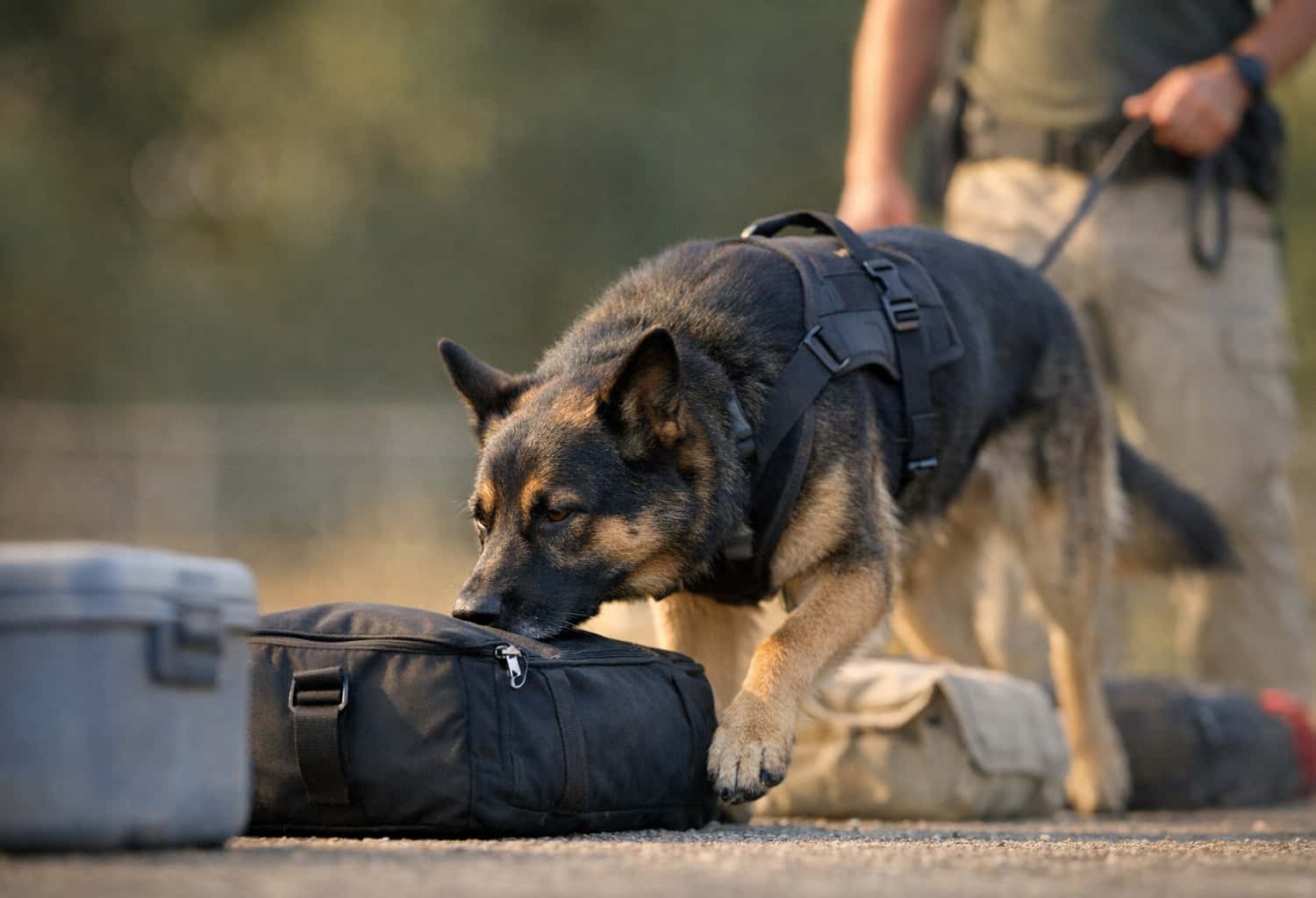
If you have spent any real time around working dogs, you learn quick that a dog’s nose is not just better than ours. It is a whole different way of experiencing the world. A good detection dog does not move through a parking lot, an airport terminal, a vehicle line, or a stretch of timber the way we do. That dog is reading scent the way a seasoned hunter reads wind, tracks, and broken cover. To the dog, odor hangs in the air, settles on surfaces, drifts with currents, and changes by the minute. What looks like an ordinary scene to us is alive with information to them.
That is what makes detection dogs so valuable. Whether they are trained for narcotics, explosives, conservation work, medical detection, or search and rescue, they rely on the same remarkable system: a nose built to gather scent and a brain built to sort it. For dog owners interested in working dogs, understanding how detection dogs use their sense of smell gives you a better appreciation not only for their ability, but for the training and handling that turns raw instinct into dependable performance.
The Canine Nose Is Built for the Job
A dog’s nose is specialized in ways most people never think about. Humans can certainly smell, but we tend to treat scent like a simple yes or no signal. A dog handles it more like a layered map. With millions more scent receptors than we have, dogs can pick up trace odors at concentrations that seem impossible to us. They also have a larger portion of the brain devoted to processing scent, which means they are not just detecting odors, they are separating, comparing, and identifying them.
When a detection dog inhales, the air is split. Some is used for breathing, while some is directed into structures designed specifically for odor analysis. Then there is the way a dog exhales. Air exits through the slits at the side of the nose, helping stir up more scent from the surrounding area instead of simply blowing it away. It is an efficient system, and once you watch a serious dog work an odor cone into source, you understand you are seeing equipment nature refined over a very long time.
Out in the field, this matters because scent is never standing still. Heat, moisture, terrain, wind direction, and contamination all change how odor behaves. A trained dog can sort through that movement and keep driving toward the strongest concentration. That is why detection work is not about random sniffing. It is methodical, purposeful, and surprisingly precise.
Why Smell Means More to Dogs Than Sight
Most people trust their eyes first. Dogs do not. A detection dog may pass by something in plain view and stay committed to odor because scent tells the truer story. I have seen dogs work through distractions that would pull the average pet off task in a heartbeat. Food odors, traffic smells, people moving around, old residual scent on surfaces, even weather shifts that make conditions difficult, a good detection dog keeps sorting the picture until it finds what it was trained to locate.
That focus comes from genetics, training, and repetition. The nose provides the information, but the dog has to learn which odor matters and which ones are background noise. That is where detection training really begins.
How Detection Dogs Learn Target Odors
At the heart of detection work is a simple principle: the dog learns that finding a specific odor leads to a reward. For one dog that reward may be a ball. For another it may be a tug, food, or energetic praise. The key is that the target scent becomes the gateway to something the dog values deeply. Once that link is established, the dog begins hunting odor with real purpose.
In early training, handlers usually make the game clear and easy. The odor is paired with reward so the dog begins to understand that this smell is the one that pays. Over time, the exercise gets harder. The odor is hidden in different environments, among stronger competing smells, at varying heights, inside vehicles, luggage, buildings, or open ground. Gradually the dog learns not only what to find, but how scent behaves in the real world.
That progression matters. A dog may know an odor in a clean training room and still struggle when that same odor is buried in a busy setting with shifting air currents. Experienced trainers build for that. They expose the dog to enough variation that the animal learns to trust its nose no matter where the odor turns up.
Final Response and Communication With the Handler
One of the most important parts of detection training is the final response. That is the behavior the dog gives when it has located source. Some dogs sit. Some down. Some freeze and stare. Others may scratch or bark depending on the discipline, though passive alerts are often preferred for safety, especially around explosives.
The response is how the dog communicates clearly to the handler, and that communication has to be clean. A dog can be brilliant on odor, but if the alert is sloppy or inconsistent, the team loses reliability. Good handlers spend as much time learning their dog as they do teaching commands. They watch body language, changes in breathing, head snaps, tail carriage, and commitment at source. Before a trained dog gives the final indication, it often shows subtle signs that it is in odor and working toward the strongest point.
What Detection Dogs Are Really Smelling
This is where folks often get curious. They want to know whether a dog smells the object itself or something coming off it. In most cases, the dog is detecting the odor picture created by volatile compounds released into the air. Every substance gives off a scent profile. Some are strong, some faint, and some are altered by packaging, moisture, heat, age, or contamination. But the dog is not reading labels. It is detecting chemical odor signatures and following them to source.
Think of it like hunting after a damp morning rain. You know the woods smell different. Ground scent holds lower, air scent shifts, and a dog may work wider or tighter depending on conditions. Detection work follows the same logic. Odor moves. It pools in low areas, carries down hallways, clings to fabric, escapes through seams, and rides warm air upward. A skilled dog is not guessing where the hide is. It is following the strongest, freshest expression of that odor until the puzzle comes together.
Different Jobs, Same Nose
Detection dogs work in many roles, but the nose they rely on is the same. Narcotics dogs search for controlled substances. Explosives dogs are trained on extremely specific odors and must work with care and control. Conservation detection dogs locate invasive species, animal scat, nests, plants, or poached wildlife evidence. Search and rescue dogs may trail a specific person or air-scent for human odor in broad areas. Medical detection dogs can alert to changes in blood sugar, seizures, or other conditions tied to scent changes in the body.
What changes from job to job is not the basic mechanism of smell, but the training standard and search style. Some dogs work methodically on leash. Others quarter open areas off leash. Some search vehicles, some buildings, some wilderness terrain, and some work in crowded public spaces. Each discipline asks the dog to use the nose under a different set of pressures.
Breed, Drive, and Temperament Matter
Not every dog is suited for detection work. The best candidates tend to have strong hunt drive, resilience, focus, and a clear desire to work for reward. You see certain breeds often because they combine those traits well, but breed alone never tells the full story. I have seen dogs from expected lines excel, and I have seen supposedly ideal prospects wash out because they lacked nerve, consistency, or the desire to stay in the hunt when the search got difficult.
That is another thing dog owners should understand. Detection dogs are not magic. They are selected and developed. Behind every polished working dog is a long stretch of careful training, problem solving, environmental exposure, and maintenance.
The Handler’s Role in Scent Work Success
A detection dog may have the nose, but the handler shapes the search. Good handlers know how to read wind, search patterns, contamination risks, and changes in the dog’s behavior. They also know when to stay quiet. One of the biggest mistakes inexperienced people make is helping too much. If the handler starts steering, cueing, or second-guessing the dog, performance can fall apart in a hurry.
The strongest teams work in partnership. The handler sets up the search, protects the dog from confusion, and trusts the dog to do the smelling. The dog, in turn, works independently but stays connected enough to communicate clearly at source. That balance is what separates a polished team from one that is merely going through motions.
In practical terms, maintaining that standard takes regular training. Dogs need fresh hides, varied environments, controlled proofing, and enough reward to keep the work hot. Like any hunting companion worth feeding through the off-season, a detection dog needs its skills sharpened continuously.
Why Detection Dogs Continue to Matter
For all the technology available today, detection dogs remain hard to replace. Machines can be useful, but they often lack the speed, mobility, and scent discrimination a trained dog brings to the task. A dog can clear ground quickly, access tight spaces, adapt to changing conditions, and process odor in real time. That combination keeps them valuable in law enforcement, military work, conservation, public safety, and private industry.
For the average dog owner, there is also something deeper worth appreciating here. Detection work shows what happens when natural canine ability meets thoughtful training. It reminds us that dogs are not simply pets with good noses. Many of them are born with the tools to perform serious work, and when those tools are shaped properly, the results can be extraordinary.
If you have ever watched a true detection dog lock into odor and drive to source, you know the feeling. The dog changes. The tail shifts, the breathing tightens, the head works, and suddenly all that drifting invisible information narrows to one point. Then comes the alert, clean and certain. To some folks it looks like a trick. To those of us who have spent time behind good dogs, it looks like exactly what it is: instinct, training, and trust coming together through the finest nose in the working-dog world.
That is what makes detection dogs so valuable. Whether they are trained for narcotics, explosives, conservation work, medical detection, or search and rescue, they rely on the same remarkable system: a nose built to gather scent and a brain built to sort it. For dog owners interested in working dogs, understanding how detection dogs use their sense of smell gives you a better appreciation not only for their ability, but for the training and handling that turns raw instinct into dependable performance.
The Canine Nose Is Built for the Job
A dog’s nose is specialized in ways most people never think about. Humans can certainly smell, but we tend to treat scent like a simple yes or no signal. A dog handles it more like a layered map. With millions more scent receptors than we have, dogs can pick up trace odors at concentrations that seem impossible to us. They also have a larger portion of the brain devoted to processing scent, which means they are not just detecting odors, they are separating, comparing, and identifying them.
When a detection dog inhales, the air is split. Some is used for breathing, while some is directed into structures designed specifically for odor analysis. Then there is the way a dog exhales. Air exits through the slits at the side of the nose, helping stir up more scent from the surrounding area instead of simply blowing it away. It is an efficient system, and once you watch a serious dog work an odor cone into source, you understand you are seeing equipment nature refined over a very long time.
Out in the field, this matters because scent is never standing still. Heat, moisture, terrain, wind direction, and contamination all change how odor behaves. A trained dog can sort through that movement and keep driving toward the strongest concentration. That is why detection work is not about random sniffing. It is methodical, purposeful, and surprisingly precise.
Why Smell Means More to Dogs Than Sight
Most people trust their eyes first. Dogs do not. A detection dog may pass by something in plain view and stay committed to odor because scent tells the truer story. I have seen dogs work through distractions that would pull the average pet off task in a heartbeat. Food odors, traffic smells, people moving around, old residual scent on surfaces, even weather shifts that make conditions difficult, a good detection dog keeps sorting the picture until it finds what it was trained to locate.
That focus comes from genetics, training, and repetition. The nose provides the information, but the dog has to learn which odor matters and which ones are background noise. That is where detection training really begins.
How Detection Dogs Learn Target Odors
At the heart of detection work is a simple principle: the dog learns that finding a specific odor leads to a reward. For one dog that reward may be a ball. For another it may be a tug, food, or energetic praise. The key is that the target scent becomes the gateway to something the dog values deeply. Once that link is established, the dog begins hunting odor with real purpose.
In early training, handlers usually make the game clear and easy. The odor is paired with reward so the dog begins to understand that this smell is the one that pays. Over time, the exercise gets harder. The odor is hidden in different environments, among stronger competing smells, at varying heights, inside vehicles, luggage, buildings, or open ground. Gradually the dog learns not only what to find, but how scent behaves in the real world.
That progression matters. A dog may know an odor in a clean training room and still struggle when that same odor is buried in a busy setting with shifting air currents. Experienced trainers build for that. They expose the dog to enough variation that the animal learns to trust its nose no matter where the odor turns up.
Final Response and Communication With the Handler
One of the most important parts of detection training is the final response. That is the behavior the dog gives when it has located source. Some dogs sit. Some down. Some freeze and stare. Others may scratch or bark depending on the discipline, though passive alerts are often preferred for safety, especially around explosives.
The response is how the dog communicates clearly to the handler, and that communication has to be clean. A dog can be brilliant on odor, but if the alert is sloppy or inconsistent, the team loses reliability. Good handlers spend as much time learning their dog as they do teaching commands. They watch body language, changes in breathing, head snaps, tail carriage, and commitment at source. Before a trained dog gives the final indication, it often shows subtle signs that it is in odor and working toward the strongest point.
What Detection Dogs Are Really Smelling
This is where folks often get curious. They want to know whether a dog smells the object itself or something coming off it. In most cases, the dog is detecting the odor picture created by volatile compounds released into the air. Every substance gives off a scent profile. Some are strong, some faint, and some are altered by packaging, moisture, heat, age, or contamination. But the dog is not reading labels. It is detecting chemical odor signatures and following them to source.
Think of it like hunting after a damp morning rain. You know the woods smell different. Ground scent holds lower, air scent shifts, and a dog may work wider or tighter depending on conditions. Detection work follows the same logic. Odor moves. It pools in low areas, carries down hallways, clings to fabric, escapes through seams, and rides warm air upward. A skilled dog is not guessing where the hide is. It is following the strongest, freshest expression of that odor until the puzzle comes together.
Different Jobs, Same Nose
Detection dogs work in many roles, but the nose they rely on is the same. Narcotics dogs search for controlled substances. Explosives dogs are trained on extremely specific odors and must work with care and control. Conservation detection dogs locate invasive species, animal scat, nests, plants, or poached wildlife evidence. Search and rescue dogs may trail a specific person or air-scent for human odor in broad areas. Medical detection dogs can alert to changes in blood sugar, seizures, or other conditions tied to scent changes in the body.
What changes from job to job is not the basic mechanism of smell, but the training standard and search style. Some dogs work methodically on leash. Others quarter open areas off leash. Some search vehicles, some buildings, some wilderness terrain, and some work in crowded public spaces. Each discipline asks the dog to use the nose under a different set of pressures.
Breed, Drive, and Temperament Matter
Not every dog is suited for detection work. The best candidates tend to have strong hunt drive, resilience, focus, and a clear desire to work for reward. You see certain breeds often because they combine those traits well, but breed alone never tells the full story. I have seen dogs from expected lines excel, and I have seen supposedly ideal prospects wash out because they lacked nerve, consistency, or the desire to stay in the hunt when the search got difficult.
That is another thing dog owners should understand. Detection dogs are not magic. They are selected and developed. Behind every polished working dog is a long stretch of careful training, problem solving, environmental exposure, and maintenance.
The Handler’s Role in Scent Work Success
A detection dog may have the nose, but the handler shapes the search. Good handlers know how to read wind, search patterns, contamination risks, and changes in the dog’s behavior. They also know when to stay quiet. One of the biggest mistakes inexperienced people make is helping too much. If the handler starts steering, cueing, or second-guessing the dog, performance can fall apart in a hurry.
The strongest teams work in partnership. The handler sets up the search, protects the dog from confusion, and trusts the dog to do the smelling. The dog, in turn, works independently but stays connected enough to communicate clearly at source. That balance is what separates a polished team from one that is merely going through motions.
In practical terms, maintaining that standard takes regular training. Dogs need fresh hides, varied environments, controlled proofing, and enough reward to keep the work hot. Like any hunting companion worth feeding through the off-season, a detection dog needs its skills sharpened continuously.
Why Detection Dogs Continue to Matter
For all the technology available today, detection dogs remain hard to replace. Machines can be useful, but they often lack the speed, mobility, and scent discrimination a trained dog brings to the task. A dog can clear ground quickly, access tight spaces, adapt to changing conditions, and process odor in real time. That combination keeps them valuable in law enforcement, military work, conservation, public safety, and private industry.
For the average dog owner, there is also something deeper worth appreciating here. Detection work shows what happens when natural canine ability meets thoughtful training. It reminds us that dogs are not simply pets with good noses. Many of them are born with the tools to perform serious work, and when those tools are shaped properly, the results can be extraordinary.
If you have ever watched a true detection dog lock into odor and drive to source, you know the feeling. The dog changes. The tail shifts, the breathing tightens, the head works, and suddenly all that drifting invisible information narrows to one point. Then comes the alert, clean and certain. To some folks it looks like a trick. To those of us who have spent time behind good dogs, it looks like exactly what it is: instinct, training, and trust coming together through the finest nose in the working-dog world.