Why Labrador Retrievers Dominate Detection Work
Jeff Davis | https://workingdogcentral.com
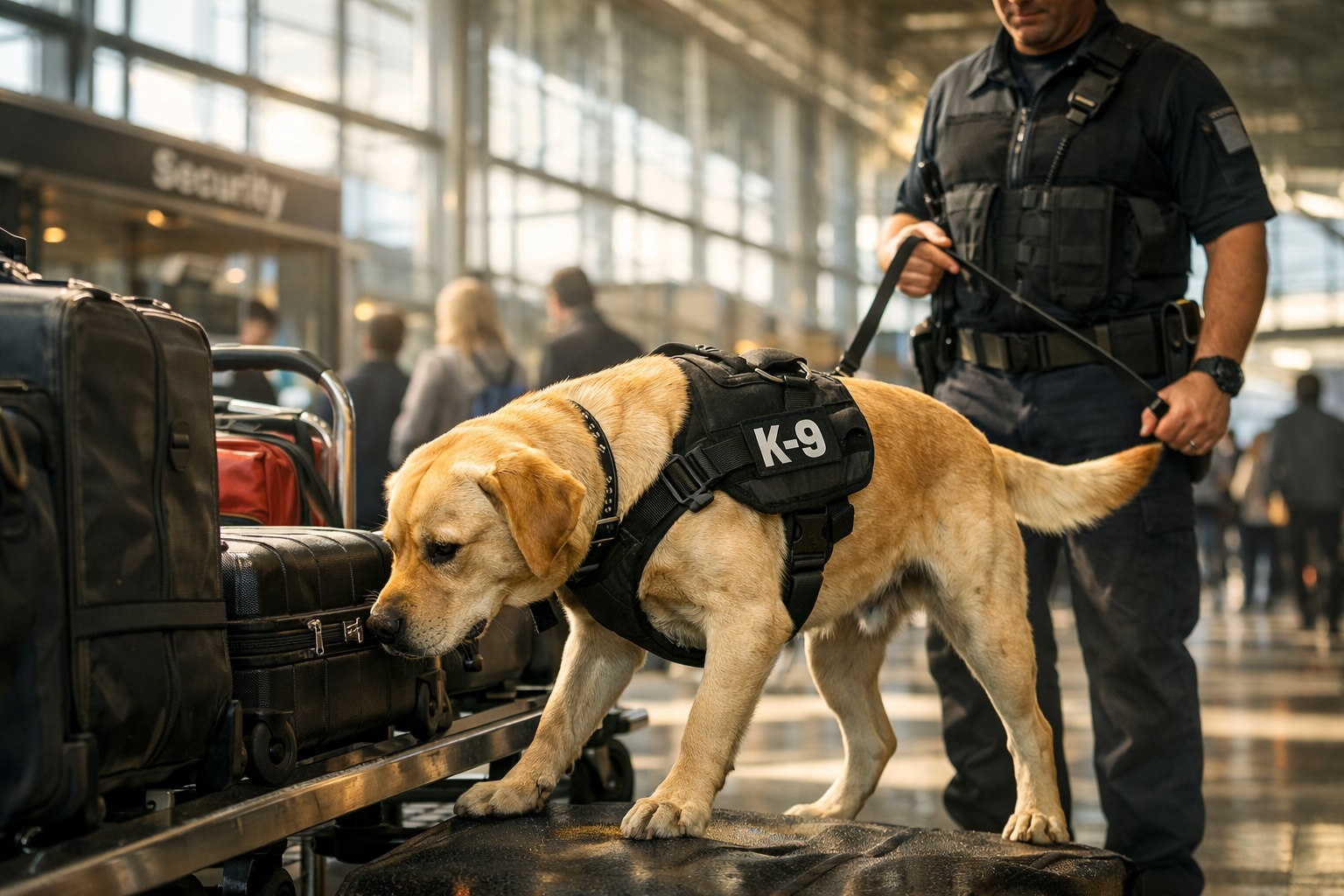
Spend enough time around working dogs and a pattern quickly becomes obvious. Walk through an airport security checkpoint, a customs inspection station, or a search training field, and odds are the dog working the scent line will be a Labrador Retriever. That isn’t coincidence. It’s the result of decades of experience proving that certain traits make a dog exceptional at detection work—and Labradors happen to possess nearly all of them.
Detection work demands more than just a good nose. Plenty of breeds can smell well enough to locate narcotics, explosives, wildlife contraband, or missing persons. What separates a truly elite detection dog from an average one is the ability to work tirelessly, ignore distractions, cooperate closely with a handler, and remain steady in chaotic environments. Labrador Retrievers check every one of those boxes.
Those of us who have spent years around working dogs know that the nose is where it all starts.
A Labrador’s nose is an extraordinary piece of biological equipment. Like most dogs, they possess hundreds of millions of scent receptors—far more than humans—but the real advantage comes from how their brains process odor. Labradors excel at breaking complex scent pictures apart and isolating specific target odors. Whether the scent source is buried beneath luggage, hidden inside a vehicle panel, or drifting through rubble after a disaster, a well-trained Lab can lock onto it with remarkable precision.
But scent alone doesn’t make a detection dog. If that were the only requirement, many scent hounds would dominate the field.
What makes Labradors special is their balance between nose and cooperation.
Anyone who has hunted behind dogs understands that some breeds prefer to work independently. Many hounds, for example, are bred to follow scent trails with little guidance, often miles away from their handlers. That independence is perfect for hunting but less ideal when the job requires close coordination with a human partner.
Labradors operate differently. They work with people rather than apart from them.
That cooperative instinct is deeply rooted in the breed’s history. Originally developed along the North Atlantic coast to assist fishermen, early Labradors were expected to retrieve nets, haul ropes, and work side-by-side with humans in cold, rough conditions. Over time, that willingness to partner with people became one of the breed’s defining traits.
Detection handlers rely heavily on this natural teamwork. A dog must constantly check in with the handler while sweeping an area, responding to subtle cues and adjusting its search pattern accordingly. Labradors seem to thrive in that relationship. They want the interaction. They enjoy the shared mission.
Another reason Labradors dominate detection work is their exceptional trainability.
A good detection dog must be able to learn complex odor recognition tasks and maintain those skills through months and years of work. Labradors are famously eager to learn. Trainers often describe them as “biddable,” meaning they actively seek to understand what their handler wants.
That mindset makes training both faster and more reliable.
Most detection programs rely heavily on reward-based training systems, often using toys or food as the primary motivator. Labradors are almost perfectly designed for this approach. Their strong retrieving instinct and natural food drive allow trainers to shape very precise behaviors through positive reinforcement.
In practical terms, this means a Labrador will happily search for extended periods, knowing that finding the target odor leads to a game, a toy, or a reward. That motivation keeps them focused through long training sessions and demanding operational deployments.
Temperament is another piece of the puzzle.
Detection dogs work in environments that would overwhelm many animals. Crowded airports, noisy shipping terminals, disaster zones filled with unfamiliar smells and sounds—these places require a dog that remains steady under pressure.
Labradors are famous for their even temperament. They are confident without being aggressive, curious without being reckless, and calm enough to operate in public spaces where safety and predictability are critical.
This balance allows them to work around thousands of people without creating unnecessary risk.
It’s one reason why agencies around the world—from police departments to border protection units—consistently choose Labradors for scent detection roles. The breed has proven itself capable of performing high-level work while maintaining a safe and approachable demeanor.
Then there is the matter of endurance.
Detection work is rarely quick or easy. A dog may be asked to inspect hundreds of vehicles in a day, sweep miles of cargo containers, or search large areas during disaster response operations. That kind of workload requires stamina.
Labradors are athletic without being fragile. Their build allows them to move efficiently for long periods, and their thick coat provides protection in a wide range of climates. From humid coastal environments to dusty desert checkpoints, Labradors continue working where some breeds might struggle.
Of course, not every Labrador becomes a detection dog. Selecting the right individual is critical.
Detection programs often look for puppies that display intense curiosity, strong play drive, and a willingness to explore unfamiliar environments. Trainers will introduce obstacles, unusual surfaces, and distractions to see how a young dog reacts. The best candidates show confidence and persistence. They keep investigating until they find what they’re looking for.
That determination is the hallmark of a great detection dog.
Once selected, these dogs undergo months of specialized training. They learn to associate specific odors—such as narcotics, explosives, or agricultural products—with their reward. Over time, they become experts at locating even the faintest traces.
Handlers quickly learn to read their dog’s body language. A subtle change in tail movement, breathing pattern, or posture can signal that the dog has encountered the target scent. When the dog finally indicates the exact source, the reward comes immediately.
That moment of discovery is the entire game for the dog.
It’s worth noting that Labradors are not the only breed used in detection work. Belgian Malinois, German Shepherds, Springer Spaniels, and other breeds also perform excellent service in specialized roles. Each breed brings unique strengths to the field.
But when agencies need a dependable, adaptable detection dog capable of working almost anywhere, the Labrador Retriever continues to stand at the top of the list.
Decades of real-world experience have proven it.
From explosive detection teams deployed with military units to customs dogs inspecting cargo shipments and search-and-rescue teams combing disaster sites, Labradors have built a reputation for reliability that few breeds can match.
That reputation didn’t happen overnight. It was earned one successful search at a time.
Talk to experienced handlers and trainers, and you’ll hear the same theme repeated again and again: Labradors simply want to work. Give them a job, and they throw themselves into it with enthusiasm.
For a detection dog, that mindset is everything.
The world of working dogs continues to evolve as new training methods and technologies emerge. Yet even as equipment and tactics change, one constant remains—the Labrador Retriever’s remarkable ability to find what humans cannot see.
In the quiet moments between searches, when the dog sits beside its handler waiting for the next assignment, it’s easy to forget how extraordinary that ability truly is.
But the next time a Labrador moves through a crowded airport terminal, nose sweeping the air with quiet determination, remember that you’re watching one of the finest detection tools nature ever created.
And chances are, that dog loves every minute of the job.
Detection work demands more than just a good nose. Plenty of breeds can smell well enough to locate narcotics, explosives, wildlife contraband, or missing persons. What separates a truly elite detection dog from an average one is the ability to work tirelessly, ignore distractions, cooperate closely with a handler, and remain steady in chaotic environments. Labrador Retrievers check every one of those boxes.
Those of us who have spent years around working dogs know that the nose is where it all starts.
A Labrador’s nose is an extraordinary piece of biological equipment. Like most dogs, they possess hundreds of millions of scent receptors—far more than humans—but the real advantage comes from how their brains process odor. Labradors excel at breaking complex scent pictures apart and isolating specific target odors. Whether the scent source is buried beneath luggage, hidden inside a vehicle panel, or drifting through rubble after a disaster, a well-trained Lab can lock onto it with remarkable precision.
But scent alone doesn’t make a detection dog. If that were the only requirement, many scent hounds would dominate the field.
What makes Labradors special is their balance between nose and cooperation.
Anyone who has hunted behind dogs understands that some breeds prefer to work independently. Many hounds, for example, are bred to follow scent trails with little guidance, often miles away from their handlers. That independence is perfect for hunting but less ideal when the job requires close coordination with a human partner.
Labradors operate differently. They work with people rather than apart from them.
That cooperative instinct is deeply rooted in the breed’s history. Originally developed along the North Atlantic coast to assist fishermen, early Labradors were expected to retrieve nets, haul ropes, and work side-by-side with humans in cold, rough conditions. Over time, that willingness to partner with people became one of the breed’s defining traits.
Detection handlers rely heavily on this natural teamwork. A dog must constantly check in with the handler while sweeping an area, responding to subtle cues and adjusting its search pattern accordingly. Labradors seem to thrive in that relationship. They want the interaction. They enjoy the shared mission.
Another reason Labradors dominate detection work is their exceptional trainability.
A good detection dog must be able to learn complex odor recognition tasks and maintain those skills through months and years of work. Labradors are famously eager to learn. Trainers often describe them as “biddable,” meaning they actively seek to understand what their handler wants.
That mindset makes training both faster and more reliable.
Most detection programs rely heavily on reward-based training systems, often using toys or food as the primary motivator. Labradors are almost perfectly designed for this approach. Their strong retrieving instinct and natural food drive allow trainers to shape very precise behaviors through positive reinforcement.
In practical terms, this means a Labrador will happily search for extended periods, knowing that finding the target odor leads to a game, a toy, or a reward. That motivation keeps them focused through long training sessions and demanding operational deployments.
Temperament is another piece of the puzzle.
Detection dogs work in environments that would overwhelm many animals. Crowded airports, noisy shipping terminals, disaster zones filled with unfamiliar smells and sounds—these places require a dog that remains steady under pressure.
Labradors are famous for their even temperament. They are confident without being aggressive, curious without being reckless, and calm enough to operate in public spaces where safety and predictability are critical.
This balance allows them to work around thousands of people without creating unnecessary risk.
It’s one reason why agencies around the world—from police departments to border protection units—consistently choose Labradors for scent detection roles. The breed has proven itself capable of performing high-level work while maintaining a safe and approachable demeanor.
Then there is the matter of endurance.
Detection work is rarely quick or easy. A dog may be asked to inspect hundreds of vehicles in a day, sweep miles of cargo containers, or search large areas during disaster response operations. That kind of workload requires stamina.
Labradors are athletic without being fragile. Their build allows them to move efficiently for long periods, and their thick coat provides protection in a wide range of climates. From humid coastal environments to dusty desert checkpoints, Labradors continue working where some breeds might struggle.
Of course, not every Labrador becomes a detection dog. Selecting the right individual is critical.
Detection programs often look for puppies that display intense curiosity, strong play drive, and a willingness to explore unfamiliar environments. Trainers will introduce obstacles, unusual surfaces, and distractions to see how a young dog reacts. The best candidates show confidence and persistence. They keep investigating until they find what they’re looking for.
That determination is the hallmark of a great detection dog.
Once selected, these dogs undergo months of specialized training. They learn to associate specific odors—such as narcotics, explosives, or agricultural products—with their reward. Over time, they become experts at locating even the faintest traces.
Handlers quickly learn to read their dog’s body language. A subtle change in tail movement, breathing pattern, or posture can signal that the dog has encountered the target scent. When the dog finally indicates the exact source, the reward comes immediately.
That moment of discovery is the entire game for the dog.
It’s worth noting that Labradors are not the only breed used in detection work. Belgian Malinois, German Shepherds, Springer Spaniels, and other breeds also perform excellent service in specialized roles. Each breed brings unique strengths to the field.
But when agencies need a dependable, adaptable detection dog capable of working almost anywhere, the Labrador Retriever continues to stand at the top of the list.
Decades of real-world experience have proven it.
From explosive detection teams deployed with military units to customs dogs inspecting cargo shipments and search-and-rescue teams combing disaster sites, Labradors have built a reputation for reliability that few breeds can match.
That reputation didn’t happen overnight. It was earned one successful search at a time.
Talk to experienced handlers and trainers, and you’ll hear the same theme repeated again and again: Labradors simply want to work. Give them a job, and they throw themselves into it with enthusiasm.
For a detection dog, that mindset is everything.
The world of working dogs continues to evolve as new training methods and technologies emerge. Yet even as equipment and tactics change, one constant remains—the Labrador Retriever’s remarkable ability to find what humans cannot see.
In the quiet moments between searches, when the dog sits beside its handler waiting for the next assignment, it’s easy to forget how extraordinary that ability truly is.
But the next time a Labrador moves through a crowded airport terminal, nose sweeping the air with quiet determination, remember that you’re watching one of the finest detection tools nature ever created.
And chances are, that dog loves every minute of the job.