Search and Rescue Dogs
Heroes Who Find the Lost
Jeff Davis | https://workingdogcentral.com
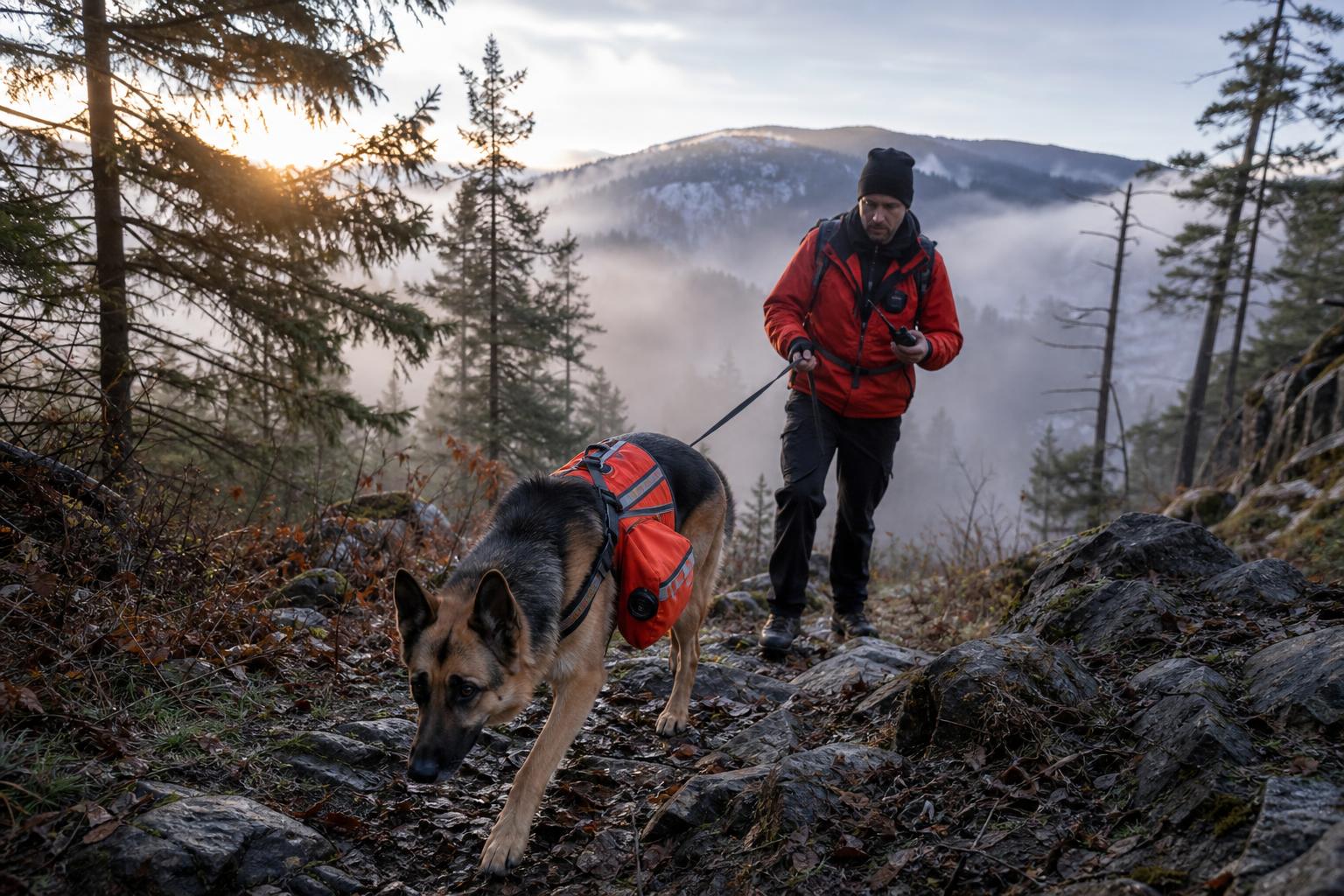
There is something humbling about watching a good dog work a trail that has gone cold to everyone else. A man can stand in the timber, study broken grass, look for a turned stone, and still come up empty. Then a search and rescue dog drops its nose, pulls into the wind, and starts reading a story none of us can see. In that moment, you understand why these dogs have earned their place among the finest working partners in the world.
Search and rescue dogs are heroes in the truest sense. They do not care about praise, headlines, or glory. They care about the job, the game of the find, and the bond they share with the handler at the other end of the lead. When a child wanders from camp, when an elderly hunter fails to return by dark, or when a storm leaves families scattered and afraid, these dogs step into difficult country and do what people alone often cannot.
What Search and Rescue Dogs Really Do
Folks unfamiliar with the field sometimes imagine all search and rescue dogs doing the same work, but that is not how it plays out on the ground. These dogs are trained for specific tasks depending on terrain, scent conditions, and the nature of the missing person case. Some dogs trail a particular human scent from an article like a glove or hat. Others work air scent, moving through a search area and catching odor drifting on the wind. Some are trained for disaster response in collapsed structures, while others specialize in wilderness searches, avalanche work, or water recovery.
What ties them all together is a remarkable nose and the discipline to use it under pressure. A quality search dog learns to ignore distractions that would pull many animals off task. Deer scent, livestock, campfire smells, passing strangers, and rough footing all become part of the background. The mission stays the same: locate human scent and lead the handler to the source or indicate the find with confidence.
I have spent enough time around working dogs to tell you this plainly: instinct matters, but instinct alone does not make a search and rescue dog. The best ones have drive, nerve, stamina, and a steady head. They want the work. Then training shapes that desire into something reliable enough to trust when the stakes are high.
Why Dogs Are So Effective at Finding the Lost
A dog’s nose is a piece of natural engineering that still outclasses much of what man has built. Search and rescue teams may use maps, radios, drones, GPS units, and thermal tools, and all of that has its place. But when scent is available and the dog is properly trained, a canine can sort through an astonishing amount of information. Human odor rises, falls, clings to vegetation, settles in drainages, drifts over ridges, and hangs in shaded creek bottoms. Dogs can work those changing conditions in ways that seem almost supernatural until you remember this is exactly what they were made to do.
Weather, of course, can help or hurt. Cool, damp air often holds scent better than heat and dry wind. Heavy rain may wash away some track picture while moving air can spread odor across a broad area. Time matters too. The fresher the scent, the cleaner the picture tends to be. Still, a seasoned dog with a wise handler can solve problems that would make most people shake their heads and call it luck. It is not luck. It is preparation meeting opportunity in hard country.
The Handler Matters as Much as the Dog
One truth that deserves saying is this: a search dog is only as useful as the team behind it. The handler has to read the dog honestly, not emotionally. That means knowing the difference between a dog casting for odor, checking contamination, losing the line, or locking onto the right path. Good handlers do not force a dog into their own assumptions. They watch, trust the training, and let the dog tell the story.
The strongest teams move together with quiet confidence. They know how to pace a search, when to rest, when to widen the pattern, and when to step back and let the dog work out a problem. That kind of teamwork is not built in a weekend. It comes from hundreds of training hours, field repetitions in bad weather, and enough real-world experience to stay steady when emotions run high.
Breeds Commonly Used in Search and Rescue
There is no single perfect breed for search and rescue, though certain types show up often because they bring the right mix of nose, athletic ability, and biddability. German Shepherds, Labrador Retrievers, Belgian Malinois, Border Collies, and Golden Retrievers are common choices. Bloodhounds are famous for trailing ability, especially when a specific track must be followed over distance. Mixed-breed dogs can also excel if they have the drive and temperament for the work.
The job determines the dog as much as the breed does. A rugged wilderness search may call for endurance and independence. Disaster work often favors agility, confidence on unstable footing, and the ability to ignore chaos. Water search brings a different set of demands, while urban trailing may require a dog that can manage pavement, traffic contamination, and crowded spaces. The best programs do not choose dogs by reputation alone. They test for hunt drive, social stability, environmental confidence, and willingness to work through frustration.
How Search and Rescue Dogs Are Trained
Training starts with play more often than people realize. The dog learns early that finding a hidden person leads to a reward, whether that reward is a toy, food, or a lively session of praise. That game grows in difficulty. Hides get longer, terrain gets rougher, contamination increases, and the dog learns that success comes from solving odor honestly.
A trailing dog may begin with short, simple tracks laid by a familiar person across easy ground. Over time, those tracks age, cross obstacles, pass through areas of human traffic, and stretch into more demanding conditions. Air-scent dogs, on the other hand, learn to hunt for airborne human odor within a search area. They develop independence, range, and a reliable final indication when they locate someone.
Search and rescue training is not glamorous most days. It is repetition, patience, correction without confusion, and exposure to all the things that can rattle a weaker dog. Slick rocks, dark stairwells, helicopters overhead, unstable surfaces, brush so thick it seems stitched together, and long hours with no quick payoff all become part of the education. A finished dog is not just talented. It is proof of countless small lessons done right.
Certification and Ongoing Practice
Responsible teams do not simply declare themselves ready. Most credible search and rescue dog units work under recognized training standards and certification requirements. That process helps confirm the dog and handler can perform under realistic conditions. Even after certification, training never stops. Scent work is a perishable skill, and the partnership between dog and handler needs regular sharpening.
The finest teams I have seen treat every practice like it matters, because someday it will. There is no room for coasting when a real search call may come at two in the morning with weather turning and family members praying for a miracle.
The Heart Behind the Work
What sets these dogs apart is not just their utility. It is their heart. A true search and rescue dog works with conviction. You can see it in the way the dog leans into the harness, in the focused sweep of the head when scent starts to build, in the sudden certainty when the line snaps tight and the dog knows it has the right answer. That intensity is hard to forget once you have seen it up close.
Handlers carry their own burden. They know every search has a human face behind it. Sometimes the outcome is joyful, with a tired but living subject found in time. Sometimes the ending is heavy. Search and rescue dogs serve through all of it, and they do so without hesitation. They do not weigh the odds or second-guess the effort. They simply work.
What Dog Owners Can Learn from Search and Rescue Dogs
Even if your own dog will never work a formal search, there is a great deal to admire and apply from this world. Search and rescue dogs remind us what can happen when natural ability meets structure, purpose, and consistent handling. They show the value of engagement, confidence building, and giving a dog a job that satisfies both mind and body.
For owners interested in working dogs, scent games, tracking exercises, and obedience under distraction can open a new level of partnership. You do not need a disaster scene to appreciate the power of a dog’s nose. Start simple, keep it fair, and let the dog learn to solve problems. You may be surprised how much talent is waiting under the surface.
There is also a lesson here about character. The best working dogs are not made through harshness or ego. They are developed through clear communication, trust, and standards that do not bend when conditions get hard. That applies whether a dog is finding a lost hiker, recovering game, or learning to stay steady in the backyard.
Final Thoughts on These Canine Heroes
Search and rescue dogs deserve every ounce of respect they get and probably more than they receive. They work in darkness, bad weather, broken ground, and emotionally charged situations where mistakes matter. They do it with courage, stamina, and a faith in their handlers that ought to make any dog man stop and think.
When one of these dogs finds the lost, it feels like more than training and skill, though that is certainly part of it. It feels like the old partnership between human and dog at its very best. One brings reason, planning, and direction. The other brings senses and determination beyond our own. Together, they reach into places fear and uncertainty have taken hold, and they bring hope back out.
That is why search and rescue dogs are not just working dogs. They are proof of what a dog can become when instinct, heart, and training meet a purpose worth serving.
Search and rescue dogs are heroes in the truest sense. They do not care about praise, headlines, or glory. They care about the job, the game of the find, and the bond they share with the handler at the other end of the lead. When a child wanders from camp, when an elderly hunter fails to return by dark, or when a storm leaves families scattered and afraid, these dogs step into difficult country and do what people alone often cannot.
What Search and Rescue Dogs Really Do
Folks unfamiliar with the field sometimes imagine all search and rescue dogs doing the same work, but that is not how it plays out on the ground. These dogs are trained for specific tasks depending on terrain, scent conditions, and the nature of the missing person case. Some dogs trail a particular human scent from an article like a glove or hat. Others work air scent, moving through a search area and catching odor drifting on the wind. Some are trained for disaster response in collapsed structures, while others specialize in wilderness searches, avalanche work, or water recovery.
What ties them all together is a remarkable nose and the discipline to use it under pressure. A quality search dog learns to ignore distractions that would pull many animals off task. Deer scent, livestock, campfire smells, passing strangers, and rough footing all become part of the background. The mission stays the same: locate human scent and lead the handler to the source or indicate the find with confidence.
I have spent enough time around working dogs to tell you this plainly: instinct matters, but instinct alone does not make a search and rescue dog. The best ones have drive, nerve, stamina, and a steady head. They want the work. Then training shapes that desire into something reliable enough to trust when the stakes are high.
Why Dogs Are So Effective at Finding the Lost
A dog’s nose is a piece of natural engineering that still outclasses much of what man has built. Search and rescue teams may use maps, radios, drones, GPS units, and thermal tools, and all of that has its place. But when scent is available and the dog is properly trained, a canine can sort through an astonishing amount of information. Human odor rises, falls, clings to vegetation, settles in drainages, drifts over ridges, and hangs in shaded creek bottoms. Dogs can work those changing conditions in ways that seem almost supernatural until you remember this is exactly what they were made to do.
Weather, of course, can help or hurt. Cool, damp air often holds scent better than heat and dry wind. Heavy rain may wash away some track picture while moving air can spread odor across a broad area. Time matters too. The fresher the scent, the cleaner the picture tends to be. Still, a seasoned dog with a wise handler can solve problems that would make most people shake their heads and call it luck. It is not luck. It is preparation meeting opportunity in hard country.
The Handler Matters as Much as the Dog
One truth that deserves saying is this: a search dog is only as useful as the team behind it. The handler has to read the dog honestly, not emotionally. That means knowing the difference between a dog casting for odor, checking contamination, losing the line, or locking onto the right path. Good handlers do not force a dog into their own assumptions. They watch, trust the training, and let the dog tell the story.
The strongest teams move together with quiet confidence. They know how to pace a search, when to rest, when to widen the pattern, and when to step back and let the dog work out a problem. That kind of teamwork is not built in a weekend. It comes from hundreds of training hours, field repetitions in bad weather, and enough real-world experience to stay steady when emotions run high.
Breeds Commonly Used in Search and Rescue
There is no single perfect breed for search and rescue, though certain types show up often because they bring the right mix of nose, athletic ability, and biddability. German Shepherds, Labrador Retrievers, Belgian Malinois, Border Collies, and Golden Retrievers are common choices. Bloodhounds are famous for trailing ability, especially when a specific track must be followed over distance. Mixed-breed dogs can also excel if they have the drive and temperament for the work.
The job determines the dog as much as the breed does. A rugged wilderness search may call for endurance and independence. Disaster work often favors agility, confidence on unstable footing, and the ability to ignore chaos. Water search brings a different set of demands, while urban trailing may require a dog that can manage pavement, traffic contamination, and crowded spaces. The best programs do not choose dogs by reputation alone. They test for hunt drive, social stability, environmental confidence, and willingness to work through frustration.
How Search and Rescue Dogs Are Trained
Training starts with play more often than people realize. The dog learns early that finding a hidden person leads to a reward, whether that reward is a toy, food, or a lively session of praise. That game grows in difficulty. Hides get longer, terrain gets rougher, contamination increases, and the dog learns that success comes from solving odor honestly.
A trailing dog may begin with short, simple tracks laid by a familiar person across easy ground. Over time, those tracks age, cross obstacles, pass through areas of human traffic, and stretch into more demanding conditions. Air-scent dogs, on the other hand, learn to hunt for airborne human odor within a search area. They develop independence, range, and a reliable final indication when they locate someone.
Search and rescue training is not glamorous most days. It is repetition, patience, correction without confusion, and exposure to all the things that can rattle a weaker dog. Slick rocks, dark stairwells, helicopters overhead, unstable surfaces, brush so thick it seems stitched together, and long hours with no quick payoff all become part of the education. A finished dog is not just talented. It is proof of countless small lessons done right.
Certification and Ongoing Practice
Responsible teams do not simply declare themselves ready. Most credible search and rescue dog units work under recognized training standards and certification requirements. That process helps confirm the dog and handler can perform under realistic conditions. Even after certification, training never stops. Scent work is a perishable skill, and the partnership between dog and handler needs regular sharpening.
The finest teams I have seen treat every practice like it matters, because someday it will. There is no room for coasting when a real search call may come at two in the morning with weather turning and family members praying for a miracle.
The Heart Behind the Work
What sets these dogs apart is not just their utility. It is their heart. A true search and rescue dog works with conviction. You can see it in the way the dog leans into the harness, in the focused sweep of the head when scent starts to build, in the sudden certainty when the line snaps tight and the dog knows it has the right answer. That intensity is hard to forget once you have seen it up close.
Handlers carry their own burden. They know every search has a human face behind it. Sometimes the outcome is joyful, with a tired but living subject found in time. Sometimes the ending is heavy. Search and rescue dogs serve through all of it, and they do so without hesitation. They do not weigh the odds or second-guess the effort. They simply work.
What Dog Owners Can Learn from Search and Rescue Dogs
Even if your own dog will never work a formal search, there is a great deal to admire and apply from this world. Search and rescue dogs remind us what can happen when natural ability meets structure, purpose, and consistent handling. They show the value of engagement, confidence building, and giving a dog a job that satisfies both mind and body.
For owners interested in working dogs, scent games, tracking exercises, and obedience under distraction can open a new level of partnership. You do not need a disaster scene to appreciate the power of a dog’s nose. Start simple, keep it fair, and let the dog learn to solve problems. You may be surprised how much talent is waiting under the surface.
There is also a lesson here about character. The best working dogs are not made through harshness or ego. They are developed through clear communication, trust, and standards that do not bend when conditions get hard. That applies whether a dog is finding a lost hiker, recovering game, or learning to stay steady in the backyard.
Final Thoughts on These Canine Heroes
Search and rescue dogs deserve every ounce of respect they get and probably more than they receive. They work in darkness, bad weather, broken ground, and emotionally charged situations where mistakes matter. They do it with courage, stamina, and a faith in their handlers that ought to make any dog man stop and think.
When one of these dogs finds the lost, it feels like more than training and skill, though that is certainly part of it. It feels like the old partnership between human and dog at its very best. One brings reason, planning, and direction. The other brings senses and determination beyond our own. Together, they reach into places fear and uncertainty have taken hold, and they bring hope back out.
That is why search and rescue dogs are not just working dogs. They are proof of what a dog can become when instinct, heart, and training meet a purpose worth serving.