Guard Dogs vs Protection Dog
What’s the Difference?
Jeff Davis | https://workingdogcentral.com
 0
0 0
0 0
0 0
0 0
0
Anyone who has spent time around serious working dogs learns quickly that not all protection is created equal. In everyday conversation, folks tend to lump guard dogs and protection dogs into the same category. But among trainers, handlers, and people who rely on these dogs professionally, the difference between the two is clear—and it matters.
Both types of dogs exist to provide security, but the way they do their job, the level of training required, and even the type of temperament they need are often very different. Understanding that distinction gives you a deeper appreciation for the intelligence, discipline, and instinct that working dogs bring to the table.
And like many things in the dog world, the differences become clearer when you look at the purpose behind the work.
The Traditional Role of the Guard Dog
The concept of the guard dog is as old as human civilization. Long before modern training methods or professional security programs existed, people relied on dogs to watch over their homes, livestock, and property.
A good guard dog functions primarily as a deterrent.
These dogs patrol territory, remain alert to unusual activity, and make it very clear to any intruder that they are not welcome. In many cases, the dog's bark and physical presence alone are enough to prevent trouble before it ever begins.
Livestock guardian breeds are a perfect example of this ancient role. Dogs like the Great Pyrenees, Anatolian Shepherd, and Kuvasz have been guarding sheep and goats for centuries. They live with the animals they protect and react instinctively to predators or intruders.
On farms and homesteads, a guard dog’s job is mostly about awareness and intimidation rather than direct confrontation. They warn. They posture. They make noise. And more often than not, that is enough.
Most guard dogs operate on territorial instinct, not detailed obedience training. Their loyalty is tied strongly to the land or the property they are protecting. If someone approaches the boundary, the dog reacts.
You might say the guard dog is the watchman of the canine world.
The Specialized Role of the Protection Dog
A protection dog, on the other hand, works under a very different set of expectations.
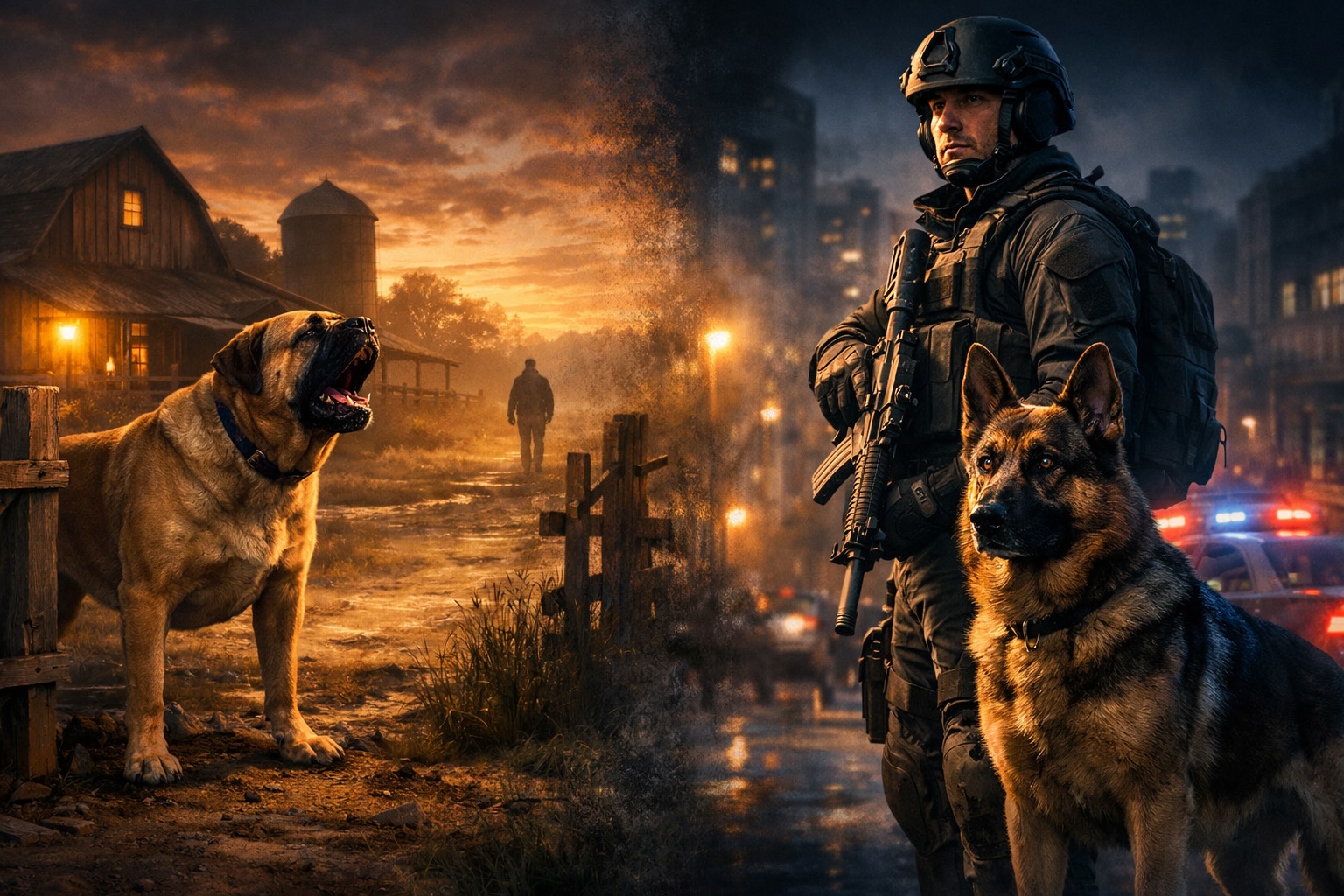
Where a guard dog protects a place, a protection dog protects a person.
Protection dogs are highly trained animals capable of responding to specific threats on command or in response to a handler being attacked. These dogs operate under strict control and must demonstrate remarkable discipline.
In professional settings—law enforcement, military units, executive security, or high-level personal protection—these dogs undergo extensive training that goes far beyond simple territorial behavior.
A true protection dog must understand when to engage and, just as importantly, when not to.
This requires a very stable temperament and a level of obedience that borders on precision.
The dog may be trained to:
* Apprehend a suspect
* Hold an aggressor at bay
* Escort or guard a handler
* Release immediately when commanded
Unlike a territorial guard dog, a protection dog must remain calm in public environments, around crowds, vehicles, and unpredictable situations.
These dogs are tools of controlled force, not simply deterrents.
Training Makes the Biggest Difference
The biggest distinction between guard dogs and protection dogs ultimately comes down to training.
A guard dog may receive basic obedience training, but its effectiveness largely comes from instinct. Breeds selected for guarding naturally possess strong territorial behavior, suspicion of strangers, and a willingness to stand their ground.
Protection dogs require something far more structured.
Training programs for protection dogs often begin early and can take months or even years to fully develop. Trainers focus on obedience, bite work, environmental stability, and controlled aggression.
It’s not just about teaching a dog to bite. In fact, responsible trainers emphasize control above all else.
A poorly trained dog that reacts unpredictably is a liability, not an asset.
The best protection dogs are calm, focused animals capable of ignoring distractions until their handler gives a command.
Temperament: The Foundation of Both Roles
Despite their differences, guard dogs and protection dogs share one critical trait: balanced temperament.
Working dogs cannot be unstable or overly aggressive. A dog that reacts out of fear or panic is dangerous and unreliable.
Guard dogs typically possess strong independence. They make decisions on their own because they are often left to patrol property without constant direction from a handler.
Protection dogs, by contrast, must be extremely handler-oriented. Their work revolves around responding to commands and protecting a specific individual.
In either case, the best dogs combine confidence, intelligence, and strong nerves.
Without those qualities, the training simply doesn't hold.
Breeds Commonly Used for Guarding
Certain breeds have long been associated with guarding roles due to their natural instincts and imposing presence.
Livestock guardian breeds dominate traditional guarding work. The Great Pyrenees, Anatolian Shepherd, and Komondor have spent centuries protecting flocks from wolves and other predators.
Large estate guard dogs like the Cane Corso or Bullmastiff also fit naturally into this category. Their size, strength, and territorial nature make them effective property guardians.
In many cases, these dogs require surprisingly little formal training to fulfill their role. The instinct is already there.
Breeds Commonly Used for Protection Work
Protection dogs tend to come from breeds known for their trainability, athletic ability, and strong working drive.
German Shepherds have long been the gold standard in protection work. Their intelligence and versatility make them ideal for police, military, and personal security roles.
Belgian Malinois have risen to prominence in recent decades, particularly within military and special operations units. These dogs combine speed, endurance, and exceptional focus.
Doberman Pinschers were historically developed as personal protection dogs and remain one of the most recognizable breeds in that role.
What these breeds share is a willingness to work closely with a handler and respond quickly to training.
That combination of intelligence and discipline is what separates protection dogs from the more independent guarding breeds.
Real-World Overlap Between the Two
While the distinction between guard dogs and protection dogs is clear in theory, real life sometimes blurs the lines.
Many dogs perform both roles to some degree.
A German Shepherd guarding a home may rely on territorial instinct much like a traditional guard dog. At the same time, with the right training, that same dog can respond to commands and protect its handler directly.
Even livestock guardian dogs have been known to intervene aggressively when predators threaten the animals under their watch.
Still, the difference in primary purpose remains important.
Guard dogs defend territory.
Protection dogs defend people.
The Importance of Responsible Training
One final point cannot be overstated.
Dogs trained for guarding or protection carry significant responsibility for the people who own and handle them.
These animals possess strength, speed, and instincts that must be guided carefully. Professional training, proper socialization, and consistent handling are essential.
When trained correctly, working dogs become some of the most disciplined and loyal partners a person could ever have.
But when poorly trained or misunderstood, they can become dangerous.
Like any powerful tool, the outcome depends entirely on the skill and responsibility of the person using it.
The Legacy of Working Dogs
For thousands of years, dogs have stood beside humans as protectors. From ancient villages guarded by mastiff-type dogs to modern K9 units working alongside law enforcement officers, the partnership between people and working dogs continues to evolve.
Guard dogs and protection dogs may perform their duties differently, but both roles reflect the same enduring truth.
A well-bred, well-trained working dog possesses instincts and loyalty that few animals can match.
And when that bond between dog and handler is built on trust, discipline, and respect, it becomes one of the most remarkable partnerships in the working dog world.
Both types of dogs exist to provide security, but the way they do their job, the level of training required, and even the type of temperament they need are often very different. Understanding that distinction gives you a deeper appreciation for the intelligence, discipline, and instinct that working dogs bring to the table.
And like many things in the dog world, the differences become clearer when you look at the purpose behind the work.
The Traditional Role of the Guard Dog
The concept of the guard dog is as old as human civilization. Long before modern training methods or professional security programs existed, people relied on dogs to watch over their homes, livestock, and property.
A good guard dog functions primarily as a deterrent.
These dogs patrol territory, remain alert to unusual activity, and make it very clear to any intruder that they are not welcome. In many cases, the dog's bark and physical presence alone are enough to prevent trouble before it ever begins.
Livestock guardian breeds are a perfect example of this ancient role. Dogs like the Great Pyrenees, Anatolian Shepherd, and Kuvasz have been guarding sheep and goats for centuries. They live with the animals they protect and react instinctively to predators or intruders.
On farms and homesteads, a guard dog’s job is mostly about awareness and intimidation rather than direct confrontation. They warn. They posture. They make noise. And more often than not, that is enough.
Most guard dogs operate on territorial instinct, not detailed obedience training. Their loyalty is tied strongly to the land or the property they are protecting. If someone approaches the boundary, the dog reacts.
You might say the guard dog is the watchman of the canine world.
The Specialized Role of the Protection Dog
A protection dog, on the other hand, works under a very different set of expectations.
Where a guard dog protects a place, a protection dog protects a person.
Protection dogs are highly trained animals capable of responding to specific threats on command or in response to a handler being attacked. These dogs operate under strict control and must demonstrate remarkable discipline.
In professional settings—law enforcement, military units, executive security, or high-level personal protection—these dogs undergo extensive training that goes far beyond simple territorial behavior.
A true protection dog must understand when to engage and, just as importantly, when not to.
This requires a very stable temperament and a level of obedience that borders on precision.
The dog may be trained to:
* Apprehend a suspect
* Hold an aggressor at bay
* Escort or guard a handler
* Release immediately when commanded
Unlike a territorial guard dog, a protection dog must remain calm in public environments, around crowds, vehicles, and unpredictable situations.
These dogs are tools of controlled force, not simply deterrents.
Training Makes the Biggest Difference
The biggest distinction between guard dogs and protection dogs ultimately comes down to training.
A guard dog may receive basic obedience training, but its effectiveness largely comes from instinct. Breeds selected for guarding naturally possess strong territorial behavior, suspicion of strangers, and a willingness to stand their ground.
Protection dogs require something far more structured.
Training programs for protection dogs often begin early and can take months or even years to fully develop. Trainers focus on obedience, bite work, environmental stability, and controlled aggression.
It’s not just about teaching a dog to bite. In fact, responsible trainers emphasize control above all else.
A poorly trained dog that reacts unpredictably is a liability, not an asset.
The best protection dogs are calm, focused animals capable of ignoring distractions until their handler gives a command.
Temperament: The Foundation of Both Roles
Despite their differences, guard dogs and protection dogs share one critical trait: balanced temperament.
Working dogs cannot be unstable or overly aggressive. A dog that reacts out of fear or panic is dangerous and unreliable.
Guard dogs typically possess strong independence. They make decisions on their own because they are often left to patrol property without constant direction from a handler.
Protection dogs, by contrast, must be extremely handler-oriented. Their work revolves around responding to commands and protecting a specific individual.
In either case, the best dogs combine confidence, intelligence, and strong nerves.
Without those qualities, the training simply doesn't hold.
Breeds Commonly Used for Guarding
Certain breeds have long been associated with guarding roles due to their natural instincts and imposing presence.
Livestock guardian breeds dominate traditional guarding work. The Great Pyrenees, Anatolian Shepherd, and Komondor have spent centuries protecting flocks from wolves and other predators.
Large estate guard dogs like the Cane Corso or Bullmastiff also fit naturally into this category. Their size, strength, and territorial nature make them effective property guardians.
In many cases, these dogs require surprisingly little formal training to fulfill their role. The instinct is already there.
Breeds Commonly Used for Protection Work
Protection dogs tend to come from breeds known for their trainability, athletic ability, and strong working drive.
German Shepherds have long been the gold standard in protection work. Their intelligence and versatility make them ideal for police, military, and personal security roles.
Belgian Malinois have risen to prominence in recent decades, particularly within military and special operations units. These dogs combine speed, endurance, and exceptional focus.
Doberman Pinschers were historically developed as personal protection dogs and remain one of the most recognizable breeds in that role.
What these breeds share is a willingness to work closely with a handler and respond quickly to training.
That combination of intelligence and discipline is what separates protection dogs from the more independent guarding breeds.
Real-World Overlap Between the Two
While the distinction between guard dogs and protection dogs is clear in theory, real life sometimes blurs the lines.
Many dogs perform both roles to some degree.
A German Shepherd guarding a home may rely on territorial instinct much like a traditional guard dog. At the same time, with the right training, that same dog can respond to commands and protect its handler directly.
Even livestock guardian dogs have been known to intervene aggressively when predators threaten the animals under their watch.
Still, the difference in primary purpose remains important.
Guard dogs defend territory.
Protection dogs defend people.
The Importance of Responsible Training
One final point cannot be overstated.
Dogs trained for guarding or protection carry significant responsibility for the people who own and handle them.
These animals possess strength, speed, and instincts that must be guided carefully. Professional training, proper socialization, and consistent handling are essential.
When trained correctly, working dogs become some of the most disciplined and loyal partners a person could ever have.
But when poorly trained or misunderstood, they can become dangerous.
Like any powerful tool, the outcome depends entirely on the skill and responsibility of the person using it.
The Legacy of Working Dogs
For thousands of years, dogs have stood beside humans as protectors. From ancient villages guarded by mastiff-type dogs to modern K9 units working alongside law enforcement officers, the partnership between people and working dogs continues to evolve.
Guard dogs and protection dogs may perform their duties differently, but both roles reflect the same enduring truth.
A well-bred, well-trained working dog possesses instincts and loyalty that few animals can match.
And when that bond between dog and handler is built on trust, discipline, and respect, it becomes one of the most remarkable partnerships in the working dog world.


View all 0 comments